Politics

Read about the latest political news, views and analysis

Who won the first leaders’ debate?

17 min listen

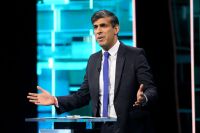
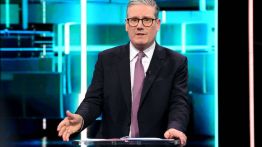
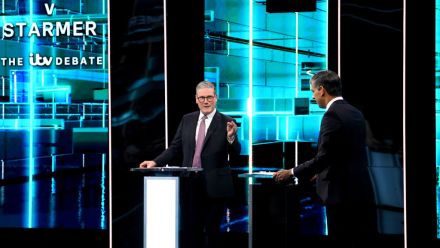
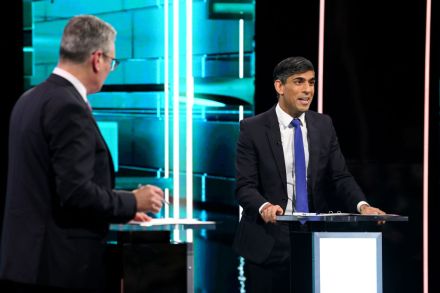
Last night, Rishi Sunak and Keir Starmer went head-to-head in the first TV debate of the campaign. They clashed on a variety of topics, including housing, the NHS, and immigration. But who came out on top? Katy Balls speaks to Kate Andrews and Isabel Hardman. Produced by Megan McElroy.
The Nigel Farage milkshaking is no laughing matter

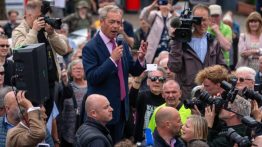
Emerging from a pub after his campaign launch in Clacton yesterday afternoon, Nigel Farage was milkshaked. A 25-year-old woman has been charged with assault by beating and criminal damage. The incident has, quite rightly, been widely condemned. Farage’s Conservative opponent in Clacton, Giles Watling, tweeted that ‘every candidate has the right to campaign without fear of violence or intimidation’. Shadow home secretary Yvette Cooper called it a ‘disgrace’ and ‘completely unacceptable and wrong’. They were right to condemn the attack: this act of narcissistic nihilism is an affront to the democratic process, whatever side of the debate you are on. Farage has done his best to shrug off the attack So it has been disappointing to see that, since the news

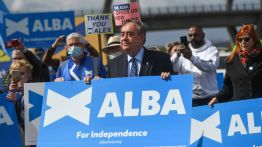
Alex Salmond’s Alba party isn’t serious about the general election

In the second-floor room of a building on Tufton Street, Scotland’s former first minister Alex Salmond delivered a press conference this afternoon to London journalists. An untouched tray of biscuits sat on a coffee table at the back, while the rest of the space was rather merch-light thanks to forgetful organisers not transporting more materials from Scotland: a party banner was illuminated on a TV screen and seats were covered in ‘general election briefing’ PDF print-outs. Hydrating not with water but with Lucozade — the party leader confessed a ‘lifelong addiction’ to the sugary drink, admitting it was neither Irn Bru nor Aperol Spritz, a favourite tipple of some nationalist

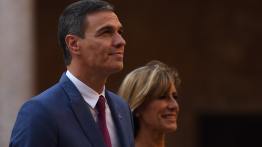
Can Begona Gomez get a fair trial in Spain?

Begona Gomez, the wife of Spain’s Socialist prime minister Pedro Sanchez, has received a court summons for 5 July, in connection with a corruption probe into her business activities. The summons follows the launch of a preliminary investigation into Gomez back in April, and relates to ‘the alleged offences of corruption in the private sector and influence peddling’, according to the court. Sanchez took several days off when the inquiry was launched at the end of April, apparently to consider resigning – a stunt that disappointingly resulted in him deciding to stay on.  If we look at the evidence in the Gomez case, then it does seem flimsy Coming as it does just before

Tory favourites enjoy mixed success in safe seats

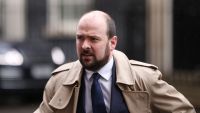
Claims of stitch-ups in seat selections are as old as the Tory party itself. But the chaotic nature of this snap election and the Conservatives’ poor polling have produced an especially angry reaction among elements of the party grassroots. With Tory nominations set to close tomorrow, only one ‘safe’ seat now remains: Basildon and Billericay, the Essex stronghold that returned John Baron with a majority of 20,412 in 2019. For weeks, there have been rumours circulating that Tory chairman Richard Holden would switch to this seat from North West Durham. Today they have been confirmed. Holden is the sole name going forward to the local association at 8 p.m today.

What’s the matter with America’s media?

28 min listen

Freddy Gray speaks to Ben Smith and Nayeema Raza from the Mixed Signals podcast. They discuss the state of American media, whether the US has any appetite for public service broadcasting, and whether America is too cynical about the press.

On Sunak’s maths, Tories will lift taxes by £3,000 per household

My colleague Ross Clark has shown how the Tories cooked up that £2,000 figure. They worked out the total cost of what they think Labour will do, using standard HM Treasury costings. Then, they divided that by the number of in-work households (18.4 million). This is a subset of the 21.4 million total UK households, so no pensioners or workless households. By choosing a smaller denominator, you concentrate the increase and conjure up a scarier figure. Then they quadruple-counted. So they took each year’s estimate for tax rise and then added them together over four years and – presto! – you end up with £2,000. But let’s apply a similar method to

The activists’ war on book festivals spells disaster for authors

Touring the country’s literary festivals as an author isn’t glamorous. Like travelling salesmen, we get into our cars or board trains to head to destinations that are often hundreds of miles away to talk about our books for an hour or so. The audience – if the talk has gone well – will then hopefully buy some copies. It is not an existence to be envious of, but it is an essential part of writing: without such festivals, authors like me would lack any kind of name or face recognition amongst our readership. It is likely that any subsequent books we write would sell in smaller and smaller numbers. Yet

The truth about Labour’s fiscal black hole

It is small wonder that Treasury officials are unhappy about Conservative claims about Labour tax rises being attributed to them. The civil service is supposed to be neutral, and be seen to be neutral. James Bowler, permanent secretary at the Treasury, who wrote to the Labour party expressing concern that certain figures are being attributed to his officials, will almost certainly find himself having to work with a Labour government in a few weeks’ time.  There is one figure at the heart of the Conservative analysis of Labour’s tax and spending plans which really should be causing concern What the Conservatives have done in making the claim that Labour will

Nigel Farage is turning the screws on the Tories

He’s back. After months of teasing and indecision, Nigel Farage launched himself fully into the fray of yet another election campaign on Monday, standing as the Reform UK candidate in UKIP friendly Clacton, and taking over from Richard Tice as leader of the party. The electrifying effect of this announcement might seem a bit odd, given that Farage has hardly been absent from screens and airwaves in recent months. But this decision to fully take the plunge matters, for three reasons. Firstly, it kills the squeeze on the Reform vote. The clear Tory strategy in the first fortnight has been to love bomb Reform UK supporters with socially conservative policy

Don’t get rid of VAR!

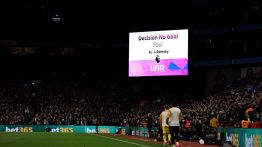
The Premier League’s 20 football clubs will vote tomorrow on whether to scrap video assistant referee (VAR) technology. Five years ago, when it was first introduced, VAR was heralded as a foolproof system. Sneaky handballs, unfair red cards, onside-offside mix-ups: all would be gone. The refereeing would be perfect. But, even after five years, VAR is still too slow and its decision-making too opaque. It’s wrong, too. There have been around 20 game-changing errors every season since its introduction. Football can’t continue in this state. Wolverhampton Wanderers forced the vote, claiming VAR had ‘damaged the relationship between football and fans’. They’re right. VAR ruins the spontaneity of goal celebrations and slows down

Is Labour really plotting a £2,000 tax grab?

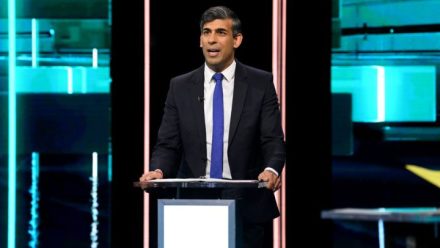
Is the Labour party planning a £2,000 tax grab on households? That was Rishi Sunak’s main message last night during the first election debate on ITV – one which he was found by YouGov’s snap poll to have won (just). The Tories will ‘keep cutting taxes’, he said, while Labour will raise them. It took some time for Keir Starmer to hit back at the accusation, and the specific number, which he eventually called ‘absolute garbage’. Starmer said the £2,000 figure was based on ‘dodgy assumptions’ and had ‘glaring mistakes’ Where did the figure come from? And how accurate is it? The document, titled ‘Labour’s tax rises’ was put together

Education has all but disappeared from the election debate

More than 25 years ago, when I was setting up the Sutton Trust, the leader of the opposition, a fresh-faced Tony Blair, was touring the TV studios with a simple message, ‘Education, Education, Education’. And sure enough, during the 1997 election, Labour promised to cut class sizes on their famous pledge card. Fast forward quarter of a century, and we’re about to go into an election which many are comparing to 1997. But what has happened to education? It’s almost disappeared from the political agenda. Indeed, it has fallen off a cliff in terms of its political saliency. Keir Starmer’s opportunity mission includes education, but the policy substance and funding

The political appropriation of D-Day

If there is one place to avoid this week it is Normandy. The global elite are in town to commemorate the 80th anniversary of D-Day. Along with as many as 25 world leaders there will be upwards of 12,000 of their security staff invading this normally sleepy part of Northern France. In addition, 43,000 gendarmes, police and military personnel will be deployed on land, sea and in the air. A restricted traffic zone will be place throughout the region, and residents are being advised to stay at home on Thursday and Friday. Some schools will be closed on those days because of the disruption. The Normandy American Cemetery, resting place of

How the Tories created Nigel Farage

Conventional Conservative wisdom once warned about the dangers of appeasement. Rudyard Kipling, the great poet of imperialism, may be the most cancelled figure in British literature, but I imagine even leftists can see how his lines in Danegeld apply to the Tory party’s appeasement of Nigel Farage: ‘And that is called paying the Dane-geld; But we’ve proved it again and again, That if once you have paid him the Dane-geld You never get rid of the Dane.‘ I guess, too, that before the rise of Ukip, all Conservative politicians knew Winston Churchill’s line that ‘an appeaser is one who feeds a crocodile, hoping it will eat him last’. Sunak is leading the Tories to a

Sunak’s scrappy style worked, but he fought on a false premise

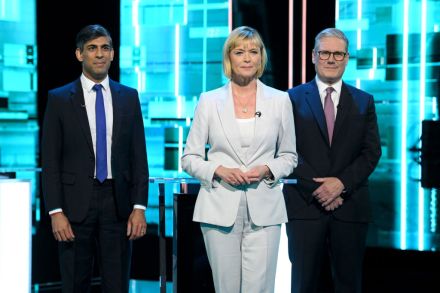
‘Gentlemen, please’, said Julie Etchingham, over and over again, as she chaired this ITV debate. She had given Rishi Sunak and Keir Starmer both 45 seconds for answers and both had far more to say. ITV didn’t silence one microphone when the other was speaking so both were able to heckle, further complicating the format. Sunak’s tactic was to turn everything into a question for Starmer: ‘What are you going to do about tax / small boats/ taxing pensioners?’ Starmer’s general lack of answers came across, which will have been Sunak’s objective. I’d give the debate to Sunak – but it was closer than I thought it would be. And to win,

Starmer will win the election, but Sunak won the debate

Full disclosure: I went into the ITV election debate wanting and expecting Sir Keir Starmer to walk all over Rishi Sunak, but from my sofa the Prime Minister looked like the clear winner. How so? He kept it simple: he would cut taxes, Sir Keir would hike them up by £2,000; he would stick illegal migrants on a plane, Sir Keir would spring them onto a high street near you; he wouldn’t force you to make expensive green upgrades to your house, Sir Keir would rip out your boiler with his own bare hands then hand you a bill. It was ruthless, fear-mongering stuff, but I suspect it will have