Politics

Read about the latest political news, views and analysis

How the Tories changed Britain

The late Roger Scruton (whose wrongful sacking as a housing adviser by a Tory minister in 2019 was a sign that things were badly wrong) defined the fundamental issue: ‘There can be no democracy without a demos, a “we” united by a shared sense of belonging.’ How has the demos changed over 14 years of Conservative government? The ‘we’ is weaker than when David Cameron and Nick Clegg were promoting a Big Society. We are in a pessimistic mood in which saying that ‘nothing works’ has become a catchphrase. Politicians are despised. The party that has governed for so long cannot avoid responsibility.  The government seemed scared to defend their only truly historic
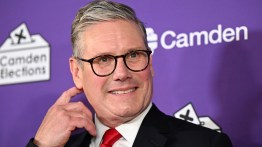
Starmer’s ruthless efficiency has risks

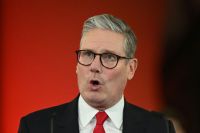
A couple of years ago, an anecdote about Keir Starmer did the rounds at Westminster. The story was that when asked about his time leading the Crown Prosecution Service (CPS), he said that his proudest achievements involved overhauling IT systems, or procurement rules, or some other highly procedural aspect of the organisation’s bureaucracy. The story was generally told with a mildly mocking tone, proof that Starmer was a bit of a plodder, not the sort of glibly agile PPE debater that generally dominates Westminster life. In essence, Starmer was seen by much of the political village as a manager, not a leader – and the village always prizes dashing leadership

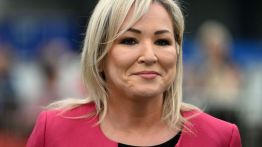
The triumph of Sinn Fein

Sinn Fein has consolidated its position as the biggest political party in Northern Ireland. It retained its seven seats and, as a result of DUP reversals, is now Northern Ireland’s largest party at Westminster. Sinn Fein were very close to winning the East Londonderry seat from the DUP – which went to various recounts – but the DUP held on with a majority of 179. So the result could have been even better for them.  Northern Ireland now has an alphabet soup of parties representing it Already the largest party at the Stormont Assembly and on Northern Ireland’s councils, it is quite the hat-trick for Sinn Fein and its leader Michelle

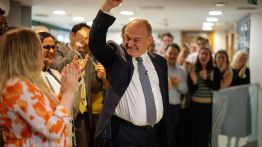
Why the Lib Dems did so well

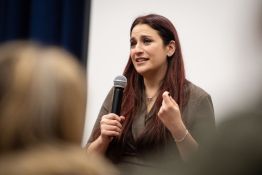
It has been quite a 14 years for the Liberal Democrats – from the coalition in 2010 to near total wipe-out in 2015. Things barely improved in the two elections after that. They even managed to lose then-leader Jo Swinson’s seat in 2019. Five years on, the party has secured 71 seats, a gain of 63 and the party’s highest ever total. They haven’t quite managed to become the official opposition but return to the new parliament as the third-largest party. The Lib Dems have benefited from ruthless targeting One of their gains includes David Cameron’s old seat of Witney on a swing of over 15 per cent. They also

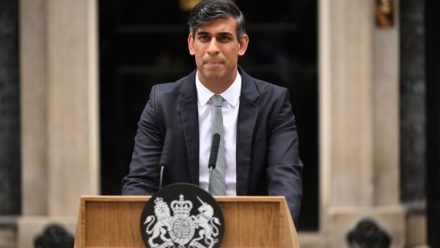
Full text: I will resign as Conservative leader

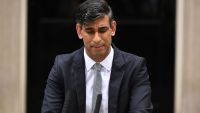
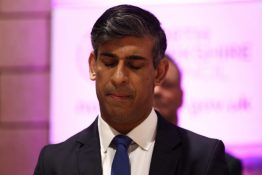
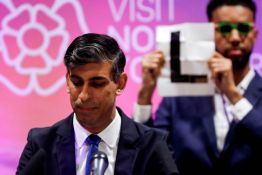
Good morning. I will shortly be seeing His Majesty the King to offer my resignation as Prime Minister. To the country, I would like to say, first and foremost, I am sorry. I have given this job my all. But you have sent a clear signal that the government of the United Kingdom must change, and yours is the only judgment that matters. I have heard your anger, your disappointment, and I take responsibility for this loss. This is a difficult day at the end of a number of difficult days To all the Conservative candidates and campaigners who worked tirelessly but without success, I am sorry that we could

Why Muslim voters turned their backs on Starmer’s Labour

In an otherwise jubilant night for Labour, the party has performed badly in areas with a high proportion of Muslim voters. So far, Labour has lost five seats with large Muslim populations – four to independent candidates and one to the Conservatives. The party’s vote is down on average by 11 points in seats where more than 10 per cent of the population identify as Muslim, with pro-Gaza candidates making significant inroads. Labour has been wary throughout this campaign of the impact that the Middle East crisis would have on its vote in urban areas with significant numbers of Muslim voters. It followed comments last year by the Labour leader, Sir Keir

Labour passes its first test with the markets

Markets don’t like surprises. And the election results, while explosive, are not a surprise – or at least the winner isn’t. Labour has secured a substantial majority, as markets had been expecting the party to do from the start of the election. No surprise this morning means no immediate jitters, as the result was already priced in. Sterling is slightly up, by 0.1 per cent, hovering around $1.28. The FTSE 100 is up 0.4 per cent since markets opened this morning. Most notably, housebuilding stocks are on the up. The strong speculation that Labour will use its first days in power to announce a planning overhaul has given the market

Why conservatives should get behind Starmer

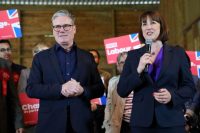
The Conservatives are going down to one of their worst defeats ever. The opposition has come from nowhere to absolutely destroy them. It ought to be one of those rare moments in British history when the centre-left can celebrate crushing a Tory party, that drives us to despair and rage in equal measure.  Speaking at a victory rally at 5 a.m. this morning, Keir Starmer told his supporters, ‘We can look forward to walk into the morning, the sunlight of hope, pale at first, but getting stronger through the day’. It was not quite as poetic as Wordsworth’s greeting of the French Revolution ‘Bliss was it in that dawn to be alive/But to

Jeremy Corybn and the rise of the Gaza independents

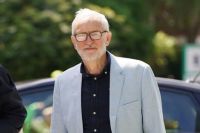
A counterpoint to the main story of Labour’s election victory is the way Gaza has cost the party at least five seats – and ran it very close in others. Jon Ashworth’s shock loss to independent Gaza campaigner Shockat Adam in Leicester South was the most high profile but there were three other losses to independents standing on a similar platform. Jeremy Corbyn was returned as an independent in Islington North, referencing Gaza in both his campaign literature and acceptance speech. It won’t just be on Gaza that Starmer now comes under pressure to move Khalid Mahmood, a Labour MP who has campaigned against Islamist extremism, was beaten in Birmingham

Labour wins by a landslide

15 min listen

Where to start with an historic election night. Keir Starmer has got his 1997 moment, winning an enormous majority. Elsewhere, eleven cabinet ministers have lost their seats, including: Grant Shapps, Gillian Keegan and Penny Mordaunt. Former prime minister Liz Truss has lost her seat, as have senior Tories Jacob Rees-Mogg and Miriam Cates. The Lib Dems have made massive gains, the SNP were decimated in Scotland and Nigel Farage is the MP for Clacton.  But it’s not a clean sweep for Labour. Two Labour frontbenchers have lost their seats and Starmer will enter government on a vote share of 35 per cent, the lowest of any postwar governing party. Will this hinder him in government?

Labour’s Potemkin landslide

Something pretty big is missing from Labour’s historic landslide: the voters. Keir Starmer has won 63 per cent of the seats on just 33.8 per cent of the votes, the smallest vote share of any modern PM. Lower than any of the (many) pollsters predicted. So Labour in 2024 managed just 1.6 percentage points higher than the Jeremy Corbyn calamity in 2019 – and less than Corbyn managed in 2017. ‘But for the rise of the Labour party in Scotland,’ says Professor John Curtice, ‘we would be reporting that basically Labour’s vote has not changed from what it was in 2019.’ And that’s on the second-lowest turnout in democratic history. So

Voters never forgave Liz Truss for her mini-Budget

Tonight was the first time since Liz Truss’s 49-day premiership that voters got to have their say on exactly what happened back in 2022, and what’s happened since. The verdict is in: Truss has suffered a devastating defeat in South West Norfolk, going from a 25,000 seat majority in 2019 (one of the safest Tory seats in the country) to losing to Labour candidate Terry Jermy, with a difference of just over 600 votes. The 26 per cent voter swing from Tories to Labour made Truss the first former prime minister to lose their seat in almost 90 years. Were this any other MP, it would be easy to chalk

The Sophie Winkleman Edition

29 min listen

Actress Sophie Winkleman was born in London, educated at Cambridge, and has appeared in television and film roles across both sides of the Atlantic. Perhaps best known for her roles as Big Suze in Peep Show and Zoey in Two and a Half Men, she is now patron to several children’s charities.  On the episode, Katy Balls talks to Sophie about how she got into acting, whether she has ever dated a Jez or a Mark, and why she believes in the comfort of strangers. Sophie also talks about her campaign to reduce smart phone use and technology exposure for children, which you can read more about here.  Produced by Patrick

The game is up for the SNP after its election meltdown

Every election is historic in its own way, and of course the top line this 2024 general election is Labour’s humongous parliamentary majority. Though never can a landslide have been delivered with so little voter enthusiasm. But something equally significant happened in the wee small hours of the morning. For, an existential threat that has arguably hung over the United Kingdom for nigh on twenty years simply evaporated. The all-powerful Scottish National Party collapsed in ruins, losing all but nine of its forty-eight Scottish MPs. This is worse than even the most pessimistic poll forecasts. The Scottish National Party, it seemed, could not lose Yet, less than a decade ago the Scottish

Watch: Liz Truss loses her seat

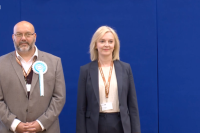
It’s the Portillo moment of 2024. Liz Truss sensationally lost her safe South West Norfolk seat this morning, less than two years after serving as prime minister. Amid much online excitement about her prospects of losing, Truss was initially not seen at the count at 6 a.m, forcing the result to be delayed by several minutes. Some of those watching began slow clapping before she appeared, not wearing a Conservative rosette. There were gasps and cheers as the results were read out, as Truss became the biggest Tory casualty on a painful night for the party. Labour’s Terry Jermy won by more than 600 votes in a seat that previously

Looking to the past won’t help the Tories navigate their future

These are going to be dark days of introspection for Conservatives. And, as they try to make sense of the 2024 election, some will look to the party’s past to put it into historical perspective. There is, however, no precedent for how awful the result was for the party in terms of vote share and seats won: it really was that bad. Yet, as a comfort amongst the wreckage, but also an inspiration for future effort, some party members will likely alight upon earlier examples of how the Conservatives recovered from cataclysmic defeat. Of those modern instances – 1906, 1945 and 1997 – 1945 is by far the most appealing.

Will the Tories finally get the message?

Can it just be a coincidence that most of the leading figures of the Tory left lost their seats, while the coming women and men of the right largely held on? Kemi Badenoch, Robert Jenrick and Suella Braverman all made it back to the Commons while whole phalanxes of would-be leadership contenders from the ‘One Nation’ wing of the party fell by the wayside. Penny Mordaunt, Grant Shapps, Alex Chalk and Gillian Keegan were among the biggest casualties. The coming civil war for the soul of the Tories is shaping up to be a humdinger Perhaps having anti-woke and mass-migration sceptic credentials helped those on the right minimise the Reform

Why Jews returned to Labour

Two weeks before the general election, the Jewish Chronicle commissioned a Survation poll to map the voting intentions of British Jews. To our surprise, we found that, unlike the rest of the country, the Tories were just ahead in the community – by nine percentage points. The stain of the Corbyn years, it seemed, had not yet been fully erased. The following week, however, a second, larger poll was published. This one, by Jewish Policy Research, put Labour 16 points ahead. It was against this background of ambiguity that amid high drama overnight, the Jewish heartland seat of Finchley fell to Labour’s Sarah Sackman, who defeated the Conservative candidate, Alex Deane,