Politics

Read about the latest political news, views and analysis

Ukraine war, three years on

13 min listen

Today marks three years since the start of Russia’s full-scale invasion of Ukraine. From early fears of a swift Russian victory to the Kharkiv offensive and the slow war of attrition that has played out since, each stage of this war has been hard to predict. None more so than this stage, with the USA drastically changing tack and tearing up the transatlantic alliance by pursuing back-channel peace talks with Putin. Europe has been left scrambling. Where do we go from here? And with an isolationist USA, the breakdown of the European consensus on Ukraine and the UK’s armed forces being hollowed out, who is left to defend Europe? James
In defence of short jail sentences

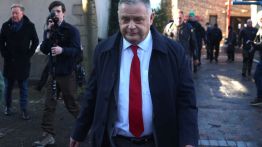
Mike Amesbury, the former Labour MP who has been sent to prison for ten weeks for punching a constituent in the street, is rather unlucky: the truth is that very few first-time offenders get locked up. It’s probable that those convicted of similar offences in the future may still be imprisoned. But the use of short prison sentences for non-violent offences, however numerous and persistent, are under threat. Very few first-time offenders get sent to prison David Gauke’s Sentencing Review, which is due to be published in full over the coming months, is likely to make it harder for magistrates to hand out short jail sentences. Shabana Mahmood, the Justice

Is Britain’s ‘net zero economy’ really booming?

If you live opposite the vacant site in Northumberland that was supposed to become the Britishvolt ‘gigafactory’ pumping out batteries for the electric car industry, or near the Vestas wind turbine plant on the Isle of Wight where half the 600 workers have been told they face redundancy, you might just struggle to believe that Britain is in the midst of a net zero jobs boom. Yet that is the striking claim that is being made by CBI Economics and the Energy and Climate Intelligence Unit (ECIU). The net zero sector, it says, grew by 10.1 per cent last year, added £83.1 billion in gross value added (GVA) and accounted

Ex-Reform Wales leader accused of taking Russian bribes

Uh oh. The ex-leader of Reform UK in Wales has appeared in court after being accused of accepting Russian bribes. Nathan Gill, 51, is facing eight counts of bribery alongside one count of conspiracy to commit bribery – to make statements, it is alleged, that would benefit Russia in the European parliament. Good heavens… Initially a Ukip member, Gill became a Brexit party MEP between 2014 and 2020. The ex-Reform leader has been accused of receiving money from the Ukrainian politician – and his co-defendant in the case – Oleg Voloshyn in return for making specific statements on at least eight occasions. The court heard that Gill’s remarks, made both

Reform fancies its chances in Mike Amesbury’s seat

This afternoon Mike Amesbury was sentenced to ten weeks in prison. The ex-Labour MP for Runcorn and Helsby was handed a custodial sentence at Chester Magistrates’ Court for assaulting a man in his constituency last October. Deputy Chief Magistrate Tan Ikram said the immediate custodial sentence was ‘necessary both as a punishment and a deterrent’. The sentence means a recall petition will be triggered in Runcorn and Helsby, unless Amesbury chooses to appeal.A recall petition means voters in the MP’s seat have six weeks to sign requesting a by-election; if 10 per cent sign the by-election goes ahead, but if the threshold is not met, the MP can stay in

Sam Fender is right about white privilege

Teaching working-class young men that they benefit from ‘white privilege’ is having a detrimental effect on a generation of boys, leading to feelings of negativity and worthlessness, and driving them into the hands of dangerous influencers such as Andrew Tate. This is the claim made by Sam Fender, the best-selling, 30-year-old musician from North Shields. As the singer told the Sunday Times yesterday, this teaching has resulted in boys from poor white backgrounds being ‘made to feel like they’re a problem’, with those from ‘nowhere towns’ being ‘shamed’ and told they weren’t underprivileged because of their skin colour. Consequently, this constant disparagement is leading many to seek consolation in misogynist

Hamas’s hostage shows evoke a haunting comparison

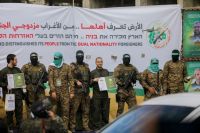
Another weekend, another grotesque spectacle in Gaza. Hamas released its latest handful of Israeli hostages as part of the fragile ceasefire agreement which is expected to expire next week. As on many Saturdays before, Hamas paraded a trio of Israelis – Omer Shem Tov, Omer Wenkert, and Eliya Cohen – onto makeshift platforms emblazoned with multilingual propaganda declarations and decorative nationalistic flags. The Hamas production feels like nothing less than a slave auction in America’s South As cheering crowds looked on, the trio were then forced onto the stage, made to smile and wave as heavily-armed militants milled about, before finally being led to freedom by the Red Cross officials

The British police are deeply hostile to free speech

Are you angry about bin collections? Potty about potholes? Incandescent about the behaviour of your local council or councillors? Well whatever you do, don’t post disparaging things about them on the internet. Unless you want a visit from the police, that is.  Yes, saying critical things about your elected local representatives is the latest thing that can get you in trouble with Britain’s speech police, if the experience of Helen Jones in Stockport is anything to go by. She was paid a visit by Greater Manchester Police last week, after she called on a local councillor to resign. The local councillor is Labour’s David Sedgwick, who has been implicated in the infamous

Kemi calls for probe into BBC Hamas film

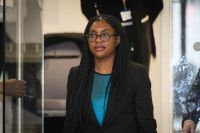
To the BBC, which has received a rather scathing letter from Tory leader Kemi Badenoch over a controversial documentary on Palestine. The Conservative party leader blasted the BBC 2 film released last week – titled ‘Gaza: How to Survive A Warzone’ – which was narrated by none other than, er, the son of a Hamas official and has questioned whether licence fee payers’ cash has been paid to the terrorist organisation. Dear oh dear… The documentary sparked outrage last week after it emerged that the father of its child narrator was a Hamas deputy minister. Initially the broadcaster pointed blame at production company Hoyo Films for not disclosing the Hamas

AI needs to be regulated

On Tuesday, the government’s consultation on AI and copyright comes to an end. There doesn’t seem to be much hope that Sir Keir and his tech-dazzled colleagues will pay much attention to it, though: long before it came to an end they made clear that their preferred plan was to change copyright law so that big tech will be able to train their models for private profit on the copyright work of artists, writers and musicians without permission or compensation. Sir Kazuo Ishiguro and Jeanette Winterson are the latest to raise their voices in opposition – joining a united chorus of the Society of Authors, which also opposes this reverse

Can Friedrich Merz fix Germany?

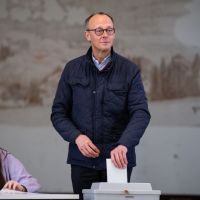
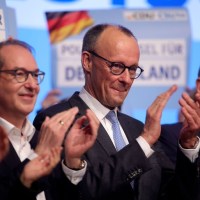
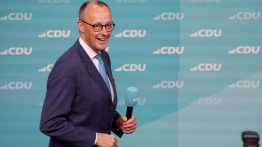
Sunday’s federal election in Germany was historic for more than one reason. After the collapse of the so-called ‘traffic light’ coalition under chancellor Olaf Scholz, it was only the fourth time a snap election had been held in post-war Germany. And just like in 1983 and 2005, a Christian Democrat will be taking over the chancellor’s office. Friedrich Merz and his alliance of the Christian Democratic Union (CDU) and Christian Social Union (CSU) emerged as the winners with 28.5 per cent of the votes on Sunday. For Merz, it seems likely that his incredibly long wait to be chancellor is over. Over 20 years ago, he lost an internal battle

Germans won’t get the right-wing government they voted for

Germany is still a divided country – at least when you look at its electoral map. After this weekend’s federal election, the east of the country is coloured in the light blue of the hard-right Alternative for Germany (AfD), while the west is dominated by the black of the centre-right Christian Democratic Union (CDU), with scattered green and red spots that show where the Greens and the Social Democratic party (SPD) have maintained their left-wing hold on the cities. One third of all voters were undecided just one week before the election. That shows how many voters felt dissatisfied with all the parties. As expected, the CDU did best in the

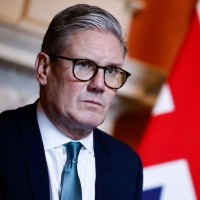
Does Trump really need Starmer’s bridge to Europe?

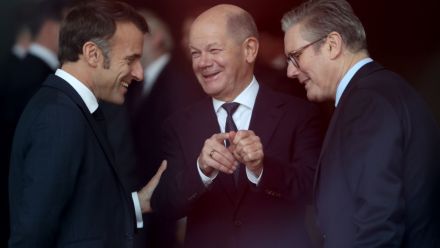
This week, British Prime Minister Keir Starmer is heading to Washington to establish himself as a ‘bridge’ between the US and the EU, and to breathe new life into the Anglo-American Special Relationship. There is much to discuss between the historic allies. Starmer has announced that a ‘security guarantee’ from America is the only way there can be ‘a lasting peace agreement … the only way to effectively deter Russia from attacking Ukraine again.’ Trump is negotiating an agreement with Putin, and leaving it to the Europeans to defend the continent while America attends to other business in the Pacific, Greenland, Panama, the Middle East and any other places Trump

We don’t need ‘postliberalism’

In 1979 the price of gas at the American pump doubled to $39.50 a barrel – $172 in today’s money. The future of industrial civilisation seemed in doubt. But to Jimmy Carter, these oil woes were a distraction from the real issue: the moral failure of the American people. ‘Much deeper’ than the energy crisis, said the President, was a ‘crisis of confidence’ in politics and society, born out of a ‘worship of self-indulgence and consumption’.  It was an example of a very old trick. The default response of a governing class to a crisis is to frame it as a general moral one – one that, conveniently, implicates everyone

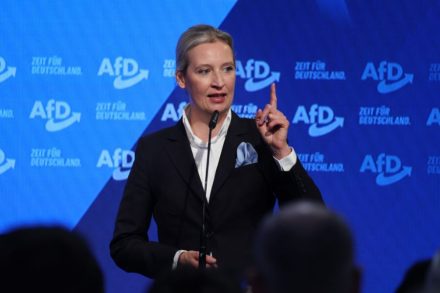
The AfD will be a thorn in Merz’s side

Alice Weidel, the leader of the Alternative for Germany (AfD) party, didn’t mince her words. Speaking immediately after the German federal election on national television in Berlin on what’s known as ‘the leaders round’, she claimed that the mainstream conservative Christian Democrats (CDU) merely won a ‘pyrrhic victory’. Its head, Friedrich Merz, had no real choice, Weidel said, but to form a coalition with her radical right party (which scored over 20 per cent of the vote). A three- party coalition, she added, would be ‘a millstone around Merz’s neck’. The AfD will enjoy the luxury of being able to criticise any new government at will Merz was having none

Is Friedrich Merz up to the task of fixing Germany?

As was widely predicted, Friedrich Merz’s Christian Democratic Union (CDU) has won Germany’s federal elections with around 28 per cent of the vote. For the first time since the formation of the Federal Republic in 1949, a far-right party – the Alternative for Germany (AfD) – has come second in a national election, winning an unprecedented fifth of the vote. The AfD surge seen tonight will dominate politics for the next four years. The party has pulled off an historic upset in the face of near-universal hostility from other parties and the media. The far right benefited hugely from a campaign largely focused on migration, its core issue. A series of terror attacks

Friedrich Merz on track to win German federal election

After two torturous months of campaigning, the wait is over. Friedrich Merz, leader of the conservative CDU party, is on track to win Germany’s federal election. According to the official exit poll, published at 5pm UK time, his party has won 28.9 per cent of the vote. This means they are set to become the largest party in Berlin’s new parliament. Hot on the heels of the CDU is the far-right Alternative für Deutschland (AfD) party, which has achieved 19.7 per cent of the vote. While it is its highest ever result in a federal election, their projected vote share suggests the far-right party will be just shy of the

Bridget Phillipson: ‘I welcome that Trump is able to bring the Russians to the table’

Trump launched a series of extraordinary attacks on President Zelensky this week, describing him as a dictator, and sidelined Ukraine in peace negotiations he began with Putin to end the war with Russia. In anticipation of a crucial meeting with Trump next week, Keir Starmer has insisted that Ukraine must be ‘at the heart of any negotiations’, and the UK has also announced new Russian sanctions. On Sky News this morning, Education Secretary Bridget Phillipson confirmed that defence spending in the UK will be raised to 2.5 per cent of GDP, although she gave no timeline on when that might be achieved. Speaking to Trevor Phillips, Phillipson said it was