Politics

Read about the latest political news, views and analysis

My friend Charlie – and the line between good and evil

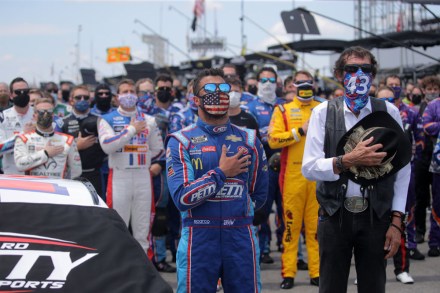
A year ago, on the afternoon of September 10, 2025, I was 20 feet away when my friend Charlie Kirk was murdered, shot dead for holding a public debate on whatever topics the students of Utah Valley University wanted to talk about. I spent the rest of the day in the waiting room of Timpanogos Hospital, first hoping for a miracle and then coming to grips with the miracle that did not come. I had little to do except reply to the dozens of messages pouring in, asking how I was holding up. Over and over, I shared how I honestly felt: I was heartbroken, but beyond that, I felt ill, sick to my stomach not just over the friend I had lost in the most horrible way imaginable, but over what it meant for the country Charlie loved so dearly. America's freedom of speech is nigh-absolute.

The desperation of the ‘Trump Dividend’

"People don’t need no jobs," said Mike Judge’s marvelous comic creation, President Dwayne Elizondo Mountain Dew Herbert Camacho. "I’m gonna tell you what people need, people need money, lots and lots of money… we gonna print so much damn money, I’m gonna give every single American one million dollars. Ain’t gonna be no more one percenters. Everybody’s gonna be million percenters." President Donald Trump hasn’t yet gone full Camacho. But he’s getting there. Last night, at the glitzy Republican midterm convention in Dallas, Texas, he introduced the "Trump Dividend" – a $5,000 reward for every adult US citizen on the condition that his party keeps the House and Senate in November.

Oil at $100 a barrel is a disaster for Trump

When Donald Trump's political obituary comes to be written, none of his colorful phrases over the years will seem quite as outrageous as his remark in June, when the Consumer Prices Index hit 4.2 percent: "I love the inflation." He later claimed that he meant he loved the inflation figures because they weren't as high as they could have been. But that isn't going to wash: he had scorned the very people who had voted for him, and for whom inflation is a very big deal, by dismissing inflation as something unimportant.  He won't be making the same mistake, presumably, now that oil prices have hit $100 a barrel once more, for the first time since July.

oil

Why were women banned from the Eiffel Tower?

The French are accustomed to rancorous debates about the threat to women’s rights posed by religious orthodoxies – especially Islam, with its restrictive tradition of hijabs, burkas and abayas to cover the female body. Only last week, France’s far-right leader Marine Le Pen, who is far ahead in the polls, declared that she will make illegal Islamic headscarves worn in public. The far left, which panders to the Muslim vote, shot back with a promise to repeal the ban on abayas in French schools. This week, few in France were expecting a scandal over religion and women’s rights that has nothing to do with Islam.

Why Britain’s West Bank sanctions are savvy politics

British PM Andy Burnham’s move to impose sanctions on West Bank settlements is politically savvy – but not because it will achieve his purported aim of advancing a two-state solution. For one thing, the impact in Israel will be minimal. Ed Miliband was clear that the new sanctions regime will target those “providing services such as construction or financing for Israeli settlements,” while trade within the Green Line will continue. Yet the principal providers of such services to the settlements are Israeli banks, major companies and the Israeli government itself. Short of Miliband sanctioning them, the policy is unlikely to achieve much. The economies of the West Bank and Green Line Israel are completely intertwined.

west bank sanctions

A Houthi-Saudi war is the last thing the Middle East needs

On my second day as Britain’s ambassador to Yemen, just after the so-called “Arab Spring” in January 2011, I visited one of the capital’s more important tribal sheikhs. This was not, by diplomatic standards, an entirely routine call. I had 23 armed bodyguards, an advance reconnaissance party, and a considerable convoy of vehicles for what was, in geographical terms, a fairly short journey through the capital, Sanaa. The precautions were justified. My predecessor but one had been attacked with an RPG by a young terrorist acting on behalf of al-Qaeda in the Arabian Peninsula. Yemen has always been a country where hospitality and danger sit surprisingly comfortably alongside one another.

What we really saw at the Portsmouth migrant boat protest

What happened in Portsmouth last night was extraordinary. Citizens waded into the bitter sea to try to prevent the arrival of foreign men who were all but ferried in by the authorities. Ordinary people stepped up as reluctant, unpaid border guards while actual border guards rolled out the red carpet for a hundred blokes from heaven knows where. Everyday Brits stood vigil over our shores while the state threw those shores open to all-comers. The last frontier of our kingdom’s hard-won sovereignty is a ragtag line of fuming Portsmouth locals How do we even define this? What do we call it? The media has reached for that small, familiar word “protest,” as if this were a mere outburst of public anger over government policy. It was so much more than that.

Even playgrounds are no longer safe in Ceuta after the migrant invasion

Ceuta, population 83,000, suffered what is being described as its worst night of vandalism last night since some 70,000 migrants poured across the Moroccan border at the end of July. Vehicles and rubbish containers were set alight in several districts, fires were started among belongings in migrant encampments and police intervened in several fights between migrants. Madrid puts the number remaining in its North African exclave at around 5,000. But current estimates in Ceuta suggest it is almost double. Night after night, Spanish television shows disturbing scenes from Ceuta Nearly 13,000 pupils are due to return to school today under an extraordinary security operation.

The lesson Cambridge should – but won’t – learn from Jason Arday

With the Jason Arday episode set to become one of the most important and symbolic stories of the year, and his death one of its foremost tragedies, it is appropriate and timely that there should be an investigation into the whole sorry affair. As Cambridge University announced on Friday, it will launch a two-part investigation into whether it could have done more to support the professor, who was found dead at an address in south London on August 14, a week after he resigned as professor of sociology of education at the university.

Trump has serious beef with American farmers

In August, Donald Trump sided with consumers by increasing the tariff-free quota on imported beef for 90 days beginning September 1. The concession will last three months. It would be a minor story with any other president in the White House. But under Trump, even dull-sounding trade news can take on a sudden importance, especially when mixed up with foreign affairs. Trump’s justification for favoring Argentina, whose 2026 quota he increased by 80,000 metric tons, is partly geopolitical: he wants to give support to Javier Milei’s free-market regime, seeing it as a foil to left-leaning governments elsewhere in Latin America.

serious beef

The oil field at the heart of Milei’s Falklands threat

If Andy Burnham, Britain’s new and surprisingly well-liked Prime Minister, were looking for another quick popularity boost, he might decide to order the deployment of a flotilla of Royal Navy vessels towards the South Atlantic today – so as to warn the Argentinians off the Falkland Islands. A good bit of gunship diplomacy is exactly what Britain needs at this point in history. Nothing would delight the public more than sticking one up the Argies again, especially after the England football team lost to a particularly unpleasant Argentinian side in the World Cup this summer. Of course, Burnham will not channel his inner Margaret Thatcher when it comes to the Falklands. Partly that’s because his entire political mission is to undo the harms of Thatcherism.

Will Pete Hegseth run for president?

19 min listen

Is Pete Hegseth positioning himself for a 2028 presidential run….or is he on the verge of being fired? The Spectator’s Sarah Beth Spraggins joins Americano to discuss the Secretary of War’s future, his loyalty to Trump, and the growing questions over his handling of the Iran war. They also explore Hegseth’s evangelical faith and Washington church, as well as his controversial personal and romantic history. Learn how to earn yield on gold, paid in gold, at Monetary-Metals.com/Americano Produced by Abigail Brierley and Henry Lloyd.

Reform UK is a party in crisis

Deputy heads have rolled. Britain’s populist Reform UK party, in the person of chairman Lee Anderson, announced this morning that Dan Jukes, Nigel Farage’s right hand man, and James Orr, the party’s head of strategy, have stood down and abandoned the party conference. “They have left the building and they won’t be coming back,” Anderson said. Footage screened by Channel 4 on Thursday night showed Jukes appearing to suggest a way to get around electoral law to secure a foreign donation of £500,000 ($675,000). A reporter posed as a UK-based son of an American father, who was to give money to the son to give to Reform after being wooed by both Orr and Jukes.

Midterms

The Democrats are both cynical and naive

At the beginning of his essay “Thank God for the Atom Bomb,” the literary critic (and World War Two Army veteran) Paul Fussell recalled a poetic advertising slogan he used to see on the sides of city buses. In life, experience is the great teacher. In Scotch, Teacher’s is the great experience. Not having tasted the potation named in the second line, I offer no opinion about the truth of the statement declaring its excellence. About the first line of the couplet, however, I must register a certain skepticism. Is experience “the great teacher” in life? An honest answer, I believe, should begin with the hoary qualification “that depends.

In America, murder has become mainstream

September has become a murderous month. This year it marks the 25th anniversary of the 9/11 attacks and the one-year anniversary of Charlie Kirk’s assassination. And as this month began, the trial of Lindsay Clancy was under way in Massachusetts, a trial notable not only for the appalling character of the crime – Clancy strangled each of her three children – but for the appalling degree of sympathy some women have expressed for the defendant. When Kirk was murdered while speaking on a college campus last year, many left-wing Americans rejoiced – and his killing is still a cause for levity at Hasan Piker rallies today. The leftist podcaster enjoys leading crowds in an off-key, mocking rendition of an AI-written song called “We Are Charlie Kirk.

Is the government deliberately disrupting the prediction markets?

Earlier this summer, I sat barefoot in Berkeley with a dozen aspiring “geopolitical traders,” learning how to make money from war. We were at a conference billed as a “festival for predictions, and markets thereof” – that is, a celebration of prediction markets. The venue, a hippie-ish compound, mostly forbade shoes indoors. Our instructor, Mike, claimed to have grown his money eightfold on Polymarket, mostly by trading on politics. Now he would share his wisdom. Prediction markets were legalized in the United States in 2020 on the premise that they would “allow us, more often than not, to predict the future.” That, at least, is what Kalshi’s marketing copy claims.

Inside Jared Kushner’s Albanian adventure

For much of its history, Albania remained as shadowy and remote as the fictional Syldavia of the Tintin comics. Letters to Albania were sometimes returned from Albany, New York, with the postal direction “Try Europe.” The country came into existence only after 1912, with the collapse of the Ottoman Empire. Its first ruler, King Zog, was hounded out by Mussolini when he invaded in 1939. Five years later, the Italians and their Nazi German allies were expelled in turn by the Albanian nationalist leader Enver Hoxha. A Muslim-born communist, Hoxha turned his Balkan fiefdom into a self-immolated model of Stalinist planning, where party purges, summary arrests and show trials were routine. In the early 1990s, Albania hurtled toward capitalism.

Laura Loomer shouldn’t dictate US deportation policy

Eleven years ago, on a cold midnight in Los Angeles, I lay on a chaise lounge at the pool of the (now abandoned) Standard Hotel, made famous in Sex and the City. I was gossiping with the Carrie, Samantha, Miranda and Charlotte of the nascent online right: Breitbart editor and podcaster prototype Milo Yiannopoulos; his then assistant, the future think tank wonk Allum Bokhari; VICE’s politics editor Grace Wyler; an anti-abortion activist who was, for some reason, wearing a gay sex harness as a blazer, and a blonde Canadian named Lauren Southern, who wore a beanie that said “libertarian” and would go on to announce she had “left the right” every two years whenever she needed a check.

laura loomer
putin russia

Is Europe brave enough to keep pointing the finger at Putin?

Just under a month after three drones were discovered in quick succession at Leipzig airport, the German government took the unexpected step of publicly naming the country behind the incidents. Standing alongside foreign minister Johann Wadephul on Tuesday afternoon, the German minister of the interior, Alexander Dobrindt, announced: “The German government has concluded that Russia is responsible for the hybrid attack in Leipzig on 4 August.” According to Dobrindt, the German government was able to conclusively determine Russia’s involvement thanks both to a police investigation and findings made by the intelligence services.