Politics

Read about the latest political news, views and analysis

Jeremy Corbyn is getting more serious about Brexit and Theresa May ought to worry

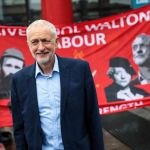
The most important statement by Jeremy Corbyn in today’s Sunday Mirror interview is not that Labour’s leader will embrace a so-called People’s Vote if that were what Labour’s conference backs this week. It is that Labour is “not happy” with the PM’s Chequers Brexit plan “and we would vote against it”. This is Labour's strongest and least ambiguous attack on Chequers. And – as if that were needed – it underwrites the view of many Tory MPs and ministers that the PM’s attempt to sell Chequers to Brussels is even more fatuous than dead-horse flogging, given that some 50 odd True Brexit Conservative backbenchers are adamant that they would vote against it.

Jeremy Corbyn discovers the art of spin on a second referendum

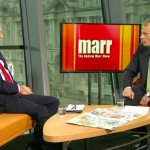
It's the first day of Labour conference and Jeremy Corbyn has kicked proceedings off with an appearance on the Andrew Marr show. The Labour leader was grilled on a range of topics from anti-Semitism and 'English irony' to his party's Brexit position. Corbyn put in a relaxed performance, insisting that he loved 'every minute' of being Labour leader. However, his sharp intake of breath when he was asked about tricky topics suggest that it isn't all plain-sailing. While his defence of his response to a variety of anti-Semitic incidents was typically evasive (he admitted he was 'perhaps too hasty' in his defence of an anti-Semitic mural), it's Corbyn's Brexit comments that will have the most impact on the upcoming conference.

Dawn Butler’s Militant conference message

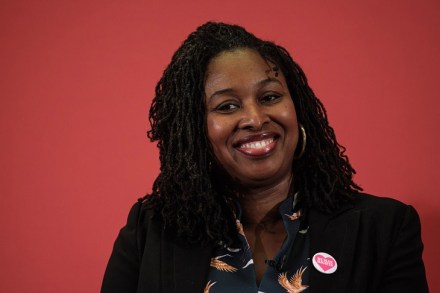
When the Labour manifesto was leaked ahead of the 2017 general election, critics said that a win for Jeremy Corbyn would drag the country back into the 1970s. Today, shadow equalities minister Dawn Butler proved them wrong - and showed that Labour would actually like to drag us back to the 80s instead. At Labour’s women’s conference in Liverpool, the Corbynite MP took the extraordinary step of praising the Militant-run Liverpool council of the 1980s, which protested new Conservative local spending caps by setting an illegal budget. The decision to break the law caused such chaos in the city that auditors had to be called in, Labour's reputation for fiscal responsibility lay in tatters, and the council had to deliver redundancy notices to its own workers by taxi.

Brexit, what happens now?

It is the morning after the statement before. So, what happens now? That’s the question I attempt to answer in my Sun column this morning. Theresa May is trying to shock the EU into engaging with her Chequers plan by saying she really is serious about no deal. Her statement yesterday was meant to be a very public burning of her boats; a message that she won’t sign up to either of the options they’re trying to push her towards. But if we don’t get any sign from the EU in the next fortnight that they are prepared to be flexible, May will come under huge pressure from her Cabinet colleagues to change tack.

The EU’s migration delusion

Just as Theresa May's Chequers plan for Brexit was being savaged in Salzburg, EU leaders also found time to engage in their usual response when it comes to the question of migration: a lot of talk, glad-handing, and pats on the back, but very little concrete action. The summit was a two-day affair that encapsulates all of the negative connotations of the EU as an institution: slow, cumbersome, ineffective, and increasingly detached from reality. Hours were devoted to the migration issue, that perennial crisis that has hovered over Brussels over the last five years.

Emily Thornberry risks reigniting Labour’s anti-Semitism row

Is Jeremy Corbyn the victim in Labour’s anti-Semitism scandal? Emily Thornberry seems to think so. The shadow foreign secretary said that the Labour leader was ‘distressed’ by the claims against him and that he found the row ‘very difficult’ to deal with because it went ‘so against his idea of who he is’. In an interview with the Evening Standard, the Corbynite MP said that while the Dear Leader was usually ‘very Zen’ about criticism, ‘calling him an anti-Semite, calling him a racist, that just went straight to the absolute core of him. It really distressed him’. Poor old Jeremy.

Will Theresa May’s big Brexit gamble pay off?

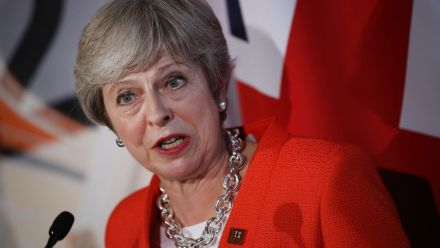
Theresa May has attempted to put the ball back in the EU’s court this afternoon. After the rejection of her Chequers plan at the Salzburg summit, May has told British voters and the EU that she regards no deal as preferable to either the UK being in the EEA and the Customs Union or a customs border between Northern Ireland and Great Britain. She said that if the EU wants to reject Chequers, it is incumbent on them to come back with an alternative proposal. The question is whether the EU takes this no deal threat seriously.

Full text: Theresa May’s Downing Street statement on Brexit

Yesterday, I was in Salzburg for talks with European leaders. I have always said that these negotiations would be tough - and they were always bound to be toughest in the final straight. While both sides want a deal, we have to face up to the fact that - despite the progress we have made - there are two big issues where we remain a long way apart. The first is our economic relationship after we have left. Here, the EU is still only offering us two options. The first option would involve the UK staying in the European Economic Area and a customs union with the EU. In plain English, this would mean we’d still have to abide by all the EU rules, uncontrolled immigration from the EU would continue and we couldn’t do the trade deals we want with other countries.

Corbyn’s our fault

As Labour gathers for its conference in Liverpool this weekend, the Conservatives will be watching with trepidation, rather than the schadenfreude with which they initially treated the rise of the hard left. Underestimating the appeal of Jeremy Corbyn was one of the biggest mistakes the Tories have made in the past two years, and the party has had plenty of time to ask why Labour ended up doing so well. James Cleverly, the party’s deputy chairman, believes that he has the answer. ‘A big, big chunk of that was our fault,’ he says when we meet at Conservative Campaign Headquarters. ‘The Prime Minister, as we know from all the time she’s been in parliament, is a grafter. She is focused on detail.

Donald Tusk tells Theresa May to chuck Chequers

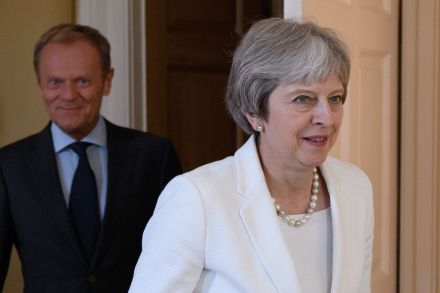
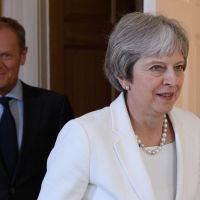
The government weren’t expecting a dramatic breakthrough in the Brexit talks at Salzburg. But they were hoping for some more positive mood music, for some language that would help Theresa May get through party conference. But Donald Tusk has just issued a broadside against Chequers: ‘The suggested framework for economic co-operation will not work, not least because it is undermining the single market.’ Tusk’s brutal language makes it that much harder for Theresa May to maintain that the EU is engaging with Chequers and her plans for a European Traded Goods Area and a Facilitated Customs Arrangement.

The benefits of a blind Brexit

Brexit won’t be over by 29 March 2019. Britain will legally leave the European Union on that date. But that won’t tell us what Britain’s future relationship with the bloc will be, or how closely aligned the UK will be to the EU. Those are questions for which we will have to wait for the answers. What MPs will vote on before next March is not a ‘Brexit deal’ but a withdrawal agreement. Theresa May won’t come to the Commons and table her Chequers plan for approval, which is just as well given that she doesn’t currently have the votes to pass it.

Jaguar’s boss isn’t scaremongering: the UK car industry is in big trouble

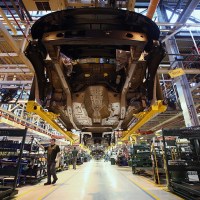
‘I’m afraid I think he’s making it up,’ was the retort of Tory MP Sir Bernard Jenkin on Monday’s Today programme to the claim by Ralf Speth, boss of Jaguar Land Rover, that a bad Brexit deal could put tens of thousands of jobs at risk in JLR and its suppliers, and cost his company £1.2 billion a year. In the same speech last week, Speth pointed out that the lack of any sort of Brexit clarity means he has no idea whether his UK factories will be able to operate on 30 March next year — or whether even the ‘tiny’ border delays Jenkin concedes are likely will cripple the just-in-time systems on which the likes of JLR and the BMW Mini factory at Cowley depend.

The hard centre

The Conservative party has to move beyond Brexit and leaders: what is it going to be about? I suggest it has to be about healing capitalism. Capitalism is the only system that is capable of delivering mass prosperity, but it cannot be left on autopilot. Once every few decades it veers off track and requires active public policy. In the mid-19th century, the old Tory party was revolutionised by Disraeli’s ‘one nation’ agenda, correcting the social catastrophes of early industrialisation. In the 1930s, there was no Disraeli: indeed, no political party rose to the challenge of mass unemployment, which was addressed as an inadvertent by-product of rearmament.

Causes without a rebel

One of the better plays at the National Theatre in recent weeks has been about a 21st-century banker, Judy, who quits her job to become a 1950s-style housewife. In Laura Wade’s Home, I’m Darling, Judy ditches her corporate wardrobe for a kitchen pinny and feather duster. She could have stepped from the Good Housekeeping domestic guide my mother was given after her wedding in 1954. Judy scorns modern technology and she dislikes coarse language. She is, at initial view, a faux-nostalgic figure, to be mocked. Yet the word used for her stance is ‘rebellion’ and by the end of the play she may, to a small extent, have made us re-examine today’s assumptions about work and happiness. Judy, though slightly mad, is fresh.

Donald Tusk’s Brexit warning spells trouble for Theresa May

What to make of Donald Tusk, the President of the European Council’s latest tweet? Ahead of tonight’s dinner in Salzburg, he says: ‘Today there is perhaps more hope but there is surely less and less time. On the Irish question and the framework for economic cooperation the UK’s proposal needs to be reworked’ The first sentence is classic Tusk; he has a fondness for statements that are meant to sound profound. His comments on the Irish border are also to be expected. The UK and the EU are still 48 kilometres apart on this question and playing a dangerous game of chicken. Theresa May will use tonight’s dinner to try and persuade the 27 EU heads of government to back away from trying to impose a customs border in the Irish sea.

Will EU leaders chuck Chequers in Salzburg?

This week's EU summit in Salzburg should settle three important Brexit questions of profound important to this country's future and that of the PM too. Most importantly, the leaders of the EU 27 are being asked by their Brexit negotiator Michel Barnier and the EU president Donald Tusk how specific and prescriptive they want the Political Declaration on Britain's prospective relationship with the EU to be. In a way it is astonishing, with just six months to go before we're out, that Barnier and Tusk do not know something so fundamental about their wishes.

The unwelcome distraction waiting for the PM in Salzburg

Theresa May heads to Salzburg tomorrow to try and persuade the leaders of the EU27 of the merits of her Brexit plan. But there’ll be an unwelcome distraction for her in the morning. I understand that the European Commission will issue a reasoned opinion in the Olaf case, where the Commission accuses the UK of failing to prevent customs fraud on shoes and textiles imported from China and is demanding over two billion euros in lost revenue. The UK continues to contest this case, and I understand it has asked the Commission for more information on various points. But the timing of this reasoned opinion has raised eyebrows in government circles. It seems more than a coincidence that it is appearing on the day that May sits down with the leaders of the EU 27.