Politics

Read about the latest political news, views and analysis

The Lib Dems’ European candidate confusion

In a press release this morning, the Liberal Democrats announced the candidates who will be representing them in the forthcoming European elections on the 23 May. A second referendum to 'stop Brexit' has been their flagship policy since the country voted to leave the EU, and so a good result in these European elections is of obvious importance to the party, if it wants to go any way towards achieving that goal. However, it appears that the party's organisation still leaves something to be desired. In Wales, where each party is only allowed four candidates, it seems that the Lib Dems have put forward five – a mistake which they have confirmed was a clerical error.

Will a Queen’s speech spell the end of May’s government?

What is the maximum point of danger for the government in the coming months? After Theresa May secured a six month Article 50 extension, many MPs along with the Tory grassroots are irate and calling for her to go. However, it's still not clear how they could force the Prime Minister out before December (when she can once again face a confidence vote by her MPs). Meanwhile, the Brexit deadlock means that the majority of crunch votes result in no decision. Even if May moves to back a permanent customs union it's not clear it will pass the Commons. The answer then could lie in the Queen's speech – and whether or not the government tries to present one.

Who is the busiest Tory leadership candidate of them all?

Tory MPs agree that Theresa May's days in Downing Street are numbered, but when it comes to picking her replacement things aren't quite as clear. Ever since May’s third bungled bid to get her withdrawal agreement through Parliament at the end of last month, the Tory leadership race has heated up. Boris Johnson remains the bookies' favourite, closely followed by Sajid Javid. But it can be a dangerous thing being a frontrunner in a leadership contest. So could an outsider like Dominic Raab – who alluded to his status as a dark horse in a recent tweet – end up triumphing? Another danger for any candidate is not being ready when the starting gun goes off. So who is determined not to get caught snoozing?

Good Friday disagreement

The relationship between the UK and the Republic of Ireland has ‘reached a hunger-strike low’, says a new study by an academic from Trinity College, Dublin. ‘Relations have not been as tense since the early 1980s and political rhetoric that had vanished by the 1990s has re-emerged,’ the paper grimly concludes. The fragility of relations between Britain and Ireland is hard-wired into me. Having grown up ‘London-Irish’ in the 1970s and 1980s, all I ever wanted was for the two countries that define my ethnicity to get on.

Are you culture compliant?

Here’s a quick quiz to jolly up your Easter. 1. Lucy Noble, artistic director of the Royal Albert Hall, thinks ‘white male titans’ such as Mozart, Beethoven and Bach are putting the young off classical music. Is she: a) Quite right! My kids would be gagging to go to the Royal Albert Hall if only its programmes included more black female/transgender composers they’d never heard of. b) Strangling yet another great institution. Audiences are drawn by artistic excellence, not diversity box-ticking. Cambridgeshire Fire and Rescue Service says: ‘There is a historical need to diversify our workforce. The number of women operational staff has been under 5 per cent and black and ethnic minority people are under-represented in all parts of the service.

Why conservatives can’t survive in government

I had mixed feelings about the sacking of Roger Scruton from the government’s Building Better, Building Beautiful Commission, following comments he made to the New Statesman. On the one hand it was utterly shameful and gutless on the part of the government, although no worse than one has come to expect from members of a party that is conservative in name only. On the other hand, I have never been a huge admirer of Roger’s aesthetic sensibilities, no matter how eloquently they are expressed. He seems to have no time for anything which has happened since about 1738. I can’t be exactly sure what he had in mind for our towns and cities, but I suspect it would either be motte and baileys plus stockades, or at best a kind of fey neo-Regency cringing.

The true cross

The bravest thing I’ve ever seen was 93-year-old Albert’s decision to die and the days after in which he stuck to his resolve and sank away from consciousness, like a swimmer turning tail and just diving down into the dark. Albert was not religious, but I’m writing this now because though I’ve been Catholic for a decade, it was only after his final week, in the spring of last year, that I began to understand Easter and the Passion of Christ. I first met Albert when fate decided to call my bluff. For years I’d bored on to my husband about the need for a scheme to put locals in touch with their elderly neighbours. Then one night out in a north London restaurant, there was a card on the table advertising just that: the Befriending Network.

What did Japan make of Jeremy Hunt’s Brexit mission? 

Attempting to explain Brexit in 90 seconds might remind you of a Monty Python sketch, but this is what Jeremy Hunt attempted in front of a class of Japanese high school students on Monday. The foreign secretary gave a carefully worded summary of the Brexit situation using the graded language of the English language teacher he used to be. It’s not clear whether the students were any the wiser after he spoke, but the real aim of the lesson was achieved: to generate positive headlines for the Foreign Secretary on his latest visit to Japan. Hunt has some advantages. He lived in Japan in his early 20s, mastered the language and developed an enduring affection for the country, even once making the Freudian slip of referring to his wife as Japanese (she’s Chinese).

Watch: Richard Burgon caught out saying ‘Zionism is the enemy of peace’

In 2016, Labour's shadow justice secretary and Corbyn ally Richard Burgon was asked a rather simple question by Andrew Neil when he appeared on the Daily Politics. The show took place shortly after allegations were made in the Daily Mail that the MP has said 'Zionism is the enemy of peace'. As you would expect, in the midst of Labour's ongoing issues with the Jewish community, Burgon was therefore given the opportunity to correct the record by Neil, and asked if the reported remarks were correct. In response, Burgon shrugged off the accusations, replying at least three times when pressed that he 'didn't say that', 'didn't make those comments' and 'would not have said that.

India should not ask Britain to apologise for the Amritsar massacre

On the afternoon of 13 April 1919, troops commanded by brigadier-general Reginald Dyer opened fire on thousands of unarmed Indian protesters massed at an enclosed garden in Amritsar in Punjab known as Jallianwala Bagh. When the shooting stopped – and it stopped only because Dyer ran out of ammunition – some 500 people, mostly Sikhs, lay dead. Dyer lost his job but kept his life, liberty, and reputation. Bigots in Britain, energetically vilifying those who denounced him, raised thousands of pounds to lubricate his transition from the subcontinent to the English countryside. Edwin Montagu, secretary of state for India, was traduced in the press and in the corridors of the Commons as a disloyal ‘Jew’ for demanding tougher sanctions against Dyer.

Can Britain really leave the EU before the European elections?

Last Thursday the Prime Minister told MPs that 'if we were able to pass a deal by 22 May, we would not have to take part in European elections and, when the EU has also ratified, we would be able to leave at 11pm on 31 May.' Her point – since picked up by ministers – was to ram home to Leave supporting MPs that 'the date of our departure from the EU, and our participation in the European parliamentary elections' was down to them. But is it realistic to think this timetable can be met? Can the government deliver? In my view, this would require a level of legislative aggression from government, and a certainty of numbers, not seen in this parliament.

How Britain can make life difficult for the EU during the Brexit extension | 15 April 2019

It is not good form for the British to be awkward and obstructive. The art of the compromise was the polite British way of doing things. Or so it used to be thought. But Europe’s axis has tilted since Theresa May’s inability to secure an exit from the EU. Jacob Rees-Mogg’s recent tweet calling for Britain to be 'difficult' and paralyse the workings of the EU from inside sums up this toppling of conventional etiquette. Now that the extension has been granted until 31 October with few constraints on British membership, should Britain form an awkward squad in Brussels to block Europe’s institutions? And if so, where do we look for inspiration and lessons in how to be difficult?

Dominic Raab takes inspiration from Game of Thrones

As Tory leadership rivals get their campaigns up and running – and start to work out how to torpedo their rivals – Game of Thrones returns to our screens. Now in its final series, the back-stabbing/front-stabbing fantasy drama sees various characters fight and plot their way to the Iron Throne. So, Mr S was curious to see Dominic Raab entering the debate on which character will emerge triumphant in the new series. The former Brexit secretary says he is backing Arya Stark who a mere 10pc of those surveyed want to see sit on the throne. 'I'm not alone in backing Arya. It's never the favourite.' https://twitter.com/DominicRaab/status/1117671602865496066 With Raab currently 8/1 to be next Tory leader behind Boris Johnson and Michael Gove, what ever could he be getting at?

Sunday shows round-up: ERG attacks, Windrush and Labour anti-Semitism

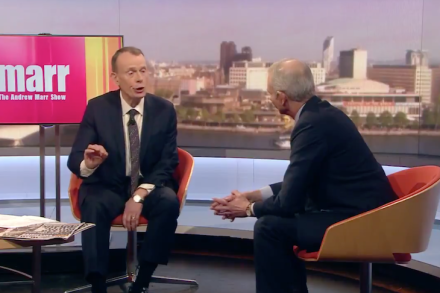
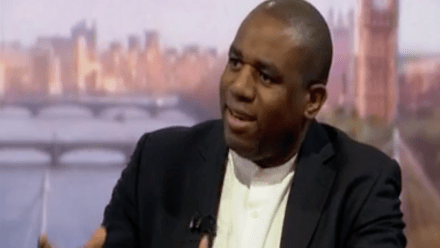
David Lammy - ERG far-right comparisons 'not strong enough' Andrew Marr interviewed David Lammy, the MP for Tottenham who has been at the forefront of calls for a second Brexit referendum. Lammy doubled down on comments he has made about not 'appeasing' the pro-Brexit European Research Group. Marr challenged him on the remarks made to the crowd at the Put It to the People March last month: AM: By implication you're comparing the ERG to the Nazi party... That was an unacceptable comparison wasn't it? DL: I would say that that wasn't strong enough... We must not appease...  I'm not backing off on this...  and the BBC should not allow this extreme hard right fascism to flourish. AM: These are elected Conservative MPs. DL: I don't care how elected they were.

Spectator competition winners: Winnie-the-Pooh grows up

The latest challenge was to submit an extract from a novel that chronicles the adult life of a well-known fictional hero from children’s stories. I enjoyed Jess McAree’s account of Paddington Bear’s Conrad-esque voyage — ‘evicted by Brexit, residence visa revoked’ — to the heart of darkness in deepest Peru. Hugh King, D.A. Prince and A.R. Duncan-Jones also shone with their portrayals of the later lives of the stars of the Just William and Noddy stories. In Harry Potter and the Cursed Child, the play based on J.K. Rowling’s books, the boy wizard has grown up and become a father of three who works for the Ministry of Magic. David Shields, one of those who made the final cut this week, imagined him taking an altogether different path.

The unintended consequences of the new EU car speed limit

A once famous question posed to job-seekers at Microsoft was ‘Why are manhole covers round?’ The question was revealing not because there was a single right answer, but precisely because there wasn’t. It helped elicit whether the applicant was someone happy to supply one plausible answer or someone who looked beyond the obvious. At a simple level, manhole covers are round because manholes are round. But there are other reasons. A circular manhole cover cannot fall down the hole beneath; a square manhole, if aligned diagonally, could. Round manhole covers can also be moved easily by rolling and replaced in any orientation. They are probably stronger than square ones. And so on. Equally good is the question asked of economics students by Professor Robert Frank at Cornell.

Being ‘down with the kids’ has turned the Tories into a laughing stock

The news that 83 per cent of Conservative voters are over 45, compared to 53 per cent of Labour voters, is depressing. That was a finding of a poll carried out by Hanbury Strategy for Onward, a right-of-centre think tank that’s just produced a report called ‘Generation Why?’. More alarmingly, Hanbury discovered that the ‘tipping point age’ — the median age at which a person is more likely to vote Conservative than Labour — is 51. That’s up from 47 at the 2017 general election and 34 just beforehand. ‘Yikes!’ as Lynton Crosby might say.