Politics

Read about the latest political news, views and analysis

How Labour could solve its Brexit conundrum

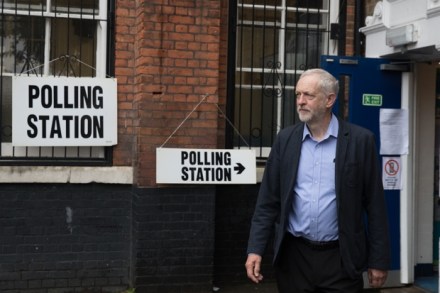
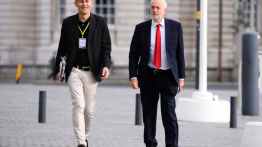
Sources close to the Labour leader believe the emergency NEC meeting on Tuesday, which determines the Labour manifesto for the EU elections, will agree a formula that is "a restatement" of the party's equivocal and prolix party conference resolution of last September. But a senior trade union source tells me that if Unison, GMB and Usdaw are bulldozed on Tuesday, if their demand for Labour to commit to a "confirmatory" referendum on any Brexit deal is simply ignored, Corbyn and his colleagues are "being delusional about the likely consequences". The well-placed trade unionist added: "They have no idea what's going to hit them and the scale of the backlash they will face" – which captures for you how emotions are running very high.

How long can the government put off a Queen’s speech for?

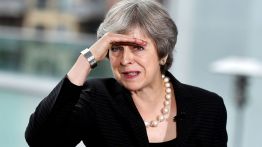
How does Theresa May plan to spend the six-month Brexit extension? Nearly one month in and there is little sign of a Brexit breakthrough. The Labour/Tory talks are ongoing yet those inside the room are pessimistic they will lead to an imminent solution. It now seems as though there won't be much in the way of domestic legislation either. In a lobby briefing, a Downing Street spokesman has suggested that the next Queen’s speech is to be postponed: 'What we are focused on is the withdrawal agreement bill [WAB], because that is the legislation which is necessary in order to ratify our withdrawal from the EU. That is part of the current Queen’s speech cycle and we need to finish that work.

Good news for government leakers

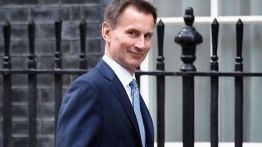
The hunt is on within government to discover which individual leaked details of a meeting of the National Security Council on allowing Huawei to help build Britain's new 5G network to the press. With an inquiry under way, Foreign Secretary Jeremy Hunt today announced that he would be happy to hand over his phone as part of the investigation. Still, should any government ministers or aides currently find themselves less enthusiastic about aiding the inquiry (and sweating it out that the net is closing in), perhaps they can find some relief in a column former No 10 aide Kate Perrior has penned for the Times. Perrior says that during her time working for the Prime Minister, she had to take part in three leak inquiries.

The deserved winners and big losers of Spain’s general election

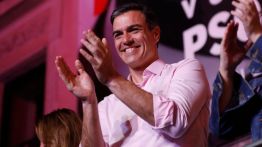
Spain’s general election yesterday – the third in four years – revealed a deserved winner and a big loser, as well as signalling the start of a lengthy coalition-forming process. The country’s five main political parties performed more or less exactly as the polls had suggested they would. Pedro Sánchez’s centre-left Socialist party (the PSOE) is still the largest group in congress and secured 28.7 per cent of the vote (although it’s still short of a majority). Trailing in a distant second place was the conservative Popular Party (PP), with 16.7 per cent – its worst ever result. Third place went to the centre-right Ciudadanos (15.9 per cent), fourth to leftist Podemos (14.3 per cent) and fifth to far-right newcomer Vox (10.3 per cent).

Sunday shows round-up: Tory chairman ‘hopes’ his party’s councillors will vote Conservative

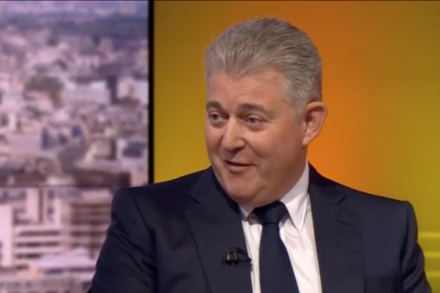
Brandon Lewis: I hope our councillors will vote Conservative After fighting off some technical glitches this morning, the new series of the Marr Show featured an interview with the Conservative party chairman Brandon Lewis. With local elections, and potentially, European elections approaching next month, Mishal Husain (filling in for Marr) asked Lewis about the party’s dire standing in the opinion polls. Of particular concern was a poll of Conservative councillors showing that 40 per cent were planning to vote for Nigel Farage’s new Brexit party if the European elections went ahead: MH: When nearly 800 of your councillors were questioned for a survey, 40 per cent of them said they would be voting for the Brexit party... BL: ...

Jeremy Corbyn won’t be forced to campaign for a second referendum

A concerted attempt by Labour MPs and MEPs to engineer that their party would campaign unambiguously for a ‘confirmatory’ Brexit referendum in the EU elections looks set to flop. Instead Jeremy Corbyn’s preferred position of characterising a new public vote only as an option is likely to prevail, because he seems to have retained the backing of most of the leaders of the big trade unions. The decision on how strongly to push for a referendum, and how Labour’s position on it should be worded in its manifesto, will be taken at a crunch emergency meeting of the party’s ruling NEC on Tuesday.

The Tories are stuck in the middle with May. Here’s what they should do next

The Tories have a debate on their hands about what direction they should go in. Do they return to the politics of the Cameron coalition? This delivered majority government, won over a greater percentage of AB (better off) voters, won more university towns, more professionals but fewer rural areas. Or should the Tories double down and become the Brexit party, moving towards what Nick Timothy says is the “National” party, with a rural, less affluent base led by someone like Boris Johnson? The choice is far from straightforward and there are five big considerations for the party to take into account on this issue before deciding which path to take: Demographic parameters: which demographic groups will get larger or smaller over time?

Derailing Brexit isn’t Leo Varadkar’s only aim

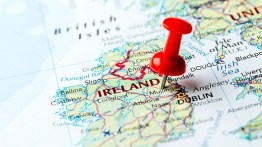
I agree with much of Liam Halligan’s analysis of the Irish government’s approach to Brexit (‘Good Friday disagreement’, 20 April). However, I think he omits an important point. Leo Varadkar is not merely attempting to derail Brexit; he is also hoping to achieve a united Ireland. For decades politicians, officials and journalists in the south have privately peddled the line to gullible counterparts in Britain that the Dublin establishment has been ambiguous about whether it really wanted the North with all of its myriad problems, but this is and always has been a lie. The Good Friday Agreement was clearly perceived behind closed doors in Dublin as a key transition stage to eventual reunification.

Theresa May will have to give the ’22 an answer

Next week, Theresa May will sit down with Graham Brady, the chairman of the 1922 Committee. He will ask her for more clarity on her departure plans. As I say in The Sun this morning, the answer that Mrs May gives will go a long way to determining her future. On Wednesday, the executive of the 1922 Committee rejected a change to its rules which would allow another vote of confidence in Mrs May’s leadership. But this decision was taken narrowly, 9 to 7 with 2 abstentions, and the executive did decide to ask the Prime Minister for more detail on when she will go. If Mrs May simply carries on saying that she’ll leave if the withdrawal agreement passes, that will not be enough.

Donald Trump couldn’t care less about Jeremy Corbyn’s snub

One doubts very much that Donald Trump knows who Jeremy Corbyn is. So the Labour Party leader’s decision to ‘snub’ the US President on his state visit to the UK in June won't rupture the special relationship. However, it is quite rude. 'Theresa May should not be rolling out the red carpet for a state visit to honour a President who rips up international treaties, backs climate change denial, and uses racist and misogynistic rhetoric,’ said Corbyn, as he confirmed that he would not attend the state banquet for the Commander-in-Chief of Britain’s greatest ally.   Corbyn’s stand is hardly a shock. He has promised before that, as Prime Minister, he would not invite Trump to Britain’s shores.

How bad will the local elections be for the Tories?

Next week, the Tories will face their first big electoral test since failing to deliver Brexit on time. On Thursday, the local elections take place – with 9,000 seats up for grabs. While the focus in recent weeks has been on the European elections next month – which will see Nigel Farage's Brexit party and the pro-EU Change UK field candidates – these votes ought to give a hint of how deep the hole the Tories find themselves in really is. With Labour consistently leading in recent polls, the Tories are predicted to lose seats next week. However, owing to the timing of the election, there wasn't time for the Brexit Party to field candidates.

Britain’s Huawei gamble is sure to anger Donald Trump

Just hours after Donald Trump's long-delayed state visit to Britain was finally confirmed, reports surfaced that Theresa May and her National Security Council have decided to let Chinese telecommunications company Huawei participate in building Britain’s 5G network. The decision is a direct slap in the face to Washington’s attempts to isolate Huawei, which itself is part of a larger campaign to aggressively counter Beijing’s pervasive and endemic cyberespionage. For a Britain weakened by the ongoing Brexit fiasco, May’s desire to allow Huawei to work on the 5G network risks not merely ruining Trump’s visit, but more importantly further straining ties with Washington. The struggle over Huawei and the West’s 5G future goes beyond Britain.

Back door to Britain

I was working in Johannesburg when I first got wind of the fact that Ireland has become an illegal back door to the UK. If you’re from a country such as South Africa, Swaziland, Lesotho, Fiji or Guyana, you need, not just a passport, but a prearranged visa, obtained from the local embassy for a fee, before you can even board a plane to Britain. It takes time, your details are checked, and you need to show a reason why you’ll go home at the end of your stay. In the 1980s most African nationals could come to Britain visa-free. But worries about terrorism and crimes committed once in the UK meant that, one by one, African countries had to join the visa scheme.

How long can Corbyn resist Labour’s drift towards a second referendum?

The International Commission of Labour’s National Policy Forum – which consists of MPs, trade unionists, MEPs, and constituency representatives – has voted unanimously that Labour’s manifesto for European elections should pledge to hold a confirmatory referendum on any Brexit deal. My sources say there were no dissenting voices. On Wednesday, all Labour MEPs voted in precisely the same unanimous way, for a referendum. Friday's Labour’s Trade Union Liaison Organisation is likely to inform the party’s ruling NEC that its big union supporters – including Unison, the GMB and USDAW, but obviously not Unite – also want a referendum.

Jeremy Hunt’s children gaffe

Although Jeremy Hunt is often depicted as a more statesman-like figure than his predecessor at the Foreign Office, the Foreign Secretary has had his fair share of gaffes. Not long into the brief, Hunt made headlines when he mistakenly identified his wife as Japanese when she is in fact Chinese. At Thursday's Press Gallery lunch, Hunt attempted to make light of the situation – insisting that his wife has since forgiven him for the slip. But will she forgive him for his latest error?

‘I’m not stupid’

Rory Stewart has just been appointed international development secretary. Last week, he explained to Katy Balls why he would make a good Prime Minister: Almost nobody in Westminster admits to wanting to be prime minister. Rory Stewart is a cheerful exception. Most leadership hopefuls prefer to plot in dark corners and woo supporters in candlelit bars. The Prisons Minister is happy to sit in the sun in Hyde Park and talk openly about his ambition. It’s a tricky time for this country, he says. ‘In a normal situation I probably wouldn’t want to run.’ One of his friends thinks he’s mad: what’s the matter with just being MP for Penrith and the Borders? Why seek No. 10 now? Isn’t it a completely thankless task?

Ripe for reform

Any hopes that the parliamentary recess would help resolve the great Brexit impasse have been dashed. MPs have returned from their break more entrenched in their positions. The essential facts remain. Theresa May doesn’t have enough votes to pass the withdrawal agreement. Equally, no Brexit option from a second referendum to a customs union has demonstrated that it can command the support of the Commons either. Tory MPs lack confidence in May’s leadership but can’t agree on who should succeed her, which keeps May in place. The consequence of all this: the drift continues. On the Tory side, the debate is fast coming down to what are MPs more scared of: May staying as Prime Minister until December or Boris Johnson taking her place? Most Tory MPs would reject both.

Do we need a Brexit inquiry?

How will future generations revisit the Brexit years? Through what glass will we be seen? This spring and, I suspect, for many seasons to come, we’re in too deep for any attempt to stand back and assess. There has been much talk (particularly by some of my fellow Remainers) of a review along the lines of the Chilcot inquiry after the Iraq war; but even with the benefit of time, Brexit will not lay itself open to easy analysis. Almost by their nature, inquiries start from the assumption that something went terribly and avoidably wrong, and culprits in the form of guilty individuals or badly mistaken assumptions are sought.

Backing Mrs Thatcher

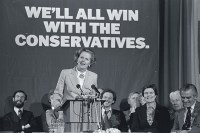
From ‘Be brave’, 28 April 1979: We can think of a number of reasons why voters might feel reluctant to vote for Mrs Thatcher. But this reluctance should be set aside. We must be brave. Only time can tell whether the Tories possess the necessary qualities of resolution and ability which are needed to deal with the nation’s problems. What we do know is that Labour entirely lacks them… The problems are familiar: a State which spends an ever-increasing proportion of ever diminishing national wealth; the atrophy of those traditions and mores which have supported British social life, resulting in growing lawlessness; a deplorable industrial record which may reasonably be blamed on a trade union movement that positively exults in maintaining low productivity.