Politics

Read about the latest political news, views and analysis

The danger of Britain’s slow journey out of lockdown

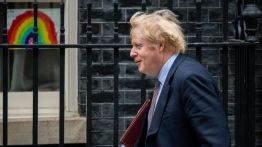
The most striking thing about the lockdown easing that Boris Johnson just announced is how limited it is. Single parents and those who live alone will be able to form a support bubble with one other household; churches and other places of worship will re-open for individual prayer, and zoos will be able to admit people to their outdoor facilities. Listening to Boris Johnson, on the day that Professor Ferguson claimed an earlier lockdown would have halved the death toll, it’s clear that the UK is going to come out of lockdown very slowly. Johnson talked about how the government has ‘to proceed with caution’ and warned that ‘this epidemic has a long way to go.’ The Chief Medical Officer and the Chief Scientific Adviser were even more adamant on these points.

Sir Keir Starmer’s split personality at PMQs

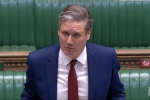
It’s official. The Labour party now has two leaders. Both are knights. But it’s hard to say which is the real Sir Keir Starmer. Not even Sir Keir Starmer seems to know. Good Sir Keir is the kindly, decent comrade who wants to aid his fellow man at a time of crisis. Wicked Sir Keir is the dastardly villain who plots to unhorse his foe with a poisoned lance or a hidden dagger. At PMQs he began as Good Sir Keir. He thanked Boris for extending the furlough and for voicing his opposition to racial prejudice. Then he got all dastardly. He read out a fistful of statistics proving that Britain has suffered the world’s worst corona-shambles. Our excess death toll, at 63,000, is shockingly high. Then this: ‘Last week he said he was proud of his record.

PMQs: Johnson and Starmer clash on schools

13 min listen

Prime Minister's Questions is becoming an increasingly heated affair. This week, Keir Starmer and Boris Johnson clashed over school closures, as well as the government's response to the Black Lives Matter protests. John Connolly talks to James Forsyth and Katy Balls.

Our coal-free months aren’t as impressive as they seem

At midnight last night Britain passed a milestone: it was two months since a coal plant anywhere in the country fed any electricity into the national grid. You have to go back to the 1880s for the last time this occurred – to 1882, to be precise, when a single coal-fired power station was opened in Holborn to feed the street lights. Unsurprisingly, the moment has caught the imagination of the green lobby which have hailed it as a triumph for renewable energy. Maybe not so fast. Few will mourn the passing of coal, which is the dirtiest form of electricity generation and which might have passed into history before now, had we been more enthusiastic about developing a shale gas industry.

A guide to renaming London’s landmarks

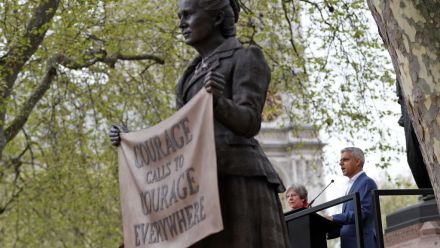
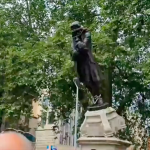
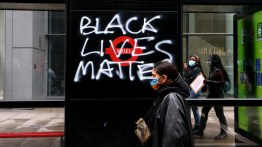
Yesterday, London Mayor Sadiq Khan announced that he was forming a new commission to investigate the landmarks, street names and statues of the capital, to see if they should be knocked down or renamed because of their racist past or links to the slave trade. The announcement came after a statue of the slave trader Edward Colston was pulled down in Bristol by Black Lives Matter protestors this weekend. Khan’s ‘Commission for Diversity in the Public Realm’ will examine various sites across London to see if they reflect the diversity of its population, and the mayor has indicated that it is not appropriate for certain figures to be memorialised in future.

Why aren’t schools reopening?

12 min listen

The government has shelved its aim of reopening primary schools before the end of term amid growing pressure from parents and unions. But how will that affect the poorest students? Katy Balls talks to Fraser Nelson and James Forsyth.

Is George Bush brave enough to tell voters to back Biden?

For an instant, it looked as if George W. Bush might be an example of integrity all who believe in liberal democracy could grudgingly admire. Last week, he announced his anguish at the police killing of George Floyd. ‘America’s greatest challenge has long been to unite people of very different backgrounds into a single nation of justice and opportunity,’ Bush explained. But African-Americans remained harassed and threatened in their own country. ‘There is a better way,’ Bush sighed as he rose to his peroration. ‘The way of empathy, and shared commitment, and bold action, and a peace rooted in justice. I am confident that together, Americans will choose the better way.’ And then he went and spoilt it all by stopping right there.

Health minister: I can stick this on the scientists

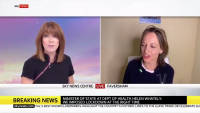
Throughout the coronavirus crisis, the UK government has insisted that its decisions and policies have been led by the scientific advice on the virus. It’s a commitment that has allowed the government to convince the public that drastic interventions to stop the disease have been necessary. But, equally, there have been criticisms in some quarters that the scientists advising Number 10 have been used as human shields for the mistakes and unpopular policies of politicians. Health minister Helen Whately did nothing to allay those fears when she appeared on Sky News this morning.

Are Remainers wrong about a no-deal Brexit?

As a Remainer, I was always convinced a no-deal Brexit would be a disaster for Britain. Now, I’m not so sure. And while I once thought anything – even a painful and protracted transition period – would be better than leaving without a deal, I’m convinced Britain should push ahead with leaving the EU, whatever happens. The reaction to coronavirus – and, in particular, people’s thoughts about the pros and cons of lockdown – has convinced me why. Ask someone’s position on the lockdown and you’ll probably have a fair idea of whether they are a Brexiteer or a Remainer.

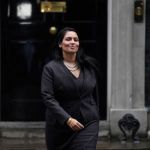
Priti Patel: I will not take lectures from Labour on racism

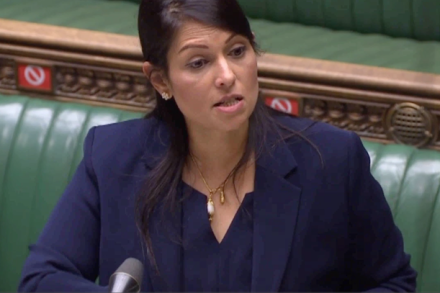
Priti Patel was in the Commons today, to be asked about the policing of the recent Black Lives Matter protests across the country. And, it was an understatement to say that the Home Secretary was taking no prisoners when it came to accusations from Labour that she or the government did not understand racism in this country. In response to Labour MP Florence Eshalomi – who asked whether the government and the Home Secretary recognised that there is racism and discrimination in the UK – Patel gave a remarkable speech in which she declared that she would ‘not take lectures’ from Labour about racism, and accused those who expect ethnic minorities to behave in a certain way as racist themselves.

How long can No. 10’s quarantine policy survive?

Today marks the start of the government's coronavirus quarantine policy with those arriving into the UK told to self-isolate for two weeks. To say the policy is unpopular with Tory MPs would be an understatement. It's also been queried by scientists, many of whom point out that it would only really have an impact in terms of people arriving from high infection countries. Given that the UK is currently at a higher infection level than many of its neighbours, that effect is questionable. The aviation industry also despises it, with a number of airline companies mooting legal action. While polling suggests the policy does for now have the backing of members of the public, these factors mean that had the policy been put to a vote it would have struggled to have passed.

The politics of toppling a statue

17 min listen

Thousands of protesters took to the streets this weekend as part of the Black Lives Matter movement. In Bristol, a statue of the slaver Edward Colston was toppled and thrown into the city's docks. But are we now seeing a change in the government's response? Katy Balls speaks to Fraser Nelson and James Forsyth.

Sunday shows round-up: Sage scientist says lockdown delay cost lives

Professor John Edmunds, an epidemiologist at the London School of Hygiene and Tropical Medicine who has been advising the government throughout the Covid crisis, spoke to Andrew Marr this morning. Edmunds told Marr that, with the UK's official death toll having now passed 40,000, the UK should have locked down faster in retrospect: https://twitter.com/BBCPolitics/status/1269553742476648448?ref_src=twsrc%5Etfw AM: [Do] you have some regrets about some of your advice, about what you thought at the time? JE: Yes. We should have gone into lockdown earlier. I think it would have been hard to do it... but I wish we had... I think that has cost a lot of lives unfortunately.

What is it about Chinese totalitarianism that makes clever people so silly?

There is something about Chinese totalitarianism which brings out the silliness of many clever people. I suspect it is to do with the fact that Chinese civilisation, being old and arcane, makes a certain type of person prize uncritically whatever privileged access he gains to the country.  A fortnight ago, I mentioned the fellow-travelling influence of Joseph Needham, Cambridge’s indisputably scholarly historian of Chinese science. Here he is writing to the Cambridge Review in 1976, the last year of Chairman Mao’s reign.

The point of protest

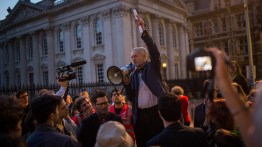
The protest in Manchester today was supposed to be static and socially distanced. While that may not have worked out so well – leaving me somewhat yearning for Israeli efficiency as seen in the protests against Netanyahu – it was still a success. The vast majority were wearing facemasks and those who quite clearly wanted to distance were respected. The protest was peaceful (as far as I could tell). Police kept a respectful distance and protesters continued their respectful behaviour. For that reason, it might not get much coverage: you’re more likely to read about those who deface monuments or confront the police. But to focus on them, now, is to miss a bigger point.But why was I there at all? Why would anyone in Manchester protest against injustice in America?

Corbyn takes the revolution online

Three faces peered out of the screen. At noon, last Saturday, Facebook hosted a digital debate between a trio of grandees from the Stop the War Coalition. Former Labour leader, Jeremy Corbyn, appeared in a plain white room that matched his open-necked shirt. The novelist Arundhati Roy spoke from Delhi. And the veteran activist, Tariq Ali, began the session by telling viewers that thousands were watching all around the globe. The great campaigners spent 70 minutes trying to create world peace from their kitchen tables. Tariq Ali is no longer the dashing figure of the 1960s who won fame protesting against the Vietnam war. A snowy mane now crowns his head. And he wears a copiously sprouting white moustache which makes him resemble a retired gunfighter in a Dodge City saloon.

The march of progressive censorship

It’s official: criticising Black Lives Matter is now a sackable offence, even here in the British Isles, thousands of miles away from the social conflict currently embroiling the US. As protesters again fill the streets of a rainy London on Saturday, as part of a now internationalised backlash against the brutal police killing of George Floyd by Minneapolis police, those who criticise them do so at their peril – as two men have recently found out. Stu Peters, a presenter on Manx Radio, has been suspended, pending an investigation, for an on-air exchange with a black caller. He said nothing racist, you can read the transcript for yourself. What he did was rubbish the idea of white privilege: ‘I've had no more privilege in my life than you have.

Boris Johnson needs to get a grip

It’s pointless to deny that the government is currently performing poorly across a wide range of fronts – and I say that as someone who voted Conservative with enthusiasm in December and who wishes the government well. Despite the shrill claims of some, the onset of an epidemic of a horrible new disease would clearly have been testing for any administration – which largely explains why some things are coming apart at the seams. But another highly damaging factor is now at work: the rolling out of obviously half-baked ‘blunt instrument’ policies that have not been subject to even the most basic of sensible refinements.