Politics

Read about the latest political news, views and analysis

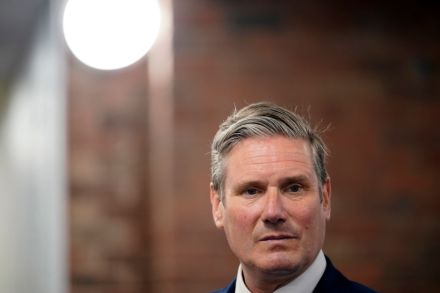
Keir Starmer’s Welsh nationalism problem

There is no region of the UK where Labour has dominated more – both politically and culturally – than Wales. Since 1922, the party has consistently won general elections there, and has ruled Cardiff’s devolved government relatively unchallenged since it was established in 1999. But Keir Starmer would be wise to keep his eye on events in Wales as he seeks to outflank the Prime Minister. The surprising impact of this Covid crisis has been a surge in Welsh nationalism, which until now was a slumberous movement reserved for the radicals of Plaid Cymru and Welsh football fans.

No. 10 to outlaw gatherings of more than six people

The government is to significantly reduce the threshold for lawful gatherings of people in homes from the current 30, perhaps to as low as six, I understand. This is a first response to the significant spike to circa 3,000 a day in Covid-19 infections we've seen. At the moment, attending a gathering of more than 30 people is punishable with a £100 fine and organising such an event risks a £10,000 fine. Under the reduced threshold, due to be announced perhaps today, the police would be empowered to break up and levy fines on much smaller groups. The new threshold has not yet been decided, however.

How the Tories can stop the SNP’s hate crime bill

Free speech concerns about the SNP’s Hate Crime Bill have been mounting for months now, so it was inevitable that the Scottish Parliament would eventually take notice. The Scottish Conservatives plan to force a vote there tomorrow calling on the Nationalist administration to withdraw the legislation. The Tory motion is unlikely to pass given the numbers at Holyrood. The SNP parliamentary group operates essentially as a single bloc vote while the sole function of the Scottish Greens is getting Nicola Sturgeon’s government out of the latest trouble it’s gotten itself into. What the resolution will do is compel MSPs to take a side.

Ripping up the Withdrawal Agreement is a big mistake

Like most things Brexit related, it depends on who you believe. The EU is concerned over the announcement that the government will be introducing legislation that could override portions of the Withdrawal Agreement, in particular the Northern Ireland Protocol. The UK government insists that the changes they wish to introduce are 'limited and reasonable' and will not violate the treaty. I truly hope it is our government which is right here. If Boris really is planning to violate the Withdrawal Agreement, signed with the EU earlier this year, that would be a grave error. The logic of threatening the European Union with legislation that changes portions of the Withdrawal Agreement could be to send a message.

The vaccine goalposts have shifted

Matt Hancock provided a vaccine update on Monday, explaining that the chances of a drug being ready by early next year are ‘looking up’. With trials pending in the UK, USA and Brazil, the Oxford-AstraZeneca vaccine could be approved this year, although the Health Secretary he conceded it would more likely come in spring 2021. He added that doses are already being manufactured so that it will be ready to roll-out the moment it does receive approval.  We’ve heard this all before.

Will the hardline Brexit approach work?

10 min listen

Boris Johnson last night issued a warning to the European Union that Brexit negotiations must be concluded by October 15 or Britain will walk away. Will this focus minds, or might it spell the end for the talks? Katy Balls speaks to Fraser Nelson and James Forsyth about the government's hardline approach.

Why Boris thinks no deal might be worth the pain

You may wonder why on earth a Tory government led by Boris Johnson, the heirs to Thatcher for goodness sake, are sacrificing the prospect of a trade deal with the EU because they want the right to subsidise British industry. If the Tories and Thatcher stood for anything, it was rolling back the role of the state in the private sector. Well, all that is stuff for the GCSE history syllabus, and turns out to be irrelevant to today's politics. Because if the government of Boris Johnson has an ideology, it is that of Dominic Cummings and his Vote Leave crew. And Cummings's passionate conviction is that Johnson's government MUST have the discretion to invest without fetter in hi-tech, digital, artificial intelligence and the full gamut of the so-called fourth industrial revolution. How so?

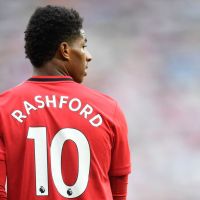
No, Marcus Rashford didn’t ‘slam’ a Tory MP over child hunger

'Rashford slams MP’s tweet about feeding children' That was a headline last night on the BBC News site. It neatly captures a tale that sums up just about everything that’s wrong with politics and journalism today. The 'story' – also in most newspapers today – is that Kevin Hollinrake, Conservative MP for Thirsk and Malton, wrote the following on Twitter: 'Where they can, it’s a parents job to feed their children' He was writing in response to another tweet asking why it has taken the efforts of Marcus Rashford, a campaigning footballer, to put the issue of child hunger on the agenda. In turn, Rashford wrote a tweet directed to Hollinrake: 'I would urge you to talk to families before tweeting.

Boris Johnson’s Brexit deadline

After months of coronavirus leading the news agenda, Brexit is back. The Prime Minister has overnight promised to quit the trade talks in five weeks if no agreement is in place. Meanwhile, figures in Brussels are voicing disbelief at reports the UK government is drawing up legislation that will override the withdrawal agreement's Northern Ireland protocol. Boris Johnson has said there needs to be an agreement by the European Council on 15 October – otherwise, it would not be possible to bring any such agreement into force before the end of the year and therefore little point in continuing discussions: If we can’t agree by then, then I do not see that there will be a free trade agreement between us, and we should both accept that and move on.

Is Britain a nation in fear of safetyism?

It should come as no surprise that Britain's city centres remain, in the words of CBI chief Carolyn Fairbairn, 'ghost towns', and nor is it a shock to hear a civil service union boss shoot down Boris Johnson's plea for public sector workers to head back to the office. Safety first, said the union man, echoing the caution of his teaching counterparts. As Trevor Kavanagh wrote in the Sun last week, Britain is ‘a scaredy-cat nation of masked hypochondriacs who won’t leave home for fear of dropping dead’. A poll last month bore this out, revealing that while two thirds of workers in France, Spain and Italy were back at their desks, in Britain barely a third of the workforce had plucked up the courage.

Can Simon Case restore stability to the heart of government?

Boris Johnson does not get everything wrong. The appointment of Simon Case to be head of the civil service at such a young age is bold and imaginative. Those who have observed his performance in senior roles all seem to regard him highly. But there could be two problems, both related to his youth: he has never run a large organisation and he has never really experienced failure. By the time that most officials and politicians reach his level of seniority, they usually know what is meant by 'after such knowledge, what forgiveness.' They are aware that what goes up can also come down; that an idea which, on the drawing-board, seemed world-class may fail in the actual world.

Boris Johnson’s careerist cabinet problem

Last year Boris Johnson won three notable domestic political victories. His hot streak began when he romped home in the Tory leadership contest and culminated with his decisive general election win. Between those two landmark moments was an event that served as a bridge between them – a decisive purge of the pro-Remain centrist tendency inside the Conservative parliamentary party. Many of the leading names in Tory circles for the past 20 years were bounced out of the party and then the Commons over their Brexit-blocking antics. Suddenly the game was up for Philip Hammond, David Lidington, David Gauke, Amber Rudd, Justine Greening, Rory Stewart, Dominic Grieve, Oliver Letwin, Ken Clarke and Nicholas Soames, among others.

Sunday shows round-up: This week is ‘moment of reckoning’ for EU trade deal

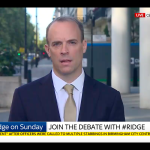
Dominic Raab - This week is 'the moment of reckoning' for EU deal The Sunday interview shows return this week to general fanfare across the nation... The first government guest to join Sophy Ridge was the Foreign Secretary Dominic Raab, who was asked about the prospect of the UK reaching a satisfactory trade deal with the EU by the end of the year. James Forsyth has written this week about how Downing Street puts the likelihood of a deal down to 30 to 40 per cent, but Raab professed a greater optimism that an agreement could be reached, citing the thorny subject of fisheries as one of the few remaining 'bones of contention': https://twitter.com/RidgeOnSunday/status/1302526946019020800?ref_src=twsrc%5Etfw DR: This week the negotiations will be really important...

A new era dawns on Butler

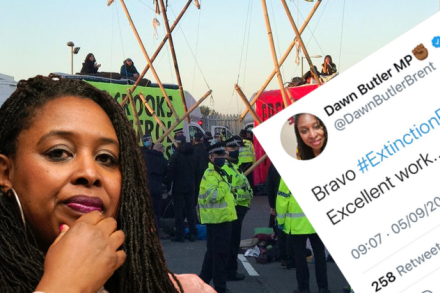
It feels good, doesn't it? Hearing Labour say something sensible for a change. Last night, eco agitators Extinction Rebellion targeted newspaper printworks hoping to disrupt the distribution of papers like the Daily Mail, the Sun and the Telegraph.  How did the Corbynite backbencher Dawn Butler respond to this attack on free expression, which has so far seen over 60 people arrested? That's right, by applauding.  But it seems that someone in Keir Starmer's office has reminded Dawn that the party is under new management – her ill-judged intervention has now been deleted. In fact, the party has gone one step further and released a statement condemning XR:  A free press is vital for our democracy.

Will state aid sink a Brexit deal?

10 min listen

The deadline for a Brexit deal is fast approaching, but the level of subsidies paid to companies and industries could prove a stumbling block. Will state aid - which makes up just 0.34 per cent of the UK's GDP - scupper an agreement with the EU? Katy Balls speaks to Fraser Nelson and James Forsyth.

The complaint from MPs that ought to worry Boris Johnson

When Boris Johnson addressed MPs on Wednesday, the hope in government was that the Prime Minister's multiple appearances would rally the troops. First at PMQs, then before the 2019 intake, before addressing the 1922 committee of Tory backbenchers. With MPs returning from the summer holidays fed up after a string of policy U-turns and constituent complaints, many needed a jolt of optimism ahead of a tricky few months.  His appearance at Prime Minister's Questions did the opposite. 'He was all over the place,' sighs one veteran MP. Several Tory MPs privately complain that it was discourteous of Johnson to turn up at the despatch box having not done his homework.

Will the Tories accept tax rises?

15 min listen

Rishi Sunak has faced a backlash this week over proposals to increase taxes to pay for the UK's coronavirus response. Can the chancellor push the changes through, and how will the party react? Katy Balls speaks to Fraser Nelson and James Forsyth.

The biggest obstacle to a Brexit deal

Downing Street now thinks that the chances of a Brexit deal are down to 30 or 40 per cent, I say in The Times today. The sticking point is, rather surprisingly, state aid. Since Margaret Thatcher’s election in 1979, the UK has been sniffy about the idea of government ‘picking winners’. It doesn’t use much state aid (less than half the EU average, according to the Commission’s figures), but the Johnson government doesn’t want to commit itself to something similar to the EU's regime – it wants to use the power of the state to develop what it sees as the industries of the future.

Europe’s ‘second wave’ has fizzled out

Has the Covid ‘second wave’ already run out of steam? On 9 July, just when Britain was reopening the hospitality sector and other businesses, the World Health Organisation announced that the pandemic was ‘accelerating’. Much of the coverage in Britain also implies that we are possibly in the early stages of a second wave. But that talk is lagging behind the data. Globally, the number of new recorded cases peaked on 31 July at 291,691 and has shown a slight downward trend ever since. In terms of deaths, they peaked at 8,502 on 17 April and have also been on a slight declining trend ever since. On the worst day in the past week – 2 September – 6,312 deaths were recorded.