Politics

Read about the latest political news, views and analysis

SNP MP admits bringing Covid to parliament

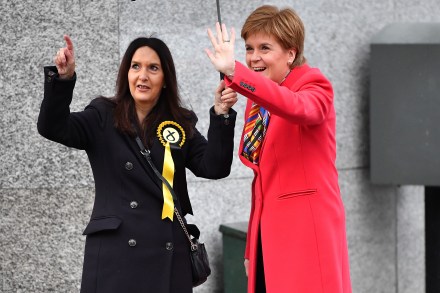
The SNP's Margaret Ferrier has released a statement admitted that she travelled down to London after suffering from Covid symptoms. She then returned to Scotland by train after receiving a positive test result... The MP for Rutherglen and Hamilton West apologised for failing to follow the guidance, set down by her own party leader in Scotland Nicola Sturgeon. She also said she has referred herself to the police.  In the statement, Ferrier said: I apologise unreservedly for breaching Covid-19 restrictions by travelling this week when I shouldn't have. There is no excuse for my actions. On Saturday afternoon, after experiencing mild symptoms, I requested a Covid-19 test which I took that day.
Is this the start of the lockdown rebellions?

We are frequently reminded of polls that show the majority of Brits supporting lockdown measures. In fact, often the public wants the government to go further than it has done. Local officials tend to reflect this sentiment. Mayors of two of the UK’s largest cities — London's Sadiq Khan and Manchester's Andy Burnham — have repeatedly accused the government of not going far enough with its Covid restrictions. But are attitudes starting to shift? While there’s little data available about the public’s adherence to Covid rules, some evidence is starting to build. A comprehensive study from UCL and Kings College London found that only a fraction of people who said they would self-isolate if required have actually done so.

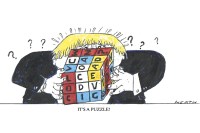
What will Boris do if no Covid vaccine arrives?

In a non-Covid world, next week would be Tory conference in Birmingham. As I say in the magazine this week, it would have been a triumphalist conference with much talk of how the Tories had won a two-term victory. Covid has changed everything, though. Tory conference is now an online only event with short speeches. The Tories are now behind Labour for the first time since Johnson became leader, albeit only in one poll. His backbenchers are becoming more rebellious. More than 50 of them signed the Brady amendment – which calls for parliamentary votes before nationwide Covid restrictions are introduced – enough to wipe out the government’s majority if it had come to vote.

The mystery over Covid infection numbers

This morning’s so-called 'React study' — an attempt by Imperial College to estimate the prevalence of current Covid-19 infection in Britain — has aroused much interest thanks to its suggestion of a sharp fall in the R number. Its central estimate for R is 1.06, but it applies a range of between 0.74 to 1.46, with a 63 per cent chance that R is above the critical level of 1.  It was a rare piece of good news to lead BBC news bulletins — as well it might given that it was the previous report from the React study three weeks ago that led to the government introducing the rule of six.

Why the north-west Covid spike is alarming

It can be hard to keep track of the progress of the epidemic as the daily cases, hospitalisations and deaths often seem to tell a contradictory story. Each suffers from random noise, delays and incompleteness in reporting, and arguments about how exactly they should be compiled. However, the total number of Covid-19 patients in hospital in the north-west has recently been growing in a disturbingly consistent way – and justifies the strict new rules which have been brought in today in the region. On 26 August, the number of hospitalised Covid patients in the region reached a low of 77. Five weeks later, this number has grown to 612 – an eightfold increase.

Boris’s new Brexit strategy? Agree to disagree

The UK is set to offer the EU a three-year transition period on fishing as a means of setting aside the issue as a block to a potential deal. What to do about fish has been a major impediment in the negotiations throughout the post-referendum period. And it appears that this government wants to repeat what has happened whenever a major Brexit-related impasse has been hit in the past — just find a way to kick the whole thing into the long grass.

Portrait of the week: Curfew street parties, Trump’s taxes and a bone-eating vulture

Home More than a quarter of the population of the United Kingdom (three-fifths of the Welsh, a third of the Scots and two-thirds of those in northern England) were put under harsher coronavirus restrictions. Boris Johnson, the Prime Minister, amid a flurry of local lockdowns, found himself unable to state the coronavirus restrictions suddenly imposed on the north-east. He said ‘six in a home, six in hospitality’ could meet, though the law said that members of different households could not meet at all indoors. Universal laws, brought in by statutory instruments, prohibited eating or drinking in bars, restaurants or clubs after 10 p.m.

The lockdown battle of Marseilles is a warning for Boris

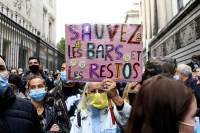
From the vantage point of Downing Street, Boris Johnson may feel reassured that the further measures against Covid-19 he imposed this week, along with the extraordinary fines with which he has decided to enforce restrictions across the country, appear to have public support. Indeed, one poll suggested that upwards of 60 per cent of the population believe the government did not go far enough last week when it ordered pubs to close at 10 p.m. But the Prime Minister should not be fooled by that apparent backing. Before he commits himself to any further action he needs to look to Marseilles, where President Emmanuel Macron has come unstuck after trying to impose similar measures.

The fall of Golden Dawn

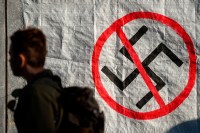
Next week, the biggest Nazi-related trial since Nuremberg will come to a close. Following the murder of Greek musician Pavlos Fyssas by a member of the neo-Nazi party Golden Dawn seven years ago, the entire leadership and dozens of members were charged under counter-terrorism legislation with running an organised crime syndicate. The case file, which runs at more than 3,000 pages, includes charges of murder, arson, possession of guns and explosives, and even trafficking. A combination of the famously sclerotic Greek justice system and circumstance held up the trial for years. The pandemic and the lockdown that followed it pushed the verdict back even further. But now, at last, it’s nearly over. The party’s troubles extend beyond the courts.

Prime ministers can’t pick the crises that define them

In a non-Covid world, next week would be the Tory party conference. Boris Johnson would march on to the stage in Birmingham to receive the adulation of his grassroots supporters. The biggest Tory majority since Margaret Thatcher’s final victory in 1987 would have been celebrated. There would have been cheer after cheer for the new intake of Tory MPs, elected in seats that had been Labour for generations. It would have been a triumphalist conference with much talk of how the Tories had won a two-term victory. The virus has changed everything. Tory conference is now an online only event with short speeches.

Could ‘clean tech’ save the aviation industry?

What advice can I offer Alok Sharma, who took a pasting in the weekend press for his lacklustre performance as Secretary of State for Business, Energy and Industrial Strategy? While Rishi Sunak knocks up as many runs as he can on a difficult wicket with his job support scheme and VAT deferrals, Sharma is the ‘dead bat’ (in one business chief’s phrase) at the other end — accused of offering no Brexit clarity, not much personal energy and no strategy at all. In defence of this former City accountant, we might say that his rag-bag department, operating under many different names since 1979, has rarely been regarded as an engine of British enterprise.

Vallance says virus is not under control

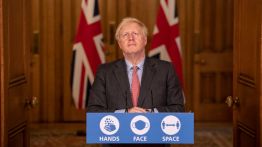
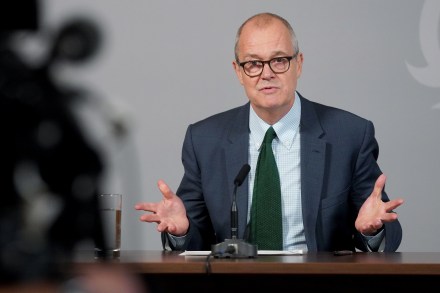
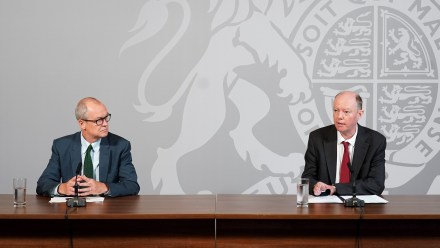
Boris Johnson announced no new restrictions in Wednesday's coronavirus restrictions — but there was still little reason for cheer. Those ministers hoping for a change to the 10 p.m. curfew were left disappointed. Johnson and his advisers — Chief Medical Officer Chris Whitty and Chief Scientific Officer Patrick Vallance — offered a series of graphs and maps to show the spread of the virus. Each made the point that infections are going in the wrong direction. It was clear from the address that they all believe new restrictions are more likely than not.  It was clear from the address that they all believe new restrictions are more likely than not While Whitty spoke of 'a long winter ahead of us', it was Vallance whose language was the most frank.

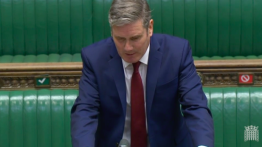
Starmer was firing blanks at PMQs

It was another ‘worst week ever’ for Boris. The highlight being his successful bid to make mincemeat of himself by garbling his own lockdown rules at a press conference. At PMQs, he presented an open target and the Labour leader struck early with a highly specific question: Why has Luton emerged from lockdown when other communities haven’t? ‘They’ve pulled together to depress the virus,’ said Boris, sounding tentatively jubilant. Everyone awaited the springing of the booby-trap. But it didn’t come. Luton was an irrelevance. It was a bait without a hook. Sir Keir was firing blanks.

Revealed: Natalie Elphicke’s bumper £25,000 payday

When former Tory MP Charlie Elphicke was found guilty of sexual assaulting two women, his wife Natalie – who has succeeded him as MP in his Dover seat – immediately announced the end of their marriage. Three days later, Natalie then gave a tell-all interview to the Sun, in which she explained why she had to leave her husband. Speaking for the first time of what she described as her 'horrible, humiliating and unpleasant' court ordeal, Elphicke told the paper:  'Charlie was keen to get things back on track but I had already made clear to him I was very, very hurt by the allegations and by his behaviour with other women.' Now it can be revealed that Natalie Elphicke received £25,000 for the interview with the paper.

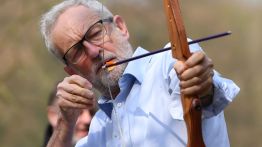
Corbyn’s £50k Momentum loan written off

When Jeremy Corbyn was battling to retain the Labour leadership back in 2016, Corbyn was given a helping hand from Momentum. The pro-Corbyn group handed Jez's campaign a £50,000 loan to help in his bid to fight off Owen Smith's challenge. With Corbyn's time at the top now over, however, it seems that Corbyn will not have to pay back the money. Why? Because happily for Jez, the 'unsecured loan' has now been 'converted to a donation'. Mr S is glad Momentum's money went to a good cause...

Is the whack-a-mole lockdown strategy working?

12 min listen

Keir Starmer attacked Boris Johnson in PMQs today over the effectiveness of local lockdowns, saying in some areas 'things are getting worse not better'. After the PM himself got the rules mixed up yesterday, is the government's strategy working, or is a change of strategy needed? Katy Balls speaks to James Forsyth.

Was that the worst debate of all time?

19 min listen

Donald Trump and Joe Biden met in the first head-to-head debate of the campaign yesterday evening. The result was a frenzied 90 minutes of outbursts and interruptions from which neither candidate emerged well. Biden lambasted the President as a 'clown', while Trump ruthlessly attacked the Democratic challenger's family, ignoring the tragic death of his son, Beau. Freddy Gray speaks to Kate Andrews about whether the debate could possibly have been any worse.

Watch: Speaker blasts Boris over Covid laws

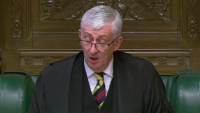
Back when John Bercow was in the Commons' hot seat, a Tory telling-off was part of the daily run of events. Things have changed under his replacement Lindsay Hoyle. But today the speaker took no prisoners as he berated the government over its use of emergency coronavirus powers.  At the start of PMQs today, Hoyle accused ministers of showing 'total disregard' and 'contempt' for parliament. He said: 'The way in which the government has exercised its powers...during this crisis has been totally unsatisfactory. All too often, important statutory instruments have been published a matter of hours before they come into force. The government must make greater efforts to prepare measures more quickly so that this House can debate and decide...