Politics

Read about the latest political news, views and analysis

A handy guide to Hotel Quarantine

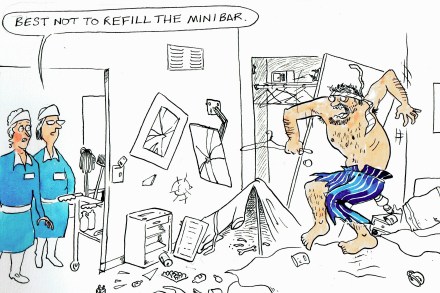
On the one year anniversary of the arrival of the Covid virus in the UK, the government has introduced strict quarantine measures to stop the virus arriving again. The shock discovery that the virus mutates in other countries, as well as our own, has prompted the government to incarcerate travellers as they step off their plane. Robert Jenrick, the Secretary of State for Housing has added the responsibility of ‘housing people in hotel rooms against their will’ to his portfolio. This week, he said: 'There will be a time when we will look back and say, with hindsight, that there are things the government could have done differently. But that time is not now'. With the foresight of hindsight, a senior government Minister has shown perfect near-sightedness about our situation.
Vaccine wars: the global battle for a precious resource

39 min listen

Why has the vaccine rollout turned nasty? (00:45) What's the sex abuse scandal rocking France's elite? (16:55) Have artists run out of new ideas? (28:35)With Daily Telegraph columnist Matthew Lynn; science journalist and author of Pale Rider: The Spanish Flu of 1918 Laura Spinney; Spectator contributor Jonathan Miller; journalist Anne-Elisabeth Moutet; Dean Kissick, New York editor of Spike Art Magazine; and Eddy Frankel, visual art editor of Time Out magazine.Presented by Lara Prendergast.Produced by Max Jeffery, Alexa Rendell and Matt Taylor.

Why shouldn’t the Prime Minister visit Scotland?

14 min listen

Boris Johnson visits Scotland today. To nobody's surprise, Nicola Sturgeon has criticised the visit coming at this moment in the pandemic; while Keir Starmer has defended the PM's right to do so as the Prime Minister of the United Kingdom. Cindy Yu talks to Katy Balls and James Forsyth about the visit and whether or not it will backfire.

This is just the start of the Brussels-Britain bust-ups

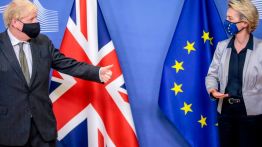
This is a crucial year for the UK’s two most important relationships, I say in the magazine this week. If the Johnson/Biden diplomatic relationship has got off to a better start than expected, the same cannot be said of the post-Brexit UK/EU one. The alignment between Johnson and Biden on climate change, Russia and China is helping the alliance. This relationship should become closer still given the two side’s agreement on China, the most important geo-political issue of the decade. The EU will attempt, often in not particularly edifying ways, to assert itself as the bigger partner.

Sturgeon is playing politics with her clumsy trans rights intervention

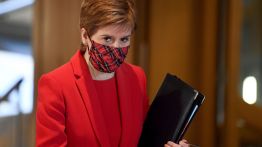
You would think Nicola Sturgeon had enough on her hands, what with overseeing a sluggish vaccine rollout, being under investigation by the Scottish parliament and hosting her own daily TV show on the BBC during the pandemic. Yet the leader of Scotland’s nationalist party has waded into the debate on trans rights and gender identity in a video published on Twitter. Sturgeon said: ‘I don’t have much time for anything other than the fight against Covid right now but on some days silence is not an option. This message wasn’t planned, it’s not scripted; I haven’t consulted with armies of advisers. That might be obvious. But what you’re about to hear comes from my heart.

Boris Johnson’s Scotland trip is a gift to the SNP

Boris Johnson is in Scotland today and once again this counts as news. This is intolerable to everyone. Intolerable to Unionists because a prime ministerial appearance in Scotland should be as routine as a prime ministerial appearance in the Cotswolds. It should not count as a newsworthy moment. And it is intolerable to Scottish nationalists because, well, because everything is intolerable to Scottish nationalists. The Prime Minister’s visit can hardly be deemed 'essential travel' in the current circumstances even if it is also essential that Scotland never becomes a no-go area for Johnson or, indeed, other cabinet ministers. Making it seem such, chipping away at Johnson’s legitimacy, is one small front on the SNP’s long, attritional, struggle against the British state.

BBC shows its pro-EU bias

It’s pretty clear that the EU has not exactly behaved well in recent weeks, during its row with AstraZeneca over the Oxford vaccine. First the German press pushed out an unsubstantiated claim that the vaccine had extremely low efficacy rates among the elderly. Then the EU threatened to introduce an export ban to prevent other countries receiving their doses. And now the EU is pushing AstraZeneca to divert supplies intended for the UK to Europe – to make up for the fact that the bloc dithered for three months before striking its own deal with the company. Meanwhile the UK, so far at least, has pretty much kept out of the row. So Mr S was surprised to see the UK’s own broadcaster, the BBC, take a ‘both sides are wrong’ approach to the dispute this morning.

The vaccine row shows the EU doesn’t understand contract law

The EU rejects 'the logic of first-come first-serve,' said the EU's health commissioner Stella Kyriakides. 'That may work at the neighbourhood butcher's but not in contracts, and not in our advanced purchase agreements'. Contract law is an area of law I know well. And it is not a political comment to say the commissioner is wrong. We don't know precisely what the contract between AstraZeneca and EU member states says. But the EU did publish another vaccine supply contract here. All this makes it very difficult to see what case the EU has In any would-be-case involving this contract, the EU has two massive hurdles to jump. Firstly, contractors undertake to use their 'reasonable best efforts' to manufacture enough supply.

Mum’s the word: Rishi Sunak’s women problem

Just how did Rishi Sunak think it would play when he thanked ‘mums everywhere’ for ‘juggling childcare and work’ in the Commons on Tuesday? Grateful thanks? A few more #dishyrishi plaudits and calls for him to be the next PM?  The Chancellor’s vote of thanks for the nation’s mothers in response to a question about female entrepeneurs who have children has earned him a pummelling on Twitter as social media exploded with visceral rage — from the fathers he neglected to mention as well as women. Hitherto the subject of ‘AIBU [Am I Being Unreasonable] to find Rishi Sunak attractive’- type posts on Mumsnet, he is now - rightly or wrongly - embroiled in a sexism row.

Quarantine and the freedom paradox

Who would have thought, this time last year, that the British government would be planning to detain British nationals at the airport and keep them under guard in a hotel room for a ten-day quarantine? It’s quite a departure for a country whose values have always been defined by the defence of liberty. But we’re living in exceptional times, with the Covid death count at more than 100,000 — a bigger hit, as a proportion of population, than almost anywhere else in the world. This requires deep reflection about the mistakes made and the changes needed. When the sick are still dying — at a rate of more than 1,000 a day — it’s hard to have a calm political discussion about what went wrong and how to get it right now.

Britain will prove more Biden-friendly than the EU

This is a crucial year for the UK’s two most important relationships. The Anglo-American alliance, our strongest diplomatic and security partnership, now needs to adjust to a new president in the White House. Meanwhile we are also starting our new relationship with the EU. The question is: can the two sides move on from the wrangling of the Brexit negotiation? To great relief in British diplomatic circles, the new US administration and the UK have got off to a good start. Joe Biden has shown that he is keen to move on from the Donald Trump era.

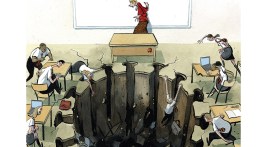
The true cost of school closures – an interview with the Children’s Commissioner

Teaching unions have spent much of the past year campaigning with the social media hashtag #CloseTheSchools. It’s a reminder of the imbalance in debate over education. Unions represent the adults, MPs represent their constituents, but who in Westminster speaks for children? In 2005 the Blair government sought to answer this question by creating a Children’s Commissioner, who would promote and protect the rights of children in decisions affecting their lives. Anne Longfield, the third to hold the job, is in the final few weeks of her six-year stint. She is spending those weeks campaigning for schools to re-open as soon as possible after the February half-term.

For Democrats, the Capitol assault was the gift that keeps on giving

As events recede, they change. When Donald Trump’s unhinged endgame culminated in a popular assault on the Capitol, most Americans of all political persuasions watched the improbable broadcast with genuine horror. Hell, yes, I was horrified myself. But as this month has advanced, and fears about my country disintegrating into anarchy have so far proved mercifully misplaced, lefty American commentators have progressed from anguish to glee. The New York Times banners that assault on its pages pretty much every day. The still of scruffs in red hats climbing the facade of the Capitol is now a standard backdrop on CNN. It must be thrilling to have your opponents do so much heavy lifting for your own team.

Boris Johnson’s risky timeline for schools reopening

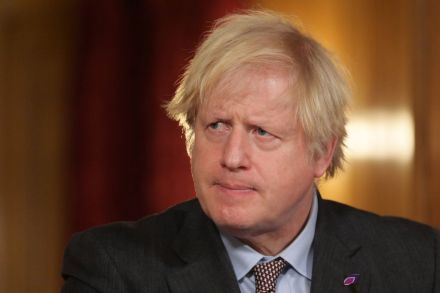
If there's one lesson you'd think Boris Johnson might have learned from his handling of the pandemic so far, it would surely be that it is too risky to set a date by which things will start returning to normal. And yet this evening the Prime Minister found himself talking about a date for schools returning, despite the timetable repeatedly slipping. Of course – as Johnson himself made clear at the Downing Street coronavirus briefing – 8 March is the earliest by which schools might start to return, rather than his deadline for anything happening. Johnson was asked whether he was once again being too optimistic by talking about this date, but said that 'opening schools is a huge priority for us all'.

Boris’s border crackdown raises some big questions

Throughout the pandemic, Britain has taken a relatively relaxed approach to controlling its borders. Restrictions on travel have come and gone since last March, but, on the whole, Britain has always leaned towards openness. The government has trusted people to make sensible judgements and follow quarantine rules upon return. Now attitudes have shifted. This afternoon, Home Secretary Priti Patel laid out the details of the government’s new, quasi-Australia style quarantine policy. Arrivals from 22 ‘high-risk’ areas will soon be forced to quarantine in a hotel when they arrive in Britain. There will be no exceptions to the rule, and travellers must stay put for ten days, even if they test negative for Covid-19.

How the EU vaccine row could escalate

The EU is now insisting that AstraZeneca use vaccine produced at its UK site to make up for a shortfall in its supplies to the EU. This is likely to kick off a major row as the UK went to great trouble to ensure that it had first refusal on all the Oxford vaccine produced in the UK. Indeed, AstraZeneca’s willingness to accept that condition is a major reason why Oxford ended up partnering with them. It is not hard to see how this situation could escalate. The EU is already saying that companies should notify them before exporting vaccine out of the bloc, and the German government is going further, calling for full on export controls on vaccines.

Will Tory MPs accept a March return of schools?

16 min listen

In his statement to the Commons today, Boris Johnson suggested March 8 as a date for schools to return. This is earlier than some predictions but certainly later than many were expecting when schools were shut earlier this month. Katy Balls talks to James Forsyth and Isabel Hardman about what this tells us about when a more general lockdown easing may happen.

Boris confirms schools will not reopen before March

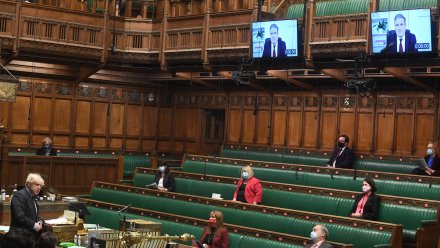
England's national lockdown is set to run on until at least March. Speaking in the Commons chamber this afternoon, Boris Johnson confirmed that the return of pupils to the classroom would be the first thing to be eased – and this would not happen in February as he had previously hoped. Addressing the House, Johnson said 'it will not be possible' to reopen schools in England after the half-term break next month. However, he remained hopeful that so long as the UK's vaccination programme remained on track, the return of pupils to the classroom would be able to begin from Monday 8 March. Given that No. 10 have no plans to relax any restrictions prior to schools reopening, this means the lockdown is here for the foreseeable.