Politics

Read about the latest political news, views and analysis

Boris’s ‘lobster law’ is ridiculous

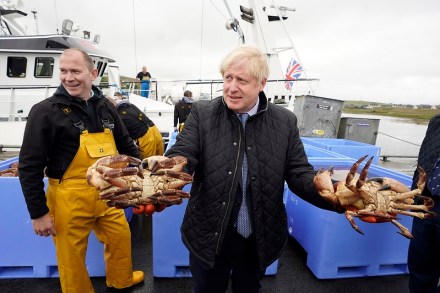
Sometimes, there is only one conclusion to be drawn – that somehow, the calendar is stuck. Though days appear to pass, it is still April 1. The latest example of April foolishness concerns shellfish. A Bill on animal rights is currently going through the House of Lords, and the government seems minded to accept an amendment which would acknowledge that crustaceans and molluscs are sentient beings and therefore must have rights. In the case of lobsters, this would mean that they could no longer be cooked by being thrust, still alive, into boiling water. As it happens, there is a good culinary case for putting lobsters into cold water and bringing it slowly to the boil. That is supposed to be more humane. Much more to the point, it also makes the lobster taste better.
Boris wriggled off the hook again at PMQs

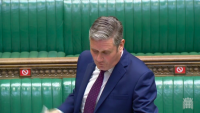
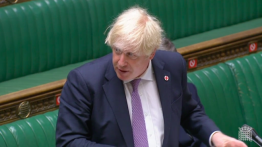
Freedom Day on 19 July was the opening issue at PMQs. Boris welcomed the return to normality and the Labour leader offered to support a ‘balanced and reasonable’ end to lockdown. But he accused the government of being ‘reckless’. Hang on, cried Boris, Sir Keir was all in favour of Freedom Day last Monday. Can’t he make up his mind? Sir Keir tried to re-baptise the ‘Delta strain’ the ‘Johnson variant.’ Which is unwise politics. After trying the new label once he dropped it. Perhaps a pushy intern had suggested it. Neither leader scored a victory today.

Follow the science – it’s time to unlock

Shortly before Boris Johnson and Keir Starmer were slugging it out in PMQs — debating whether the mass-lifting of restrictions on 19 July is indeed a good idea — the Office for National Statistics released their latest antibody survey, the details of which support the Prime Minister’s argument for reopening. It is now estimated that roughly nine in ten adults in England, Wales and Northern Ireland had antibodies in the week beginning 14 June (eight out of ten in Scotland). Moreover, antibody prevalence is on the rise in younger age groups. The percentage of adults testing positive for antibodies aged 35 and older ranges between 94 per cent and 99 per cent — with the most antibody protection detected for the elderly.

Lords bombard flagship Animal Sentience Bill

Speak to battle-scarred Tory veterans of the 2017 snap election and they'll regale you with horror tales about animal sentience. A little-noticed vote to reject the inclusion of the subject in the Withdrawal Bill quickly blew up into one of the major election issues, with the Independent running viral articles on the subject with inflammatory headlines that were widely shared all over social media sites. Some still credit the issue with helping to denying Theresa May her much-craved majority in that election. In the years since then the Conservatives have handled the issue of animal welfare with extreme caution, well aware of its political volatility.

Starmer’s PMQs attack line could spell trouble for Boris

Prime Minister's Questions proved a rather testy affair today as both Boris Johnson and Keir Starmer barked questions at each other across the Commons floor. After the Prime Minister unveiled his plans on Monday for a big bang reopening in which legal rules will be replaced by a focus on personal responsibility, Starmer urged caution.  The Labour leader quizzed Johnson on the health impact of this decision. He asked what the government estimate was for the number of hospitalisations if cases hit 50,000 a day. Johnson declined to say.

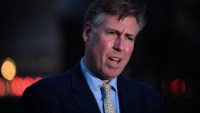
Graham Brady defeats Tory 1922 Committee leadership challenge

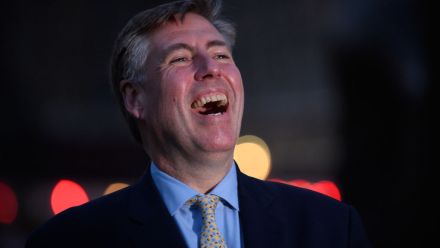
We will shortly find out who has been elected as the leader of the Conservative backbench 1922 Committee after incumbent Sir Graham Brady faced a challenge from Heather Wheeler. I’m told that turnout in the election for the chair was over 90 per cent and that counting has just begun. Rather than emitting white smoke, the committee is notifying the two candidates of the result by text message. Brady has been at the helm since 2010 and has generally been considered a reliable figure in representing the views of backbenchers to the Prime Minister.

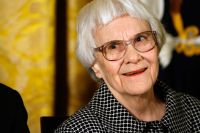
Cancelling To Kill a Mockingbird is a step too far

It often feels like we're living through the revenge of the talentless. Cancel culture is essentially a war of no-marks against high achievers. Think of all those faceless furious people on Twitter who want the Harry Potter books thrown in the dumpster of history just because JK Rowling thinks biological sex is real. These people can barely string a tweet together, never mind write eight books that entrance millions. Or think of the armies of literalist bores who demand the scalp of some comic who once made an iffy joke. I bet those people have never made anyone laugh. At least not intentionally. And now we learn that a schoolteacher in Edinburgh has decided he wants to stop teaching To Kill A Mockingbird and Of Mice and Men because apparently they are outdated and offensive.

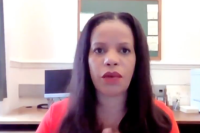
Watch: Claudia Webbe stumped by her own question

The appearance of Dominic Raab before the Foreign Affairs Select Committee yesterday got somewhat overlooked in all the drama about lockdown and football. While the session was fairly routine, with Raab largely able to bat aside questions from committee chairman and No. 10 nemesis Tom Tugendhat, it will mostly be remembered for a moment of sheer vacuousness from Leicester East MP Claudia Webbe. In an exchange with Raab, Webbe, who was suspended from the Labour party last September after being charged with harassment, tried to put the Foreign Secretary on the spot over Belarus. Unfortunately after a few brief sentences between the two it became apparent that Webbe did not have the slightest clue about the legal action she was calling for, or the reasons she was calling for it...

The surprising history of England’s three lions

English lions went extinct 12,000 to 14,000 years ago. So why will eleven Danish men – each dutifully sporting the ‘DBU’ roundel of the Danish Football Association – be facing tonight 33 embroidered images of panthera leo on the shirts of the England team? The answer has nothing to do with football, or any other sport in which the men and women of England’s national teams bear the three lions. It is, in fact, a throwback to the medieval battlefield, and the system of identification that allowed heralds to walk among the dead once the frenzy was over and catalogue the fallen. King Richard clearly liked lions far more than he did England, which he barely visited Military insignia are ancient.

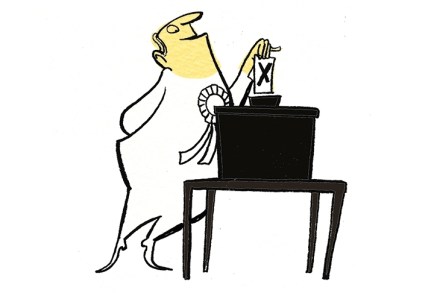
Why voters should have to show photo ID

This week’s publication of the Elections Bill has given pressure groups and others a fresh opportunity to complain about what they see as the latest manifestation of this government’s illiberalism: a requirement for people to produce photo ID when they go to vote. Forgive me, but I fail to see what is so terrible, so undemocratic, about that. The arguments go like this. First of all, opponents say, any change is unnecessary, as the UK simply doesn’t have a problem with voter fraud – with impersonation, say, or multiple voting. Trust in the UK electoral process is high and the instances of fraud are infinitesimal compared with the numbers of votes cast.

Rishi’s £771,000 Downing Street bill

Government flats have been in the news a fair bit recently. Much ink was spilled over the £88,000 Boris and Carrie shelled out to interior designer Lulu Lytle to do up the Prime Minister's flat at the end of last year. But now it seems the Johnsons got off lightly, judging by the current exorbitant rate going for Downing Street apartments. A Freedom of Information request by Steerpike has shed light on a previously little-known arrangement between government departments over the Chancellor's official flat, which is based in No. 10, adjacent to the Prime Minister's larger abode next door in No. 11.

Javid’s lockdown balancing act

12 min listen

Sajid Javid today said there could be 100,000 Covid cases a day in summer. He said the government would be focusing on hospitalisation and death figures, but added Britain was in 'uncharted territory for any country in the world'. Many thought of the new health secretary as a lockdown sceptic, so why is he urging caution? Isabel Hardman speaks to James Forsyth and Katy Balls.

Matt Hancock isn’t the only politician who is clueless about cyber security

It is widely acknowledged that Britain has some of the world’s finest cyber capabilities. GCHQ is a global leader in those dark arts, and its offshoot, the National Cyber Security Centre (NCSC), is making that expertise available to businesses and others in need of help with their digital defences. All the more shocking, then, that our political leaders seem so utterly clueless. They have pledged to make Britain the ‘safest place in the world to be online’, but instead are running around like stars in a digital age ‘Carry On’ movie. Exhibit number one is Matt Hancock.

Labour’s unlocking problem

Labour is unhappy with the government's plan for unlocking, with leader Sir Keir Starmer calling it 'reckless'. In the Commons this afternoon, shadow health secretary Jon Ashworth and then shadow education secretary Kate Green complained about the statements from their ministerial counterparts. Ashworth treated fellow MPs to the slightly bizarre spectacle of him waving a paper Sajid Javid had written on pandemics while at Harvard, which seemed an incongruous political stunt. All the more discordant is the party's stance on unlocking, which seems to be to complain about it happening while offering a plan that isn't vastly different.

Ashworth’s summer flip-flops

Jon Ashworth is one of the great survivors of the Labour front bench, having held the shadow health brief for some four and a half years under successive leaders. But given this morning's media round, how much longer will he be remaining in post? Responding to the government's announcement yesterday of the end of social distancing restrictions, Ashworth gave a tetchy interview on Radio 4's Today programme in which he levelled the charge of 'recklessness' at the government. He told presenter Mishal Husain 'I don't think any avoidable deaths are acceptable, that's why I would always want to put in place mitigating precautions to try to save people's lives.

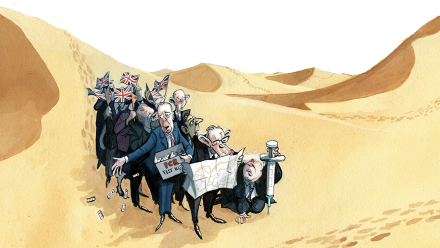
Boris’s ‘freedom day’ spells misery for many

The projection from Sajid Javid that Covid-19 infections could surge to a record 100,000 per day in a few weeks, as all social distancing and mask-wearing regulations are removed, is especially terrifying for those whose immune systems are impaired or are clinically vulnerable in other ways. There are millions of these frail people. For those whose immune systems are compromised or suppressed, the efficacy of vaccines is much reduced. For others among the frail, any residual risk of becoming infected is too great, because for them it is literally a matter of life or death.

Nigeria’s abduction epidemic and the silence of the West

Every day, more and more children are going missing in Nigeria. At least 140 schoolchildren were kidnapped in Nigeria’s northwestern Kaduna city yesterday. A day earlier, another eight people – including two nurses and an infant – were abducted in Zaria, around 50 miles north of Kaduna. This marked the fourth attack on a Kaduna state school and the third on a Zaria hospital in the past five months. Over 1,000 schoolchildren have now been kidnapped in Nigeria since December; around 200 of them are still missing. Yet the international condemnation has been muted.

Lockdown didn’t save lives from cancer

Everyone understood the government message in March 2020 to stay at home, protect the NHS and save lives. Yet the lives that we knew were being saved were ones from Covid-19. Anything more long-term than daily figures never registered. The concept of other causes of death – most devastatingly cancer – were secondary concerns. We may be about to see the consequences of this Covid solipsism. The recent cross-party parliamentary report “Catch Up With Cancer – The Way Forward” showed that UK lockdowns had resulted in a staggering drop in cancer treatment. There were 350,000 fewer urgent cancer referrals in 2020, and 40,000 fewer cancer diagnoses, compared to 2019.