Politics

Read about the latest political news, views and analysis

Revealed: the BBC guide for covering climate change

Climate change is once again dominating the news agenda. A report from the Intergovernmental Panel on Climate Change warned that even if emissions are cut rapidly, the effects of global warming will be felt across the world. The report – which Boris Johnson has declared sobering reading – leads the news today, with the BBC dedicating seven stories on its homepage today to climate change. So just as well then that BBC staffers were recently treated to an internal audience research briefing telling them how best to convey messages about climate change to different audiences.
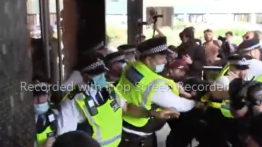
Watch: anti-vaxxers storm wrong BBC centre

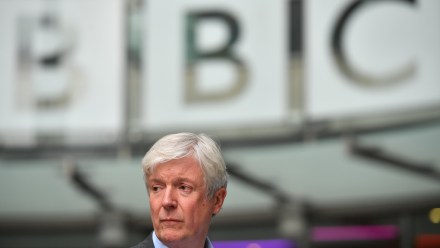
Oh dear. This afternoon an anti-vaccine demonstration marched on what they thought was BBC Television Centre in apparent protest at the media's supposed complicity in supporting vaccines, Covid certification and lockdowns.  Unfortunately for the protesters, the Corporation actually left the building in White City some eight years ago. Since 2013 the site has instead boasted luxury flats whose residents were presumably perturbed to be granted with chants of 'Shame on you!' and a wave of expletives. The building does however continue to serve one media purpose – part of it remains a studio where ITV films light entertainment programmes such as Loose Women and This Morning.  https://twitter.com/DJJASONJOY1/status/1424707991677321220?

What will the next reshuffle look like?

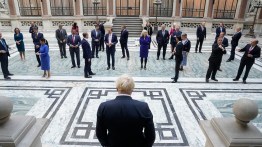
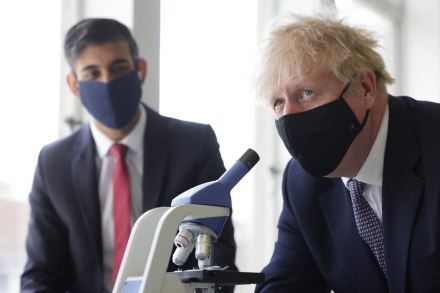
Following reports over the weekend that Boris Johnson has threatened to demote Rishi Sunak to health secretary, Downing Street has today sought to downplay reports of a rift between the pair. After business secretary Kwasi Kwarteng used the morning media round to praise the Chancellor's work, the Prime Minister's spokesperson has insisted that Johnson has full confidence in Sunak. While it's clear both sides are keen to kill reports of tension, they are unlikely to have their wish granted. What's more, the comments have brought back speculation over a potential reshuffle.  As a general rule, all cabinet reshuffle speculation ought to be taken with a heavy pinch of salt.

What Starmer’s Blair bomb means for Labour

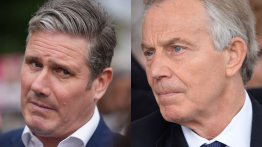
In a recent interview Keir Starmer dropped the B-bomb and Labour members are all a chatter about what it means. Speaking to the Financial Times the Labour leader said his party should be ‘very proud’ of what it achieved under Blair and Brown. As part of Labour’s campaign to regain power for the first time since 2010, Starmer believes the party should remind voters of the good it did when in government, and point out Labour’s successes in reducing poverty, improving the prospects of children and tackling climate change. This might seem a reasonable thing for the Labour leader to say.

Cable goes from Mr Bean to Stalin

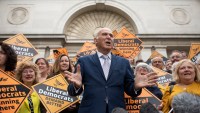
It seems like just yesterday that Vince Cable was the most popular Lib Dem in the land. Back in the heady days of the late noughties, Cable was regarded as the supposed seer who foresaw the banking crisis; a 'safe pair of hands' whose memorable jibe at Gordon Brown's transformation from 'Stalin to Mr Bean' provided much mirth to MPs across the House. But much has changed in the decade since and the once well-regarded Liberal Democrat has been undergoing a transformation of his own. Cable, who stepped down from the Commons in 2019, has earned notoriety during the last year for his comments on the Chinese Communist party and the plight of the Uyghur Muslims under the regime. https://twitter.com/BeijingToBrit/status/1419943540415676433?

How deep is the Boris/Rishi divide?

12 min listen

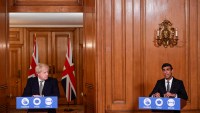
With the Chancellor's leaked letter to the Prime Minister (which apparently he'd never seen) showing some disagreement about COVID policy, is this an omen signalling a fracas to come over future spending plans?

Whitehall’s £3 million Stonewall spend

It’s not been a great year for the LGBT rights charity Stonewall. In May founding member Matthew Parris accused the organisation of trying to delegitimise anyone who did not agree with its views after a free speech row at Essex University.  Stonewall was alleged to have misrepresented the law in its advice to the institution with barrister Akua Reindorf warning of 'potential illegalities' and suggesting the university should reconsider its ties to the campaigning group.  Then in June it was reported that the Ministry of Justice is preparing to leave Stonewall’s diversity scheme as part of an 'exodus' of government departments severing ties with Stonewall. Now, fresh questions are being asked about the source of the charity's funding.

Was the Tokyo Olympics a success?

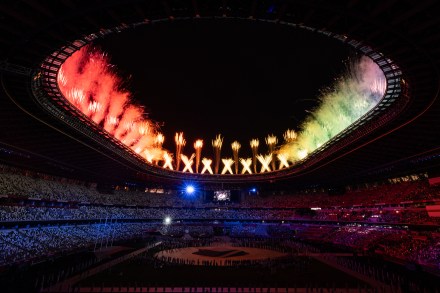
Yoshihide Suga, Japan’s Prime Minister, is a hard man to read. He has a sum total of one facial expression and lives up to the national stereotype of inscrutability. Still, I’m pretty sure I know what was going through his mind at the closing ceremony of the Tokyo Olympics on Sunday night: ‘Thank God, that’s over.' The games were not the disaster that many, including this writer, feared. Two weeks’ ago in Coffee House I wondered if Tokyo 2020/1 would be the worst ever Olympics – and for a brief panicky period, when an astonishing 11th hour cancellation was mooted, that actually looked optimistic. But in the end, the show did go on. And it was, just about, all right on the night.

Farage’s festive funding of the lifeboats

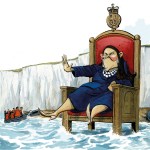
Throughout the summer Nigel Farage has kept up his focus on the migrant crisis in Dover. The onetime UKIP leader turned GB News star has spent much of the last six weeks denouncing the efforts of the Royal National Lifeboat Institution (RNLI) which he has dubbed a 'taxi service for illegal trafficking gangs' for picking up those crossing the Channel. Such criticisms have only served to produce a backlash, with Farage's criticisms producing a 3,000 per cent rise in donations to the charity with more than £200,000 given in one day last month. A fresh fundraising effort to buy a new hovercraft has meanwhile sailed past the £90,000 mark, with organisers cheekily suggesting it be named 'the flying Farage' in honour of the latter's fundraising efforts. https://twitter.

Belarusians in exile aren’t safe from the iron grip of Lukashenko

This week has laid bare the terrifying situation faced by Belarusians in their home country and abroad. From Tokyo’s Olympic village to the streets of Kiev and the courts of Minsk, the iron grip of president Alexander Lukashenko only seems to be tightening. With athletes joining political opponents and exiled activists in being targeted by the regime, many are now asking the question: where can Belarusians be safe? Certainly not at home. On Wednesday, a behind-closed-doors trial began in Minsk for two opposition figures involved in organising the huge protests which swept Belarus last year following elections widely held to have been fraudulent. Maria Kolesnikova and Maxim Znak have been charged with incitement to undermine national security.

Will Covid turn into the common cold?

Many experts and modellers thought that the 19 July reopening would be a disaster. So far, that has not been the case. Daily case numbers actually started falling within days after 19 July, although that was far too soon to have been caused by anything to do with ‘freedom day’. The question now is how the pandemic will play out for the rest of this year and the next? In trying to understand this, we need to understand some important things about the biology of coronaviruses and their interaction with their hosts: us. Sars-CoV-2, the virus that causes Covid, is not going away. Like other coronaviruses, it will likely infect us all repeatedly throughout the rest of our lives, probably about once every five years.

Is Boris Johnson planning to demote Rishi Sunak?

Is Rishi Sunak facing the axe? The Sunday Times reports this evening that Boris Johnson threatened to sack his chancellor this week during a meeting with No. 10 aides. After a letter Sunak wrote to the Prime Minister arguing for an easing of travel restrictions made its way into last week's paper, Johnson was left in a rage as to who was behind the leak. In the Monday call, on realising that Sunak was absent, he is alleged to have said: 'I’ve been thinking about it. Maybe it’s time we looked at Rishi as the next secretary of state for health. He could potentially do a very good job there.’  No-one in No. 10 is denying that Johnson said this. However, some play down the severity of the comments – suggesting it was a joke rather than a plan of action.

Will a Scotland ‘love bomb’ woo voters?

14 min listen

Boris Johnson and Nicola Sturgeon seem to be battling for the position of most amiable leader. The First Minister invited Johnson to meet with her on his visit to Scotland, but the PM politely declined, instead inviting Sturgeon to a more formal meeting of devolved administrations. The Prime Minister's visit to Scotland is part of a wider plan to soften support for independence. Will a 'love bomb' work? Katy Balls speaks to James Forysth and James Johnson, co-founder of polling firm JL Partners and former pollster at No. 10.

Talk tough and do nothing: The abject failure of Patel’s migrant strategy

It is somehow fitting that during an Olympic Games a department of Her Majesty’s government is busy smashing records. In the very week that a man ran the 400 metre hurdles at the Tokyo Olympics in a previously unthinkable time of sub-46 seconds, the Home Office presided over the arrival of 482 irregular migrants on the south coast of England in a single day. That easily broke a previous record of 430, set on 19 July or 'freedom day'. Startled observers of the cross-Channel chaos are now pondering whether the 500 barrier could even be exceeded one day this summer. That the Norwegian hurdler Karsten Warholm’s record represented astounding success, while the Home Office’s amounts to shocking failure is by the by.

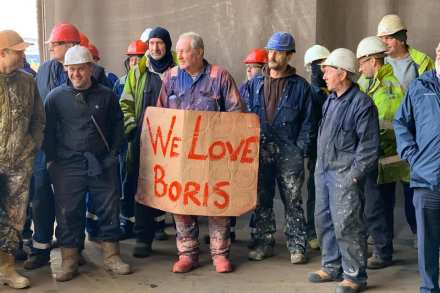
Boris’s miners joke reveals his contempt for the working class

In March this year, 35 years to the month since the end of the miners' strike, environmentalists were caught dressing up as miners. Their media stunt was intended to protest against a proposed expansion to the Bradley coal mine in County Durham. Martin Raine, a real miner working at the site, was quoted saying: ‘It is our jobs at stake here and instead of allowing us a voice the BBC showed fake miners with fake cardboard helmets and interviewed a student bussed in by Extinction Rebellion who got the basic facts wrong.’ Miners (and former miners) are no more likely to join eco-protests against mining jobs than Thatcherites are to sign up to Extinction Rebellion.

The China challenge has no precedent

The US has never been more worried by the rise of China than it is today. In my Times column today, I mention a new book by Joe Biden's China director on the National Security Council which sets out why ‘China now poses a challenge unlike any the US has ever faced’. Rush Doshi notes that American hegemony has been based, in considerable part, on its economic might. In the second world war, Germany and Japan combined did not reach 60 per cent of US GDP. Throughout the Cold War, the Soviet Union failed to hit this mark. Yet, China passed it seven years ago. The book sets out how China is attempting to replace the US-led world order with its own system, and how the US should try and counter this. It highlights that great power competition is very much back.

How Britain can really help Belarus’s embattled opposition

Belarus's opposition movement is gathering momentum. This week – just days after meeting president Biden – the country's opposition leader Sviatlana Tsikhanouskaya was in London to visit Boris Johnson and Dominic Raab. But what does this mean for ordinary Belarusians living under the rule of Alyaksandr Lukashenka, the brutal dictator still in charge of the country? Do they finally have cause to be optimistic about the future? As recently as April, Belarus’ democratic movement appeared to be running out of funding and impetus, with no clear strategy for ousting Lukashenka. Bolstered by a fearsome state security apparatus and Russian support, Lukashenka has unleashed a brutal crackdown on anyone who dares to challenge his 27-year reign.

Will Michael Wolff ever have to write a fourth Trump book?

30 min listen

Freddy's guest on this week's episode is the famed journalist Michael Wolff, author of three books on Donald Trump - the bestseller Fire and Fury, its very popular follow up Siege and the latest, Landslide. The final in the trilogy tells the story of the last days of the Trump presidency, including the 2020 election – one that the former president still claims he won.On the episode, Michael recounts election night and the moment Fox called Arizona, why he has little sympathy for the voters who still believe the election was 'stolen', and what it was like to catch up with Trump at Mar-a-Lago.