Politics

Read about the latest political news, views and analysis

Britain’s economic bounce back is less impressive than it seems

The UK economy is rebounding at the fastest rate in Europe, and faster even than the United States: that is the general tone of reporting of today’s GDP figures, which show that the UK economy expanded by 4.8 per cent in the second quarter of 2021. That is compared with 0.9 per cent in France, 1.5 per cent in Germany and 1.6 per cent in the US. But hang on, dig a little deeper and there is something a little odd going on with the figures. Compare nominal and real changes in GDP during the second quarter and it produces the following: UK, nominal growth in second quarter: +3.6 per cent; real growth in second quarter: +4.8 per centFrance, nominal growth in second quarter: +1.0 per cent; real growth in second quarter: +0.

The cost of net zero

35 min listen

In this week’s podcast: First up, to deny the man-made climate crisis we now find ourselves in would be an act of wilful delusion. But what is the right way for the UK to try and minimise this looming disaster? In our cover story this week Ross Clark looks at the financial viability of the government’s central proposal: getting to net zero. Lara Prendergast talks to him along with James Kirkup, chair of the Social Market Foundation, who writes in this week’s magazine saying that the cost for net zero is more than worth it. (00:48)‘Ten years ago, electric cars were a work of science fiction, now the best-selling car in the UK in June was the Tesla.

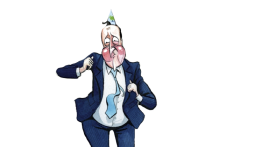
How do we stop the next David Cameron?

One of the enduring charms of British politics is how slight the pecuniary rewards are for taking up the job of prime minister. American presidents can look forward to stonking great advances on their memoirs. (Barack and Michelle Obama received a joint up-front payment of £47 million from Crown publishing group.) They claim rock-star appearance fees in exchange for a few platitudes to sandalled Silicon Valley execs. (Bill and Hillary Clinton raked in £110 million in speaking fees between 2001 and 2015.) A stint in the White House boosted George H W Bush’s net worth by 475 per cent and Richard Nixon’s by 650 per cent, pocket change compared to Bill Clinton’s 6,150 per cent. Unlike 1600 Pennsylvania Avenue, no one enters No.

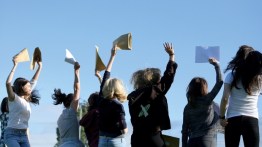
When will exams get back to normal?

It wouldn’t be credible to say that this year’s A-Levels grades are comparable with 2019's: almost 45 per cent of entries got an A or A* compared to 25 per cent two years ago. But, as I say in the magazine this week, the problem is that you can’t simply snap back to normal next year. Many of those who got their grades this year won’t go to university until next year. This — and the fact that the education of those in the year below has been disrupted too — means it wouldn’t be fair for exams to return to normal next year. That would leave the class of 2022 competing for university places against those who have benefitted from 2021’s more generous system.

Cambridge XR academic brags after prosecution dropped

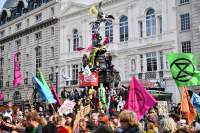
Since being formed in May 2018, the eco-warriors of Extinction Rebellion have done their best to endear themselves to commuters across the country. Known for their outlandish stunts, apocalyptic rhetoric and garish attire, members of the movement have deployed new forms of non-violent civi disobedience – much to the irritation of those whose roads and bridges they blockade. One such member is Jason Scott-Warren, a lecturer in English literature at the University of Cambridge. The academic tweeted on Monday that he was due to appear in court for a one man protest in May in which he repeatedly obstructed the highway wearing a sandwich board.

How to burst the grade inflation bubble

The Tories regard a return to rigorously marked exams as one of their big achievements in education. In 2010, the year they took office, more than a third of A-level entries received an A or A* grade. By 2019, following an overhaul of the curriculum, only a quarter did. Despite the havoc wreaked by Covid on education, the government was determined to carry on this trend. That’s why last year, after exams were scrapped, the Department for Education tried to further control grade inflation by using an algorithm. It worked, in part, by assessing the past results of schools — but a consequence was that exceptional pupils from historically underperforming schools were marked down. This seemed very unfair and the backlash was swift.

Working from home is a decision for businesses, not government

After seizing so much power during the pandemic, Boris Johnson’s government is having trouble working out where its remit now ends. The division used to be fairly simple: the state provided public services but left people and companies free to organise their own affairs. Ministers now talk as if they are in charge of everything — including whether people should or should not work from the office. Lockdown would not have been possible without digital technology, which enabled so many to work from home. For many companies, remote working has opened up all sorts of new possibilities. But the drawbacks are obvious. Younger workers are denied the training that the workplace offers. They also miss out on opportunities for building up working relationships, skills and salaries.

The SNP-Green alliance is a victory for the cranks

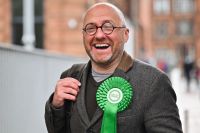
The SNP’s nationalist outriders, the Scottish Green party, are reported to be within touching distance of agreeing the terms of a formal cooperation agreement that will see them enter government for the first time. What will this mean for Scotland and its governing party? On the face of it, not a great deal. Some Green MSPs (the party has seven, including co-leaders Lorna Slater and Patrick Harvie) will get ministerial posts but will have minimal impact on SNP policy, which will likely remain tightly controlled by Sturgeon and her inner sanctum. The SNP will hope that the optics of hooking up with the Greens will boost their environmental credentials in the build-up to the Cop26 conference in Glasgow.

Margaret Ferrier’s staffing crisis

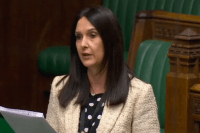
It's not just the hospitality sector struggling to recruit this summer. Steerpike has been amused to see a number of job postings appear on the 'Working for an MP' website in recent months for the exciting opportunity to work for the member for Rutherglen and Hamilton West, Margaret Ferrier. Ferrier of course has been suspended from the SNP since October after she admitted travelling down to London, having developed Covid symptoms. Not only did the MP fail to stay at home to prevent potentially spending the disease, she also decided to speak in Parliament, and then decided to travel back to Scotland on the train after receiving a positive Covid test.

Why did Andrew Cuomo resign?

24 min listen

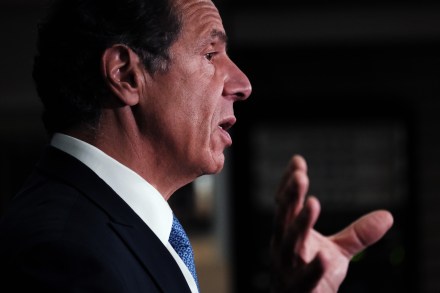
Andrew Cuomo has resigned as governor of New York after an inquiry found he sexually assaulted multiple women. Why was the Governor so loved by Democrats, should he really have resigned over the state's care homes scandal, and might we soon see him as a CNN contributor? Freddy Gray speaks to Spectator World contributor Grace Curley.

Google’s war on home workers was inevitable

Tapping out some code in the back garden. Working on a sales presentation while watching the school sports day. Or even better, traveling though a continent or two while still pulling down a ritzy six figure salary.  Over the last year, middle class professionals have bought into the Work From Home Dream – or WFHD as it's known in HR circles – to create a working life that combines the best of all possible worlds. It is hardly surprising that so many highly-paid workers are happy to stay away from the office on a permanent basis. Forget Zero Covid. The WFH warriors will be aiming for Zero Flu and Zero Colds before they get back to their desks Google's move illustrates two big problems with WFH But hold on. It turns out there is dark side to that dream.

Kate Clanchy and the new censorship in publishing

‘There’s more than one way to burn a book’, wrote Ray Bradbury, in a coda to the 1979 edition of his anti-censorship classic, Fahrenheit 451. The case of Kate Clanchy, the Orwell Prize-winning author, currently rewriting her book after a particularly strange fit of identitarian pique, shows us just how true that is. The story of Clanchy’s sudden fall from grace in the publishing world is utterly mad, even by today’s standards. She is an author, poet and teacher. In 2019, she published Some Kids I Taught and What They Taught Me, a memoir reflecting on her time teaching in an Oxford comprehensive, to critical acclaim.

Will Williamson be moved from education?

14 min listen

Equalities minister Kemi Badenoch could replace Gavin Williamson as education secretary in the next reshuffle, according to reports today. Should he be moved, and how is he making his case for staying? Cindy Yu speaks to James Forsyth and Isabel Hardman.

One in five Scots thinks Sturgeon controls foreign policy

Tensions between Westminster and the devolved parliaments have been a constant feature of the Covid pandemic. Up in Edinburgh, the First Minister Nicola Sturgeon has made full use of the crisis – hinting constantly at closing the English border and peppering her daily press conferences with pointed jibes at London.  Such actions are of course merely in keeping with the SNP's penchant for power grabs and undermining the Union. In April the party's Holyrood manifesto included a section grandly titled 'global affairs' boasting about their plans to engage with the 'Scottish diaspora' and the establishment of a 'Scottish Council for Global Affairs.' Foreign policy is, of course, a reserved power for Westminster.

The problems posed by booster shots

It is already known that there will be a campaign of booster shots in the UK this autumn to boost immunity among the over-50s. But it now looks like the government is planning one for autumn 2022 as well. Steven Swinford reports in the Times today that the UK has ordered 35 million doses from Pfizer for next year. The number of doses ordered suggests that the government wants to have the option in 2022 of giving a booster shot to everyone in clinical groups 1-9: the over-50s. Swinford reports that the government was prompted to act, in part, by the fact that the EU has already placed an order for 900 million Pfizer shots over the next two years. It seems likely that richer countries will go down the booster shot route in the coming months.

The BBC’s woke guide to gender

Earlier this week, Mr S brought you the BBC’s internal guide to talking about climate change and how to win audiences over to the 'correct' side of the issue. Now he can report that the Corporation’s commissars of language appear to have also redefined what it means to be gay. That redefinition comes in the BBC Style Guide, the in-house guide to words last updated in November. In light of the Corporation's increasingly desperate attempts to win over younger audiences, Auntie's description of 'homosexual' might raise some eyebrows given its definition as: 'Homosexual means people of either sex who are attracted to people of their own "gender.

Why wealth matters in the free speech debate

The divide between the rich and the poor is obvious in Britain today. Whether in terms of income, geography or political outlook, the cleavage between the haves and have-nots widens conspicuously. It has become a source of much snobbery and resentment. But there is another field in which this division can be witnessed, yet all too often goes ignored: free speech. Increasingly, the freedom to express your political opinions has become the privilege of the rich, while the poor – or even those on middle incomes – now fear to say what they like. This is especially the case when it comes to talking about gender, race and Brexit.

Will Boris treat Hong Kong like Belarus?

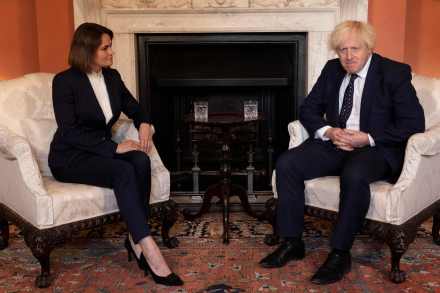
It may be recess but diplomacy does not stop. Last week Boris Johnson welcomed one of the main Belarusian opposition leaders Sviatlana Tsikhanouskaya to Downing Street to show his support for the cause.  According to a No. 10 readout of the meeting, the Prime Minister claimed that the British people shared with Belarusians 'fundamental values such as a belief in democracy, human rights and rule of law' and that the UK “stands in solidarity of the people of Belarus and will continue to take action to support them.' Johnson subsequently met this rhetoric with actions yesterday when the UK introduced trade, financial and aviation sanctions on the Lukashenko regime in response to its continued undermining of democracy and human rights violations.