Politics

Read about the latest political news, views and analysis

Boris faces a backlash from Tory MPs over Afghanistan

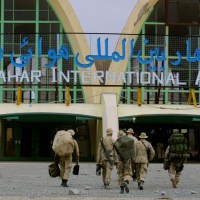
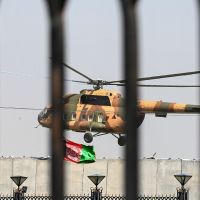
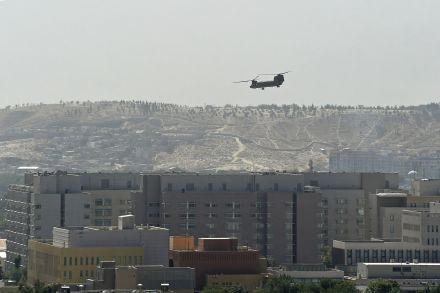
After the Taliban took over Kabul and announced victory in Afghanistan, a scramble is underway by diplomats and many Afghans to flee the country. There are videos overnight of distressing scenes at Kabul airport where crowds have assembled in an attempt to get out. The US embassy has since issued an advisory to American citizens and Afghan nationals not to travel to the airport until notified. As the chaos unfolds – and both UK and US estimates on the likely speed of the Taliban advance prove embarrassingly wide of the mark – anger is building among MPs over the government's handling of the situation. Dominic Raab has flown back from his holiday early and Parliament will sit on Wednesday for an emergency session to debate the next move.
Our moral obligation to the Afghans who took us at our word

The speed of the Taliban’s advance in Afghanistan is remarkable. Even those who thought that the Trump / Biden policy of withdrawal was a folly, did not expect that Kabul would be surrounded before the end of August. Their only mistake was to believe our assurances about having an enduring commitment to the country What makes the whole situation, with all the suffering that ordinary Afghans will endure and the damage being done to the US’s reputation for being a reliable ally, so exasperating is that after years of failure the US and Nato had found a relatively low cost way of maintaining a form of stability in the country.

Calculating the cost of Bercow

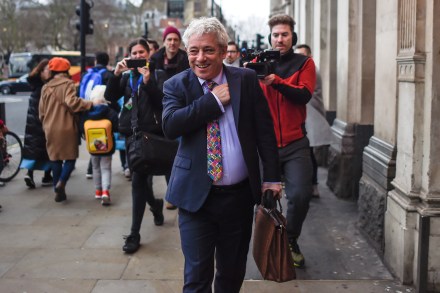
After a year out of the headlines, John Bercow is back. The former Commons Speaker appeared on the Observer front page in June to announce his membership of the Labour party, eighteen months after retiring from Parliament.  The onetime Tory right winger is still smarting over the government's refusal to award him a peerage and thus a seat for life in the Lords to happily chunter away. There is now speculation as to whether Bercow's revised goal is a return to the Commons under Labour colours – as if his former colleagues there had not suffered enough. One story Bercow will have been less pleased about was the news last month that he has broken his promise not to claim his gold-plated Speaker's pension until he is 65.

Scotland’s transgender guidance is a safeguarding nightmare

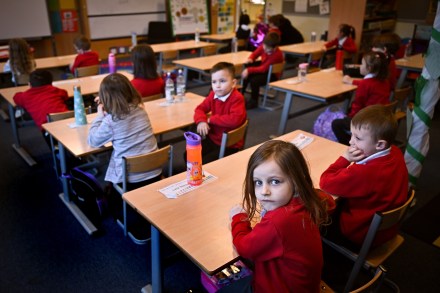
On Thursday, teachers planning residential trips were told that it may be just fine for teenagers of the opposite sex to share a room.  In 25 years of teaching, I have seen many daft ideas trickle down from government, but the Scottish government’s latest guidance, ‘Supporting Transgender Pupils In Schools’, takes the biscuit. Of course it promotes affirmation of transgender identities. This is Scotland, after all, where Nicola Sturgeon’s SNP seems to be in thrall to transgender ideology. The party previously enacted legislation that talked about people ‘becoming female’. But while that law took liberties with the rights of women, this latest guidance impacts the safeguarding of children.

Is the West in retreat?

15 min listen

The south of Afghanistan is now under Taleban control, after the group took the cities of Kandahar and Lashkar Gah this week. Meanwhile, Britain and America are deploying thousands of troops - as many as were there before the withdrawal began earlier this year - to evacuate expats and the majority of embassy staff. After a 20-year war in Afghanistan, the West is running away.Britain and her allies, however, will continue to face challenges like Russian aggression and Chinese expansionism in the coming decade. Will we just sit back and accept our decline? Isabel Hardman speaks to James Forsyth and General Sir Richard Barrons, who helped set up the International Security Assistance Force in Afghanistan in 2001, and was deputy chief of the defence staff from 2011 to 2013.

The failure of the right

Sometimes things that don’t happen are as important as those that do. In the Sherlock Holmes story Silver Blaze, about the theft of a racehorse, the failure of a dog to bark is the central fact that allows the crime to be solved. Holmes mentions this 'curious incident of the dog in the night-time' to a Scotland Yard detective who is puzzled and tells him: 'The dog did nothing in the night-time.' Holmes replies: 'That was the curious incident.' There is a strong case for regarding the failure of a dog to bark as the central fact of British political life today.

The problem with Anglo-Gaullism

Enoch Powell was a great admirer of General de Gaulle. That didn’t stop him, at the end of his career, rallying to the Ulster Unionist cause — rather ignoring the fact that de Gaulle happily sacrificed the French Algerians to the higher cause of France. In the same spirit as Powell, one hears talk today in conservative circles of the idea of Anglo-Gaullism; Peter Hitchens recently described himself in this way in an interview with Nigel Farage. What might this concept mean and is it true that Gaullism offers possible lessons for British conservatives today? One problem with answering that question is that even in France it is hard to say what ‘Gaullism’ means. In his lifetime de Gaulle was a highly contested figure.

Merkelism is here to stay – and that’s bad news for German politics

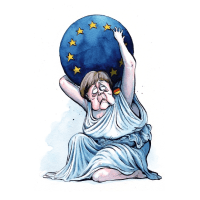
When Angela Merkel leaves office after Bundestag elections next month, she will have forever changed the course of German history. Merkel has steered Germany through a recession, the Eurozone and migration crises and the Covid-19 pandemic. During the Trump presidency, Germany's chancellor became an icon for liberals around the world. Yet her legacy in terms of Germany’s domestic politics leaves much to be desired. And her Christian Democratic Union (CDU) party has been left searching for meaning, with many voters now left wondering what the point of the Union is after Mutti. On the face of it, Merkel's insistence on reaching for consensus in German politics appears to be something to celebrate.

How I fell out of love with football

The new Premier League season has begun and I don’t know what to think. I tried to watch all of England’s Euro 2020 matches, but I never made it to the end of any of them. When the final against Italy kicked off, I retired to a quiet room feeling angst and confusion. Why was I so out of step with everyone else? Gareth Southgate’s players seem like lovely boys. And while they probably represent the better aspects of our evolving culture, it seems likely we may soon discover that they remain fallible. But if the response of the public to England’s triumphs and tragedy was one thing, the reaction of the media was quite another. It drew out the very worst reverse snobbery in me.

Boris on Afghanistan: in his own words

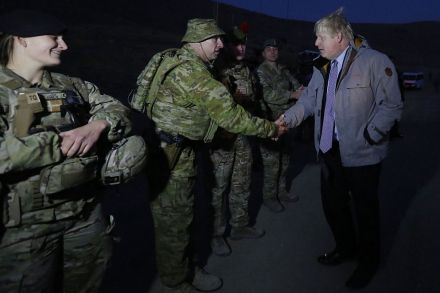
After 20 years, 456 UK military deaths and £22 billion spent, Britain's involvement in Afghanistan is over. With the last American forces leaving within a month, news out of the war-torn nation has been predictably grim, with the Taliban sweeping the country amid reports of executions, evacuations and troops switching sides. The situation is now so dire that Boris Johnson has been forced to chair an emergency Cobra meeting this afternoon. British troops went into the country in October 2001 – four months after Johnson was first elected as an MP for Henley – with the subsequent two decades of fighting attracting much comment from the future Prime Minister during his rise from a backbencher and commentator to a minister climbing the greasy pole.

Jonathan Miller, Matthew Lynn and Melissa Kite

19 min listen

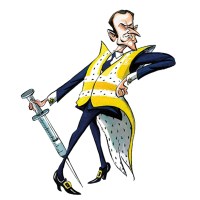
On this week's episode, Jonathan Miller, author of France, a Nation on the Verge of a Nervous Breakdown talks about the French 'vaccine passport' protests; Financial columnist Matthew Lynn reflects on 50 years without the gold standard; and Melissa Kite tells us about her own ways of treating Covid.

Will Britain regret the Afghanistan withdrawal?

14 min listen

With things on the ground in Afghanistan accelerating from bad to worse so fast that the Americans are now even worried about the safety of their embassy. Cindy Yu talks to James Forsyth and Isabel Hardman about what the UK Defence Secretary Ben Wallace's attitude towards this 20 year conflict has been like in statements both past and present.

Winning here: the Lib Dems’ links with China

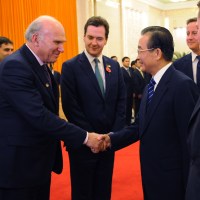
Earlier this week Mr S brought you news of the latest interminable row splitting the Lib Dems: what to do about Vince Cable? The ex-leader has alienated his party's youth wing with his comments about the Chinese Communist party and Beijing's treatment of Uyghur Muslims. Cable has denied that genocide is taking place in Xinjiang and also defended the Hong Kong government's crackdown on protesters on the grounds that 'there's got to be order.' Bull in the China shop stuff indeed. Now Mr S has been delving into the links of some of Cable's colleagues from the Coalition government. Back then, it was the so-called 'golden era' of UK-China relations with Sinophilia all the rage in SW1 – a phenomena from which the Lib Dems were by no means exempt.

Is the Catholic Church falling apart?

18 min listen

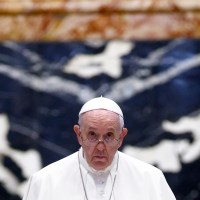
In the last episode of Holy Smoke, I discussed Pope Francis's brutal and petty new document which seeks to ban as many Latin Masses as possible. This week we look at the other recent developments, which are arguably just as disturbing: two criminal prosecutions in which close allies of the Pope are accused of a range of hair-raising offences – and the question of how much Francis knew about their activities still hasn't been answered, either by the Vatican or its tame press corps.. Also, I touch on a new explanation for Rome's dreadful pact with China. Did the Pope's Secretary of State sign away the freedom of Chinese Catholics because Beijing was threatening to release data relating to the use of the gay hook-up app Grindr inside the walls of the Vatican? We may never find out.

Where is Britain’s anger about Afghanistan?

This is an age of anger. Social media amplifies rage and exaggerates polarisation. Twitter isn’t Britain, but too many people in politics and journalism spend too much time on the site and – consciously or not – start to mistake its shallow extremes for real public opinion. The result is a public discourse more often driven by fury than understanding. Just about any question or issue can unleash this lab cultured rage. Some people are angry about being asked to wear a mask to avoid spreading a disease that might kill someone else. Some people are angry about an alpaca. So where’s the anger about Afghanistan? A Suez moment is passing almost unremarked Afghanistan, where two decades of Western intervention is ending in bloody failure.

Devi Sridhar blunders (again)

The antics of Scottish Covid advisor Devi Sridhar have been one of the few bright spots throughout the pandemic. During the last fifteen months, Sridhar has become something of a pin-up girl to the SNP's online army of so-called 'cybernats.' This has been due to her repeated jibes at the Westminster government, her demands for more power which Holyrood already had and her effusive praise for First Minister Nicola Sturgeon’s ‘wise words’ and ‘strong leadership’. Not to mention of course her suggestion that an independent Scotland would have done better against Covid. More seriously, Sridhar has also been accused of spreading misinformation about the Oxford vaccine.

Is the Taleban’s success a surprise?

11 min listen

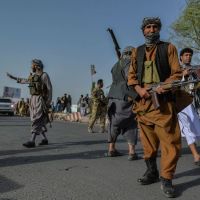
The Taleban are continuing their advance through Afghanistan, and are on the cusp of taking control in the major cities of Herat and Kandahar. The group's fighters have predictably ignored the Doha Agreement, but has the speed of their success taken politicians by surprise, and how much of an embarrassment is the deteriorating situation for the White House and Downing Street? Cindy Yu speaks to James Forsyth and Isabel Hardman.

Afghanistan will be a stain on the Biden presidency

Afghanistan will be a stain on the Biden presidency. His decision to continue with a US withdrawal from the country – he wants America out by the twentieth anniversary of the 9/11 attacks – reflects both the war-weariness of Washington and how Afghanistan and the ‘war on terror’ have dropped down the country's list of strategic priorities. The consequences of the US withdrawal are all too apparent, with the Taliban now in control of two thirds of Aghanistan. American intelligence is worried that Kabul might fall within a month. In an awful historical irony, the Taliban could once more be in control of the Afghan capital by 11 September.