Life

Game on

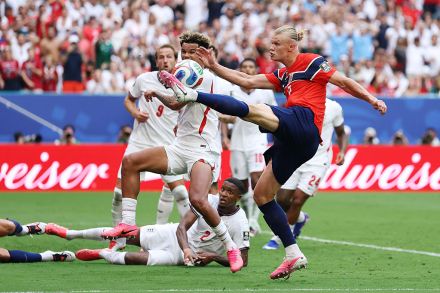
The FIFA World Cup is coming to the United States (Thursday, June 11 to Sunday, July 19, 2026), which means, for a few weeks, the country will submit to calling the Beautiful Game football. It already does so more often than it admits, and the insistence on “soccer” now feels faintly performative. The US came late to the game, but Major League Soccer now draws average crowds of more than 22,000 a match, placing it alongside established European leagues. Its broadcast deal with Apple – 10 years and $2.5 billion – suggests confidence. The arrival of Lionel Messi at Inter Miami CF in 2023 did not create interest so much as accelerate it. Watchmaking, as it tends to, has followed the audience.

Keep it classic

Old Masters has long been yesterday’s story as contemporary art surged away from the dusty legacy market. But just as the interesting times that we live in have investors heading for gold in their droves, the value of certainty is a rising stock in the art market, a tendency on vivid display at TEFAF art fair at Maastricht in the Netherlands this spring. Certainty of long-term value, certainty of supply and of provenance are some of the qualities that are drawing collectors back to Old Master categories, but add better curation, services and the perception that prices reflect intrinsic worth more than hype and the smiles all round as TEFAF closed are easy to account for.

The scenic route

Walking up to the Valhalla is an intimidating experience. Low to the ground, it looks like a prototype race car and every bit the million-dollar starting price tag. Its large gullwing doors swing up, presenting an interior bathed in carbon fiber. After climbing in awkwardly, the carbon bucket seats hug you in and the squared-off steering wheel reminds you this is no ordinary Aston. Close the door and you’re cocooned in like a Le Mans Hypercar. The Valhalla isn’t a track-only racing machine, though. It’s a hybrid road car, made in partnership with Aston Martin’s Formula 1 team, but with surprising levels of comfort and usability. It has 1,046hp, with power coming from both the 4.

Loosen up

Oliver Spencer, designer and founder of London-based luxury formalwear brand Favourbrook, has a few thoughts about summer style. For a start, he is unimpressed by the type of men who turn up at the races squeezed into “tight suits” and seeming to want to look like an extra from Peaky Blinders. He is equally dismissive of the long reign of beige discretion. “We’re all a little bored of that ‘quiet luxury,’” he says. “No thanks. No more.” For Spencer, the answer is obvious. Summer should be fun, fancy, colorful, and, above all, joyful. He dislikes the idea of “occasionwear” altogether.

Mixing business and pleasure

British tailoring house Thom Sweeney has long made a virtue of Italianate ease refined through a distinctly Mayfair lens. The wardrobe is sleek, elegant, and relaxed enough to move from airport lounges to boardrooms, members’ clubs, long lunches, and late dinners without missing a beat. That balance is especially clear in its summer proposition, where tailoring is stripped of heaviness but none of its polish. As co-founder Thom Whiddett puts it, “I love our new chocolate-brown blazer paired with a black dress trouser” – both cut from “very lightweight and breathable wool,” which makes them ideal for warmer weather, and the silhouette works for “both business and pleasure.

Down with the children’s birthday-industrial complex

Recently, I’ve been thinking a lot about birthdays. For one thing, I’m writing this on the very day I turn 37. For another, you might’ve heard that America’s got a big one coming up later this year: 250. Old enough to stop squabbling and act its age. But right now, the only birthday that matters in our household is my daughter’s, and it’s coming up in two weeks. New York City children’s birthday parties – at least many of the ones I’ve witnessed – are unlike anything you’ve ever seen. Not so much parties as highly coordinated tests of moral conscience. They’re diplomatic summits involving balloons, sugar and, yes, perhaps a touch of low-level psychological warfare.

pope

The clash between Trump and Pope Leo shouldn’t shock Catholics

I have always believed that no Catholic with a sound understanding of his faith, which represents the ultimate in realistic thinking and a realistic view of the world, should be shocked by anything. For this reason, the recent contretemps between the President of the United States and Pope Leo XIV left me completely unaffected. Donald Trump is not a Catholic and the Pope in Rome serves in persona Christi, the 367th temporal embodiment of the Lord before the Second Coming. I believe further that a great many devout Catholics devote too much attention to whoever it is who happens to be serving as the Vicar of Christ at any given moment and that it is theologically wrong to treat him as an international celebrity, as it has been the custom of Catholics to do in the postwar era.

yachts

The trouble with yachts

Yacht owners are well-heeled and outgoing types, perfect devotees of good food and wine. Drinking and yachting does not carry the same stigma as drinking and driving. But yachts are not exactly small things so where, exactly, do you put your boat when you stop somewhere for lunch or dinner? A guide has now been published, telling yacht-owners which Palm Beach restaurants are boat-friendly, how much dock space each establishment has, whether or not there are docking fees, whether “rafting” is sometimes necessary (ferrying people to and from the dining area from the dock), whether overnight parking is permitted (in case you imbibe too much), what is the maximum size of boat accepted, whether table service on the boat is available and for what fee and whether sailboats are permitted.

Americans think they want the ‘real Ireland.’ They don’t

As the first Americans of the season got out of their car I scrunched up my face and groaned. “They’re all like that, remember?” said the builder boyfriend. “What if the bed gives way?” I demanded. “How will they even fit in the bed?” The BB shrugged. “Who cares?” he said, with his usual sunny attitude. I don’t mean to suggest these people were overweight. I mean they were giants. I’m sure their depth was right for their height. There was just an awful lot of them, and we are not the Premier Inn, with super-king beds that sleep two medium-sized horses. She was in sportif wear. He was tousle-haired and bearded, dressed in a flowing shirt and baggy trousers.

ireland

Croquet hasn’t quite gone away

Growing up, I remember a set of strange colored mallets that occupied a dusty corner of the family garage. My mother had purchased them as a novelty, I learned, in an effort to take up croquet when she bought her first weekend home upstate. She had fond memories of playing croquet as a child, but to me it always rang somewhat ironic: the city slicker’s romantically anachronistic idea of, “What else is there to do in the country?” So when I got invited to this year’s Annapolis Cup – the 42nd annual croquet match between St. John’s College and the US Naval Academy – I wasn’t sure what to make of it. My first instinct was to assume it was a gag, a silly put-on for charity.

palm beach real estate

Palm Beach is religious about real estate

A reporter, writing in one of the local rags recently, observed that “Palm Beach does not take itself too seriously.” Er… wrong. Very wrong. Palm Beach takes itself very seriously indeed and, as the location with the greatest density of billionaires, why not? And the two things it takes most seriously are money and property. As I have remarked here before, property prices are close to being a religion in Palm Beach. Not a day goes by without the local “shiny sheet” reporting the latest property price news, mostly a happily reassuring dollar figure for this condo or that beachfront palace. Given this, well, preoccupation, it is no surprise that we now have two new concepts in property. These are “property promiscuity” and “polydomary.

The marvels of Cuba’s national botanic gardens

The last time I visited Cuba’s national botanic gardens, there was a wedding in a tucked-away corner by the Japanese pool. The happy couple stood at the water’s edge as jacanas – Jesus birds – walked the lily pads behind them. I have been thinking about that couple, as we’ve just heard that the botanics have closed due to the oil blockade the US is imposing on the island. The gardens were an escape in a collapsing city, not that we could still reach them, as there is no fuel. I have a small boy, Santiago, and it’s hard to entertain him in these trying times. On calm days, there is the beach, the beautiful miles of sand to the city’s undeveloped east, but with an empty gas tank, that too is out of reach.

Gone fishing: In the Andean foothills of Northern Patagonia, the wild trout are biting

The casa grande could be an ancient chalet in the Austrian Tyrol. A steeply gabled roof to slough off the winter snow, dandelion-yellow paintwork, and inside a treasure trove of all an outdoorsman loves. Antlers jostle for space on every wall. There is a tack room thick with the leathery tang of saddles, a bathroom with 1950s rifle magazines for idle reading, and everywhere photos of family, ancient and modern, often with a trophy – deer, vast mountain goat, or even puma. But it is the array of polo cups that gives away the location.

A new vintage

Washington, DC might not seem the obvious choice for Britain’s oldest wine and spirits merchant to establish its first US outpost, eschewing more likely suspects such as, say, Manhattan. But that’s exactly what Berry Bros. & Rudd, founded in 1698 opposite St. James’s Palace in London, has done. “We’ve quickly earned recognition across all of DC, as well as Virginia, Maryland, Delaware, and more,” says Jamie Ritchie, the company’s longtime managing director. “The news that we’re here spread quickly because it’s a smaller population, a smaller competitive set. People are aware we’ve arrived.” ‘If you spend too much time looking backwards you tend to bump into the future.

What lies beneath

Every J Craft’s retro-style hull conceals ultramodern comforts and a setup fit for a tech-savvy Viking If you are familiar with the Ship of Theseus paradox, you’ll know that dating back to the Greeks, the famous philosophical question is this: if a boat has all its components replaced, is it at the end still the same boat? Every J Craft’s retro-style hull conceals ultramodern comforts and a setup fit for a tech-savvy Viking In Sweden there is a near modern-day version of this taking place every year at the J Craft shipyard on the island of Gotland.

How luxury pen company Yard-O-Led is setting today’s digital and disposable world to writes

One day during my first job as an aspiring journalist at a serious newspaper, the editor told me how much he liked my writing. Flushing with pride, I asked which particular piece I’d penned. “No!” he interrupted abruptly, before I’d even finished my question. “I mean your handwriting.” It was the note I’d scrawled rather than any article I’d labored over that had caught his eye. Curiously, ever since I was calligraphy-shamed by a teacher for blotty, illegible cursive writing at a young age and attempted to recreate the italic script a friend had learned, handwriting has played a significant role in my life. There was the person I’d sent a written message requesting information for a story, who wanted to meet me because he admired my handwriting.

Exploring the world’s oceans with the world’s most interesting man

“You can just do things.” It’s a popular phrase on X, usually in response to someone accomplishing something remarkable, taken to mean that there’s nothing stopping you from doing something out of the ordinary. SpaceX might post video of a rocket landing – “you can just do things.” Victor Vescovo might be the living embodiment of the phrase. My first introduction to Vescovo was an email from him, extending an invitation to be a guest at his table for the Explorers Club Annual Dinner. The name was vaguely familiar to me but didn’t immediately register. Who was this mysterious correspondent?