
There are few brands that can claim to have made a handbag for Margaret Thatcher, a cigar case for Winston Churchill, and the necklace worn by Kate Winslet in 1997’s Titanic. Asprey, the British luxury house that has been operating out of London since 1781, can claim all three, and that’s before you get to the Royal Warrants, the generations of silversmiths working in its workshop, or the fact that it is currently embarking on what it calls a modern Grand Tour, sourcing rare crafts from artisans in Japan, Brazil, Afghanistan, and beyond to mark its 245th anniversary.
If you haven’t heard of Asprey, you’re probably not alone – at least on this side of the Atlantic. In Britain, the name carries a particular kind of weight. It’s the sort of house that gets referenced in the same breath as Savile Row tailors: historic, deeply skilled, and not especially interested in shouting about it. “For 245 years, we at Asprey have stood as custodians of British craftsmanship, heritage, and enduring excellence,” says John Rigas, chairman of Asprey. Founded in 1781 by William Asprey, the house received its first Royal Warrant in 1862 from Queen Victoria, for dressing cases and traveling bags, and has held one for every British monarch since, up to, and including Queen Elizabeth II. That is an unbroken run of royal endorsement stretching across more than 160 years, which gives you some sense of the esteem in which the house has been held.
The connection to the British royal family runs deep. In 1948, Queen Mary bought a five-strand natural pearl necklace from Asprey as an 18th birthday gift for Princess Margaret, who wore it for several of her most famous portraits by Sir Cecil Beaton. When the necklace came up for sale at Christie’s in 2006, it fetched £276,000 (roughly $372,827 today), more than 10 times its estimate. Princess Diana received a full parure of diamonds and sapphires from Asprey, gifted by Crown Prince Fahd of Saudi Arabia when she married Prince Charles in 1981, and later had Pierre Balmain design a blue velvet dress specifically to match it. The current Princess of Wales, Catherine, has continued the tradition, wearing Asprey pieces including an emerald and diamond choker that Princess Diana had made famous, and a pair of diamond and amethyst earrings at a London Marathon training day in 2017.
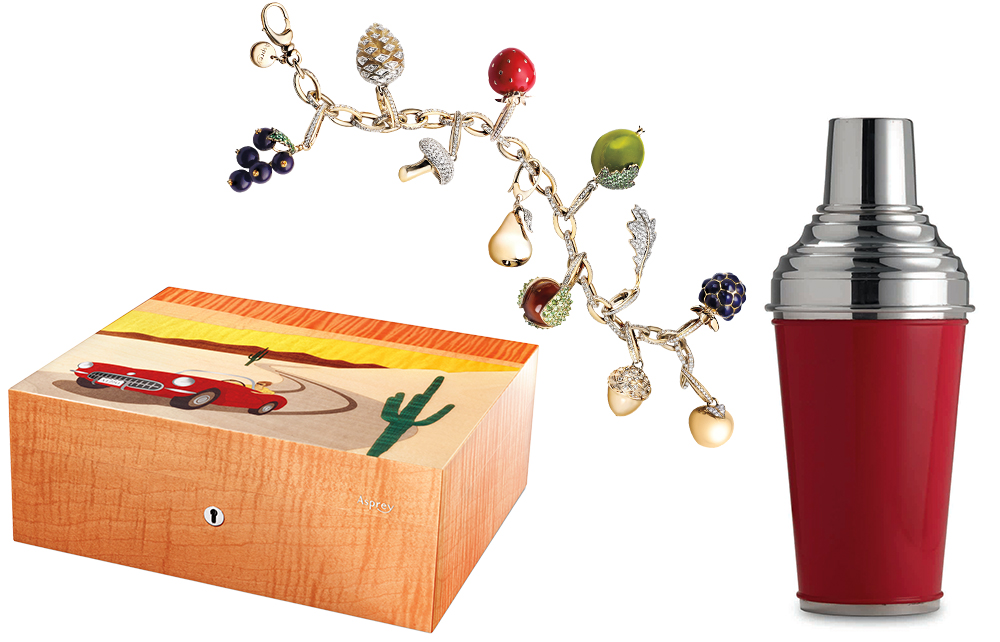
What Asprey actually makes is harder to summarize than you might expect. The short answer is beautiful and exceptionally well-made objects. Silver, leather, jewelry, glass, furniture, accessories – the house has always defined itself less by a single category than by a standard of craft that spans across all of them. At the heart of the operation is its West London workshop in Hammersmith, opened in 2022 in a 4,900-square-foot space, where the house relocated its machinery and craftspeople from the maze of attic rooms above its former flagship on New Bond Street.
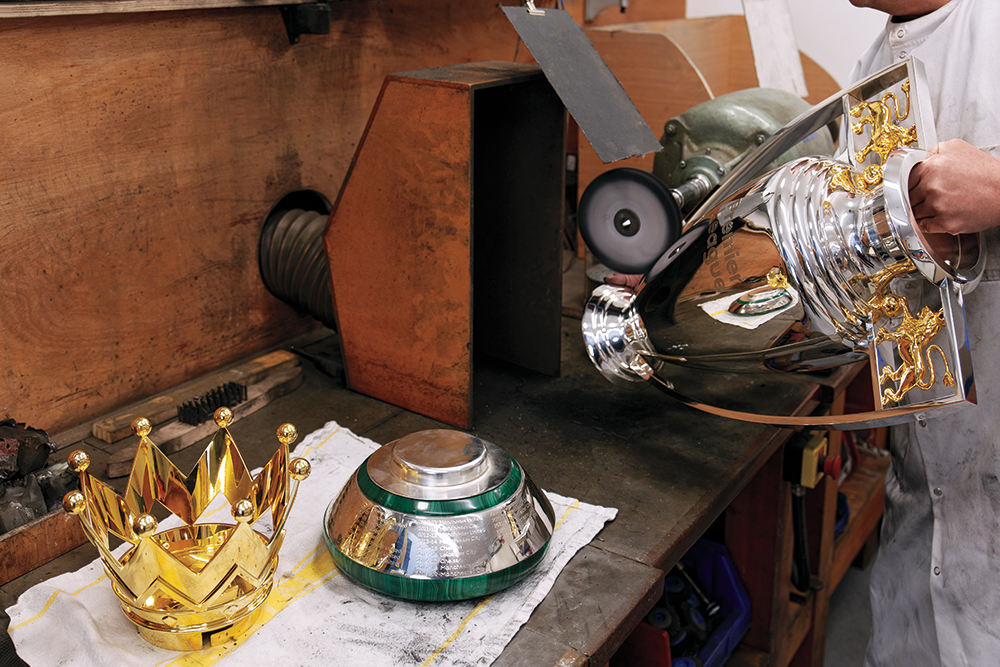
The team is small but formidable – some of its members have spent five decades at Asprey – and specializes primarily in silversmithing, with plans to reintroduce jewelry making. Traditional techniques sit alongside modern processes such as laser welding and precision polishing, with century-old tools still in daily use. The workshop produces everything from bespoke commissions and intricate decorative objects to prestigious sporting trophies – among them the Premier League trophy, which returns to Hammersmith every year for engraving.
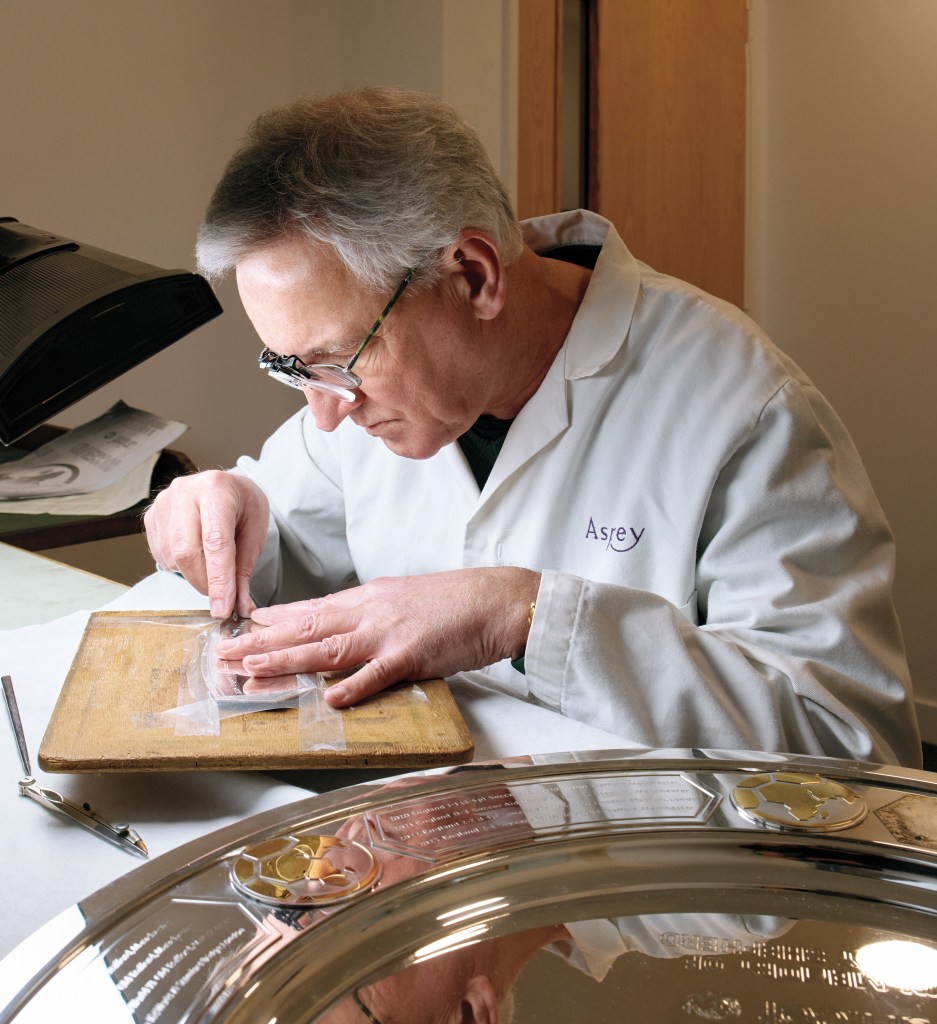
Apprenticeships are central to how the workshop operates, and the house supports the Goldsmiths’ Craft & Design Council to ensure specialist skills are passed on to the next generation. “At the heart of Asprey, we maintain one of the few fully operational workshops in London, where exceptional objects are meticulously brought to life with precision, artistry, and integrity,” says Rigas.
The kind of commissions that have come through the house over the years give a sense of its range, spanning American financier J. Pierpont Morgan to the Maharaja of Patiala. Many remain confidential – discretion being something of a house speciality – but the ones that have become public tell a story of a business present at some of the defining moments of British cultural and political life for nearly two and a half centuries. Its influence has even extended to Hollywood, with the “Heart of the Ocean” necklace in Titanic being one of its most famous creations.
‘In our 245th year, we continue to champion rarity, longevity, and the preservation of exceptional cra smanship’
This year, for its 245th anniversary, Asprey has taken the concept of the Grand Tour – the 18th-century tradition of wealthy young Britons traveling through Europe to broaden their cultural education – and reimagined it as something more contemporary. The result is a series of collaborations with master craftspeople and workshops from around the world, each producing work that fuses Asprey’s British heritage with local techniques and materials you would be unlikely to find anywhere else.
In Britain, the house has worked with Jonathan Harris, a second-generation glassmaker, on hand-sculpted cameo vases. In Ireland, it has collaborated with Zelouf & Bell, a furniture maker working in wood, bronze, brass, and gold-leaf marquetry since 1992. In Japan, it has partnered with Inden-Ya, whose decorative lacquer technique dates to the 16th century, to apply traditional Japanese craftsmanship to leather bags. In Brazil, designer Silvia Furmanovich has contributed marquetry made from exotic fallen wood from the Amazon. In Afghanistan, Asprey has worked with Turquoise Mountain – the craft revival organisation originally established at the initiative of King Charles III – to produce semi-precious stone boxes handcrafted by local artisans. And in China, the house has sourced Imperial Jadeite carved by master artisans.
It is a program that spans six countries and six very different craft traditions, and it has found a ready audience in the United States. Asprey’s US flagship on 678 Madison Avenue in New York was recently remodeled to replicate the immersive, mansion-like experience of the London store, sitting in a stretch of the avenue that is seeing something of a revival, with flagship openings from both established and emerging designers, and vacancy rates nearing historic lows.
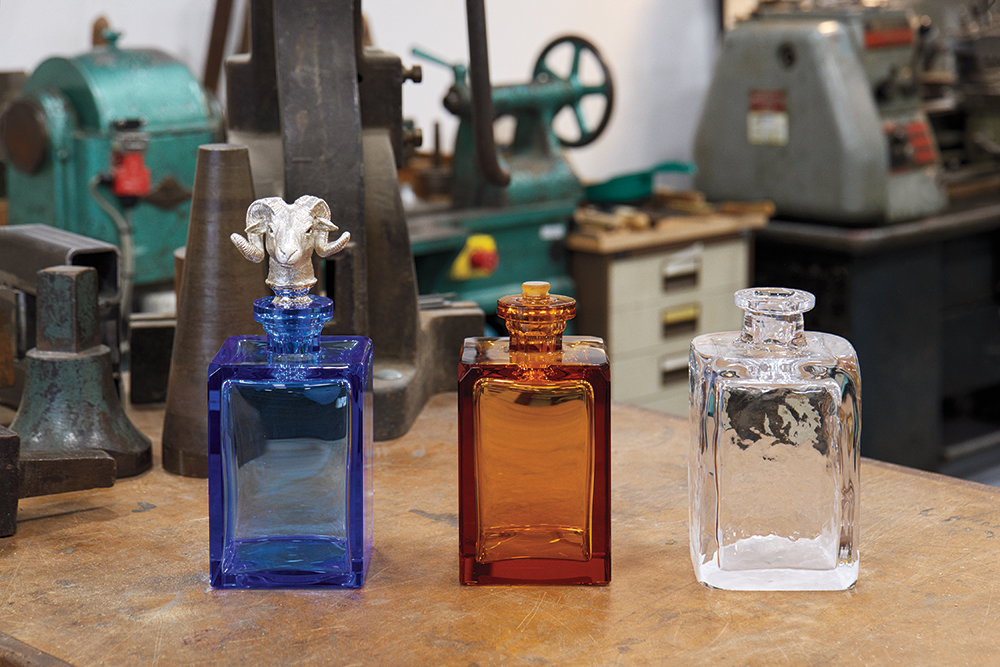
Beyond New York, the brand operates in Beverly Hills where its boutique inside the legendary Beverly Hills Hotel is in 2026 celebrating its 27th year. “Our Beverly Hills boutique features an exclusive barware collection inspired by the glamour and spirit of California living – from mouth-blown crystal to finely crafted metalware designed for modern entertaining,” says Rigas. The brand also operates in Miami, Palm Beach, and Southampton, NY.
“In our 245th year, we continue to champion rarity, longevity, and the preservation of exceptional craftsmanship, bringing together master artisans worldwide to create objects of enduring significance and enduring beauty across generations,” says Rigas. “We have always been defined not only by our history, but by our continued commitment to creation.”





Comments