World

Trump is already the diplomat-in-chief

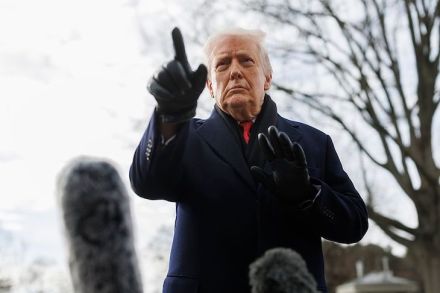
The United States only has one president at a time. Until January 20, that’s Joe Biden. But President-elect Donald Trump and his skeleton foreign policy team are waiting in the wings, plotting policy behind the scenes on issues — Ukraine, Gaza, Iran, Middle East peace — that have stymied the Biden administration for the last year. In fact, Trump is already influencing the respective calculations of allies, partners and adversaries before he even steps foot in the Oval Office. And Biden’s advisors seem perfectly fine with it. Trump fancies himself as a master negotiator, somebody who’s inherently skilled at poking, pressuring and sweet-talking the opposite side of the table until he gets what he wants.

diplomat

I was censored from talking about Chinese influence in Latin America

I represented the United States at the sixth Youth and Democracy in the Americas Summit at the Organization of American States, or OAS, last month. Most Latin Americans know this organization well, though most here in the US don’t. It is the premier regional political forum, the region’s European Union, a sort of mini-UN. When tyrants steal elections and jail journalists, the OAS becomes the center of the spectacle.  It has a reputation for defending liberty. But when it comes to China, matters get murky. So much so that the organization is willing to censor American voices that tell the truth about China’s regional ambitions. The appointment of Florida senator Marco Rubio as secretary of state may augur a new era of US focus on its hemispheric neighbors.

China

A prayer in Ukraine

By the summer of 2024, Kyivans could joke that there was no way the Russian army could take their city now — they’d never get through the downtown traffic. The simple normality of urban congestion, crawling through grand boulevards in the shadows of buildings that, with fresh coats of paint, would suggest a Wes Anderson vision of Mitteleuropa, could lull a visitor into thinking he could be in any capital on the old Orient Express route. So, too, would the world-class Fenix restaurant, run by a celebrity chef and festooned with Chihuly-inspired decor. It was between the salmon tartare eclair and the rabbit ravioli that I heard for the first time, face-to-face, what it’s like to be persecuted for worshipping God in the wrong way.

ukraine
South Africa

South Africa’s international decline

South Africa’s recent foreign policy has both surprised and dismayed Western diplomats and strategists. Many of these entered their careers during the era of the “end of history” when the Soviet Union had collapsed and with it, or so the thinking went, the last serious threat to the Western liberal order. Western democracy had triumphed, and policy doctrines of hard power and deterrence could give way to strategies of acquiescence and engagement. In South Africa, the African National Congress Party of Nelson Mandela was coming to power. Given that its key ally the Soviet Union had collapsed, the ANC took a sufficiently circumspect view of the new unipolar global order for Western diplomats to conclude that it had become their ally.

Why Biden should let Ukraine strike Russian targets during the lame-duck period

On the back of President Trump’s victory November 5, the end of the election season will open an interesting eleven-week window. President Biden will assume lame-duck status and be freed from any concern that a more aggressive posture toward Russia might hurt Kamala Harris’s presidential campaign. Biden might also be considering the implication of handing over Ukraine policy to an individual who has repeatedly signaled his pro-Putin views. Both of these factors argue for Biden breaking from his self-imposed restrictions and supporting Ukraine striking targets in Russian territory during this lame-duck period. Imagine a moderately successful Ukraine attack now, after the November 5 election, on a moderately relevant target, such as a railroad terminal fifty miles inside of Russia.

Kyiv

Mexico’s Claudia Sheinbaum begins her presidency

Claudia Sheinbaum was sworn in as Mexico’s new president in Mexico City’s San Lázaro Legislative Palace this Tuesday. In her inauguration, she underscored the historic significance of electing the first woman president, while promising to adhere closely to her predecessor’s political agenda.  Wearing her presidential sash, she began her speech by thanking foreign dignitaries, but she saved the most thanks to former president Andrés Manuel López Obrador (AMLO), whose coattails she rode into the National Palace.

Ukraine becomes another battlefront in the American election

They were the odd couple, one lumbering in his trademark oversized Brioni suit, the other ripped in his olive green military attire. The two had been engaged in a kind of mano-a-mano verbal combat before their official meeting in Manhattan at Trump Tower. It was getting ugly. Ukrainian president Volodymyr Zelensky suggested that J.D. Vance’s plan, such as it was, for ending the war between Ukraine and Russia was “too radical.” Add in Zelensky’s visit to an armaments factory together with Pennsylvania governor Josh Shapiro, and Trump and his flunkeys went nuts. House Speaker Mike Johnson wrote a sniveling letter demanding the ouster of Ukrainian ambassador Oksana Marakarova.

zelensky

The end of the Orbán era

Over the headline “Peace Mission,” a recent cover from the conservative Hungarian periodical Mandiner shows an awkwardly photoshopped Viktor Orbán mediating between a bemused-looking Vladimir Putin and a grim Volodymyr Zelensky. Behind Orbán, a map of the world connects Kyiv, Moscow, Beijing, Washington and Budapest. One of these capitals, as they say, is not like the others. Even before Ukraine’s Kursk offensive, the chances of Orbán’s July trips to Kyiv and Moscow producing a peace settlement were slim. The Mandiner cover, however, is a revealing window into the mindset of Orbán’s conservative fans. The idea of a Hungarian prime minister mediating between squabbling great powers is both attractive and plausible to many of Orbán’s fervent supporters.

Orbán

The Venezuelan practice of property invasions has emigrated to America

Viral footage showing armed Venezuelan gang members taking over an apartment complex in a Denver suburb has shocked thousands, especially after Mayor Mike Coffman of Aurora, Colorado joined Fox News’s Sandra Smith on Thursday to explain how failed border policies are affecting his city — which is around 700 miles away from the US-Mexico border. In the interview, Coffman confirmed that at least two apartment buildings in Aurora were taken by what some suspect are members of the notorious Tren de Aragua gang.  All of this is not quite surprising for those who are familiar with Venezuela. “Invasiones” (invasions, as Venezuelans call it) have been a recurrent phenomenon throughout the oil-rich South American country in the last twenty years.

property invasions

Hong Kong justices decide to keep Jimmy Lai in jail

Hong Kong’s top court decided Monday to uphold Jimmy Lai and six other pro-democracy activists’ convictions for their campaigning during the anti-government protests that rocked the city in 2019. In a unanimous agreement, the court dismissed the bid to overturn the convictions of the seven activists.   Among the justices who voted to uphold the conviction was British justice David Neuberger, who is still serving as non-permanent judge in the former British colony.   Lai, seventy-six, the founder of the pro-democracy newspaper Apple Daily, was found guilty in 2021 of organizing and participating in an unauthorized assembly in August 2019 during months-long pro-democracy protests in the China-ruled city. He was sentenced to seventeen months in prison.

jimmy lai

A lifesaving prisoner swap with the worst incentives

The massive prisoner swap which led to Russia’s release of prisoners Evan Gershkovich, Paul Whelan and Vladimir Kara-Murza, among many others, is the greatest gift their families and loved ones could ever hope for — in several cases, it is a lifesaving development. But it also serves as an indication of just how much the practice has become a weapon of the world’s great powers. For my family, the news is deeply personal. Vladimir, a longtime dissident imprisoned for the crime of speaking out against the war in Ukraine in remarks to the state legislature of Arizona, was a pallbearer along with me for my father-in-law, John McCain. My wife joined with his, Evgenia, to speak to a bicameral congressional committee earlier this year to advocate for his release.

prisoner

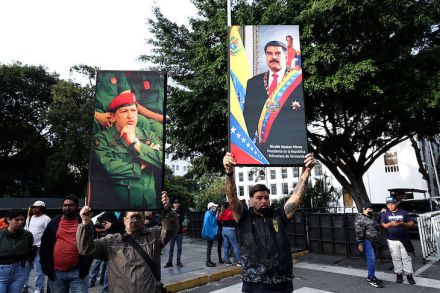
Venezuelans topple Chávez statues as they reject Maduro victory

Nicolás Maduro’s rival Edmundo González and opposition leader María Corina Machado told reporters at around 6:30 p.m. Monday that with more than 70 percent of votes counted, González is more than doubling Maduro’s votes. During the press conference, both candidates emphasized peaceful protests, especially as thousands began taking to the streets the day before, when the country’s electoral council declared that Maduro had won with 51 percent of the vote. They called on voters to gather at 11 a.m. Tuesday. “I speak to you with the calmness of the truth,” González said to his cheering supporters from outside his campaign’s headquarters in Caracas. “We have in our hands the tally sheets that demonstrate our categorical and mathematically irreversible victory.

maduro

Will the US apply pressure to combat Maduro’s election fraud?

Sunday night was a long one in Venezuela. At midnight, the much anticipated yet dubious results came in for the South American country's election. The head of the National Electoral Council, Elvis Amoroso — a close ally of Venezuelan president Nicolás Maduro who has served as a deputy for his party — said that with 80 percent of ballots counted, Maduro had won with 51 percent of the vote. His rival, Maria Corina Machado’s replacement, Edmundo González, ended with 44 percent. The opposition has a different story. “Venezuela has a new president and his name is Edmundo González Urrutia. We won! And everyone knows it,” Machado said from a press conference following some silence after Maduro’s announced win.

maduro fraud

Things are about to get ugly in Venezuela

At 3:45 a.m., the sun was not yet out in the Venezuelan valley of Caracas, but Andrés, a twenty-two-year old who lives in the outskirts, woke up and with the Gloria Al Bravo Pueblo national anthem at maximum volume, roused his family too. From deep in the valley, Natalia showed up to the polls at 7 a.m. She then headed back to pick her elderly parents; “they can skip the line now,” she tells me.  Like them, thousands of others got up Sunday morning with a mission: make the Venezuelan presidential election — the most consequential one in twenty-five-years — fraud-proof. The logic: the world has to see what Venezuelans see, eyes don’t lie.  “It's 5 a.m. and we have work!,” said the face of the opposition, María Corina Machado.

venezuela

What to expect in this weekend’s Venezuelan elections

Venezuelans will gear up to vote in what has devolved into an unfair and unfree presidential election Sunday — one that nonetheless offers its citzens the best chance in a decade to get rid of the twenty-five-year-old Chavista regime that brought the oil-rich nation to its knees. Nicolás Maduro, the man who, among other things, caused a forty-two-place drop in Venezuela’s Press Freedom Index in ten years, will be facing Edmundo González. González, a little known diplomat who served in Algeria and Argentina, became the opposition’s unitary candidate after the government banned María Corina Machado from running. Though “inabilitated,” as Venezuelans put it, this election continues to be a Maduro versus Machado match.

venezuelan

China’s slow but sure infiltration of America

As it becomes clearer that China and the US have entered a new Cold War, Beijing’s spy operations have grown more flagrant and provocative. Whether it be flying spy balloons, buying farmland near US military bases or even establishing a secret police station in New York City, China is slowly but surely infiltrating the US. In February 2023, a US fighter jet shot down a Chinese spy balloon over the Atlantic. The balloon crossed into US airspace over Alaska in late January before passing through Canada and into Montana. While the balloon was able to transmit information back to Beijing in real time, CNN reports the government doesn’t know exactly what intelligence was gathered.

xi jinping wang huning wargame militarizing IP china

Despite defeat, Le Pen’s party has made steady progress

I have been in Paris the last few days and by coincidence am staying cheek by jowl (joue contre joue?) with the Eiffel Tower, site of France’s version of those “mostly peaceful” and of course eminently wonderful protests against “the far right” last week in the aftermath of Marine Le Pen’s strong showing in the first round of voting for seats in the National Assembly. The second round took place yesterday, and there were some of us who hoped that Le Pen’s Rassemblement National Party would sweep the field. France has an excellent law that neither the media nor politicians may comment publicly on an election until the polls close, which last night was at 8 p.m.

marine le pen

Why Russia is flaunting its ships in the Caribbean

Two Russian ships docked Tuesday in Venezuela’s La Guaira port, twenty miles away from Caracas. The stop comes after military exercises were conducted in the Atlantic, with four vessels stopping in Havana late last month. This is all part of a decades-long “look-at-us” operation, also known as a “show the flag” move, as Russia’s defense ministry puts it. While Russia’s presence in Cuba and Venezuela is not a new phenomenon, conflict in the East has only accelerated their muscle-flexing in the West. These movements mark Russia’s first extensive military exercises in the hemisphere in five years, as well as their first deployment of a nuclear submarine in close proximity to the US since the Cold War.

Russia

Seized Russian assets should be used against Putin

The seizure of enemy treasure, formerly known as plunder and pillage, is an ancient tool of war. Though still practiced in the world’s nastiest conflict zones, it’s a tricky business within a rules-based international order. The G7’s agreement to lend $50 billion to Ukraine — using income from $300 billion of frozen Russian assets to cover interest and repayments on the loan — is a vivid case in point. And some would say, a lily-livered half-measure. The key feature of the deal is that it does not actually claim ownership of Russian loot — which however ill-gotten is mostly held in EU banks in the form of western government bonds. It merely diverts interest payments due on the bonds from the issuing governments.

Russian
nato

Inside the debate over Ukraine joining NATO

NATO’s summit in Washington, DC will be full of pomp and circumstance. The gathering, from July 9-11, is intended in part to celebrate the Alliance’s seventy-fifth anniversary, a symbolic and emotional event for the leaders in attendance. You can expect the red carpet to cover the entire city. Dozens of speeches will be given about how NATO is the oldest and most successful military alliance in history and why the bloc remains a crucial check on Russian expansionism. Some will even claim matter-of-factly that NATO enlargement over the last twenty-five years — NATO has doubled its membership during that period of time — was sound policy and had nothing to do with Russia’s decision-making calculus on Ukraine.