Middle East

Could Iran target Jews outside Israel?

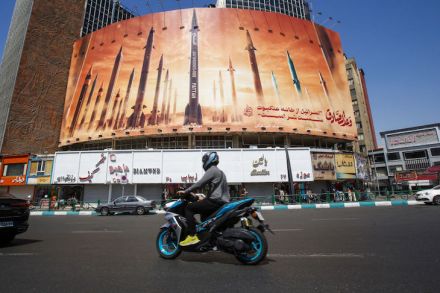
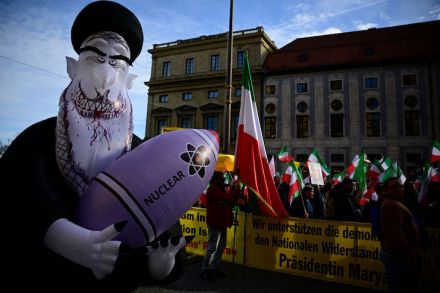
After the massive direct Iranian attack on Israel, many breathed a sigh of relief that Israel’s defences were mostly well prepared and highly effective. The one death reported was that of a Gazan Palestinian man killed by shrapnel near Jericho. So much for Iranian solidarity with the Palestinians. Yet tensions remain high as further Iranian aggression may follow. This time, it could the Jews of Europe, the UK or America who are the targets.  Iran has a history of responding to setbacks with global terrorism Israel’s impressive strategic operational activities in Lebanon and Syria have not only severely limited Hezbollah’s abilities, but also restored Israel’s intelligence and military deterrence in

Will Israel fire back on Iran?

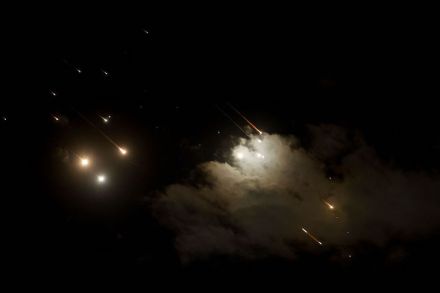
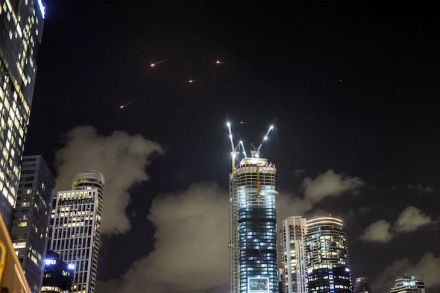
Israel has come under widespread missile attack from Iran. Some 200 ground-to-ground missiles were launched from Iran, according to Israeli media. Israelis have been ordered to stay in bomb shelters while the Israeli Defense Forces (IDF) intercept missiles overhead. The sound of interceptions over Tel Aviv, Israel’s largest city, are constant and deafening. So far, there don’t appear to be any casualties or direct hits. Among Iran’s targets were military bases, including airforce and intelligence facilities. It’s not known whether the attack has now finished, or if another wave of missiles is making its way to Israel. Elsewhere, a terror attack this evening in Jaffa has resulted in the death

Iran launches a missile attack on Israel

Iranian missiles are slicing through the evening sky over Tel Aviv as Tehran responds to the killing of Hezbollah leader and terrorist mastermind Hassan Nasrallah. Some reports on Israeli television put the number of missiles at 100, while the head of emergency medical organisation Magen David Adom has told Channel 12 that the number is in the hundreds. Videos uploaded to social media show some ballistics being intercepted. The attack has coincided with a shooting incident in nearby Jaffa, where two terrorists are reported to have murdered eight and injured a further seven. It is not clear whether the two incidents are linked. Iran will want to avoid a hot

This is Israel’s greatest victory since the Six-Day War

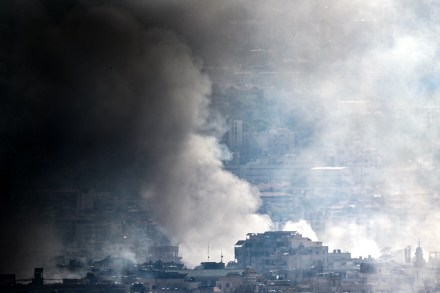
There is a satirical Israeli song from the Second Lebanon War, ‘Yalla Ya Nasrallah’, with the chorus: ‘Come on, oh Nasrallah/We will screw you, inshallah/we’ll send you back to Allah/with the rest of Hezbollah’. The lyrics are doggerel, but I mention it for two reasons. One, it’s an absolute banger of a tune and, two, all that it threatened has now been carried out. Hassan Nasrallah, leader of Hezbollah for 32 years, was killed last night in an IDF strike on the Islamist terror group’s underground command centre beneath a Beirut suburb. My city my people 😂🇮🇱 Tel Aviv “Yalla ya Nasrallah, We will f*ck you Inshallah, We will return

How will Iran respond to Nasrallah’s assassination?

The assassination of Hezbollah leader Hassan Nasrallah transcends the immediate confrontation between Israel and its Islamist enemies. Nasrallah was both a leader and a symbol of Iran’s bid for hegemony in the Arab world. His fighters advanced Iran’s cause in Syria, Iraq, Yemen, and beyond the region – into Europe, Africa, and Latin America. Israeli pundits discussed last night the possibility of deterioration into all-out war As is known but rarely stated by western diplomats and officials, Nasrallah was the most powerful man in Lebanon and its de facto ruler. He led a military force and a political structure that dwarfed the ailing official state and managed a successful insurgency

Nasrallah is dead and Hezbollah is broken

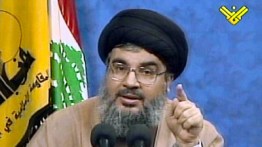
Israel has said that it killed Hezbollah’s leader Hassan Nasrallah in Beirut yesterday. Information that Nasrallah was at Hezbollah’s main headquarters in Beirut arrived while Israel’s Prime Minister was addressing the UN in New York, and a decision was made to target the man who has been terrorising Israelis for more than three decades. He was a gifted politician and leader, under whose leadership Hezbollah turned from a minor terrorist group into a large, heavily armed powerhouse Nasrallah, 64, was born in a village in southern Lebanon and was a deeply devout Shiite Muslim. He was one of the founders of Hezbollah and became leader of the terror organisation when

Rachel Johnson, James Heale, Paul Wood, Rowan Pelling and Graeme Thomson

34 min listen

On this week’s Spectator Out Loud: Rachel Johnson reads her diary for the week (1:19); James Heale analyses the true value of Labour peer Lord Alli (6:58); Paul Wood questions if Israel is trying to drag America into a war with Iran (11:59); Rowan Pelling reviews Want: Sexual Fantasies, collated by Gillian Anderson (19:47); and Graeme Thomson explores the ethics of the posthumous publication of new music (28:00).  Produced and presented by Patrick Gibbons.

Why didn't the BBC air this 7 October documentary earlier?

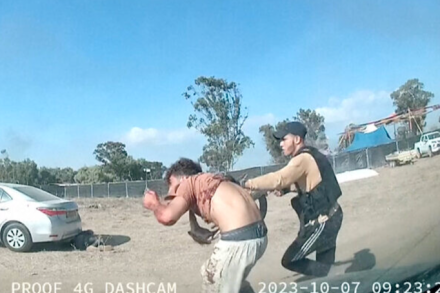
We all know what happened on 7th October 2023. But those of us who have watched the Israeli government’s compilation of footage from the day, as well as other videos sourced from the darker corners of the internet, know more than most the extent of atrocities carried out by the Palestinian terrorists who invaded through the Gaza border. There is no sanitisation here, no softening of the terror Now everyone can get a sense of what truly happened, thanks to Surviving October 7th: We Will Dance Again, the film by Yariv Mozer which screened last night on the BBC and is available on iPlayer and Paramount+ in the US. The documentary delivers a

Is this the end for Hezbollah?

The recent fighting between Israel and Hezbollah is a war that’s not yet officially a war, initiated by a political party without a mandate that takes its orders from Tehran, in support of a Palestinian party that few Lebanese care about. Hezbollah was the jewel in the Mullah’s turban It is a decades-old conflict, an exhausting, deadly stalemate, but this recent escalation could prove to be decisive. There’s a chance Israel could finally deliver a dagger blow to Hezbollah. This would be a staggering achievement because the Iranian-backed Shia militant group controls many, if not all, of the levers of power in Lebanon, and has been a constant irritant to

Paul Wood, Ross Clark, Andrew Lycett, Laura Gascoigne and Henry Jeffreys

33 min listen

On this week’s Spectator Out Loud: as Lebanon reels from the exploding pagers, Paul Wood wonders what’s next for Israel and Hezbollah (1:24); Ross Clark examines Ireland’s low-tax project, following the news that they’re set to receive €13 billion… that they didn’t want (8:40); Reviewing Ben Macintyre’s new book, Andrew Lycett looks at the 1980 Iranian London embassy siege (15:29); Laura Gascoigne argues that Vincent Van Gogh would approve of the new exhibition of his works at the National Gallery (22:35); and Henry Jeffreys provides his notes on corkscrews (28:01).  Produced and presented by Patrick Gibbons.

The Hezbollah pager bomb plot has Israel's fingerprints all over it

At the end of the 2014 film Kingsman: the Secret Service, the plucky spy hero is in trouble deep in an enemy base. Suddenly his tech wizard figures out that he can hack into the microchips inside the enemies’ heads and make them all explode. The bad guys all go boom. Hezbollah fighters must be asking themselves what other tricks Israel might have up its sleeves On Tuesday night, the spy thriller trope became real. Across Lebanon, Hezbollah operatives’ secure pagers exploded. Security camera footage showed the small explosions in supermarkets and shops, leaving Hezbollah terror operatives bleeding or worse. More than 3,000 people were injured in the hundreds of blasts,

Britain's arms crackdown on Israel has come at a dreadful time

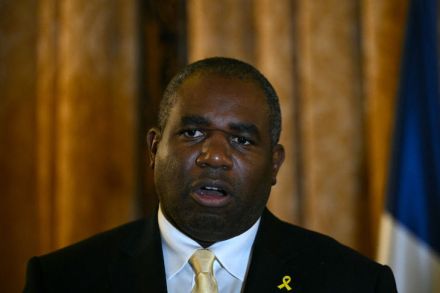
The Chief Rabbi Ephraim Mirvis is a moderate man and chooses his words carefully. So his statement about David Lammy’s suspension of 30 export licences to Israel was striking in its tone, if not surprising in its content. The Foreign Secretary’s timing did feel a bit rum ‘It beggars belief that the British government, a close strategic ally of Israel, has announced a partial suspension of arms licences, at a time when Israel is fighting a war for its very survival on seven fronts forced upon it on the 7th October, and at the very moment when six hostages murdered in cold blood by cruel terrorists were being buried by

Iran and Hezbollah don’t want a war with Israel

Hezbollah’s response to the killing of senior official Fuad Shukr, when it finally came, was a more minor event than anticipated. For weeks, both the Lebanese Shia Islamist group and its Iranian patron have been threatening a terrible revenge for the recent assassinations in Beirut and Tehran. It is now clear, however, that neither Hezbollah or Iran wishes to risk a descent to all put war at the present time. Iran appears to have relegated its response to the killing of Hamas leader Ismail Haniyeh in Tehran to some point in the future. Hezbollah, meanwhile, sought to target two sites of high significance – the Mossad headquarters, and the HQ

Ignoring the Taliban won't end their reign of terror

The Taliban have always had a strange misogynist world view, weirdly preoccupied by sex. The first time they were in power in Afghanistan in the late 1990s, the governor of the western province Herat banned women from walking or talking in the street outside his office, in case he was distracted by footsteps ‘or hearing the sound of their laughter’. The Taliban attempted to control every aspect of life. But it has taken until now, three years into their second period of power, for them to impose the full set of restrictions they imposed then.  The last three years have been bad enough, particularly for women and girls, banned from

Israel's strikes on Lebanon bring Jerusalem one step closer to regional dominance

As the dust literally settles across southern Lebanon in the aftermath of the Israeli airstrikes, we are starting to see an answer to the question of whether this will be the escalation that leads to all-out war. Hezbollah has declared an end to the first phase of revenge for Israel’s assassination of its most senior military commander Fuad Shukr, who masterminded the killing of 241 marines and 58 French soldiers in 1983, in Beirut last month. Its planned attack on the headquarters of Mossad and Unit 8200, Israel’s fabled military intelligence directorate, has been averted. Casualties appear to have been very limited. Jerusalem’s spy chiefs have flown to Cairo to

The EU finally takes the Red Sea crisis seriously

An oil tanker carrying 150,000 tonnes of crude oil is on fire and adrift in the Red Sea, after Houthi militants based in Yemen apparently caused three explosions on board. The Greek-flagged MV Sounion now represents a ‘navigational and environmental hazard’, according to the European Union’s naval mission in the region, Operation Aspides. It went on to warn that the fire ‘could lead to a severe ecological disaster with potentially devastating effects on the region’s biodiversity’. This is a serious situation. Houthis attacked the vessel on Wednesday, following which the crew – 25 Filipino and Russian sailors and four private security contractors – was taken off by a French warship

What will Iran do next?

Following the killings of Hezbollah’s Fuad Shukr and Hamas’s Ismail Haniyeh, Israel and the Middle East are poised and waiting for the next move. The two killings represent a significant humiliation for the Iran-led regional axis, which until this point had been projecting a sense of achievement and satisfaction.  Is Israel prepared to up the ante to the point of regional war? The October 7 massacres and the subsequent war may not have come at the express order or at the precise time wanted by the regime in Tehran. But events have proceeded largely in a way satisfactory to it. Israel appeared to be isolating itself diplomatically, unable to deliver a deathblow

Hamas and Hezbollah leaders killed in strikes on Iran and Lebanon

Israel has been accused of killing Hamas leader Ismail Haniyeh in a strike on Iran overnight. No one has claimed responsibility for the attack but Hamas said Haniyeh was ‘killed in a treacherous Zionist raid’ and vowed revenge. If indeed Israel did target Haniyeh in his Tehran residence it could mark a major escalation in the conflict. Iran will be humiliated that, even in the heart of its capital, Haniyeh was not safe. Hamas said Haniyeh was ‘killed in a treacherous Zionist raid’ Israel is yet to respond or issue a statement, but the country did say that it carried out a separate strike on Beirut yesterday in response to a

What will Labour do about Iran?

Labour isn’t typically known for offering a more hawkish foreign policy platform than the Conservatives, but at the last election there was an exception: Iran. Yvette Cooper and David Lammy have spoken in strong terms about toughening up Britain’s approach to Iran George Robertson, the former defence secretary and Nato secretary general leading the government’s defence review, has described Tehran as part of the ‘deadly quartet’ of nations working together to challenge the Western-led global order. Both Yvette Cooper and David Lammy have also previously spoken in strong terms about toughening up Britain’s approach to Iran. With the Home Office and Foreign Office on board, Sir Keir Starmer has the

Violence surges against Syrian refugees in Turkey

A wave of violence targeting Syrian refugees is spreading through Turkey, triggered by allegations of the sexual harassment of a child by a Syrian man in the city of Kayseri. The child, also Syrian, was related to him, according to the authorities. Since the start of the Syrian civil war in 2011, 3.1 million Syrians have been granted temporary protection in Turkey, according to official figures. But now there are growing public demands for them to return to Syria, fuelled by both the governing and opposition parties in Turkey. As reports of the incident in Kayseri snowballed on social media, mobs combed the streets, attacking and burning houses, businesses, and