Middle East

Who’s actually winning the wars in the Middle East?

If you read the New York Times or watch the foreign policy establishment’s “best and brightest,” you will be told, with imperious certainty, that America is losing the war in Iran and was stupid to begin it. The conspiratorial wing on both the right and left add that it is all the Jews’ fault, although they usually remember to mutter they mean “Israel” instead of all Jews, a gossamer cloak over what they really mean. If, on the other hand, you watch Fox News or read blogs by conservatives or military analysts, you will be told with equal certainty that America and its ally, Israel, are actually winning – and

middle east

Israel won’t stop in Lebanon until Hezbollah is crushed

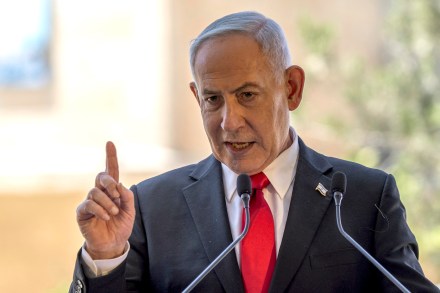
Direct US-brokered talks between Israeli and Lebanese representatives are set to take place in Washington this week. The Israeli delegation will be headed by Yehiel Leiter, Jerusalem’s ambassador to the US. Lebanon will be represented by Nada Hamadeh, the Lebanese ambassador to Washington. The State Department will host the negotiations. In his statement on Thursday announcing the talks, Israeli Prime Minister Benjamin Netanyahu framed their purpose as “disarming Hezbollah and establishing peaceful ‌relations between ⁠Israel and ⁠Lebanon.” Lebanese Prime Minister Nawaf Salam, for his part, expressed his hope that Beirut should become a “demilitarized city.” Even as the talks were announced, Lebanese Hezbollah’s attacks on Israeli population centers and Israel’s

lebanon

What will happen to Iran now?

What now after the collapse in peace talks between America and Iran in Pakistan? The gap between the two sides on the two critical issues – Iran’s nuclear program and the Strait of Hormuz – proved too big in the end. Is it back to war? What does the failure to reach a deal mean for the fragile, two-week ceasefire the two sides agreed? Whose fault is it that the discussions, which lasted for a marathon 21 hours, broke down? So far, there is little in the way of concrete facts about what exactly happened in Islamabad but the blame game is already under way. First out of the blocks

Of course these peace talks would fail

The US and Iran have failed to reach an agreement after 21 hours of peace talks in Pakistan. I can’t say I’m surprised. After all, we didn’t have to wait for the negotiations to finish to make an informed guess of the outcome. America and Iran agreed a ceasefire conditional on the Islamic Republic’s complete opening of the Strait of Hormuz. It has so far refused to honor that condition. Earlier this week, President Trump responded with fulminations: Iran “better stop now” if it’s charging tankers to pass through. But, in practice, all he has done is apply more pressure on NATO allies and send Vice President J.D. Vance to

We’re stuck at the worst possible oil price

A ceasefire has been agreed with Iran. The Straits of Hormuz will reopen. And the oil market will get back to normal very quickly. By Wednesday morning, it looked as if the energy crisis was over. Finance ministers will be breathing a sigh of relief as the crisis abates. But hold on. In reality, the truce is fragile, and huge amounts of supply have been taken out of the market. So long as that remains true, the price of oil, and with it the global economy, will remain stuck. The average price of $90 to $100 a barrel is not what anyone really thinks a barrel of oil is worth

oil
ceasefire

What will the Iran ceasefire cost Trump?

Might Donald Trump travel to Tehran this spring to open an American embassy and declare that he’s fallen in love with the new Iranian leadership? His volte-face on Tuesday night – announcing a two-week ceasefire with Iran – suggests that Trump is embarking upon a new course in the Middle East. After threatening to bomb Iran back to the Stone Age, Trump announced that it’s time to call the whole thing off: “We received a 10-point proposal from Iran, and believe it is a workable basis on which to negotiate.”  What that negotiation will look like is an open question. Early reports suggest that Trump, not Iran, caved on everything from Iran’s control over the Strait of Hormuz to acceptance of uranium enrichment, from the lifting of sanctions to

Why Iran thinks it’s winning

President Trump has what he so dearly craves; the attention of the global media and the world hanging on his every word. As time ticks down to Donald’s deadline, after which he is threatening to commit war crimes on an unprecedented scale against the Iranian people, the gap for negotiations narrows and the likelihood of a US ground invasion into Iran widens. We should be honest about the talks’ chances of success: very low. At present it is likely that negotiators are seeking only to find common ground, however thin, from which a pause in fighting can be agreed upon. We are talking here about the foothills of a framework

iran

The UAE and Oman could be the big winners from the Iran war

Sixty years ago, I first gazed out on the Strait of Hormuz from the Musandam peninsula of Oman. I was there as private secretary to my godfather, Selwyn Lloyd, who had been Britain’s foreign secretary during the Suez Crisis. The previous evening our host, Sultan Said bin Taimur, the ruler of Oman for nearly 40 years, commented gloomily: “When two fish are fighting in these waters, the British are behind it.” I estimate that I must have made at least 250 visits to the Gulf States in the intervening six decades. The key question which would surely now be asked by the ghosts of my former Middle East interlocutors –

oman

War and fishing in the Strait of Hormuz

On February 28, I jumped on a fishing charter with some friends and headed out into the Strait of Hormuz. There was barely any wind. The sea shimmered in the heat of the Gulf sunshine. On the very first drop of our lines, something hit my metal jig and went off like a rocket. After a couple more brief runs, a very stout, double-figure grouper rose through the water column, which I guided safely into the waiting net. It was a personal-best hamour (The Arab word for grouper), weighing between 10 and 12 pounds. I went on to catch a few interesting tropical fish, including a snapper, but I didn’t

Trump’s delusion of omnipotence

Donald Trump likes to use the phrase “go big or go home” to describe his political strategy. It looks as though the US President is about to stress test its efficacy as he weighs dispatching another 10,000 troops to the Middle East, a move that would further embroil him in the widely unpopular war in Iran. According to a recent Quinnipiac poll, 74 percent of Americans are opposed to a ground war against Iran. Small wonder. The prospect of an American Gallipoli is hardly going to inspire support for a war of choice in the Middle East, one that Trump embarked upon without inspiring any backing in the first place.

How Trump can ‘win’ in Iran

The United States is once again in a terrible predicament: a war where the definition of “victory” grows murkier by the day, against an adversary whose advantages lie in the tyranny of geography and its determination to fight. While the US and Israel enjoy overwhelming conventional superiority, a handful of cheap Iranian drones or weaponized IRGC dinghies have been able to take America’s Gulf oil allies offline and render the strategic Strait of Hormuz unnavigable. Donald Trump faces what we might call the “Corleone problem”: the don can end the war, but only if peace looks like a gift he’s granting, not a price he’s paying. America has been trapped

iran

Who is actually talking to the Iranians?

On Friday night, Donald Trump announced that America was “very close to meeting our objectives as we consider winding down our great military efforts in the Middle East.”  He even pinned the announcement to the top of his Truth Social account to make sure everyone realized he meant it. That did little to settle the markets over the weekend, however, so this morning he took to Truth Social again to go further in ALL CAPS:  The lingering fear is that the truth may be more TCCO (Trump Can’t Chicken Out) I AM PLEASED TO REPORT THAT THE UNITED STATES OF AMERICA, AND THE COUNTRY OF IRAN, HAVE HAD, OVER THE LAST TWO DAYS,

Has Trump averted an energy crisis?

Have markets and governments horribly underestimated the fallout from the Iran war, or is it the doomsters who have got it horribly wrong? President Trump’s announcement has rather caught the world off guard. This morning, he posted on Truth social saying that he is seeking a negotiated settlement with Iran and has postponed his planned attacks on energy infrastructure. Many expected a huge escalation in hostilities this week. Could this be yet another example of TACO (Trump Always Chickens Out), or was his threat to bomb energy infrastructure another crafted bluff – and that order to the global economy will be swiftly restored? At the end of this crisis, the

Israel can’t assassinate its way to victory over Iran

The killing of the Iranian senior security official Ali Larijani this week is the most significant “targeted assassination” undertaken since Israel’s killing (in cooperation with the US) of supreme leader Ali Khamenei on the opening day of the war. These two very high-level hits have been accompanied by a long list of killings of less well-known senior Iranian officials. These have included Islamic Revolutionary Guards (IRGC) commander Mohammad Pakpour, intelligence minister Esmail Khatib, armed forces chief of staff Abdolrahim Mousavi, defense minister Aziz Nasirzadeh, military intelligence chief Saleh Asadi and many others. Around 30 officials in all have met their deaths at the hands of this campaign. The borders between conventional

The Iran war won’t help Russia defeat Ukraine

For Vladimir Putin, Donald Trump is the gift that keeps on giving. Just as Moscow was tiring of the American president’s assurances that he could strong-arm Volodymyr Zelensky into accepting Russia’s terms for peace in Ukraine, the US-Israeli intervention in Iran caused a spike in the oil price. This has given Russia the chance to supply more oil to the global market and boost its flagging budget revenues. On balance, the war in the Middle East is set to bring significant benefits for Russia, but they will not be enough to bring about Putin’s most urgent desire: the defeat of Ukraine. Of course, the Russian president can bask in the

russia

Decapitating Iran’s leadership might not topple the mullahs

Iran’s most powerful leaders are being picked off one by one by Israeli and American military strikes. The latest scalp claimed by Israel is Ali Larjani, Iran’s security chief, and widely believed to be the most powerful figure in the present Iranian leadership. The reported killing comes just days after Larjani went on a public walkabout in Tehran, all defiance and bombast as he greeted members of the public during the Quds Day rally last Friday in the capital. Larjani also spoke to state media during the march, claiming that the Americans and Israelis were “running out of steam”. Well, not quite in his case, it turns out. Few will mourn the demise of Larjani.

larjani

The illusion of Iranian regime change

Supporters of regime change in Iran have long argued that if the United States and Israel weakened the country’s rulers then the Iranian people would finish the job. But the likely outcome is instead a wounded regime, one that emerges more paranoid, more repressive, and more convinced that only force ensures its survival. Iran has experienced mass protests every two to three years for more than a decade. What often begins as economic unrest frequently evolves into broader anti-regime demonstrations, drawing thousands of Iranians into the streets. People outside the country see these protests and believe they could ultimately topple the government. Such arguments come from parts of the Iranian

Should NATO help America defend the Strait of Hormuz?

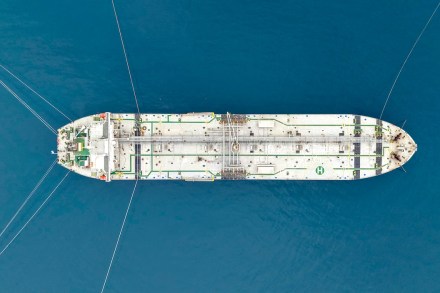
As soon as Operation Epic Fury, America’s latest campaign against the Islamic Republic of Iran, got underway on the last day of February, political, military and economic minds around the world should have turned their attention to the Strait of Hormuz. The waterway provided the only shipping route from the Persian Gulf to the Gulf of Oman and the open seas beyond. That has long made the strait the dagger Iran holds at the throat of the world. At its narrowest, it is less than 25 miles across, and Iran controls the northern shore; to the south is the Musandam Peninsula, shared by the United Arab Emirates and an exclave

NATO STRAIT

What Signalgate tells us about Iran

Remember Signalgate? It was quite the story, and worth revisiting now in light of Operation Epic Fury, the ongoing crisis in the Strait of Hormuz and its dire implications for the global economy.  In March last year, Donald Trump’s then National Security Advisor, Mike Waltz, somehow added Jeffrey Goldberg, the editor-in-chief of the Atlantic, to a Signal messaging group for senior government officials to discuss top secret military action against the Houthis in Yemen. The group included the Vice President J.D. Vance, Secretary of State Marco Rubio, Defense Secretary Pete Hegseth, Director of National Intelligence Tulsi Gabbard, White House Chief of Staff Susie Wiles and deputy chief of staff Stephen Miller,

hegseth signalgate walt

How the Islamic Republic tried – and failed – to destroy Iranian culture

The Islamic Republic in Iran is not only at war with the United States and Israel. For years, the country’s government has been waging war on Iranian culture. Music, poetry, storytelling, dogs, dancing, singing, art, dice and card games, romance, tolerance and the honoring of women are central to Persian culture and its ancient history. Yet under the Islamic Republic, these cherished expressions are banned or stigmatized, especially when pursued by women. The departure of Iran’s enlightened and educated from the country they love is one of the most poignant brain drains in history In the dark, dystopian times immediately following the Islamic Revolution in 1979, couples holding hands or