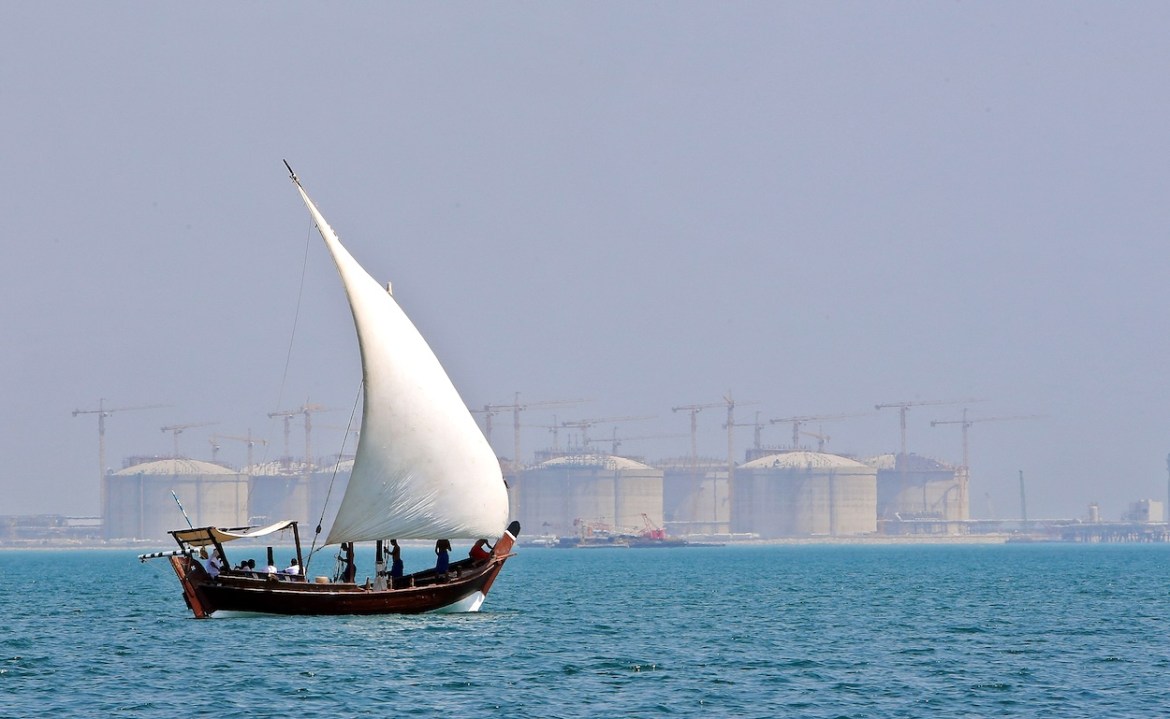
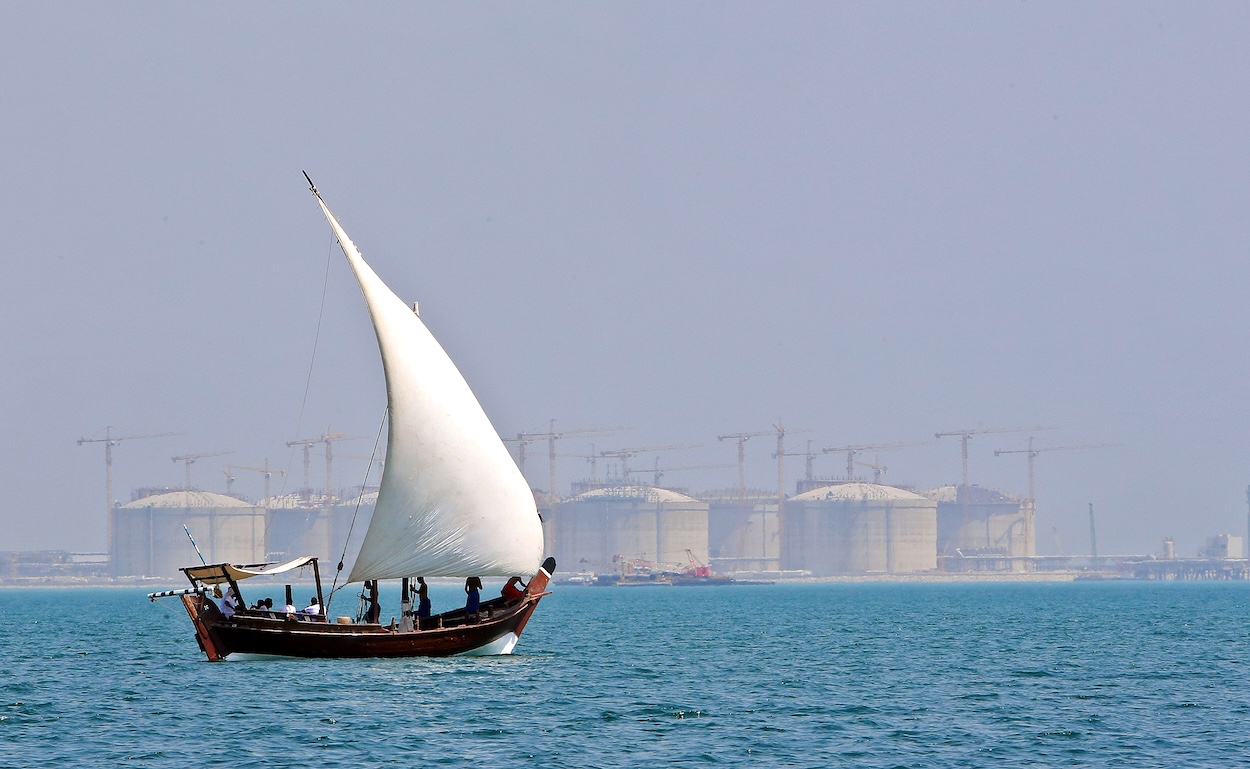
On February 28, I jumped on a fishing charter with some friends and headed out into the Strait of Hormuz. There was barely any wind. The sea shimmered in the heat of the Gulf sunshine. On the very first drop of our lines, something hit my metal jig and went off like a rocket. After a couple more brief runs, a very stout, double-figure grouper rose through the water column, which I guided safely into the waiting net.
It was a personal-best hamour (The Arab word for grouper), weighing between 10 and 12 pounds. I went on to catch a few interesting tropical fish, including a snapper, but I didn’t recognize most of them. It was on our journey back to the Abu Dhabi port that things changed. As the land came back into view, I spotted what looked like a plume of smoke in the distance among the skyscrapers. Shaun, a friend who works in Dubai’s oil and gas industry, gestured to look up so as not to wake our sleeping girlfriends. There were two missiles streaking through the sky.
We docked, paid the skipper, and got into the car. The journey was silent. An Apache helicopter was scouring the skyline. Our girlfriends searched for news on their phones, but there was nothing beyond rumor and speculation. We parked at a roadside restaurant next to the fish market to have our catch prepared and cooked for us. There wasn’t much chatting at lunch. Everything felt strained. Suddenly, there was a series of loud bangs in the distance. We got back in the car and drove home for shelter.
The change in atmosphere over the past month reminds me of when I lived in Sallalah, Oman, in early 2020. That was when Iranian Major General Qasem Soleimani was executed by a US drone. Some days later, the much-loved Sultan Qaboos of Oman died of natural causes after ruling the country for almost 50 years. Both deaths caused tension and sorrow. Arabs are typically emotional, expressive people; concern and uncertainty are written all over people’s faces.
Since this war began, there have been two or three missile warnings a day via emergency phone alerts. Typically these are followed by the sound of explosions in the sky and then an all clear message to return to normal. I have been staying about 10 minutes from Abu Dhabi’s Zayed International Airport. Some of the explosions have been pretty close, and the louder they are, the more disconcerting it is, and the more mortal you tend to feel.
I find the explosions sharpen my mind: there’s a kind of internal risk-assessment dialogue that automatically takes over. Explosions and the shaking of seemingly infallible structures will do that to you. I’ve found myself thinking about whether my gym’s roof will offer any protection from debris. Or whether my apartment windows face Iran and, if the curtains are drawn, whether they will stop shattered glass from blasting across the living room. I’ve ordered extra water in case desalination plants are targeted. And I wonder if I should stock up on dry foods just in case.
As the land came back into view, I spotted what looked like a plume of smoke in the distance among the skyscrapers
One night, I took shelter in my apartment’s bathroom until an aerial attack subsided. I listened to the sirens of emergency vehicles rushing to the impact sites. What was initially a bit of a shock has now become normal. People are still going to restaurants and malls and have been celebrating Ramadan and Eid as they usually would, visiting the homes of friends and relatives. Western expatriates are still playing golf, going shopping, and relaxing at the beaches or around the pool. Work continues as usual, now with an option to WFH. People are getting on with their lives. I tell myself that I’m much more likely to die of a violent crime in the Bronx than from an Iranian projectile aimed at the UAE.
Why has Iran targeted the UAE? Partly it’s because of the US, French and British military facilities on its territory. But there are other reasons. For one, hurting wealthy neighbors allows the regime to hold the global economy to ransom. There is also an ideological element, as places like Dubai are the antithesis of how Tehran sees the world. The UAE is a socially liberal state; tolerance and peace are strong tenets of its government.
Resentment is another factor. The vision of Zayed bin Sultan Al Nahyan, the UAE’s founding father, has transformed a place like Dubai from a humble village of pearl divers into a sprawling metropolis in just 50 years. The city is an example of human progress and ingenuity. Conversely, Iran’s period of cultural flourishing in the 1970s is now a sad, distant memory.
In any case, the attacks are not having their desired effect. There is a solidarity and resilience among Emiratis and expatriates. People have built their lives here. The government has offered to cover the accommodation costs of any tourists unable to get home because of cancelled flights. The feeling is that Dubai and Abu Dhabi will come back stronger than ever before. As for me, my girlfriend is from Abu Dhabi. Like most people, I don’t want to leave. I want to be back on a skiff in the Strait of Hormuz as soon as possible, the sun warming our faces.



Comments