The United States is once again in a terrible predicament: a war where the definition of “victory” grows murkier by the day, against an adversary whose advantages lie in the tyranny of geography and its determination to fight. While the US and Israel enjoy overwhelming conventional superiority, a handful of cheap Iranian drones or weaponized IRGC dinghies have been able to take America’s Gulf oil allies offline and render the strategic Strait of Hormuz unnavigable. Donald Trump faces what we might call the “Corleone problem”: the don can end the war, but only if peace looks like a gift he’s granting, not a price he’s paying.
America has been trapped by this logic before. The Kennedy and Johnson administrations did not stay in Vietnam because they believed in the domino theory but because they could not be seen to lose. The operative concept was “credibility,” the idea that American commitments ranging from Nato to the Taiwan Strait depend on Washington demonstrating it would pay any price to honor its pledges, or that the US remains the world’s top dog. The credibility trap is springing again. If the US walks away while Iranian missiles are still falling on Gulf infrastructure, the signal to every revisionist power – China above all – is that asymmetric pressure works. Washington does not merely need an exit, but one that looks like a victory. How?
Trump’s ‘I knew nothing’ routine is likely the opening act of an exit strategy
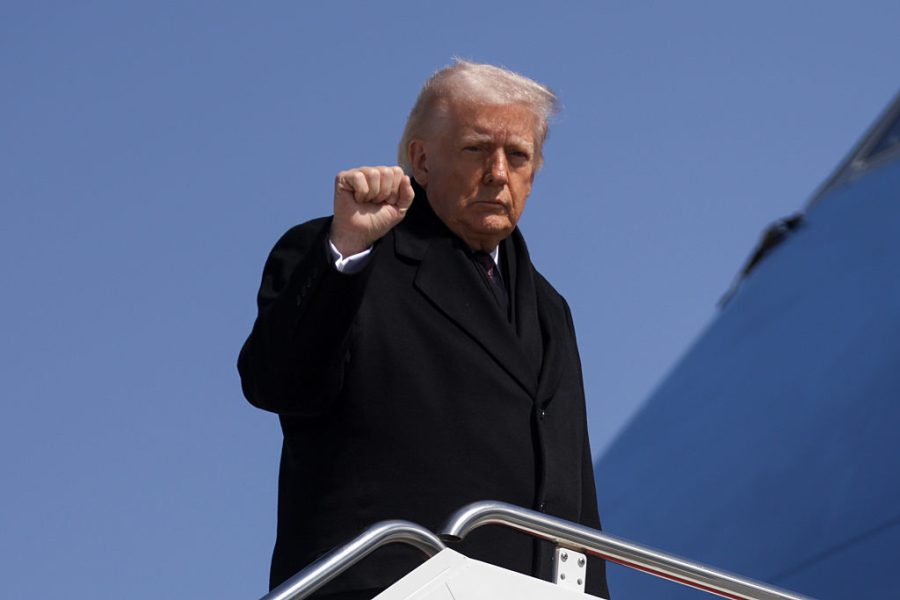
Washington needs to put (at least rhetorical) distance between itself and Jerusalem. This is already happening. Trump’s public admonishment of Benjamin Netanyahu over Wednesday’s Israeli strike on Iran’s South Pars gas field was not an accident, nor was his implausible claim to have known “nothing” about it in advance. Trump’s “I knew nothing” routine is likely the opening act of an exit strategy. By publicly hanging Netanyahu out to dry over the gas fields, the White House is effectively building a firebreak between American interests and Israeli escalation. It’s a calculated performance of “the adult in the room” restraining a trigger-happy ally. If Trump can successfully sell the narrative that he is the one keeping the lid on a regional meltdown, he transforms a messy military withdrawal into a feat of global statesmanship.

Trump must also declare victory on the nuclear front. Netanyahu has handed Washington this gift in his press conference on Thursday, where he declared that Iran’s capacity to enrich uranium and manufacture ballistic missiles had been destroyed. If joint strikes have genuinely destroyed Iran’s enrichment capability, this is the most significant nonproliferation achievement since Libya abandoning its nuclear ambitions in 2003. The original sin of the Iran crisis was always its nuclear program. If that program is finished, the US can claim, with considerable justification, that the core objective has been achieved. Mission accomplished, although this time, perhaps, without the premature triumphalism of President Bush’s aircraft carrier in Iraq in 2003.
Hardest of all, Washington must build a deal that Tehran and regional states can accept. Iran holds cards that no amount of bombing can remove. Geography is permanent: the Strait of Hormuz will still be there when the last cruise missile has been fired. The regime survived eight years of war with Iraq. It will not submit because of a few weeks of American air power.
Since 1979, the Gulf’s security order has been built on Iranian exclusion, and it has manifestly failed to produce stability. The Gulf states themselves have recognized as much. The China-brokered Saudi-Iranian rapprochement of March 2023 was a real step towards a different regional order: embassies reopened, foreign ministers exchanged visits, and the détente held even after October 7.
When Israel struck Iranian territory in October 2024, the Gulf states refused to allow Israeli or American aircraft to use their airspace. Saudi Arabia condemned the strikes as a violation of Iran’s sovereignty. These are the actions of states that have decided accommodation is preferable to permanent confrontation. A durable settlement would build on this foundation, offering Tehran what it has always sought – acknowledgment as a major regional power with legitimate security interests – in return for constraints on its missile program and an end to infrastructure attacks.
And Israel? The cold strategic logic is more favorable than it appears. The existential threat was always the nuclear program, and that has been destroyed. Hezbollah is severely degraded. Hamas is a shell. The proxy architecture that constituted the “ring of fire” has been dismantled more thoroughly than at any point since its construction. Israel has emerged from the horror of October 7 as a strategic regional hegemon. Israeli prime ministers have walked back maximalist war aims before: for example, after the 2006 Lebanon war and after each Gaza operation. The public has accepted the gap between rhetoric and outcome, provided the security gains are tangible. Destroying Iran’s nuclear capability is about as tangible as it gets.
Would Iran’s leadership accept such a deal? Perhaps not today. But the point is less about what is achievable than about what is framable, and thus builds momentum towards a deal to settle this devastating conflict. The US needs an exit narrative, and “we destroyed their nuclear program and brokered a new regional security order” is a considerably better one than “we got scared of $120 oil.” The lesson of Vietnam is not that America should never fight. It is that America should never fight without knowing what victory looks like and how to get home. It is now time to go home.






Comments