Europe

Trump’s lessons for Europe

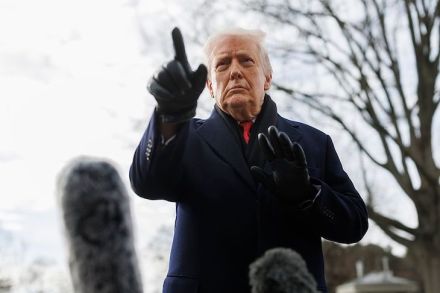
Donald Trump’s dramatic intervention in Venezuela has achieved much more than to bring a brutal, corrupt dictator and drug trafficker to justice in an American court of law, something which no amount of human rights declarations, international law or indictments in the international criminal court were able to achieve. It took President Trump deciding it was in America’s interests to helicopter Nicolas Maduro to face justice, and this is the awful truth that Europe’s political leaders are coming to terms with: Trump has the means and the will and they don’t. Europe’s growing geopolitical impotence in the world is becoming the issue now, and histrionics about Greenland is confirming this

mandelson

European countries are expanding their militaries. Why aren’t we?

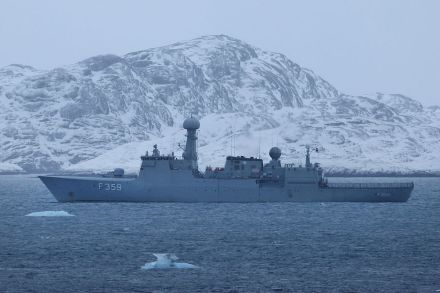
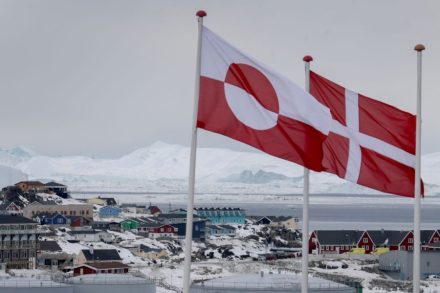
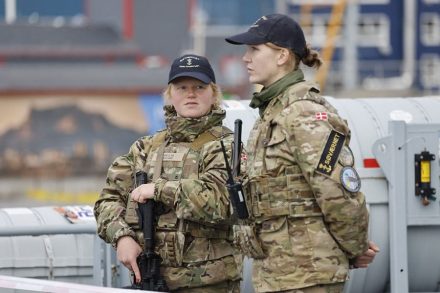
Following America’s extraordinary raid on Venezuela last week, Donald Trump has pointed to Greenland, which belongs to the Kingdom of Denmark, as the territory he plans to turn his attention to next, staking a claim he has made repeatedly since his return to the White House. Trump said this week that America needs Greenland ‘for national security. Right now’. He told reporters he is ‘very serious’ in his intent. The US President might be claiming Greenland in the name of peace and stability, but there is every chance his neo-imperial attempts to see off the threat from China and Russia will backfire. Will his actions herald the return to a

Is Viktor Orban about to lose power?

Hungary is bracing for its next general election in April. It is the tightest race since Viktor Orban came to power almost 16 years ago. Challenging Orban is Peter Magyar. Once a member of the ruling Fidesz party, he defected to become its fiercest critic. Compared to the traditional Hungarian opposition, Magyar seems to be more successful. Only a couple of months after launching his own party, TISZA – an acronym that stands for the ‘Respect and Freedom party’ – in 2024, it came second in the European parliament elections. Now, Magyar is aiming for the main prize. He is confident that he can win it. Orban’s attacks on Magyar

Why the US should annex Greenland

What do you think: is it manifest destiny that the United States acquire or at least exercise control over Greenland? That’s pretty much how America got Texas, California, New Mexico, Hawaii, the Philippines, Puerto Rico, Guam and American Samoa. Then there was the Louisiana purchase. In 1803, Thomas Jefferson doubled the size of the United States, paying France $15 million or a bit less than three cents per acre for a landmass that is about 26 per cent of the contiguous United States. And let’s not forget about Alaska. A few facts about Greenland. It is big: 836,000 square miles. It is home to about 50,000 people, mostly Inuits. Historically, it has

International statesman or 'never here Keir'?

18 min listen

From ‘regime change’ in Venezuela to Russia’s war in Ukraine, the Labour government is trying to navigate complicated situations across foreign affairs. Having appeared to weather the domestic reaction to the situation in Venezuela, Keir Starmer is in Paris today to discuss Ukraine alongside Chancellor Merz and Presidents Macron and Zelensky. This is undoubtably important – but to what extent will this fuel the criticism that the Prime Minister spends too much time abroad? And how can Starmer reconcile the demands of foreign affairs with his domestic priorities? James Heale and Tim Shipman join Patrick Gibbons to discuss. Produced by Patrick Gibbons.

The truth about Keir Starmer's EU 'reset'

As Keir Starmer found out with digital ID, what the public initially says it wants isn’t always what it turns out to want once the details become clear. A large majority in favour of digital ID turned into a significant majority against once people started to ask themselves: is this scheme really going to tackle illegal migration or is it just going to be another bureaucratic burden on our lives?     Might the same turn out to be true with Starmer’s ‘reset’ of relations between Britain and the EU? Notionally, there is strong support for the idea. A YouGov poll at the time of Starmer’s reset negotiations last May for example,

The New Year's Eve fire shattered the myth of Swiss invulnerability

This was not supposed to happen in Switzerland. In a country where disasters are meant to be engineered out, risk neutralised and failure anticipated, the idea of a crowded bar turning into a death trap feels almost unthinkable. Around 40 people died inside the Constellation bar in Crans Montana on New Year’s Eve, and up to 119 were injured, many suffering serious burns. Switzerland has become more open and more exposed. It’s also become more complacent Witnesses describe flames racing across the ceiling within seconds. Systems that were assumed to hold clearly did not and panic set in. The inquiry will take time, but the outline is already visible. The

Britain has lost faith in Labour's ability to 'smash the gangs'

More than 41,000 migrants crossed the Channel in small boats in 2025, a number surpassed only by the 45,000 who made the voyage in 2022. In total, 41,472 people reached England from France, a 13 per cent increase on 2024. The weather was a factor: according to the Met Office, last year provided Britain with the most hours of sunshine – 1,622 – since records began in 1910. But of greater significance is the ineptitude of the British government in stopping the small boats. A spokesperson for the Home Office described the 2025 figures as ‘shameful’, adding that ‘the British people deserve better’. They would say that, wouldn’t they? It

Friedrich Merz risks losing touch with the German people

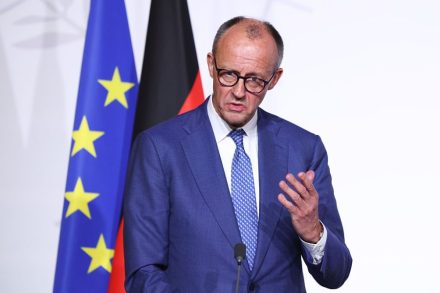
What a radically changing year 2025 has been: a year in which Germany’s new chancellor, Friedrich Merz, found himself fighting not merely the parliamentary opposition, the Russian threat and the brittle promise of European unity, but also his weakest and most self-confident adversary of all – his own coalition partner, the Social Democrats (SPD). After years of aborted ascents, Friedrich Merz has finally reached the summit. For more than seven months now, he has sat in the Kanzleramt in Berlin he once seemed destined never to occupy. His ascent, however, was ungainly. Two rounds of voting were required to crown him chancellor. A monumental volte-face on the reform of the

Ten years after Brexit, the EU is wrestling with its identity

As the tenth anniversary of the Brexit vote approaches, renewed debate about Britain’s relationship with the European Union is perhaps inevitable. A steady drip of stories has suggested that closer ties between the UK and EU may once again be under consideration, with speculation over rejoining the customs union appearing every week since the Budget. Health Secretary Wes Streeting went further just before Christmas, arguing in favour of the move. The economic case for deeper cooperation may be compelling, but even for those who hope this is a prelude to something bigger, it is worth asking a more fundamental question: what kind of European Union would Britain be re-entering? One

From Porn Britannia to Political Chaos: The Spectator’s Year in Review

31 min listen

The Spectator’s senior editorial team – Michael Gove, Freddy Gray, Lara Prendergast and William Moore – sit down to reflect on 2025. From Trump’s inauguration to the calamitous year for Labour, a new Pope and a new Archbishop of Canterbury, and the ongoing wars in Gaza and Ukraine, the year has not been short of things to write about. The team take us through their favourite political and cultural topics highlighted in the magazine this year, from the Assisted Dying debate, the ongoing feud over Your Party and Reform’s plan for power, to Scuzz Nation, Broke Britain – and Porn Britannia. Produced by Patrick Gibbons.  

Macron is right: Europe should talk to Putin

‘Macron is right’ is not one of those statements I honestly expected to find myself writing, but when the French president said, ‘I think it will become useful again to talk to Vladimir Putin,’ after the cup-half-full negotiations in Brussels over continued financial aid to Ukraine, he was spot on. ‘I believe that it’s in our interest as Europeans and Ukrainians to find the right framework to re-engage this discussion’ with Moscow, he said, and that this should be done ‘in coming weeks’. Of course, there are some who equate talking to Putin as somehow legitimising him, or meaning the same thing as negotiations. EU foreign policy chief Kaja Kallas

Europe has left Ukraine living on borrowed time

Russia started the war on Ukraine, so Russia should pay for the damage it has wrought. Such was Volodymyr Zelensky’s forceful message to European leaders last night as he pleaded for a ‘reparations loan’ backed by the €190 billion (£167 billion) of Russian Central Bank capital frozen in a Belgian clearing bank since Putin’s full-scale invasion. ‘Just as authorities confiscate money from drug traffickers and seize weapons from terrorists, Russian assets must be used to defend against Russian aggression and rebuild what was destroyed by Russian attacks,’ Zelensky told his European allies. ‘It’s moral. It’s fair. It’s legal.’ But after negotiations that went late into the night, Europe ultimately shied

Why Britain needs to wake up to extremism

16 min listen

As the world reacts to the attacks on Bondi Beach in Australia, Conservative peer Paul Goodman joins Tim Shipman and James Heale to discuss the failure of successive British governments to properly tackle extremism – especially Islamist extremism – over the past two decades. In the post ‘War On Terror’ era, there was a reluctance by some to discuss the problem openly as it got tied up in other polarising topics like immigration. Though that reluctance appears to be fading, Paul argues that there is a ‘communalist air of voting’ in British politics now, and he warns of the dangers that face British politics if fragmentation becomes entrenched in party

Why does Trump care about Europe's 'civilisational erasure'?

In Ukraine, as elsewhere in Europe, Donald Trump’s new national security strategy is being met with a mixture of incredulity and incomprehension. ‘What does it actually mean?’ a general who advises Volodymyr Zelenskyy asked me on Tuesday as we met in the presidential administration building in downtown Kyiv. It’s not an easy question to answer. Is it a blueprint for surrendering to the Kremlin? Or a negligible document that, for all the hoopla surrounding it, President Trump has most likely never read? The document was apparently drafted by Michael Anton, who was until recently head of the US State Department’s policy planning staff. He seems to have tailored it to torment America’s European

Europe's EV market is rolling backwards

Imagine you are a keen Brexiteer and opponent of net zero plans, especially of the idea of being forced to buy an electric vehicle (EV). There are plenty of people like you; there is much evidence to suggest that the two things go together. But you must now be feeling a little confused. It must be dawning on you that, in terms of your freedom to buy the vehicle that you want, you would have been better off had Britain remained in the EU. Europe has just made the decision to relax the ban on petrol vehicles from 2035 to 2040 – while in Britain it is still planned to

Stopping the boats will be harder than Jordan Bardella thinks

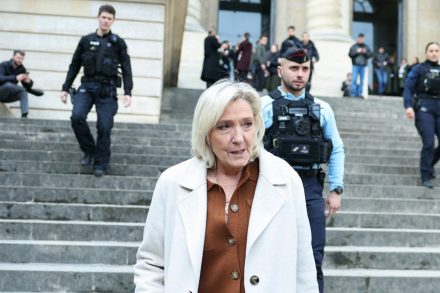
France’s Jordan Bardella has promised to stop the boats. Now where have we heard that before? The president of Marine Le Pen’s National Rally made his boast on a day trip to London on Tuesday. After lunching with Reform UK’s Nigel Farage, the 30-year-old outlined his strategy for curtailing the passage of illegal immigrants between France and England. ‘My ambition is to make France the least attractive country for mass immigration in Europe,’ explained Bardella. ‘From there, if it is no longer possible to cross, then there will be no one left in Calais.’ Bardella said he will make France unattractive for migrants by abolishing the right of asylum, expelling

Keir Starmer's call for ECHR reform is a risky gamble

Ahead of a Council of Europe summit in Strasbourg today to discuss the future scope of the European Convention on Human Rights (ECHR), Keir Starmer has called for ‘practical action’ to fix the asylum system and deal with irregular migration. In a joint letter with the Danish prime minister, Mette Frederiksen, Starmer argued that ‘modernisation’ of the ECHR is essential and that the Convention system needs to ‘evolve to reflect the challenges of the 21st century’. The two leaders acknowledged that responsible progressive governments need to ‘control our borders’ in order to ‘protect our democracies’. This is a tacit admission that Labour is concerned that Conservative and Reform UK proposals

Europe’s kind words and bear hugs can't save Zelensky

If bear hugs were army divisions and brave words cash euros, Volodymyr Zelensky would have ended his tour of European capitals this week the best-armed and best-funded leader in the world. Zelensky faces the danger that giving too much to Putin would make Ukraine ungovernable ‘We stand with Ukraine,’ vowed Sir Keir Starmer after hosting a summit for President Zelensky and top European allies at Downing Street on Monday. ‘We support you in the conflict and support you in the negotiations to make sure that this is a just and lasting settlement.’ Germany’s Chancellor Friedrich Merz declared that ‘nobody should doubt our support for Ukraine’ and that ‘the destiny of

Brexit's back – and so is Truss

16 min listen

There has been a flurry of UK-European activity across Britain this week, with the German state visit in London, the Norwegian Prime Minister signing a defence agreement in Scotland and the British-Irish council meeting in Wales today. Perhaps then it’s inevitable that speculation over closer ties between the UK and the EU has re-emerged. Could Labour seek to rejoin the Customs Union? Would this help or hinder Reform? And would the EU even stomach it? Plus – Liz Truss launches a new show today. Will she say anything new? James Heale and Charles Grant from the Centre for European Reform join Patrick Gibbons to discuss. Produced by Patrick Gibbons.

'Peace' is just another ploy in Russia's playbook

Predicting Russian behaviour is a fool’s errand. As a young ‘stringer’ in Kyiv during the dying months of the Soviet Union, I was bemused by the analysis of Western journalists from their elite compounds in Moscow, who saw a very different world to that experienced by those of us in the ‘sticks’. This deal is little more than a sophisticated Kremlin disinformation campaign It is with some trepidation then that I write this. While I’m keeping my fingers crossed for the peace deal Ukraine has reportedly agreed to, I fear any ‘agreement’ will prove to be little more than a sophisticated Kremlin disinformation operation, designed to hurt Volodymyr Zelensky when

Will Mahmood's asylum reforms force Ireland's hand?

Labour’s plans to overhaul Britain’s overstretched asylum system have forced the Irish government to do the same. As the Northern Irish border is the only international border across these islands, Shabana Mahmood’s pledge to create ‘by far the most controlled and selective [asylum system] in Europe’ left Dublin with little choice. Ireland’s Minister for Justice, Home Affairs and Migration – Ireland’s equivalent to the Home Secretary – Jim O’Callaghan warned that Ireland must be ready to adjust its own policies to prevent a surge in applicants travelling via Northern Ireland.  Labour’s announcement has heightened fears that Ireland could be seen as a ‘soft option’ compared with its neighbour Labour’s announcement

Spain's post-Franco democracy is on the rocks

‘Fine weather in Malaga’ proclaimed the banner headline of a Spanish newspaper in 1974 – that was the day’s big story. There was nothing about the country’s social and economic problems or the Carnation Revolution bringing democracy to neighbouring Portugal. After almost four decades in charge, the dictator Francisco Franco had effectively depoliticised Spain. ‘A century and a half of parliamentary democracy,’ Franco said, ‘accompanied by the loss of immense territory, three civil wars, and the imminent danger of national  disintegration, add up to a disastrous balance sheet, sufficient to discredit parliamentary systems in the eyes of the Spanish people.’ Yet once Franco died – fifty years today ­– a