Food & Drink

My new discoveries from South Africa

When I heard that Minnesota Representative Ilhan Omar had gotten into the wine biz, I thought “Hot dog! If she is as good at wine as she is at investing, this should be spectacular.” I mean, talk about creatio ex nihilo. Just a few years ago, Omar had a net worth of about $1,000. Now she is said to be worth some $30 million. Perhaps only Nancy Pelosi, the world’s most successful investor, is better at conjuring something out of nothing. In 2022, eStCru, the winery Omar’s husband had invested in, was touted as a “hot brand” by Wine Business Monthly. There was chardonnay from the Willamette Valley, cabernet from Mendocino and more.

Loser’s: the campy and ironic bakery making made-to-order cakes

Going downtown in New York used to be cool. Before Soho became a glorified shopping mall, it was a haven for starving artists. Before Chelsea became family-friendly, Michael Alig was throwing Blood Feast parties at the Limelight. The rebel heart of downtown, which attracted generations of avant-garde creatives, is much harder to find today. All of Manhattan has seemingly “gone uptown.”  But Loser’s Eating House, a made-to-order bakery operating out of a tiny Soho ghost kitchen, is still serving up a little slice of downtown realness. Loser’s style is campy and ironic. The cakes rely on exaggeratedly large piping, done in a purposefully messy style Loser’s was launched in 2021 by baker Lizzy Koury, who was, until very recently, her company’s sole employee.

Hunting for the Pizza Hut of my youth

About 15 miles off the I-80, tucked away in the Cleveland suburb of Warren, you’ll find a delightful bit of yesteryear, preserved from the 1970s and serving up your childhood dreams. Here you’ll find a Pizza Hut that forgot to evolve into a quick counter-service and delivery outpost like almost all the others. I had heard rumors of Pizza Hut Classics for some time. For years I’ve wanted to find one. As a person who would live solely on pizza if it weren’t for the heart disease and kidney stones that would inevitably follow, I knew I had to find one. Lo and behold, one such restaurant happened to be in my path on a road trip to Detroit over the holidays.

The vast landscape of American barbecue

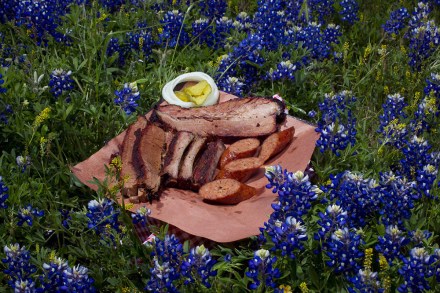
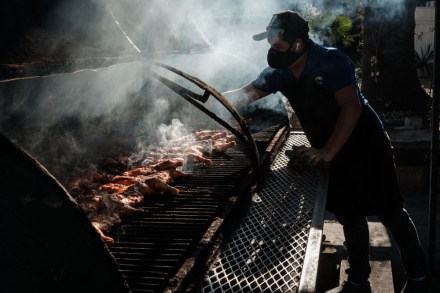
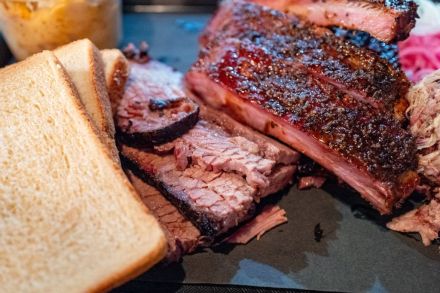
Some 25 years ago, I walked into the University of South Carolina library to check out a book on the history of barbecue. I had just finished a PhD in American literature, but had become more interested in culinary history. I had also taken to driving the state’s backroads, seeking out old-school barbecue restaurants. Researching the history of barbecue seemed the perfect next move. To my surprise, no one had published a book on the subject. The most that had been written about pre-20th century barbecue were a few sparse paragraphs in larger works on food history. I ended up having to write one myself. It took a while. The first edition of Barbecue: The History of an American Institution was published in 2010.

The mindfulness behind the cooking of Buddhist nun Jeong Kwan

I am somewhat allergic to food nomenclature: zero-waste, plant-based, seasonal, small plates, “live cultures,” foraged, farm-to-fork. It’s not that these are inherently off-putting concepts, but I associate them with “foodie” fads, gimmicks and big egos. All of those trendy labels could apply to the food cooked by the “philosopher chef,” a Buddhist nun called Venerable Jeong Kwan, plus you could throw in a dash of mindfulness and eastern spirituality for good measure. Yet Kwan, who is venerated by Le Bernardin’s Eric Ripert and Noma’s René Redzepi, and has featured in an episode of Chef’s Table, is the furthest thing from an ego-chef.

Oprah’s obesity gene claim is hard to swallow

Appearing yesterday on The View, a show that couldn’t possibly exist without the trail she blazed, Oprah Winfrey, promoting her new book, ‘Enough,’ had this to say about her recent, semi-permanent, GLP-1-induced weight loss: “All these years I thought I was overeating. I was standing there with all the food noise, what I ate, what I should eat, how many calories was it going to take. I thought that was because of me and my fault. Now I understand that if you carry the obesity gene, if that is what you have, that is what makes you overeat. You don’t overeat and become obese. Obesity causes you to overeat.” “Right,” say the ladies of The View. “Obesity causes you to have all of that food noise.

Oprah

The proof is in the glass

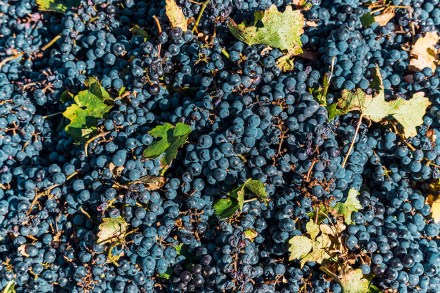
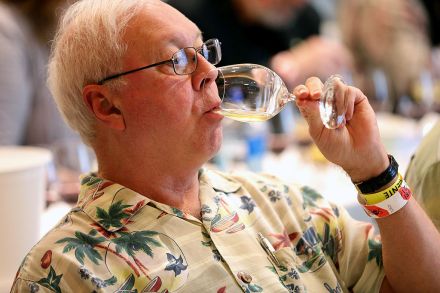
Here we are at the beginning of a new year. Since I don’t have any childcare “learing centers” to offer my readers, I thought, the weather being frigid here in the northeast, I would reach out with the warmth of – no, not “collectivism,” to which I am allergic – but of some recent discoveries in the world of wine. Much cheaper, believe me, and much more palatable. It is only fairly recently that the Santa Cruz Mountains have come into their own as a California wine-producing region. I was deeply impressed by the 2021 Estate chardonnay from Rhys Vineyards. Sourced from three spots in the mountains, with elevations ranging from about 700 to 1,400 feet on a variety of soil types, this chardonnay is exceptionally well-structured.

How I lost 50lbs eating at McDonald’s

Eating regularly at McDonald’s over the past nine months, I have managed to lose 50lbs and ten inches off my waist, and I’m still counting. Yes, you read that correctly. Like many Americans, I have been trying to lose weight to no avail. I completely changed my diet, eating only vegetables, apples and microwavable, low-calorie, diet meals. And again, like many Americans, after months and years of discipline, restricting my portion sizes and eating like a rabbit, the scales wouldn’t budge. I had made so little progress that I had given up trying. Dieting is expensive and time-consuming and I didn’t realistically have the time or the money to do it, especially if I wasn’t seeing results. I work very odd hours and don’t have time to meal prep or cook. So I gave up trying.

‘Corporate agriculture’ is wrong about cows and methane

In the 1960s, scientists discovered that halogenated compounds such as chloroform and bromochloromethane could inhibit methane-generating microorganisms, also known as methanogens. This was important because agricultural scientists were trying to make livestock farming more efficient. Ruminants (cows, sheep, goats, deer, giraffes) produce the gas methane when they digest plant matter. Scientists reckoned between 2 and 12 percent of all the energy from feed was being lost as gas. If they could reduce methane production, they could increase yields of meat, milk and other products. In one experiment, feeding chloroform to sheep reduced their methane emissions by between 30 and 50 percent. The results were even more dramatic with bromochloromethane: a reduction of 70 percent.

A glutton’s guide to Venice

I have been writing about restaurants that are in or near cultural landmarks: museums, opera houses, historic sites. This column is an exception, as it is about one of the few restaurants in the world that is a cultural landmark in its own right: Harry’s Bar. It is an even more remarkable fact given that the restaurant is in the midst of probably the most culturally dense city in Europe, Venice. I must declare that I have eaten at Harry’s at least once, sometimes twice, on every one of the many trips I have made to Venice since 1977. I love it. Not everyone does – or maybe it’s more accurate to say that not everyone gets it. I took a friend there on his first visit and he complained that “the chairs are too low, the drinks are too small and the prices too high.

venice

The joy of Jell-O

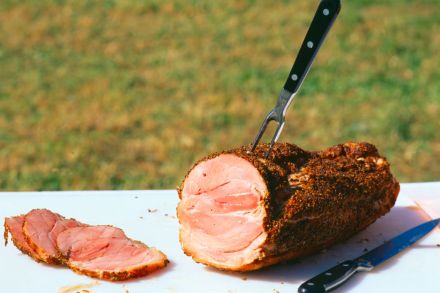
My grandmother lived on a Christmas tree farm in Indiana. December weekends meant hauling evergreens, pulling needles from our socks and pretending I was far more help than hindrance. But the real event – the thing the whole month orbited – was Christmas Day dinner: the good china, the stiff grace and the quiet family rule that no one under 20 offered up an opinion unless asked. The table was a study in American aspiration: a ham glossy with cloves, wassail steaming on the hob, potatoes whipped into obedient fluff, canned cranberry sauce still bearing its aluminum-molded rings… and always, inevitably, the Jell-O. There were several, because my family believed in abundance, even when the abundance quivered. Aunt Deb and Uncle Fritz arrived with their famed Jell-O eggs.

Flirting with Passetoutgrain, Burgundy Pinot Noir’s fun sister

In his History of the Franks, Gregory of Tours (c. 539-594) wrote one of my favorite opening sentences: “A great many things keep happening, some of them good, some of them bad.” Who can disagree? Gregory’s works are full of interesting morsels. Writing about the miracles of St. Julian, for example, he notes that a cask of wine that was left half empty was found “overflowing and forming a rivulet of wine across the floor. Although drawn from repeatedly, the cask remained full until the next day.” A good fellow to have around, that Julian. Gregory seems to have taken a keen interest in wine. He was one of the first people to opine about the wines of Burgundy. which he compared to storied Roman Falernian in 591. What do you suppose that wine was like?

A chef’s twist on the Feast of the Seven Fishes

My Italian-American family gathers every Christmas Eve to cook a Feast of the Seven Fishes. And every year, it’s always just a little disappointing. Sorry, Mom. While the Feast must include seven distinct seafood dishes, there’s no correct way to prepare it. It’s entirely open to personal preference or family tradition and typically relies on whatever fish is readily available in the American northeast. Still, a touch of gourmet precision can help refine some of Nonna’s age-old recipes. The Feast is a quintessentially Italian-American tradition – one rooted ostensibly in Old World Catholicism and the abstention from meat until Christmas Day. Yet there’s very little record of it ever taking place in Italy.

jesus garden

I met Jesus – and he’s an old Spanish gardener

As the old Jewish proverb goes, “Man plans and God laughs.” But nothing, in my experience, makes Him clutch His sides quite like hearing about my Mediterranean gardening ambitions. Every winter, my horticultural memory performs a factory reset. I somehow forget the summer mornings when the thermometer climbs past 90°F by 8 a.m. and the plants wilt by noon. The brutal, arid wind that strips moisture from the leaves faster than I can water? Erased from my mind. What blight? And the way perfect fruit splits overnight after a thunderstorm? Never happened. Come spring, I’m suddenly possessed, clicking “add to cart” on tomato varieties with names like 1980s cocktail bars: Pink Jazz, Green Zebra, Cosmic Eclipse.

A trip to Fortnum’s turned me into an expert present-giver

I had only been to Fortnum & Mason once before. The first time I went, I wasn’t sure what I was getting in to. I remember that the distinct, pale eau-de-nil (mint green) exterior – its signature color – was framed by cream trim and Georgian sash windows stacked neatly across several stories. It was charming and slightly whimsical, like a confectioner’s box scaled up to building size. My maiden voyage was with the British skateboarder and artist Blondey McCoy, who excitedly led my wife around the hallowed halls as an unofficial tour guide during the bustling Christmas season last year, sporting an infectious Cheshire-cat grin. I was jetlagged and generally not festive, but the energy was palpable. I began to turn from a Scrooge into a believer.

fortnum

How I won over a Scrooge-like New Yorker

Like all men, my dear friend Chris Black is an absolutely terrible person to shop with. He behaves only marginally better than a boy toddler. As we stood on the street outside Fortnum’s, this New Yorker’s greeting to me was, “I’m not really a Christmassy kind of person.” How anyone could say this when they are about to enter the Father Christmas of department stores is beyond me. Fortnum & Mason, with its crimson carpets and twirling mahogany doors, counters groaning with marzipan and chocolate and its gracious staircases and red-coated butlers transport even the most jaded shopper to a gentler time when Christmas shopping was an “outing,” one that you dressed up for, before people had even imagined scroll-and-click retail.

Matthew and Camila McConaughey’s signature Christmas cocktail recipe

Our Santa Pants cocktail is one of our go-to holiday pours when hosting at this time of year. Made with our organic tequila and ginger beer, cranberry juice and fresh lime, it brings all the sparkle and cheer of the season. It is like Christmas in a glass. And while the world doesn’t need another celebrity tequila, it could use a shot of fun. So this Christmas, enjoy yourself and keep the holiday spirit flowing. Here’s how to make it. Ingredients – 60ml Pantalones Organic Tequila – 60ml cranberry juice – 15ml lime juice – Top with ginger beer – Garnish: sugar rim, cranberries, rosemary Rim the edge of a rocks glass with a lime wedge, dip the rim in sugar to coat and set aside.

Four Twenty Five’s wine list is better than most

I was recently invited by friends to a small birthday fête at Four Twenty Five, Jean-Georges Vongerichten’s latest New York restaurant at (wouldn’t you know it) 425 Park Avenue. It was, as Bertie Wooster might have put it, oojah-cum-spiff, a worthy companion to the Terrace and Nougatine, those other famed New York refectories by Jean-Georges. I won’t bore you with the victuals, which were so far from boring themselves that it would take more than a column just to enumerate those toothsome morsels. Instead, let me mention a couple of the wines we enjoyed, noting for posterity that the wine list at Four Twenty Five is one of the most extensive and thoughtfully selected in New York City. I hope to have occasion to make a thorough study in the years to come.

WIne

How America fell in love with the G&T

The gin and tonic has had quite the journey. From humble beginnings protecting British explorers against malaria, it has become the country’s favorite cocktail. Abroad, Italians grown tired of spritzes now opt for it come aperitivo hour. The Japanese bow before it. The world stumbles after it. Yet there is one land the G&T has been slow to conquer: America, the land of vodka sodas and zero-calorie seltzers. In recent years that has begun to change. While overall consumption of spirits is down, sales of gin in the US are on the rise and expected to grow some 6.5 percent a year for the rest of this decade. Craft distilleries are in the vanguard: in California, gin is infused with citrus and coastal herbs. In the South, it might be perfumed with watermelon rind or magnolia blossoms.

g&t