Food & Drink

I tried the world’s worst drink

I am standing in a sunny courtyard in the little town of Gijduvan, waiting for a drink. Just in case you don’t know, Gijduvan is a way station on the old Silk Road, in the far west of Uzbekistan: it is known for ceramics, Sufi mystics and loud celebrations of the Persian spring festival, Nowruz. As part of this festival, the locals make a special soup/beverage called sumalak. The recipe, I’m told, dates to Zoroastrian times – more than 3,000 years ago – and includes “wheat sprouts,” “cottonseed oil” and, I am not joking, “stones.” I can already see the sumalak bubbling away in a vast steel pot. It looks like viscous brown cow slurry. To be honest, I’m not brimming with eagerness.

drink
shooting

Wine highlights from a weekend shooting party

Do you know Charlotte Mulliner’s charming poem “Good Gnus”? It was transcribed by P.G. Wodehouse in his short story “Unpleasantness at Bludleigh Court.” I went shooting with friends last weekend at a magnificent rural fastness in a semi-secure, undisclosed location near Millbrook, New York. Although we were shooting clays, not pheasants or other fauna, the opening of “Good Gnus” nevertheless floated into my mind like a tocsin with its irrefragable psychological insight.

Beaujolais is the ideal summer wine

It’s been a while since we have traveled to Beaujolais, that ancient wine growing region along the Saône River north of Lyon. Since summer is nigh, it’s time for another visit. Beaujolais is an ideal summer red wine. It is almost always made exclusively from the Gamay grape, a cross between Pinot Noir and an ancient white varietal called Gouais. It is light, flowery, full of pleasing acidity and fruitiness, satisfying by itself and notably food friendly. Of course, anyone who writes about Beaujolais these days has to begin by issuing a little advisory, like the Surgeon General’s warning on packs of cigarettes and certain medications. A few decades back, Beaujolais was plagued by scandal.

beaujolais

Activist-academics push to Make America Teetotal Again

What constitutes a safe level of drinking? For some activist-academics there is none – and they are loudly lobbying for alcohol to be treated like tobacco in official US health advice. The Dietary Guidelines for Americans are under review and will be updated this year. Currently they recommend moderation: two drinks or less in a day for men and one drink or less in a day for women. Pressure, however, is being applied for a new recommendation: no safe level.But that would fly in the face of decades of evidence that has shown those who drink in moderation live longer than those who do not, mostly because alcohol consumption lowers the risk of heart disease, stroke and diabetes. The current guidance from 2020 is roughly where the sweet spot is from a health perspective.

pregnancy

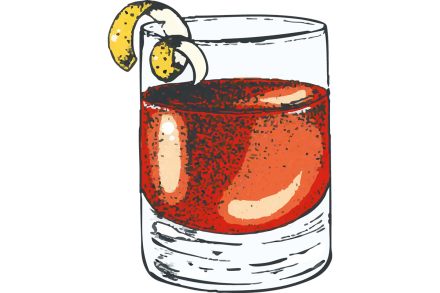
The Sazerac: an old favorite… from New Orleans

As the Super Bowl rolled into New Orleans, with Kendrick Lamar and his flared jeans in tow, I was thinking about the many contributions that this small Louisiana city has brought to the cocktail bar. There’s the creamy green Grasshopper, the French Quarter’s whiskey-based Vieux Carré, the tropical rum punch Hurricane and, of course, the comically difficult Ramos Gin Fizz – which blooms up in a tower of egg-white froth. But perhaps the oldest, most widespread and most conventional is the Sazerac: it is considered one of America’s oldest cocktails, having been served in New Orleans from the late 19th century.

alsatian wine

Is Alsatian wine primarily French or German?

Among the minor aporia bedeviling the universe is a question about Alsatian wine. “What is it?” someone asks. “Wine from Alsace,” comes the answer. “But where is Alsace?” This is where things get fraught. The answer is not latitude and longitude (for the curious, Grok offers 48.57º N and 7.75º E for Strasbourg, a plausible anchor for the area). The answer is not found in geography either. “West of the Rhine and east of the Vosges mountains” is all well and good. But it does not impinge upon the real question, which is a question of identity. Not to belabor the point, but should we think of Alsace as primarily French or primarily German? With that, as Jeeves might have said to Bertie Wooster, rem acu tetigimus.

Why I am confident the Champagne tariff will not last long

I have to begin this column with a glass of Pol Roger cuvée Winston Churchill. It’s fancy stuff, and — according to some — it’s a bit early in the day to be quaffing Champagne.  “How early is too early?” I’ve often wondered that. The jury is out but most of the best authorities say that any time before actually awakening is too early.   Why the shampoo (as David Niven was wont to denominate the beverage)?  It seemed like the appropriate expedient in response to a bulletin I received from a Trump-skeptical friend. It came in over the headline, “Trump’s first mistake.

palm beach wine champagne

The excellent wine of Mount Ventoux

On April 26, 1336, the poet Petrarch, accompanied by his younger brother, climbed up the windy slopes of Mount Ventoux in the Rhône Valley. He said that he was the first person to climb that Alps-adjacent peak, which isn’t quite true. But it may well be true that he was the first person to go mountain climbing for fun. Petrarch wrote about his outing in 1350 in a famous letter called “The Ascent of Mount Ventoux.” The twentieth-century German philosopher Hans Blumenberg (speaking of mountains) wrote that Petrarch’s climb marked “one of the great moments that oscillate indecisively between the epochs,” namely between the medieval world and the Renaissance. Today, we like mountains. They mean picnics, sight-seeing, natural beauty.

Ventoux

The fine wines of Meursault

In November, I was privileged to attend the 91st Paulée de Meursault. There are three coveted invitations at that time of year in this part of Burgundy: the world-famous wine auction held in Beaune and the luncheons called la Paulée de Beaune and la Paulée de Meursault. La Paulée de Meursault celebrates the fine wines grown in this small village. It is home to eighty wine-growing families and the area is known for its charm and terroir, that unique blend of soil and climate that has been producing exceptional white and red grapes for centuries. I had heard from our family about this festive celebration ever since our daughter and son-in-law moved to France fifteen years ago to work in wine.

Meursault
wine

Wine highlights from Inauguration Day

I write a few days after the Big Event in Washington, DC on January 20, 2025. For us deplorables, it was a celebratory occasion. I am told that non-deplorables entertained different feelings that day. Since they had been used to having the run of our capital city, I can understand their sentiments. But, perhaps by some process of selfselection, very few non-deplorables were in evidence at the haunts I visited during my stay. Every hotel, restaurant and event space I stopped off at was full of red caps — yes, those red caps — and the mood was almost giddy with anticipation and glee. It brought to mind a passage from one of my favorite Psalms, number 23: Thou preparest a table before me in the presence of mine enemies:thou anointest my head with oil; my cup runneth over.

How beer cracked France

Only a fool tries to guess exactly what awaits at a French karaoke bar. But on a Saturday night in Avignon, I wasn’t expecting to find a crowd of twentysomething hipsters drinking American-style IPA and singing “Mr. Brightside” and “Friday I’m in Love.” France, in all its stereotypical glory, has always been a wine country. Edward Lear wrote no limericks about a “young man from Saint-Étienne, who liked drinking Old Speckled Hen” but things are changing. France has the most breweries in Europe and beer is now the most bought alcohol in supermarkets, though if you ask a middle-aged Frenchman why young people are embracing beer instead of burgundy, you are met with the most Gallic of shrugs and a “bof... je ne sais pas.” So, why are they doing it?

beer
Bloody Mary

The Bloody Mary deserves more than brunch

Regular readers of my cocktail column probably get the formula by now: I give a short history of the drink in question, probably with an anecdote about my time in bartending, then provide a classic recipe, following by various flavor and format variations. But the Bloody Mary doesn’t fit neatly into that structure. For one thing, the drink’s origin has never been firmly established — given that it started as a spiked tomato juice, how could there be? Do we really care who invented the vodka-cranberry? The Bloody Mary is the same way. It probably came around during the 1920s, gaining popularity in the 1930s. By 1939, you see the first real mentions of it in print.

winter

The best winter wines

Winter is a natural moment for a little recherche du temps perdu. For my band of serious thinkers, the usual aides-mémoire are not petites madeleines dipped in tea but some of the various wines the holidays afforded us. Wordsworth said that poetry “takes its origin from emotion recollected in tranquility.” The jury is still out on the accuracy of that neatly phrased observation. But regardless of its pertinence to the art of poetry, its pertinence to the art of wine appreciation can hardly be gainsaid. With that in mind, I offer, as a minor public service, a brief recollection of some of the wines that a beneficent providence vouchsafed us as the winter solstice came and went and the house was redolent of evergreen and wood fires.

My thoughts on Malört

It was January in Chicago and the forecast was for heavy snow followed by bitter cold — high time, I thought, for a shot of malört, the most undrinkable beverage on earth. Or so I’d always heard — and therein lies a tale I didn’t expect to tell. Chances are you’ve never heard of malört, formally known as Jeppson’s Malört, Carl Jeppson being the Swedish immigrant who invented the liqueur a century ago. However, it’s legendary in Chicago, where it’s commonly described as a rite of passage. That tells you a lot right there. Lest there be any doubt, readers are invited to search for #malortface on X, formerly known as Twitter, or Instagram or Flickr.

Malört
mocktails

Strong stuff for a Dry January

If you spent your holiday season right, you’re reading this magazine with a hangover, fueled by seasonal excesses in eggnog, wine, whisky and other alcoholic indulgences. January is the month to clean out, to convince yourself you’re going to start running regularly this year, burn off some of the holiday fat and detox your thoroughly tox’d body. However, just because you’re having a dry January doesn’t mean it should be a dreary one — and there are some great drinks to fuel you through it. So most of this month’s drinks will be mocktails; fortunately the non-alcoholic scene is not what it was a few years ago.

Kyè

The master Kyè

Last month we took a quick trip to Tuscany. Among the wines we sampled was Sassicaia, the fabled Cabernet blend from Bolgheri on the Tuscan coast. I said that the wine was an “instant sensation,” but an alert reader pointed out that it was only when it was sold commercially, in the late 1960s, that it took the wine world by storm. Before that, it was the private province of its creator, the marchese Mario Incisa della Rocchetta, who began experimenting with Bordeaux grapes in the 1940s. I also said that Tignanello was another superlative Super Tuscan from “the region.” But that same alert reader noted that while the region was Tuscany, Tignanello comes not from Bolgheri but from Chianti, several miles to the East.

Where Trump’s Washington will actually be hanging out

Where will conservatives and Donald Trump's disciples spend their non-working hours in DC for the president-elect’s term? The Washingtonian provided a list by Jessica Sidman last week, but by Cockburn’s estimation, it’s not totally over the target. Contenders on Sidman’s list include the Big Board, Cafe Milano, Capital Grille, Dirty Water, RPM Italian, Royal Sands Social Club, Shelly’s Back Room and the Waldorf Astoria — which used to be the Trump Hotel DC but was sold back in 2021. Shelly’s is Cockburn-approved, especially for the cigar smokers. Rudy Giuliani has been spotted in there before. But Cafe Milano, Capital Grille and Dirty Water are not necessarily “hangouts” for conservatives or the MAGA crowd in particular.

washington trump

Cocktails for a merry, tipsy Christmas

Not to live up to Irish stereotypes, but for me, Christmas wouldn’t be complete without booze; and so, for this seasonal column, it’s only fitting that I recommend some perfect yuletide drinks to get you slammed under the Christmas tree. There are two broad bases you can work with for Christmas drinks — creamy ones and those with seasonal spices. You can do both, but these are the two broad playing fields, and just because you don’t like one kind doesn’t mean you won’t like the other. There aren’t a lot of cocktails using cream (the classic or the alcoholic Irish one); the trick is to use a good Irish cream and add it to existing non-alcoholic drinks. Want a nice boozy milkshake? Want a hot chocolate that gets you blitzed? A creamier espresso martini?

Christmas
Tuscans

The secrets of Super Tuscans

I suspect that most readers, asked to name the most important red-wine grapes of Italy, would focus mainly on Nebbiolo, Barbera and Sangiovese, the most widely planted grape in Italy. Lovers of Sicily might also mention Nerello Mascalese and Nero D’Avola. What if I told you that some of the most spectacular wines in Italy were made from the Cabernets (Sauvignon and Franc) and Merlot? Have I gotten lost in the Médoc? No, I am in Tuscany, ancient home of the Etruscans, northwest of Rome. To be specific, I am in Bolgheri, a few miles from the Ligurian coast. On a clear day, if you cast your eyes south, you might just see Napoleon padding around the island of Elba plotting his escape. Everyone has heard of “Super Tuscans.” Not everyone knows the story of their origin.

A sip of the Vieux Carré

It’s 1951 and the Hotel Monteleone burns bright, a gilded island of light and liquor adrift in the New Orleans dark. Inside, the air is thick with the sweet tang of cigar smoke and the murmurs of polished conversation. Over in the Swan Room, the trumpets blare, their brassy notes cutting through the gentle chatter, their absence filled with the lively, gravelly voice of Louis Prima. The crowd sways in rhythm, caught between the pulse of jazz and the flicker of chandelier light. Outside, the French Quarter is still alive.

Vieux Carré