Food & Drink

Malbec: a conundrum worth solving

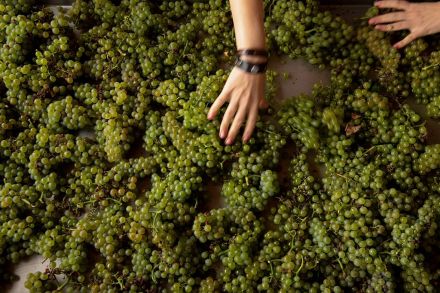
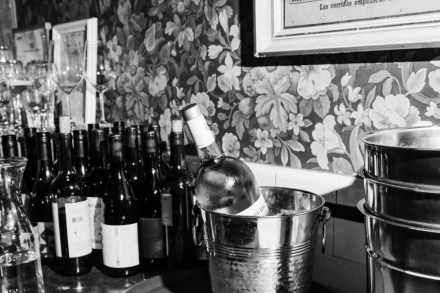
Malbec, observed Hugh Johnson, is a “conundrum.” Sometimes it is light in color as well as body. That’s what it tends to be like in the Loire, where the grape is called côt (apparently its original name). It used to be grown in Bordeaux, where it was used primarily as a sort of filler, rounding out the cabs and merlots. In Cahors, its major French venue today, it is sometimes called côt noir or Auxerrois. There malbec tends to be bold, spicy and dark. “Dark,” in fact, is one of the wine writer’s favorite adjectives for this allotrope of malbec. This was the “black wine” that Thomas Jefferson would sometimes

The joy of spring greens

Many of us, if told we must live by foraging in the wild, would quickly go toes up – from fear, not malnourishment, like the birds in Ol’ Paul the Mighty Logger, who saw snowy white popcorn bits flurrying through the air as the giant Bunyan munched, figured winter was back, and promptly froze to death. But there’s no need to die of fear at the idea of picking spring greens. True, we love our washed and bagged “spring mixes” of baby lettuce and we tremble at the thought of dandelion greens plucked from the meadow by our own inexpert hands, uncurated by the all-wise authorities of the food industry.

War and fishing in the Strait of Hormuz

On February 28, I jumped on a fishing charter with some friends and headed out into the Strait of Hormuz. There was barely any wind. The sea shimmered in the heat of the Gulf sunshine. On the very first drop of our lines, something hit my metal jig and went off like a rocket. After a couple more brief runs, a very stout, double-figure grouper rose through the water column, which I guided safely into the waiting net. It was a personal-best hamour (The Arab word for grouper), weighing between 10 and 12 pounds. I went on to catch a few interesting tropical fish, including a snapper, but I didn’t

How different is Catholic and Protestant food at Easter?

I’m a New York-raised Italian Catholic, and my family’s inherited religious-cultural neuroses inform our meals every bit as much as the WASPs next door. This is particularly true at Easter, where centuries of European immigration have shaped the culinary traditions in New York. The Easter feast became a religiously sanctioned opportunity to indulge For my family, the Easter feast typically includes a herb-crusted leg of lamb (American only; New Zealand lamb is far too gamey), deviled eggs, rich scalloped potatoes, honey-glazed carrots, some fresh spring vegetables and an absurdly decadent chocolate dessert – all washed down with a robust Etna Rosso, generously poured. While both Catholic and Protestant Easter traditions

My take on marry me chicken

I am not in the habit of bringing viral TikTok recipes here. It is a safe space, away from digestive biscuits submerged in yogurt masquerading as cheesecake, baked oats, or sugary instant coffee whipped up like foam (if you don’t know what I’m talking about, ignorance is bliss). No, here we are in the realm of tried-and-tested vintage recipes. So why am I letting marry me chicken into this sacred place? For the uninitiated, it first popped up a decade ago on an American food website called Delish, but it became the most-searched recipe on the New York Times in 2023. It’s a simple concept: chicken cooked in a creamy,

marry me chicken

Why is the wine industry dying?

Most wine columns resemble recipes from Larousse Gastronomique or Mastering the Art of French Cooking in this way: they have happy endings. This column, alas, proceeds with a melancholy burden. The world of wine, it pains me to report, is in the doldrums. Is it because of a new infestation of phylloxera, the blight that devastated French vineyards in the 19th century, or some other pest? Is it some novel tyranny of teetotalers, outlawing the production and consumption of wine? No. It is something closer to original sin or what Immanuel Kant on a dreary afternoon called “the crooked timber of humanity” out of which nothing straight can be fashioned.

The glorious versatility of Dijon mustard

Not just salami, air conditioning and dental fillings: among their many contributions to civilization, the Romans also gave us Dijon mustard. Somewhere about the 4th century, it seems, the vinegar makers of Dijon were granted the right to use the exclusive mustard recipe composed by Palladius, son of Exuperantius, Prefect of the Gauls (or so Samuel Chamberlain informs us in his Bouquet de France of 1952). Palladius was one of those fascinating Roman gentleman-farmers who are also poets and scientists. He owned farms in Italy and Sardinia and had a particular interest in fruit trees. He penned a popular treatise on agriculture that stayed on the best-seller (or at least

The growing appetite for brisket

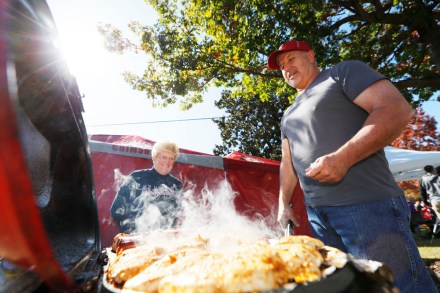
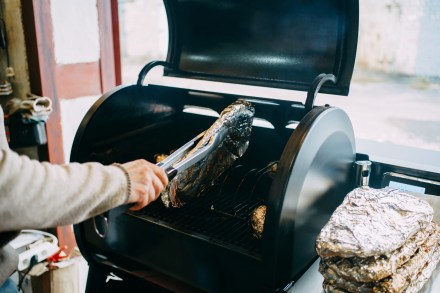
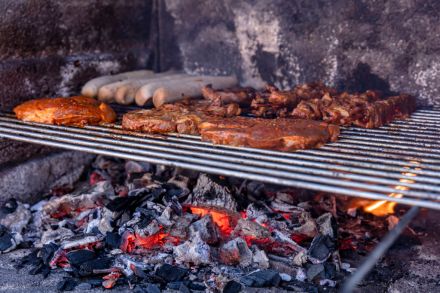
When I first became enamored with barbecue in the 1990s, I ate a lot of chopped pork at Carolina barbecue joints, and sometimes chicken and ribs. One thing I almost never encountered was beef, especially slow-smoked brisket. That barbecue cut remained mostly a Texas thing until well into the 21st century. A few pioneers did try to introduce it to the Carolinas over the years, with limited success. Tommy Brightwell, for instance, put brisket on the menu when he opened Pappy’s BBQ in Madison, North Carolina, in 2004. A review in the Greensboro News & Record began, “So, you think barbecue has to come in pork form only?” The public’s

brisket

Jeffrey Epstein had the diet of a sick man

Comb through Jeffrey Epstein’s emails and you find frequent correspondence with his private chef Francis Derby about “beef jerky.” Online sleuths have speculated that it is a code word for something more sinister. We know Epstein was a sexual predator, but what if he literally preyed on human flesh? After all, Derby cooked at a restaurant called the Cannibal. Make of that what you will. I can’t quite bring myself to believe Epstein was devouring the teenagers he trafficked, but he did seem to have the eating habits of one. He was picky, entitled and equally fond of fad diets and junk food. He substituted Sweet’N Low for sugar in

epstein

Jeffrey Epstein’s testosterone problem

Jeffrey Epstein was a sick man. That’s hardly news. But a new dimension has been added to our understanding of him by the latest batch of files released by the Department of Justice. Physically, not just mentally and morally, Jeffrey Epstein was very, very unwell. For the better part of a decade, despite having billions of dollars and access to some of the world’s greatest practitioners of medicine, Epstein’s health only got worse. We can now follow his physical decline in depth – via emails and text messages, magazine clippings, scientific reports and website articles he saved – which is exactly what a number of internet sleuths have been doing.

Americans have perfected the art of countertop cuisine

There are many reasons to admire America, and also a few reasons to disapprove. On the plus side there is free speech, the right to protect oneself, a relatively dynamic economy and 198 versions of beef jerky. On the downside, an inconsistent attitude to turning right at lights, too much fructose and the possibility of a civil war on the way. However, on a recent long trip up the American West Coast, from palm to pine, I came away realizing that America has one great advantage over Europeans: a serious understanding of the concept of eating at bars in restaurants. By which I don’t mean nibbling nuts and necking a

Criminal gangs have developed a taste for snails and seafood

It was a dark night in November that the criminals stole softly upon the sleeping snails. They snipped away the fencing, pried open the door with a crowbar and knocked out the security lights. Then, they advanced upon their victims, who were lying, defenseless, in cold storage. No use for the snails to flee; heliciculturists breed them for flavor, not speed. The hapless gastropods could only pull in their horns, make themselves as small as possible inside their shells, and wait. The crooks worked with merciless efficiency. Some 450 kilos of snails soon found themselves shivering in the getaway vehicle as it sped off down a route départementale in northeastern

snails

Dining out in Mysore

Long before “decolonization” was a glint in the eyes of left-leaning political scientists, Hyder Ali, an upstart mercenary soldier turned sultan of Mysore, and his nepo baby son, Tipu Sultan, fought four bloody wars to keep the British from controlling the south of India. If wars were like soccer league tables, the Hyder/Tipu team would have come out on top with an enviable record of three wins to one loss. That loss was the final match otherwise known as the Fourth Anglo Mysore War, in which Tipu was defeated by the inspired generalship of the future Duke of Wellington. Tipu died in battle and the general was soon comfortably billeted

My new discoveries from South Africa

When I heard that Minnesota Representative Ilhan Omar had gotten into the wine biz, I thought “Hot dog! If she is as good at wine as she is at investing, this should be spectacular.” I mean, talk about creatio ex nihilo. Just a few years ago, Omar had a net worth of about $1,000. Now she is said to be worth some $30 million. Perhaps only Nancy Pelosi, the world’s most successful investor, is better at conjuring something out of nothing. In 2022, eStCru, the winery Omar’s husband had invested in, was touted as a “hot brand” by Wine Business Monthly. There was chardonnay from the Willamette Valley, cabernet from

Loser’s: the campy and ironic bakery making made-to-order cakes

Going downtown in New York used to be cool. Before Soho became a glorified shopping mall, it was a haven for starving artists. Before Chelsea became family-friendly, Michael Alig was throwing Blood Feast parties at the Limelight. The rebel heart of downtown, which attracted generations of avant-garde creatives, is much harder to find today. All of Manhattan has seemingly “gone uptown.”  But Loser’s Eating House, a made-to-order bakery operating out of a tiny Soho ghost kitchen, is still serving up a little slice of downtown realness. Loser’s style is campy and ironic. The cakes rely on exaggeratedly large piping, done in a purposefully messy style Loser’s was launched in 2021

Hunting for the Pizza Hut of my youth

About 15 miles off the I-80, tucked away in the Cleveland suburb of Warren, you’ll find a delightful bit of yesteryear, preserved from the 1970s and serving up your childhood dreams. Here you’ll find a Pizza Hut that forgot to evolve into a quick counter-service and delivery outpost like almost all the others. I had heard rumors of Pizza Hut Classics for some time. For years I’ve wanted to find one. As a person who would live solely on pizza if it weren’t for the heart disease and kidney stones that would inevitably follow, I knew I had to find one. Lo and behold, one such restaurant happened to be

The vast landscape of American barbecue

Some 25 years ago, I walked into the University of South Carolina library to check out a book on the history of barbecue. I had just finished a PhD in American literature, but had become more interested in culinary history. I had also taken to driving the state’s backroads, seeking out old-school barbecue restaurants. Researching the history of barbecue seemed the perfect next move. To my surprise, no one had published a book on the subject. The most that had been written about pre-20th century barbecue were a few sparse paragraphs in larger works on food history. I ended up having to write one myself. It took a while. The

The mindfulness behind the cooking of Buddhist nun Jeong Kwan

I am somewhat allergic to food nomenclature: zero-waste, plant-based, seasonal, small plates, “live cultures,” foraged, farm-to-fork. It’s not that these are inherently off-putting concepts, but I associate them with “foodie” fads, gimmicks and big egos. All of those trendy labels could apply to the food cooked by the “philosopher chef,” a Buddhist nun called Venerable Jeong Kwan, plus you could throw in a dash of mindfulness and eastern spirituality for good measure. Yet Kwan, who is venerated by Le Bernardin’s Eric Ripert and Noma’s René Redzepi, and has featured in an episode of Chef’s Table, is the furthest thing from an ego-chef. She has no restaurant, no recipes, cooks for

Oprah’s obesity gene claim is hard to swallow

Appearing yesterday on The View, a show that couldn’t possibly exist without the trail she blazed, Oprah Winfrey, promoting her new book, ‘Enough,’ had this to say about her recent, semi-permanent, GLP-1-induced weight loss: “All these years I thought I was overeating. I was standing there with all the food noise, what I ate, what I should eat, how many calories was it going to take. I thought that was because of me and my fault. Now I understand that if you carry the obesity gene, if that is what you have, that is what makes you overeat. You don’t overeat and become obese. Obesity causes you to overeat.” “Right,”

Oprah