Economy

  • AAPL

    213.43 (+0.29%)

  • BARC-LN

    1205.7 (-1.46%)

  • NKE

    94.05 (+0.39%)

  • CVX

    152.67 (-1.00%)

  • CRM

    230.27 (-2.34%)

  • INTC

    30.5 (-0.87%)

  • DIS

    100.16 (-0.67%)

  • DOW

    55.79 (-0.82%)

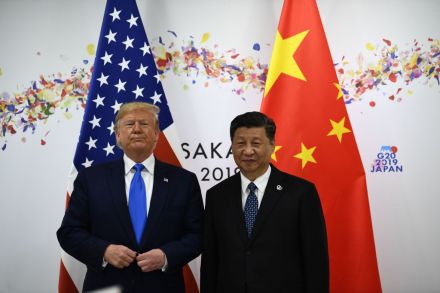
Why Xi thinks he has the upper hand

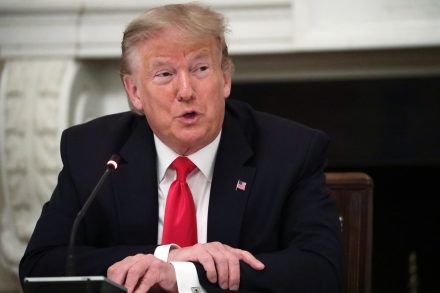
Taiwan is “the most important issue,” Xi Jinping warned Donald Trump. “If mishandled, the two nations could collide or even come into conflict, pushing the entire China-US relationship into a highly perilous situation,” according to Chinese state media. The contrast with Trump’s comments was striking. Trump had earlier named trade as the most important issue. In opening remarks, the American President stuck to bland flattery, saying he and Xi had a “fantastic relationship,” that Xi was a “great leader” and that “it is an honor to be your friend.” “The relationship between China and the USA is going to be better than ever before,” he insisted.

Spotlight

Featured economics news and data.

Cutting Britain’s giant welfare bill would be an act of kindness

Does having money really matter that much? There are those, usually with quite a bit of it, who want us to care less about materialism. But, unequivocally, money really does matter – not because of any status it supposedly brings, but for the freedom it buys: freedom to choose how we live and how we look after others. Considering this, it seems that the deep disillusionment with mainstream politicians in recent years stems from a protracted and ongoing period of stagnant living standards over which they have presided. But the truth is that the average person has not got poorer since the global financial crisis. They have got a little bit richer. Employment levels are still exceptionally high. And, both historically and internationally, we are a very rich country.

Coronavirus’s biggest victim? Money

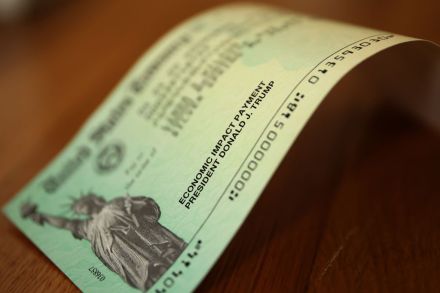
The first victim of war, they say, is truth. The first victim of coronavirus, by contrast, is fiscal discipline. Yesterday, President Trump started negotiating with the Senate over a proposal to suspend payroll taxes, possibly until the end of the year. Wall Street certainly liked it: markets shot up by five percent. Whether future Americans will enjoy paying the bill is another matter. The government’s proposal is not just targeted help for a few industries like travel and tourism, which stand to lose out heavily as people stay at home. It is not a modest tax cut to encourage Americans to go out and spend a little more. Even to call it a 'stimulus package' — as these things are pat to be called — seems pathetically inadequate.

coronavirus money

Market hysteria is not all down to coronavirus

Is this really about a virus? Oil has plunged 30 percent, the S&P Index seven percent. What is happening on the markets today has less the feel of a rational reaction to world events than one of the periodic panics which grips world markets — with coronavirus a mere excuse for a sell-off which was perhaps coming anyway. The deadliest words for world markets are not ‘coronavirus’ and ‘Covid-19’ but ‘decade-long bull market’. The latter idea has planted in many investors’ heads that the good times could not have gone on much longer — there had to be a correction or crash. It is true, as well, that the US, in common with many developed countries, has not suffered a recession for over 10 years. That, too, feels unnatural.

market

Coronavirus is a chance to buy cheaper — but it comes with a health warning

If anything, stock markets have been slow to respond to the spreading coronavirus outbreak. Stories of Chinese supply interruptions, from JCB digger components to plastic toys, have been circulating since mid-February, while hedge funds have been hard at work short-selling cruise-operator shares: Royal Caribbean and Carnival are both down 30 percent. Now airlines have taken a pasting too, with easyJet and Ryanair among the big fallers in Monday’s sell-off of European stocks, following news of a cluster of virus cases in northern Italy. Meanwhile, a turning point may or may not have been reached in the rate of reported cases in Wuhan, where the outbreak began.

coronavirus

Coronavirus could be ‘black swan event’ that costs Trump the presidency

Donald Trump is, as we know, a noted germophobe. It would be richly ironic, then, if he missed out on a second term owing to the germ of the moment: coronavirus. Over the past 24 hours, something remarkable has been stirring in the normally wayward kingdom, Trump Tweet Land. The president has started lavishing praise on the Centers for Disease Control (CDC) — a government agency which he has previously treated in a rather less than admiring way. In 2017 he famously sent it a list of banned words like ‘transgender’ which he didn’t want to see in official documents. And he has since been attacked for cutting its budget. Suddenly, they are heroes who are doing a GREAT job of tackling coronavirus VERY VERY quickly.

Is it worse to be an environmental polluter or a moral one?

So farewell Bernie Ebbers, former chief executive of WorldCom, the long-distance phone operator that became America’s biggest-ever bankruptcy case in 2002. Ebbers has died aged 78, having been released on health grounds in December from a 25-year jail sentence for his part in an accounting fraud that concealed the perilous state of WorldCom’s finances, misleading investors after a series of high-risk acquisitions by the bejeweled ‘telecom cowboy’ Ebbers during the dotcom boom. By repute, US justice aims to make examples of high-profile corporate miscreants, starting with the humiliating ‘perp walk’ into court and concluding with harsh sentences and scant hope of parole.

polluter

After Brexit

This article is in The Spectator’s February 2020 US edition. Subscribe here. The US-China trade war is easing; a new trade deal with Canada and Mexico has been passed by a large cross-party majority in the House of Representatives — largely unnoticed, as it happened in the same week as Donald Trump’s impeachment. The idea that the president is taking the world down a blind alley toward an era of protectionism is beginning to fade. So what now of the prospects for that other trade deal that Trump has promised: between the US and Britain?

brexit

There’s a long way to go before Trump can declare victory in his trade war

There is no shortage of quotes by Donald Trump that his opponents have tried to use against him — few of which have so far damaged him politically, still less embarrass the man himself. But there is one which really does have the potential to cause him harm in this year’s presidential election: his claim, in March 2018, that ‘trade wars are good, and easy to win’. That isn’t looking quite so clever now, two years later when the trade war that Trump started with China is still far from won. The deal signed today by Trump and Chinese vice premier Liu He brings a respite in hostilities, but there is a long way to go before the US can be claimed to have won, or even to have restored trade to what it was prior to 2018.

trade war

All forecasts are off if Iran shuts the Strait of Hormuz

Just when you thought it was safe to go back in the water…late last year, a range of forecasts suggested that the likelihood of recession in the US, with knock-on effects for the rest of the developed world, had significantly diminished. Last summer, many economists were putting the chance of a substantial downturn at 50 percent but by November, Goldman Sachs had marked it down to 24 percent and Morgan Stanley to ‘around 20 percent’. Underlying this shift were strong corporate earnings and consumer spending, plus rising hopes of a settlement of US-China trade tensions. Last month saw a sell-off of safety-first government bonds reflecting the mood, and the FT’s end-of-year forecasts included a confident ‘No’ to ‘Will the US go into recession?

hormuz

The Chinese trade deal is a Christmas gift to Xi

If Donald Trump wanted to deliver a seasonal gift to his ‘good friend’ Xi Jinping, the ‘Phase One’ trade deal reached this weekend fits the bill pretty well.  From the viewpoint of the Beijing leadership, it vindicates the Chinese refusal to budge during the long months of trade negotiations despite the threat of escalating duties. What has resulted is less the kind of overall trade agreement originally aimed at by the Trump administration and feared by China as interference in its economy —  and more of a purchase agreement accompanied by reduced tariffs.

xi

Trump’s Chinese tariffs are simply a scare tactic

Ever since Donald Trump began his trade war with China there have been two possibilities: firstly, that he intends tariffs to form a permanent feature of the landscape in relations between the US and China: a protectionist device designed to protect American jobs indefinitely; or secondly, that he sees his tariffs as a shock tactic devised to draw China into talks which it would otherwise be loathe to join, and with the ultimate aim of freeing up trade. The latest development, halving a set of tariffs which had been in place since September and canceling another set which had been due to come into place this week, points heavily to the latter.

chinese tariffs

They may take our wine, but they’ll never take our brie-dom

I was poking at a dessicated branzino at the Union League yesterday, half-listening to a schoolmate drone on about international alternatives, when he mentioned off-hand that the United States and France are gearing up for a trade war. Bordeaux could cost a bomb; brie could break the bank. I dare say, it shook me to my coeur. Thank God it’s not Sancerre season. They’re decorating the club for Christmas, so I worried I was delirious from the smell of brass polish. I excused myself and discreetly logged on to see that, alas, the dreadful news is true. It’s bad enough that they’re banning foie gras in New York, which is as civilized as burning churches. Now the feds are getting in on the act too.

wine brie

America should kidnap pandas to end the trade war

It’s near the witching hour as the wolves begin to howl, the Tasmanian devil spins itself into a frenzy, and the red-eyed tree frog blinks into glass. The zoo is oddly quiet as US commandos (trained in zoology) scale the walls and deploy a well-placed and tiny explosive gum inside the lock to pop open the enclosure. The sleepy giant simply rolls over with dreams of bamboo and blasé dancing in its head. A bearded captain pulls out a black sack and pulls it over the animal’s head as they tranquilize the heavy sleeper — the panda rendition is complete. That’s right, I am proposing kidnapping the American domiciled pandas to expedite an end to the US-China trade war.

pandas

A US-UK free trade agreement will bring benefits on both sides of the Atlantic

It will no doubt be met with furious resistance in parliament and on the streets. There will be an outcry over chlorinated chickens. There will be scare stories about the National Health Service being sold off. And the farmers will be angry at the prospect of the country being flooded with food that is far cheaper than anything they can produce. Even so, assuming the Conservatives win the election, we leave the European Union and Donald Trump wins re-election to the White House (OK, I will agree the hypothetical is doing some heavy lifting in that clause), Britain and the United States are going to attempt a comprehensive free trade agreement. That will be a big deal. America and the UK are, respectively, the biggest and fifth biggest economies in the world.

us-uk

There’s no need to mourn the loss of Uber’s London license

Early experiences of Uber in London did not encourage me to become a regular user. My first driver thought I wanted to go to Birmingham when the ride had been booked from Clapham to Mayfair. The next was a furious driver who would have seen off Lewis Hamilton at Hyde Park Corner. Call me old-fashioned, but I still prefer the pottering black cab with its opinionated Essex-dweller at the wheel and the possibility of paying in cash. So my own modus operandi is unaffected by Transport for London’s decision not to renew Uber’s license in the capital and I’m not in the least upset about it. OK, life today is all about apps, cashless convenience and the individual’s right to make choices and take risks.

uber

Trump’s economic nationalism is an effort to save capitalism

This article is in The Spectator’s November 2019 US edition. Subscribe here. Elizabeth Warren looks like a deadly serious prospect for the Democratic presidential nomination. Bernie Sanders may never make it to that promised land, but there is no question that his spirit is still moving the Democrats toward democratic socialism. The party’s activist base and youth wing grow more anti-capitalist by the month. It’s enough to turn many a libertarian or Chamber of Commerce conservative into a Trump supporter, despite the president’s own defiance of free-market orthodoxy on trade. Yet the president might as well be Milton Friedman compared with some on the right who are, if anything, outflanking the left in their critiques of capitalism.

capitalism

Are inside-traders profiting from the US-China trade war?

Of all the 9/11 conspiracy stories, one of the most persistent is the suggestion that al-Qaeda funded its operations by short-selling the shares of airline companies in the days before the attack. Inevitably, airline shares plummeted that day, netting short-sellers vast profits. While there was an increase in short-selling before the attack, no-one has proved one way or the other whether that was history’s most audacious case of insider-dealing or just a reaction to an industry which was already in trouble for purely commercial reasons. But is someone now trying on the same trick with the US-China trade war?

inside-traders

Would Britain really be first in line for a US trade deal?

The animosity between the Trump administration and Europe has not yet damaged military relations, but the same can't be said for economic ties. Negotiations for an EU-US free trade agreement, the Transatlantic Trade and Investment Partnership (‘economic NATO,’ as the organization’s former secretary general, Anders Fogh Rasmussen, had called it), have stalled, perhaps permanently. Negotiations are at ‘a stalemate,’ said EU trade commissioner Cecilia Malmström. The Council went a step further, declaring the mandate for the talks to be ‘obsolete and no longer relevant.’ TTIP’s demise, and the frustration it has caused the Americans, might augur well for another possible transatlantic trade deal.

trade deal

Trump is pursuing Mugabe economics

Can Donald Trump weather the spate of bad news that’s coming his way? Trump remains enmeshed in a battle over his prediction that Alabama would be socked by Hurricane Dorian, but what could really upend his presidency is the new report that job creation was a measly 130,000 in August and that the manufacturing industry is taking a hit because of his trade war with China. True to form, Trump is trying to blame someone rather than himself.Last week, he claimed that American businesses are at fault. They’re 'badly run and weak', he claimed. An odd stance for a Republican president to adopt, for sure. Today, he went back to an old reliable, the Federal Reserve, in — what else?

economics

The cosmic combination of Hong Kong, Brexit and the trade war

Over the past several months, we have witnessed remarkable courage in the streets of Hong Kong. What began as limited protest against a single act of pro-Beijing legislation now has the markings of existential struggle, if not revolution. As the people of Hong Kong understand, the city government’s proposed extradition bill — enabling removal of its citizens to mainland China for trial — was not an isolated event. It was, instead, a sign of things to come, the gradual encroachment of Beijing upon the rights and freedoms promised Hong Kong for 50 years in the 1997 Basic Law. These constitutional guarantees — negotiated with the United Kingdom before it transferred the city — have come steadily under attack as the clock ticks ineluctably towards midnight.

hong kong

The ur-Trump has re-emerged at last

Is Donald Trump bonkers? In the past few days, the notion that Trump is not all there has been picking up steam. His references to what would amount to a divine mandate — 'I am the chosen one' — or eager embrace of his putative status as King of the Jews have prompted more than a little head shaking in the media. Perhaps the most vociferous member of the Trump-as-nutcase brigade is his aggrieved former aide Anthony Scaramucci who most recently likened the president to Rev. Jim Jones. Trump has reciprocated Scaramucci’s concern about his mental health by deeming him, in turn, a 'nut job.' But it is Trump’s actions today that have his detractors sounding fresh alarms. After Federal Reserve chairman Jerome H.

donald trump