Economy

  • AAPL

    213.43 (+0.29%)

  • BARC-LN

    1205.7 (-1.46%)

  • NKE

    94.05 (+0.39%)

  • CVX

    152.67 (-1.00%)

  • CRM

    230.27 (-2.34%)

  • INTC

    30.5 (-0.87%)

  • DIS

    100.16 (-0.67%)

  • DOW

    55.79 (-0.82%)

The IMF growth downgrade is more bad news for Rachel Reeves

Rachel Reeves lands in Washington tonight to be greeted with bad news. The International Monetary Fund (IMF) – whose spring meeting the Chancellor is attending – has just handed Britain the largest GDP downgrade of any G7 country.  In the freshly released update to their world economic outlook, the IMF forecast growth for the UK this year of just 0.8 per cent – down from the 1.3 per cent they’d previously projected. Things don’t get much better next year either, with just 1.3 per cent growth forecast, again downgraded from 1.5 per cent.  This downgrade singles out Britain and our European neighbours. While the IMF calls the overall effect of


Spotlight

Featured economics news and data.

Cutting Britain’s giant welfare bill would be an act of kindness

Does having money really matter that much? There are those, usually with quite a bit of it, who want us to care less about materialism. But, unequivocally, money really does matter – not because of any status it supposedly brings, but for the freedom it buys: freedom to choose how we live and how we look after others. Considering this, it seems that the deep disillusionment with mainstream politicians in recent years stems from a protracted and ongoing period of stagnant living standards over which they have presided. But the truth is that the average person has not got poorer since the global financial crisis. They have got a little

The Super League collapse shows interventionism is back

What killed the European Super League? Undoubtedly part of it was the backlash from the fans. But the government’s threats to intervene were clearly a factor too. A super league where the six English clubs couldn’t get work permits for any overseas players would have quickly lost its appeal – and the government and the FA were clearly prepared to go down this route. Brexit had strengthened the government’s hand on this; freedom of movement would have meant that any footballer with an EU passport could have come and played for one of the Super League clubs. Football is clearly a special case. But the government’s willingness to intervene does seem

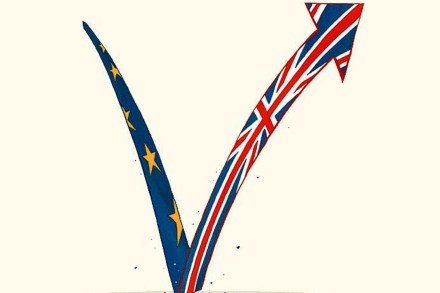
The Brexit bounce is underway

The collapse in UK-EU trade after 1 January was widely reported. What has not been reported nearly as much is that UK exports have made a near-complete recovery. They were up 46.6 per cent in February after falling by 42 per cent in January. Imports are not there yet. They were up 7.3 per cent in February after a fall of 29.7 per cent in January. The one prediction I am happy to make is that they will recover too.  What these and other numbers are telling us is that even this bit of the Brexit scare stories will not come true. If you look at the latest IMF data

Have unemployment fears subsided?

Over the past few months, each labour market update from the Office for National Statistics has suggested forecasts predicting mass unemployment were wide of the mark. In the three months leading up to February, unemployment was estimated to hover at 4.9 per cent, 0.9 per cent higher than the previous year but down 0.1 per cent from the previous month. Where credit is due is debated – and likely shared. The jobs retention scheme continues to shield five million workers, who cannot yet return to their jobs, from unemployed status. That GDP has not taken anywhere near the same tumble this winter as it did last spring speaks to innovative

Which London suburbs are worth moving to?

Pre-pandemic, all you needed for a good London location was a roof terrace, proximity to a vibrant social scene and a tube station. Or a river view. Then everything changed. Whilst central areas have pretty much fallen into the doldrums, a combination of more room, better value and access to green spaces has become essential. If you had all the money in the world, you’d still locate around London’s greatest open green spaces. Hampstead Heath, Kenwood and Regent’s Park to the north, Hyde Park or St James’s Park in central London or Battersea, Richmond, Dulwich or Richmond to the south. For the rest of us, living in a shoe box with

Money to burn: shoppers, not the state, will lead our recovery

Compared with the United States, the UK has so far been relatively cautious about launching stimulus programmes to kick-start the economy. And yet perhaps it doesn’t need to. People are paying off their credit cards, putting some money into the stock market, buying new houses, as well as finally booking a restaurant and getting back to the shops. A lot of money is about to be unleashed on the economy, even if this stimulus is largely invisible now. The interesting question is this: where will all the money go, and which sectors will be the big winners? It may at times seem as if Rishi Sunak is spending like crazy.

Is the UK taking advantage of its vaccine success?

UK GDP ever so slightly edged up in February, growing 0.4 per cent according to today’s update from the Office for National Statistics. No surprises here: there were no changes to lockdown restrictions between January and February, which gave the economy little room for manoeuvre. The ONS has revised January’s GDP fall from 2.9 to 2.2 per cent: still a contraction, but another good indicator that businesses have significantly adapted to lockdown rules, which has meant that this winter’s lockdown didn’t plunge GDP down to record levels as it did last spring. Still, February serves as another reminder that – despite spectacular market innovation – there is a ceiling on

The commuter villages that combine town and country

The rush to leave London has been a staple of property columns over the last twelve months. Built up, densely-populated urban areas were portrayed negatively in favour of remote locations, but as normal life begins to resume does that characterisation still hold? London is already back on the agenda for many professionals and will remain central to culture, creativity and commerce, especially when restaurants, bars, theatres, museums, music venues and galleries re-open. And yet the urge for green space is not going to disappear overnight. The pandemic may well have changed our relationship with the city permanently. The solution for many buyers seems to be locations that are far enough out to offer green space and

Was Deliveroo the most embarrassing flop in City history?

The market emphatically endorsed my negative opinion of the Deliveroo share offer, which bombed from its offer price of 390p to close at 282p before Easter. The biggest London IPO since the commodity giant Glencore went public in 2011 now also stands as the most embarrassing flop in living City memory. Goldman Sachs and JP Morgan Cazenove, the deal’s bookrunners, must have known it was in jeopardy when they knocked more than a billion off their first indicative valuation after UK institutional investors lined up to say they wouldn’t touch it. But 70,000 Deliveroo app users, having failed to read that signal, bought into the ‘community offer’ — and have

The future of the Euro is uncertain

A decade ago, Europe clambered out of the 2008/09 financial crisis only to fall into the sovereign debt crisis of 2010. As the global economy rebounded, Greece, Italy and Spain all had to be bailed out by the ECB as investors lost faith in their ability to carry on servicing their loans. Deep economic cuts imposed in Greece as a condition of the bailout threatened political stability. Could it be about to happen again? Will Europe climb out of the very deep economic hole created by the Covid pandemic only to slide into a hole of sovereign debt? For the moment, that seems a distant question because the Covid hole

The squeeze on tax havens is only just beginning

The message from the budget last month was clear – at some point in the future the Chancellor is going to raise taxes. A lot. The announced increase in corporation tax rate from 19 per cent to 25 per cent from 2023 is a sign of things to come. And yet the overall tax take has already increased substantially since the Thatcher lows of the late 1980s. The amount of tax the government raises is already equivalent to 35 per cent of GDP, the highest level since 1969. And prior that that, as the chart above shows, you have to go back to 1948/9 for years when the tax take was this

Why I won’t invest in Deliveroo

‘The reason we have the vaccine success is because of capitalism — because of greed, my friends.’ So Boris Johnson told his backbenchers last week, though he immediately muttered ‘Forget I said that’ while aides tried to explain it as a joke on the chief whip, who was munching a cheese and pickle sandwich at the time. Whatever, the PM’s gaffe makes a neat text for a short Easter sermon. The fact is that ‘capitalism’ — the mustering of vast private-sector resources to bring lab-tested potions to mass production in record time — has indeed delivered a triumph, in combination with university science, a smart Whitehall taskforce, military logistics and

Are cryptocurrency transactions the future?

To most of us, cryptocurrencies remain an esoteric world, beloved by nerds and incomprehensible to the rest of us. Does Visa’s announcement this week that it will now process payments directly in a cryptocurrency called USDCoin change that, and hasten us to a day when we will all have cryptocurrency accounts which we use to do our day-to-day shopping? You don’t need to understand the mathematics of cryptocurrencies and blockchain to work out that the prospect of shopping with crypto is rather concerning for two reasons. Firstly, cryptocurrencies are an unregulated Wild West. While the pound in your pocket is backed by the Bank of England and the pound in

Leaving London? The top commuter cities that will give you more space

Would you swap living in London for York? According to the latest survey on family-friendly city living, York tops the list. On a range of measures from childcare costs to average house prices and leisure activities, York is it. Unless your work or family ties take you there, I’m not convinced though. The three-hour train journey into London means a move there would more or less sever your links to the capital.   There’s no denying that the capital’s house hunters are being tempted increasingly further afield in their property searches. More space and lower prices makes it seem like a no brainer. But the jury is out on whether the pandemic will cause us

Are we entering a new era of fractured trade?

Just as the auto industry embraces the electric future I wrote about last month, it hits a new crisis: a shortage of the microchips that power everything under the bonnet. As a parable of globalisation’s perils, this one has all the ingredients from trade war to fire, drought and Covid pestilence. When car production slumped last year, chip-makers switched to meet booming demand for parts for smartphones, tablets and laptops. Now car factories are keen to raise output again, but there aren’t enough chips to go round. The leading source, Taiwan, is entangled in US-China tensions and its factories are afflicted by water shortages; other plants have been stricken by

Will British stocks bounce back after Covid?

‘Unloved’ is an adjective often applied to British shares in recent years. A more appropriate description might be ‘abandoned, with half a dozen kids and the rent unpaid’. Since referendum day in June 2016 the FTSE100 index has grown by 10 per cent. Over the same period the Hang Seng is up 42 per cent, the DAX up 44 per cent, the Dow Jones up 88 per cent and the Nasdaq up 184 per cent. The FTSE100’s longstanding underperformance goes back far further, though, than that. It is still lower than it was on the last day of the last century – although there has been substantial growth in the midcap stocks which make up

How to find a property bargain in London

The centre of London currently looks as though the apocalypse has struck. Streets, bars and restaurants lie empty and shops are boarded up. It’s hard to picture the bustling capital so familiar to many of us a year ago and it’s understandable that this dead city centre has prompted many home owners to up sticks and leave. But reinvention is sure to occur. And when it does, you’ll want to be a part of it. Whilst interest in rural properties has surged and rents in London are falling, prices in the capital are yet to reflect the sheer volume of people moving out. Those who can hold on to their London property are doing so in

Can John Lewis and Waitrose really remain partners?

Historians of unforeseen crises talk about ‘chaos theory’ and the ‘butterfly effect’, in which a small perturbation far away — the flapping of a butterfly’s wings in Australia, as it were — have impacts across much larger connected systems. More usually applied to weather events, the theory had its 2008 moment when the collapse of AIG, a US insurer whose name meant little over here, threatened to cripple so many banks that, without immediate bailouts, our high street ATMs (we were told) might have been switched off there and then. Let’s hope Greensill Capital, a little-known ‘shadow bank’ created by former Queensland sugar farmer Lex Greensill, doesn’t turn out to

How to rein in runaway house prices

Should the Bank of England be jacking up interest rates whenever the housing market starts to run away with itself? That is what the Reserve Bank of New Zealand has in effect just been asked to do by Jacinda Ardern’s government: to take into account a ‘sustainable housing market’ when fixing its monetary policy. If such a policy were to be adopted in Britain it would have profound consequences for homebuyers and investors – threatening to cut off the supply of cheap loans whenever prices started getting frothy. It is over two decades since the Bank of England was set the task of tracking an inflation target – increasing interest

Why there’s never been a worse time to move to the country

It began with a sourdough starter. Then we dabbled with home delivery cocktails. This time round, I watched The Dig and bought a Fair Isle tank top and a blouse with a big collar to wear for Zoom calls. Then, when my husband’s company announced they’d be hiring remotely, we embraced the biggest lockdown cliché of them all: moving to the country. Mentally, we checked out of London and started rubbing our hands in expectation of what we could get in exchange for our terraced house in Zone 2. Outdoor space, a couple more bedrooms – the trade-off many Londoners have come to expect in exchange for enduring the years

Are Wall Street’s ‘Spacs’ about to make waves in the City?

This column generally takes a sceptical view of financial novelties and gimmicks. So my antennae have twitched in recent days at frequent mentions of Spacs, or ‘Special Purpose Acquisition Companies’, which are the latest plaything of Wall Street and could be about to go large over here. Also known as a ‘blank cheque’ company, a Spac is a stockmarket-listed cash shell that raises money with a view to merging with a real — usually hi-tech, often relatively early-stage — business seeking a fast route to listed status. Hundreds of Spacs have been created in the US since the craze began last year, many with celebrity names — sports stars, astronauts,