Louise Cooper

The problem with investing in cryptocurrency

From our UK edition

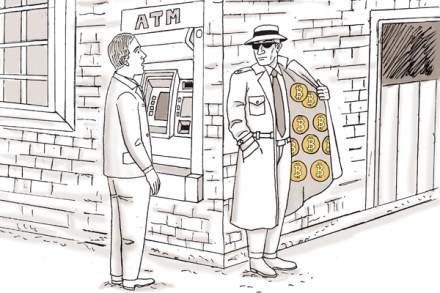
'This time next year Rodney, we will be millionaires.' If Only Fools and Horses was still being made I imagine the scriptwriters would have got Del Boy disastrously deep into cryptocurrencies. Dodgy, Get Rich Quick schemes, skirting around the law always were his forte. And that is how I view cryptocurrencies.  The bulls will cry, Louise you are wrong! The price of Bitcoin has doubled since the start of the year and up over 500 per cent in a year. The value of rival cryptocurrency Etherium has risen more than 1,500 per cent in the last twelve months. But cashing in depends on buying and selling at the right time and there's no telling when that will be. The price of Bitcoin and other cryptocurrencies is highly volatile. And that is why it is risky.

The squeeze on tax havens is only just beginning

From our UK edition

The message from the budget last month was clear – at some point in the future the Chancellor is going to raise taxes. A lot. The announced increase in corporation tax rate from 19 per cent to 25 per cent from 2023 is a sign of things to come. And yet the overall tax take has already increased substantially since the Thatcher lows of the late 1980s. The amount of tax the government raises is already equivalent to 35 per cent of GDP, the highest level since 1969. And prior that that, as the chart above shows, you have to go back to 1948/9 for years when the tax take was this high.

Why next year could bring a 1980s-style spending boom

From our UK edition

Most forecasts for the economy are pretty grim: bankruptcies, bad debts, job losses and a massive debt hangover leave little room for optimism. But I’m going to try. I think there is a wodge of money burning a hole in UK consumers’ pockets. And once they can, households will go out and spend it. This wall of money can be seen in the savings ratio — the amount of income that households save. For decades it has wobbled around 10 per cent. But the latest figures from the Office for National Statistics (ONS) show that households are now saving an astonishing 30 per cent of their income. It’s never been so high. In a pandemic, there are fewer opportunities to splurge, and so many households have become big savers by default.

Why are US shares performing so well when the economy isn’t?

A staggering 20 million Americans lost their jobs in April and yet the US stock market had its best month for decades, with the S&P 500 up 13 percent. Since then job losses have continued to mount, and yet the market is still higher. How can US shares be doing so well when the evidence of economic devastation is overwhelming? Even odder, the US stock market (S&P 500, down 13 percent year to date) is doing far better than the UK (FTSE 100, down 23 percent YTD) and European indices (Eurostoxx, down 26 percent YTD), and yet UK and European governments have protected millions of jobs through various furloughing schemes.

market shares

‘Fire’ may let you retire early but it’s a miserable way to live

From our UK edition

With four cats and two children to feed, I’m not very Fire. But then I am not sure I want to be. ‘Fire’ is the ‘Financial independence, retire early’ movement that has proved popular among burnt-out millennials wanting to quit the corporate rat race.  It began in America with a 1992 book, Your Money or Your Life, which advised followers to live frugally and simply in order to achieve financial independence. One of its biggest proponents is a man dubbed Mr Money Moustache, who describes himself to his 112,000 Twitter followers as a ‘thirtysomething retiree who now writes about how we can all lead a frugal yet badass life of leisure’.

The truth behind David Cameron’s new inheritance tax policy

From our UK edition

David Cameron's new Inheritance tax policy is clearly an important political message of aspiration and family values rather than a policy that will either help many or actually have much fiscal impact. The OBR has numbers on death rates and estates subject to the tax: just under 600,000 people died in 2013/14 and only 5 per cent of those had estates that were liable to inheritance tax. So that is just over 26,000 deaths in one year whose estates paid inheritance tax. According to the Telegraph, Cameron's policy would only begin in 2017, two years into the next parliament. So three years of this policy and on 2013/14 rates this will only effect about 80,000 estates. On the face of it not a huge vote winner then.

Forget Cyprus, the real savings robbery is in Britain

From our UK edition

There are many reasons that the fate of Cyprus is being followed so closely in Britain. One is sympathy for those who are about to pay the price for the sins of a banking sector that was at one point seven times the size of the island’s economy. Another is shock at how the island, to which Britain granted independence just 53 years ago, now finds itself caught between Berlin, Moscow and Brussels. But the real lesson of Cyprus can be applied closer to home: when governments run out of money, they come after other people’s. Everyone is looking at Cyprus and asking: how safe are my savings? In Cyprus, at least, when the government decides to help itself to people’s savings, it’s called theft. In Britain, it’s called ‘quantitative easing’.

A generation of Cypriots are about to be badly hurt. It’s all unravelling – badly.

From our UK edition

This picture is from a website for Cypriot homes:  you can buy a three bedroom apartment for £1.6mn.  Whoever owns that — property developer or individual and whichever bank lent them the money to develop or buy it — now risks being wiped out. And this is just the beginning. Here are a few thoughts on this situation. 1. The downfall. Cyprus was a problem amplified by political incompetence, a disaster that never should have happened.  The outlook is exceeding bleak for this small economy and the economic pain coming to the 800,000 inhabitants will be severe.  Why? Because the banking industry got so giant – at seven times the economy - and it is about to shrink rapidly.

The wealth transfer and where it’s going

From our UK edition

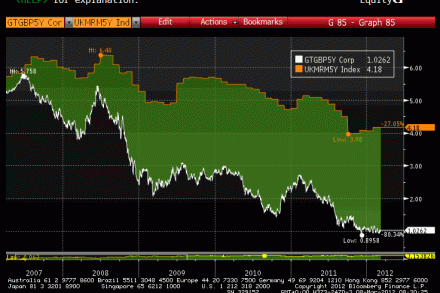
The last three years have been one big transfer of wealth from savers to borrowers. Thanks to record low interest rates, savers have gained little from tucking their money away in bank accounts, whereas borrowers have reaped the benefits. According to data from the Bank of England, mortgage holders paid interest of £1328 billion in the three years from 2008-2011, compared to £1897 billion in the preceding three years. That's a difference of £569 billion, or just over £50,000 for each of the UK's 11.2 million mortgage holders. Call it a stimulus if you like. But it's a stimulus that involves clobbering savers so that borrowers can buy a flatscreen TV at the end of the month. There are signs, though, that this transfer is slowing.