Economy

  • AAPL

    213.43 (+0.29%)

  • BARC-LN

    1205.7 (-1.46%)

  • NKE

    94.05 (+0.39%)

  • CVX

    152.67 (-1.00%)

  • CRM

    230.27 (-2.34%)

  • INTC

    30.5 (-0.87%)

  • DIS

    100.16 (-0.67%)

  • DOW

    55.79 (-0.82%)

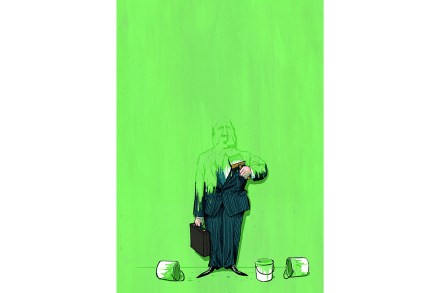
UBI will make us miserable

It’s hard to avoid the constant prophecies of doom about how AI is going to take our jobs – with some of these already being borne out. However, AI leaders such as Elon Musk have declared that the population will be supported by Universal Basic Income (UBI) instead, in which the government will financially support everyone through the huge revenues produced by AI. “Universal HIGH INCOME via checks issued by the Federal government is the best way to deal with unemployment caused by AI,” Musk posted on X earlier this year. Musk imagines that we wouldn’t be unemployed but rather liberated – UBI would allow us to live without the mundane tasks of everyday life, like making PowerPoint presentations, writing emails or finding synergies in our deliverables.

Spotlight

Featured economics news and data.

Cutting Britain’s giant welfare bill would be an act of kindness

Does having money really matter that much? There are those, usually with quite a bit of it, who want us to care less about materialism. But, unequivocally, money really does matter – not because of any status it supposedly brings, but for the freedom it buys: freedom to choose how we live and how we look after others. Considering this, it seems that the deep disillusionment with mainstream politicians in recent years stems from a protracted and ongoing period of stagnant living standards over which they have presided. But the truth is that the average person has not got poorer since the global financial crisis. They have got a little bit richer. Employment levels are still exceptionally high. And, both historically and internationally, we are a very rich country.

Can Twitter still be saved?

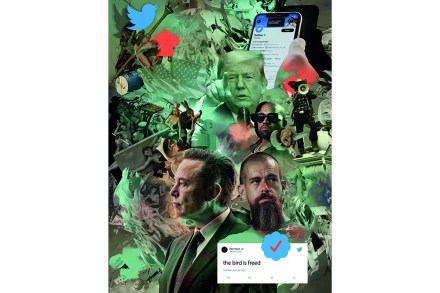
A philosopher once famously said that Hell is other people. What the world has learned from Twitter is that Hell is other people’s opinions. It’s no wonder, then, that when Elon Musk came bounding into Twitter headquarters in late October — after changing his Twitter bio to “Chief Twit” — a popular response, on Twitter and off, was, “welcome to Hell.” When Musk, in an open letter to Twitter advertisers, wrote that he doesn’t want the site to become a “free-for-all hellscape,” he touched a debate concerning a much larger issue — balancing free speech against the need to keep hate, propaganda and manipulation out of public forums, particularly digital ones that can spread malicious content around the world instantly.

twitter
playbook

How Politico’s Playbook went from must-read to spam

Imagine one day you walk into your local watering hole and find out that all of your favorite bartenders have been hired away. In their place are new “cocktail specialists,” who are too busy flirting with one another to actually help customers. When they finally pour you a drink, they are awfully stingy with the booze. You briefly grieve over an overpriced vodka soda and then vow to never go back to that awful place. That’s more or less how I feel about Politico’s Playbook, the newsletter that was once the go-to morning read for Washingtonians. Reporters, lobbyists, government employees and politicians used to consume the daily newsletter before their first cup of coffee.

levi's

How I went from woke capitalist to victim of the woke mob

In February 2022 I walked away from my job as the first female global brand president of Levi’s after close to twenty-three years at the company. I’d given the better part of my adult life to Levi’s because of the product itself — I do love my 501s. (I have always preferred the button-fly on my jeans, rather than the zipper.) But while I may have chosen to work there in the beginning because of the product, I stayed because of the company culture. I believed in their mantras: “profits through principles,” “harder right over easier wrong,” “use your voice.” These refrains were rooted in the company’s heritage of rugged individualism, corporate philanthropy and populist inclusiveness.

dave portnoy

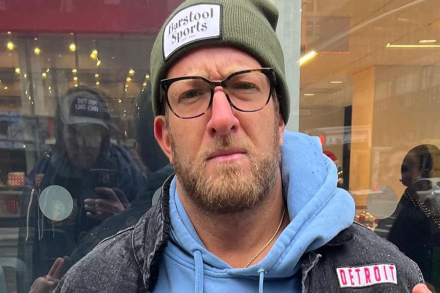
Dave Portnoy is the degenerate gambling king

Why do people in the media keep trying to make a story out of Barstool Sports head honcho Dave Portnoy being exactly the person he claims to be? It just keeps happening. Most recently comes a pathetic attempt at a New York Times exposé that does little more than expose Portnoy for being everything his listeners, readers and fans know him to be: a mouthy, opinionated, over-the-top degenerate gambler and the court jester of a sports and gambling conglomerate that has become a dominating cultural force under his leadership. The Times apparently thinks their readership is unaware of all of this, and deems it noteworthy that he has had to climb out of the pit of gambling-fueled bankruptcy in the past. I'm only surprised that his losses were only $30,000, not ten times that.

Sam Bankman-Fried and the scam of woke capitalism

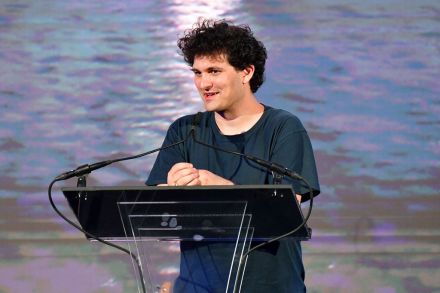
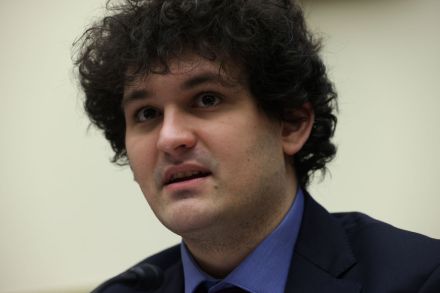
For anyone seeking direct proof that woke capitalism is nothing but a scam, look no further than Sam Bankman-Fried, founder and former CEO of the now bankrupt crypto exchange FTX, who says as much in a direct message exchange with Vox reporter Kelsey Piper. He calls “ethics” a “dumb game we woke Westerners play” — presumably to avoid any scrutiny from journalists, employees, investors and consumers. I’ve worked for and with these people for decades. They want to convince you and the employees in their company that they are in it out of the goodness of their philanthropic hearts. They are just trying to make the world a better place, you see.

bankman-fried

Sam Bankman-Fried’s media outlets must come clean

Bankrupted crypto billionaire Sam Bankman-Fried is the talk of the town thanks to the implosion of his heavily celebrity- and lawmaker-endorsed digital currency platform, FTX. SBF cleverly disguised his shaky financial schemes behind an awkward personality and philosophy labeled as “Effective Altruism,” meaning giving away massive amounts of wealth in the name of simply doing good. It’s a popular philosophical fad that has caught on among progressive global elites in the philanthropy arena and seems to be quite popular among media elites as well. Amazon and Washington Post owner Jeff Bezos announced a plan to donate most of his wealth, on the same day that 10,000 jobs were to be eliminated at Amazon.

sam bankman-fried

Meet Sam Bankman-Fried’s crypto-enablers

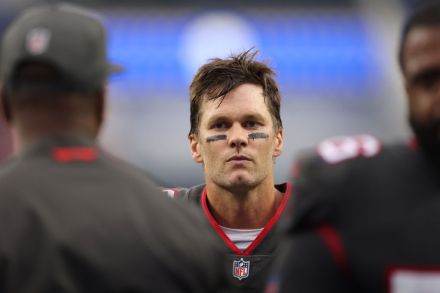
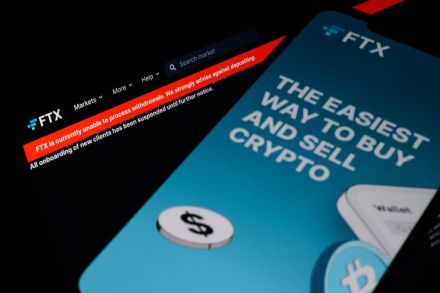
Things aren’t going well for Tom Brady. His team, the Tampa Bay Buccaneers, has a losing record. He is getting divorced, and FTX, the crypto exchange he was touting a year ago — and in which he was invested — has gone bust. He isn’t the only sports star with egg on his face after the collapse of FTX. Stephen Curry, Shohei Ohtani and Naomi Osaka, to name just three, also got greedy and believed the vision of Sam Bankman-Fried. Overnight, Sam Bankman-Fried has gone from crypto wunderkind to infamous huckster. The celebrities, influencers and traditional media outlets that helped make him a star shouldn’t be allowed to absolve themselves as quickly.

Tom Brady Sam Bankman-Fried

Why Murdoch dumped Trump

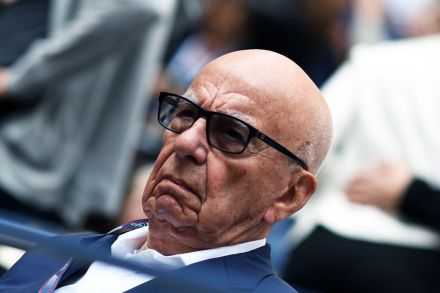
“He’s done.” That was the general consensus when I asked around about Donald Trump’s future in politics this week. And in the search for signs that Trump is in trouble, Rupert Murdoch’s newspapers are a good place to start. In the days since the disappointing midterm results, the New York Post, has already labeled the former president “Trumpty Dumpty” and praised his Republican rival Ron DeSantis as “DeFuture.” Trump's 2024 bid was relegated to page 26 on Tuesday, teased on the cover as "Florida man makes announcement." Things aren’t much better for the former president over at the Wall Street Journal. It has been crammed with anti-Trump op-eds since last Tuesday. One headline summed things up neatly: “Trump is the Republican Party’s Biggest Loser.

Rupert Murdoch

Saying goodbye to the crypto nerd utopia

It’s been a great year for those of us who didn’t have the nerve to invest in crypto. The value of Bitcoin, Ethereum and Luna crashed in May. Now, crypto giant FTX has gone bankrupt amid serious allegations of criminal misconduct. At last! For years, we kicked ourselves for not investing in Bitcoin, ETH, et cetera, when we had the chance. We heard tales of people who went from bums to millionaires, while we grinded in our offices and fretted about debts. Suddenly, we can reframe our risk aversion as foresight! Of course we knew that this would happen! Of course we did! Really, I shouldn’t joke about this crypto craziness. A lot of people have lost a lot of money. People will lose businesses, homes, and families. Some might even commit suicide.

The fall of Sam Bankman-Fried is crypto’s Enron moment

In recent weeks, the world’s richest man and his flailing attempts to figure out what to do with Twitter have dominated the news cycle. However, his unhinged management-by-tweets reality show are nothing compared to an almighty tussle between two crypto-bros. Internet magic money (aka crypto) billionaire Sam Bankman-Fried, better known as SBF, is the man behind FTX, a crypto exchange. He seems to have angered fellow magic money billionaire and fremeny, Changpeng Zhao, better known as CZ and CEO of the rival exchange Binance. It might have to do with FTX cozying up to regulators to get the regulations beneficial to the FTX but not its rivals.

Sam Bankman-Fried

Democrats’ last gambit: a corporate windfall tax

Inflation continues to be the economic story of the day. While Democrats try to divert attention to the job market, and many Republicans seem more interested in appealing to “gut feelings” on issues like crime, the latest polling shows that rising prices remain top of mind for most voters. To the extent that the Biden administration is talking about inflation, it’s generally been to downplay the latest numbers (at least when not accidentally highlighting it with ill-fated tweets that take credit for historically high Social Security cost-of-living adjustments). But there is another talking point that some Democrats are taking as an alternative: big corporations are to blame, and windfall taxes are the solution.

Why Tiffany Cross got the ax

Weekend host Tiffany Cross has been cut from MSNBC. According to Variety, "MSNBC decided not to renew Cross’s contract after two years... and severed ties with her immediately." The trade paper is rather euphemistic in its description of why Cross was shown the door: Executives at the network [were] growing concerned about the anchor’s willingness to address statements made by cable-news hosts on other networks and indulging in commentary executives felt did not meet the standards of MSNBC or NBC News. Allow Cockburn to translate: Cross was becoming burdensome to the network for her regular rash remarks.

tiffany cross

Is Elon Musk about to ax millions in severance for Twitter execs?

As if getting fired from your job isn’t distressing enough, it’s got to hurt a whole lot more when you miss out on $122 million in payouts. Reuters reported that Elon Musk recently fired Twitter chief executive Parag Agrawal, CFO Ned Segal, and legal affairs and policy chief Vijaya Gadde. According to research firm Equilar, these folks were set to receive “golden parachute” payout packages worth up to $122 million in severance and unvested stock options. But according to the New York Times, “Mr. Musk… appears unlikely to pay the golden parachutes that the fired top executives of Twitter were set to receive. Under the merger agreement, those executives… had been set to receive compensation of $20 million to $60 million if they were fired. But Mr.

Elon Musk is now Donald Trump’s business rival

Cockburn has always had some formidable business rivals to contend with. It's not easy competing with the likes of other thinly sourced gossip rags like Page Six and the Washington Post (even if Cockburn is confident he could drink the staff at all those publications under the table). Yet so far as competition goes, it's Elon Musk who has it the worst this week. Last night, Musk completed his $44 billion takeover of Twitter, a calm and rational discussion site where people like to post helpful gardening tips and delicious recipes. "The bird is freed," Musk tweeted, though there are at least a few people (outside the expected left-wing freak-out) who won't be quite so pleased.

Ye learns that hate is bad for business

Cockburn keeps up with the Kardashians, so to him, Kanye West’s recent outbursts are not much of a surprise. But over the last few weeks, anyone that didn't previously know that he was, shall we say, in decline, is now fully aware. Ye's antisemitic comments, such as declaring that he would go “death con 3 On JEWISH PEOPLE” and continuously talking about how Jews “own the media,” have resulted in dire financial consequences for him, as the various businesses he works with cancel their contracts and denounce his remarks. The most recent — and arguably the most important — business collab that Ye has watched crumble is his partnership with Adidas. The lucrative multi-year deal to design sneaker brand Yeezy was valued at $1.5 billion.

kanye west business

A nation of quitters

America’s post-pandemic employment picture is an unsettling paradox. On the one hand, job totals are finally back above pre-pandemic highs — and unemployment rates skirt fifty-year lows. But at the same time, overall work rates are lower than they have been since the 1980s — and millions of workers who dropped out of the labor force during the Covid-19 lockdowns have yet to return. A peacetime labor shortage has erupted, yet vast numbers of men and women are still sitting on the sidelines of the economy. America is renowned for its work ethic — and rightly so. The average worker in the United States clocks more hours each year than those in Canada, Australia, Western Europe and now even Japan. But those are the work patterns of US men and women holding down a job.

work
birkin

The fall of the Birkin bag

If you had a spare $100,000, what would you spend it on? The deposit on a decent home, perhaps. Maybe a boat or a luxury car. For her twenty-fifth birthday, Kylie Jenner was given a bag worth that princely sum. The three-toned Birkin was one of just three made. By her own account, Jenner had “never even seen anything like this before.” Kate Moss famously used one as a diaper bag, Kim Kardashian, a gym bag. The Hermès Birkin bag was birthed in 1984, after Jane Birkin, the British-French actress and singer, sat next to Hermès chairman Jean-Louis Dumas on an Air France flight to London. The contents of her bag spilled out onto the floor, prompting Dumas to remark that she needed one with pockets.

federal

The deep sleep state

America may be falling behind in manufacturing everything from household goods to textiles and semiconductors, but there is one sector of innovation where these United States will never be surpassed: defrauding the federal government. Sure, Beijing’s Machiavellian overlords may steal some missile or naval tech here or there — more often than not here and there — but they couldn’t come up with deploying fake concrete in public works projects or, say, building the Middle East’s largest women’s studies department in the name of defeating terrorism. We Americans cannot be topped in our capacity to fleece the taxpayer. I witnessed one such act on summer vacation and marveled at its creativity and simplicity.

Biden declares war on Lyft and Uber

The Biden administration’s Department of Labor recently released a new interpretive rule regarding whether workers are classified as employees or independent contractors. The action reverses a Trump-era rule that simplified the classification process, and was dedicated to preserving the gig economy. Employees are much more expensive than independent contractors — possibly by as much as 30 percent. This is, in part, because independent contractors are not subject to federal minimum wage or overtime regulations, among others, and are not protected by the National Labor Relations Act, meaning it is more difficult for them to unionize. This all may seem rather trivial, but the impact on both the consumer and the worker will be significant.