Culture

The good, the bad and the ugly in books, exhibitions, cinema, TV, dance, music, podcasts and theater.

Brown furniture isn’t dead

Throw out your grandfather clocks, the naysayers said, and banish your commodes to the scrapheap and junkshop. Brown furniture – invented in the Georgian and Regency eras and popularized for the mass market in the Victorian period – has been decreed by those tastemakers in the know to be as dead as Jacob Marley – a man who undoubtedly would have cherished those heavy mahogany bed frames and cabinets that were synonymous with his age – and showing even fewer signs of returning, even in spectral form.   The reasons for the apparent demise of brown furniture are less to do with a rejection of sturdy, well-built items that were once the pride and joy of any household and more because we are living smaller lives, in all senses.

brown furniture

Lonnie Bunch’s long march through the Smithsonian

Lonnie G. Bunch III, the first black head of the Smithsonian Institution, is stepping down after a tenure of some seven years. NPR had the news: “In 2019, Bunch was named secretary of the Smithsonian, becoming the first historian and the first African American to hold the position.” The Wall Street Journal also got the memo: “The first Black historian to lead the world’s largest museum and research complex says he’s retiring and will leave by year’s end.” NBC looked behind the headline. “Bunch, the first Black person and first historian to lead the institution, has said he would have retired a year ago but felt he had to stay to defend the institution from the White House attacks, the person said.

Welcome to the Silicon Valley cinematic universe

Yesterday, a teaser dropped for Artificial, a biopic directed by Luca Guadagnino based on Sam Altman’s brief ouster from OpenAI in 2023. Earlier this summer, a trailer was released for The Social Reckoning, Aaron Sorkin’s Meta drama, which is a follow-up to his 2010 film about Mark Zuckerberg and the founding of Facebook, The Social Network. And in the past few days, audiences at the Venice and Telluride film festivals have been hyping up Nathan Fielder’s documentary You Can See Everything about the Theranos founder/fraudster Elizabeth Holmes, as well as Alex Gibney’s Musk documentary. (Gibney made an earlier documentary about Holmes, who has already been the subject of a biopic, played by Amanda Seyfried in The Dropout.

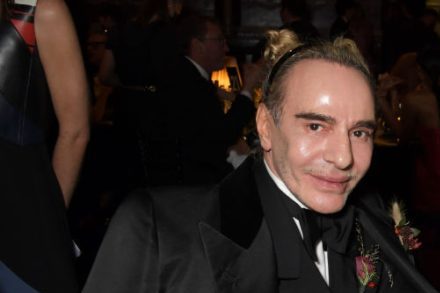
The Met museum has humiliated John Galliano

John Galliano’s reign at Dior was before my time. But he was the first Brit to put his mark on a great French couture house and, in any way you care to look at it, he has been one of the most consequential figures in fashion for the past four decades. Which is why it felt right that the Metropolitan Museum in New York should announce it would be holding a show of his work, and why it felt wrong when they pulled the show earlier this week.  Galliano's star burned brightly until early 2011, when over the course of two months or so he came apart. There was a damning video of him in a Paris café, hissing at a woman about her “ugly Jewish face” and later telling a man he was a “f-king Asian bastard” he would kill.

UN map

Are our maps colonialist?

It has been clear for years that the UN has fallen under the influence of left-wing activists and rapacious developing countries, who are using it as a vehicle to press to slavery and climate reparations. But the UN’s latest initiative is possibly the nuttiest of them all. The General Assembly will vote today on whether to try to eradicate world maps drawn on a Mercator projection on the grounds that they are “colonialist” – and replace them with a favored map which is much more honest in representing the size of individual countries. The campaign against “cartographic colonialism” began with an online “correct the map” campaign and has now been taken up by Togo, backed by the African Union countries.

Gloria Steinem

Gloria Steinem made feminism slick – and dishonest

So, it’s farewell to Gloria Steinem at the astonishing age of 92: the feminist whose most striking attribute to those outside the movement was that she was terrifically easy on the eye. It didn’t endear her to the ugly sisters of the movement who complained about her unholy glamour, but it was an advantage she put to good use when she became a Playboy Bunny Girl in 1963 so as to write for Stage magazine about the sheer disagreeableness of life in that bit of Hugh Heffner’s porn kingdom.

Wendell Berry’s homecoming

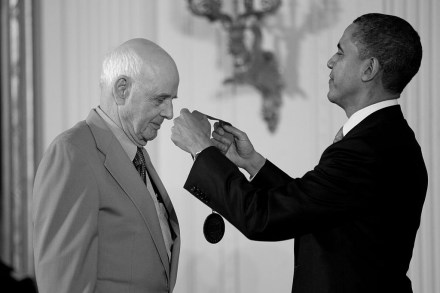
Wendell Berry, who died Monday aged 92, was a man who loved the soil and the soul. Writing from Kentucky, where his family has lived and farmed for generations, Berry built up, over more than sixty years, a corpus of fiction, non-fiction and poetry – all genres in which he distinguished himself – which, when taken as whole, reveals a profound and coherent philosophy of the earth and how it relates to human community.  Unfortunately, the average person probably doesn’t know who Berry is. Even those who have heard of him might only know his incendiary 1987 Harper’s essay “Why I Am Not Going to Buy a Computer” or his watershed 1977 takedown of maximalist agricultural practices, The Unsettling of America.

wendell berry
Are you having a 'nun girl summer'?

Are you having a ‘nun girl summer?’

20 min listen

Why are young women suddenly fascinated by nuns? From “nun girl summer” on TikTok to a wider “quiet revival” of Christianity among Generation Z, the religious life appears to be enjoying an unexpected cultural moment. But is the attraction genuinely spiritual – or are young women simply drawn to the aesthetics, certainty and tranquility of convent life? This week on Holy Smoke, Damian Thompson is joined by the Spectator's US assistant editor Margaret Mitchell and the Daily Mail’s Mimi Yates to discuss the unlikely appeal of nuns to Gen Z. They explore the joy and “slow living” of convent life, the exhaustion of the attention economy and whether retreating into an all-female religious community offers an escape from modern dating and the “manosphere.

Why Wendell Berry mattered

Like most adults who write their thoughts down regularly, I was raised in a home by a mother who maintained piles of books strewn around the house. There were more books than anyone in our home could read combined, but you could find our favorites open on tabletops and dressers with a pencil, or another book, pinned in them to hold a page. Most of these books that were propped open were my mother’s and they included dozens of Wendell Berry’s works. I slowly absorbed a version of Berry’s way of thinking: through reading, through my mom’s infatuation with his work, through osmosis as I watched Cartoon Network next to open copies of Hannah Coulter and What are People For? Berry has begun to suffer the same literary fate as C.S.

wendell berry

The new right-wing art scene is disappointing

It averaged a brutal 91 degrees this week in Cameron County, the southernmost tip of Texas, and a group dressed as the cast of O Brother, Where Art Thou have been there sweating away at something big. A colossal limbless torso is parked on the dunes and a head, suspended from a crane, is swaying very gently in an ocean breeze. There is the smell of metal and hot dust.  Pending some finishing touches and last-minute dabs of glue, this Atelier Missor’s Prometheus, soon to be unveiled at SpaceX’s Starbase launch site – standing contrapposto, torch aloft, bidding the rockets a comradely “Adieu!

Prometheus SpaceX

Tim Curry was the king of camp

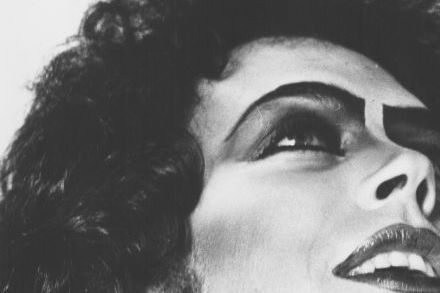
“Do Tim Curry proud,” my friend Simon said to me when he heard I was writing about him. Simon is, admittedly, a Tim Curry fan extraordinaire whose go-to karaoke song is "I’m Going Home" from the Rocky Horror Picture Show soundtrack, which Curry himself sang with mournful gravitas both on stage and in the 1975 film. Yet it also encapsulates the way in which the actor and singer, who has died aged 80, became an extraordinarily beloved part of the pop cultural landscape and remained that way for decades. Even a debilitating stroke in 2012, which forced him into a wheelchair and largely ended his on-screen career, could not damage the Englishman’s inimitable reputation as someone who made audiences laugh – a lot – and, when the occasion arose, tantalized or terrified them as well.

RIP Dolly Parton

“And try to make the most of every moment / ’Cause if you never try, you never win.” There are few more appropriate lines with which to begin an obituary of Dolly Parton, although they do have the slight disadvantage of sounding like something that might be printed on an especially tawdry greetings card. Dolly – always Dolly, never ‘Ms Parton’ – was never particularly concerned about that sort of thing. She understood that sincerity was generally more effective than sophistication, and that if something was true there was little point in making it sound cleverer than it was. She was the greatest singer of her generation, the female Elvis if you will, and she was damned if anyone was ever going to persuade her otherwise.

The canonization of Tupac

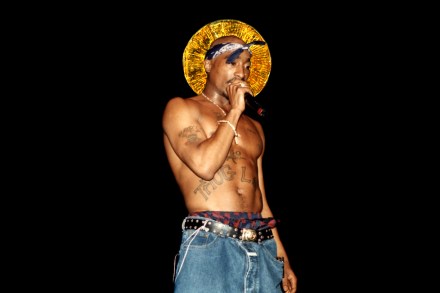
The Tupac murder trial has finally begun. A 63-year-old former gang leader, Duane “Keffe D” Davis, is accused of orchestrating the murder of rapper, actor, and activist Tupac Shakur in a drive-by shooting 30 years ago. Tupac’s reputation – both alive and since – is chequered to say the least. Some still perceive him as one of a cadre of thugs who glorified gun violence and the gang lifestyle in the 1990s (if you’ve ever heard the phrase “Thug Life,” that’s one of his). Others have continued a campaign of quasi-canonization, presenting him as a tortured poet struggling against the strictures of fate. The latter argument gradually won through, with Tupac now closing in on Princess Diana in the global “national treasure” stakes.

Why Marilyn Monroe is still as big a celebrity as ever

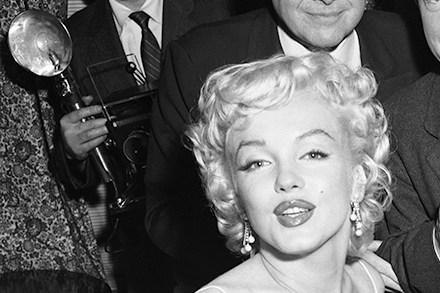
Marilyn Monroe would have celebrated her 100th birthday this year. My new biography of her begins with this story: she’s walking with a friend down Park Avenue dressed in a raincoat and sunglasses and without make-up. As the crowds stream past her, nobody gives her a second glance. Then she turns to her friend and asks, “Do you want to see me be her?” Without changing her hair or dress, the transformation begins and, after making some kind of inner psychological adjustment, she morphs from an ordinary woman into Marilyn Monroe, superstar. As her friend, the actress Susan Strasberg, recalled: “There she was – not the simple girl I’d been strolling with, but ‘Marilyn Monroe,’ resplendent, ready for her public. Now heads turned. People crowded around her.

marilyn monroe
read

Who will we be without our ability to read?

In Arthur C. Clarke’s 1953 science-fiction novel Childhood’s End, a race of benevolent aliens arrives to take control of Earth and its peoples. They have been sent here, it transpires, to oversee the transformation of the human race from Homo Sapiens – individual, unique, quarrelsome – into a hive mind. The change happens in a single generation to everyone under the age of ten – and parents no longer know what their children are. “All the hopes and dreams of your race are ended now,” the alien supervisor says. “You have given birth to your successors, and it is your tragedy that you will never understand them – will never even be able to communicate with their minds... you will not think them human and you will be right.

nashville

All roads lead to Nashville

“There ain’t nothing like the loving of a hard-driving cowboy man,” as the country singer Barbara Jean puts it towards the end of Robert Altman’s movie Nashville, and, really, there ain’t nothing like Nashville itself, either. It’s surprising more has not been made of it this year, when the country’s 250th anniversary has got tangled up with the flailing Trump presidency. Though he made the film in 1975, Altman set it a year in the future, amid a fictionalized and chaotic 1976 presidential campaign. He meant to give an account of a country that, on the 200th anniversary of its founding, had descended into unprecedented gaudiness and depravity. When Jimmy Carter wound up winning the White House, Nashville came to seem prophetic. But it is more than that.

Is Music, Fashion, Film really the best Charli xcx can do?

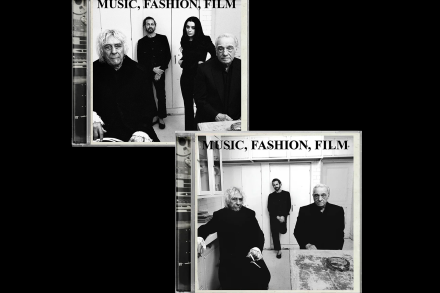
Of the three creative pursuits that give Charli xcx’s eighth album its title, the English pop star seems least interested in the first. She admits as much on “Camera,” the best song on Music, Fashion, Film, which makes clear her obsession with acting and a desire to pursue it more fully. “Do I want to make music?” she asks herself. “Am I being fucking stupid if I try to be a girl on the screen and I’m turning 34?” Even without this clue – which, like much of the album, is presented via the singer throwing out rhetorical spiel more or less unexpurgated – it is no great stretch to surmise that the pursuit of making music is struggling to fully hold her attention.

brat

China understands The Odyssey better than we do

China will inherit Homer, and not because the Communist party has decided to take him. The evidence arrived last week in Beijing, where a doctoral candidate in political theory named Yiyang Zhuge sat down with Christopher Nolan to talk about The Odyssey. She reads Greek and has translated Plutarch’s Moralia into Chinese. She learned her Greek in the United States. Zhuge told Nolan that the concept of atonement does not exist in Greek culture, in the Greek language, or in Homer’s Odyssey. It is in the film. Then she asked him: “Did you Christianize the Odyssey?” Nolan said he had focused on xenia, the ancient obligation between host and guest. As for atonement, he said it was “what we bring as viewers to the story,” and that he had not intended to Christianize the poem.

the odyssey china

What the Odyssey means to America

In 1899 Jack London, beginning his career as a writer, sold a story to Atlantic Monthly for $120. Drawing on his experiences during the Klondike gold rush and on the Yukon River, it was a tale of an Aleutian native wandering the Arctic for years on end in search of his wife, who had been stolen by a powerful Nordic sea captain. London titled his saga, “An Odyssey of the North.

Is Tainan the world’s most dangerous city?

In a country full of brilliant food, the Garden Night Market in sultry Tainan, southwest Taiwan, is still a standout: a cheerful riot of steam, umami, deep-fried tofu and loud, vivacious chatter. Families drift past in loose formation, grandparents hefting toddlers with fruit ices, flirting teenagers orbiting bubble-tea stalls, couples sharing hot skewers of squid, pork and chicken gizzards. Almost everyone plays lurid and inexplicable games involving teddy bears and claw machines. I eat sublime oyster omelettes slick with sweet chili pepper sauce, then hot soup dumplings that collapse into scalding, savory bliss. Someone presses popcorn chicken into my hand. It is dangerously moreish. The next morning, Tainan feels sun-blessed and unhurried.