Books

The plight of the returnee

If the 20th century popularised the figure of the émigré, the 21st has introduced that of the returnee, who, aided by a combination of Skype, social media and cheap air travel, doesn’t so much exchange countries as exist between them. ‘I was an émigré. I had left. Now I’d returned,’ announces Andrei Kaplan, somewhat incredulously, in Keith Gessen’s vigorously funny second novel. An inverted Pnin, Andrei is a Russian-American academic, making a living by moderating online discussion groups for a professor who, in due course, compares Pushkin, Gogol and Dostoevsky to Kanye West. Failing to find a tenured job, Andrei moves to Moscow, where he was born, to care for his ailing grandmother. The city is unrecognisable.

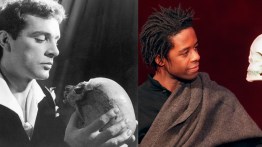
How do we envisage Shakespeare’s wife?

Despite his having one of the most famous names in the world, we know maddeningly little about William Shakespeare. His private life was lost in the swirling debris of the early modern world. Buildings such as the Globe or New Place (the house he retired to in Stratford) were demolished in the centuries after his death. Not a single letter survives, no first drafts of the plays have surfaced and it is disputed whether his portraits even look like him. Scholars are forced to find other ways of peering into his soul. Some look to the plays and sonnets, boldly presenting fictional and contradictory poetry as concrete evidence. Others examine the objects he may have owned, but the results are hardly the stuff dreams are made on.

A feast for foot fetishists

It is always interesting to see what art historians get up to when none of the rest of us is looking. It is hard to know what the inspiration for The Mummy’s Foot and the Big Toe can possibly have been, but if this very short book offers the kind of approach that will go down well in the enclosed world of the academic conference, Alan Krell might find the common reader a tougher nut to crack. Having said that, however, those with a taste for such things will probably find plenty to enjoy in a book that ranges from the bare foot as symbol of freedom to the foot as ‘fetish and fancy, object of desire and of abjection, and vehicle for the comic, the absurd and the empowering’ in the context of literature, art, sport and film.

Did the Russian mafia help Trump along his way to the Oval Office?

Before he died last year, the New York muckraking reporter Wayne Barrett told me he had discovered ‘25 to 30’ connections between Donald Trump and the mob. He was talking about Italian-American organised crime but today another New York journalist, Craig Unger, says he has found ‘59’ links to the Russian mafia. He lists them all in his new book House of Trump, House of Putin, which is damning in its accumulation of detail, terrifying in its depiction of the pure evil of those Trump chose to do business with, and enraging in that — if Unger is right — Trump acted with impunity for decades to get filthy rich laundering the mob’s blood money. This is the man who now sits in the Oval Office, Unger says. In fact, he argues, they put him there.

The shattering honesty of V.S. Naipaul

V.S. Naipaul, who died on Saturday at the age of 85, was sustained most of all by self-belief. The society in which he launched himself as a writer was not created to support a man like him. It was designed to degrade him. His career was without precedent. When he arrived in England as a teenager armed with a scholarship to Oxford, he was a man apart, the descendant of Indians shipped out by the British Empire to toil as indentured labour in the sugarcane plantations of the Caribbean. Against his ambition, self-worth and dignity were arrayed the stifling prejudices of a conservative and hierarchical nation long accustomed to stamping on people of his appearance. The racism Naipaul was subjected to was of a vicious and crippling variety.

The perfect guide to a book everyone should read

‘The Divine Comedy is a book that everyone ought to read,’ according to Jorge Luis Borges, and every Italian has read it. Dante’s midlife crisis in the dark wood, his journey down the circles of hell, up the ledges of Purgatory and into the arms of Beatrice is mother’s milk to Italian schoolchildren. Today lines from La divina commedia are printed on T-shirts; before the war, as Primo Levi recalled, there were ‘Dante tournaments’ on the streets of Turin, where one boy would recite the start of a canto and his rival would try to complete it. I had two Italian students in an English literature seminar last year who sniggered when I mentioned the once standard Penguin translation of the Comedy by Dorothy L.

‘We are not cattle, we’re people’: everyday hell in Stalin’s labour camps

‘No testimony from this time must ever be forgotten,’ the great Lithuanian poet Tomas Venclova says in his afterword to Dalia Grinkeviciute’s memoir. The author was 14 in 1941, when the Soviets deported her with her mother and brother from their native Kaunas, Lithuania’s second largest city. In 1949, the women escaped from Siberia and went into hiding. Grinkeviciute began writing about her ordeal, but soon, facing another arrest, she buried the unfinished manuscript in a garden. More prisons and camps followed before she eventually returned home in 1956. Found in 1991 after her death, the memoir was published and became part of the school curriculum in Lithuania.

The selective breeding of pets: how far should we go?

It was in his play Back to Methuselah that George Bernard Shaw honoured a lesser known aspect of Charles Darwin’s originality as a thinker, when he described him as ‘an intelligent and industrious pigeon fancier’. Britain’s greatest natural scientist was indeed a keeper of fowl, with pigeons among his favourites. The habit arose from Darwin’s instinctual recognition that in the animal-rearing experiments conducted over millennia by our ancestors, we had inadvertently stored away crucial evidence about the way in which all of life can change in response to environmental stimuli.

Shades of Rear Window: People in the Room, by Norah Lange, reviewed

A girl at a window, hidden behind curtains, watches three women in a dimly lit drawing room in the house across the road as they sit silently smoking, hands and faces pale against their dark clothes. She invents identities for the trio: they are criminals or abandoned spinsters. Sinister or pathetic. Curiosity grows into obsession: she imagines them as painted saintly icons, golden against a dark wall, ‘flies crawling across their faces… the first threads of a spider’s web spun from their eyes’. People in the Room is set in the early 20th century in the affluent Buenos Aires neighbourhood of Belgrano, where the author lived as a child.

The magnificent Atkinsons: rigours of travel in 19th-century Russia

Russia has always attracted a certain breed of foreigner: adventurers, drawn to the country’s vastness and emptiness; chancers, seeking fortunes and new beginnings in the Russian rough and tumble. Romantics, all of them, men and women in search of soulfulness and authenticity — the experience of life lived on and beyond the edge of the civilised world’s conventions. Thomas Atkinson was all those things — in addition to being a self-taught architect and stonecutter of middling skills, a decent watercolourist, a stoic traveller of apparently inexhaustible curiosity, and a bigamist.

Born again: My Year of Rest and Relaxation, by Ottessa Moshfegh, reviewed

The new novel by the author of the 2016 Booker shortlisted Eileen is at once a jumble of influences — Oblomov by way of Tama Janowitz and Elizabeth Wurtzl, Bartleby with a touch of Bright Lights, Big City, a lunatic psychiatrist who melds Ayn Rand and William Burroughs — and unnervingly original. It takes guts, after all, to spin a yarn out of a rich Upper East Side orphan who decides to put herself to sleep for a year in an attempt at rebirth. Beyond the evident — the death of her parents, an obnoxious man in her life — precisely why our narrator wishes to shed her skin remains unclear to us; but her tenacity in pursuing oblivion is unshakeable.

David Sedaris, the current king of humourists, is often not funny at all

Since the 17th century, a ‘humourist’ has been a witty person, and especially someone skilled in literary comedy. In 1871, the Athenaeum said that Swift had been ‘an inimitable humourist’. But in modern usage the term seems to describe a specifically American job title: someone who specialises in writing short prose pieces whose only purpose is to be funny. The current king of humourists is David Sedaris, and his books are essentially scripts for his sell-out reading tours. But is he funny? On a line-by-line basis, he sure can be. He helps push someone’s broken-down car, ‘and remembered after the first few yards what a complete pain in the ass it is to help someone in need’.

Portrait of an American childhood: A Long Island Story by Rick Gekoski reviewed

Success as a rare books dealer, academic, publisher, broadcaster and author of several non-fiction books — at 70, Rick Gekoski had ticked all the boxes. Time to relax, perhaps? Gekoski thought otherwise: he wrote his first novel, published last year, a quirky black farce mutating into a revelation of love and loss. Heaped with praise, Darke has since been shortlisted for two best first novel prizes. A triumph, then. Followed by the familiar fate of the second novel — heightened expectations. Darke was a witty metro-politan narrative with a sharp literary edge. A Long Island Story is warmer, more leisurely, awash with period background; an affectionate portrait of the author’s family, drawing on Gekoski’s childhood in America.

Bruce Lee: weird, gruesome and oh-so-cool

Every cinema-loving person has a favourite Bruce Lee moment. My own comes towards the end of Enter the Dragon, the film which Lee made just before his death in 1973 at the age of 32, and that would in turn seal his worldwide stardom. There, on one side, stands Lee himself. There, on the other, is the villainous Han, who has a set of metal talons where one of his hands ought to be. The two men leap across each other, leaving Lee with an unpleasant gash on his shirtless torso. He pauses, dabs a finger in the blood, raises it to his mouth — and licks. It is weird, gruesome and oh-so-cool, all at once. Why did Lee do this? The answer is in Matthew Polly’s biography.

Adam Smith analysed human behaviour, not economics, says Simon Heffer

Jesse Norman is one of only three or four genuine intellectuals on the Tory benches in the House of Commons. It must vex him, as it does most of us with A-levels, to witness the distressingly ignorant, chaotic and unprincipled way in which the government, run by the party of which he is a member, conducts its business and that of the country. Those who control the destinies of that government would do well to read his book on Adam Smith, and indeed Adam Smith himself.

Two valuable new books about technology that are a bummer to read

All good non-fiction writing shares certain characteristics: consistent economy, upbeat pace and digestible ideas that logically flow. Tech writers have an additional challenge, however, of combining all this with boring technical detail. How to explain the mechanical stuff without being either too dry or too simple? What’s the reader’s likely level of knowledge? These questions can eat an author up. I imagine science writers have the same difficulty, but this problem weighs especially on tech writers, because the composition of a piece of software, an encryption standard, or a machine-learning algorithm has a direct bearing on how it works and therefore how it affects the world.

A melancholy talent with a genius for send-up – Flann O’Brien was his own worst enemy

It is tempting to compare two highly intelligent, learned and gifted young Dublin writers, suffering under the burdensome, Oedipal influence of James Joyce, struggling to have their first novels published in the late 1930s. Samuel Beckett’s Murphy, whose central character is an extremely idiosyncratic young man in the grip of profound indolence, was published in 1938; Flann O’Brien’s At Swim-Two-Birds, whose central character is an extremely idiosyncratic young man etc., in 1939.

Kyoto is all that is left of Japan – more’s the pity

‘Much of what I say may turn out not to be true.’ Hardly the ideal beginning to a guided tour. But Alex Kerr is not your typical tour guide, briskly selling a place to a time-pressed group via a few must-snap essentials — the glint of the sun off Kyoto’s Golden Temple and its still waters; the demure shuffle of geisha; winter rays radiating through a bamboo grove. Kerr is more the lone local you’re not entirely sure you should trust, sidling up and engaging you in conversation. Why do temples have gates without doors? Are they entrances — or exits? Ever thought about that? No? Come on, I’ll show you.

Meet Michiko Kakutani, the conservative

Michiko Kakutani used to be an important person in the world of people who cared about book reviews in the New York Times. This was not a world at all, so much as a small village whose borders could be seen from any tall building in Manhattan. Still, her opinion was considered important. Kakutani was notorious for actually reading the books she reviewed, and for not thinking of the reviewer’s desk as an outpost of the publisher’s press office. So, though book reviews are generally not worth reading, hers sometimes were. When Kakutani left the Times in 2017, it was rumored that she had jumped before being pushed by the downward-dumbing of the Times’ arts’ content.

Chopin’s Piano is an eclectic trip through 19th-century romanticism

It is easier to say what this book is not than to describe what it is. It is not a biography, nor a work of musicology. As an extended historical essay it is patchy and selective. It is partly about pianos and pianism, but would disappoint serious students of that genre. It is not quite a detective story — though there are, towards the end, elements of a hunter on the track of his prey. It is probably best to begin the book with no expectations of where it will lead. It starts in the Palma workshop of one Juan Bauza in the 1830s as he fashioned an upright piano — crude, even by the standards of the day — from local softwood, felt, pig iron and copper.