Books

From Don Quixote to My Struggle — a survey of the novel in 160 pages

I wonder what your idea of a good novel is. Does it embody the attributes of solid plotting, characterisation and an impermeable membrane between invention and reality — the novel, that is, being a box from which nothing can leap out, and into which nothing, except what the author has chosen to put there, can leap in? And does it conform to the conventions laid down by the great writers of the 19th century? That’s what I assumed, during my schooldays; and the little that had filtered down to me of Don Quixote, which is claimed by many to be the ‘first’ novel, did not alert me to the fact that it was anything more than a story. As opposed to — to put it very simply indeed — a story about stories.

Death-defying acts and the dark side of the circus

In 2013 Tessa Fontaine joined up with the World of Wonders, a circus sideshow that travels around the United States each year displaying sword-swallowers, human-headed spiders, snake-charmers and fire-eaters to a marvelling/cynical public. Sideshows, as Fontaine writes, ‘are where people come to see public displays of their private fears’, and to probe their disgust reflexes and their yearnings. Here, too, they come to tread the line between relinquishing themselves to magic and uncovering, once and for all, the trick. Yet as Fontaine discovers in her first flame-eating lesson, the trick is simply that there is no trick. Flame-eaters get burnt; sword-swallowers die of wounds inflicted by carelessly inserted blades.

The short step from good manners to lofty imperialism

In the gap between what we feel ourselves to be and what we imagine we might in different circumstances become, lies civility. Keith Thomas’s marvellous new book addresses the subject of ideal behaviour. It shows the way that early modern England formed notions of civilisation and proper conduct, in contrast to what was termed ‘the Other’. These alternative people were labelled ‘barbarians’ or ‘savages’ when found abroad or on the Celtic fringe. If the unacceptable was found within England, rural or impoverished, they would be called ‘clowns’ or ‘clodhoppers’.

The comic masterpiece of Donald J. Trump

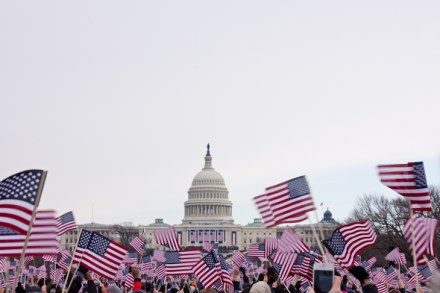
For pure, unadulterated comedy nothing has emerged from the carnival of broadcast entertainment, print-media and online badinage of the past two years to beat the quotidian exhilarations of the saga of Donald J. Trump. Each day accelerated demands for stimulation are amply satisfied by the President’s actions and reactions as they trigger his detractors (‘losers and haters’) into ever more preposterous and self-righteous rage. In the short time since the proofs of Conrad Black’s lively new chronicle landed on my doormat, Trump has attended a ‘very, very successful’ G7 summit in Quebec at which he declared a ‘10 out of 10’ relationship with other leaders including Justin Trudeau who ‘did a really good job’.

Trump

It’s the wreckage of alcoholism, not the road to recovery, that makes for enthralling reading

The Recovering by Leslie Jamison, novelist, columnist, bestselling essayist and assistant professor at Columbia University, makes for bracing reading. Clever, bold, earnest and sometimes maddening, it is chiefly an account of the author’s alcohol addiction and the various stages of her recovery. It is also an examination of the lives and works, in so far as they pertain to drugs and alcohol, of ‘addicts of extraordinary talent’, such as Jean Rhys, John Berryman, Billie Holliday and David Foster Wallace. The book is an investigation of how Alcoholics Anonymous operates, its strengths and challenges, the leanings of its founders and a roll call of some of its members who’ve touched the author’s life.

The story of the last living survivor of the Atlantic slave trade is a high adventure

Zora Neale Hurston, the African-American novelist-ethnographer, was a luminary of the New Negro Movement, later renamed by American scholars the Harlem Renaissance. ‘Harlemania’ took off in jazz-age New York, as white thrill-seekers danced to Duke Ellington hothouse stomps and enthused over so-called primitive art. Hurston made a ‘black splash’ of her own in 1920s Harlem. Among her admirers was the dance critic and photographer Carl Van Vechten, whose deliciously Firbankian 1926 account of life uptown, Nigger Heaven, gloried in blackamoor jungle dances and other Uncle Tom minstrelsy. (‘Period piece’ would be the most charitable description.

Lionel Shriver and the rigging of the book market

Should the arts reflect the demographic make-up of their society, and be subject to quotas and affirmative action, in the name of diversity? Or should they be exempt from the imposition of quotas, as a meritocracy in which the only affirmative action is the one that recognises talent? This, I reckon, is the question at the heart of this week’s media case, The People (on Twitter) versus Lionel Shriver. Shriver, born in Gastonia, North Carolina, is a American export to Britain, and much appreciated over there for her novels and journalism. This week, she was persecuted by a less welcome American export, the modern Salem that is trial by Twitter mob. Her crime was to have ridiculed a ridiculous letter that Penguin Random House has sent to literary agents.

American Histories, by John Edgar Wideman, reviewed

This new collection of John Edgar Wideman’s short stories comes across the pond as one of four handsomely packaged volumes from Canongate. Little known in this country, he towers large in his native States; a MacArthur Genius fellow, a PEN/Faulkner Award winner twice, winner of the Prix Femina Etranger last year, endorsed by Richard Ford and Caryl Phillips…. Old now, he has a lengthy list of publications behind him, and, on this latest evidence, carries a flame of rage against American injustice and prejudice that yet burns magma-hot.

Russia’s obsession with securing a warm-water port changed the history of Central Asia

In the 13th century, having overrun and terrorised Europe as far as Budapest, and in the process possibly bringing with them the flea which caused the Black Death, the heirs to Genghis Khan and the Golden Horde had also conquered territory to the east as far as the Korean peninsular. The assiduous Swiss scholar and explorer Christoph Baumer chronicles the ensuing sagas of the remaining individual khanates in great detail. But by the 16th century it is clear that although a few pockets still flourished, producing impressive buildings and works of art, these erstwhile mighty nomadic clans had sunk to a point where they had disappeared from the consciousness of the outside world.

When diversity means uniformity

I’d been suffering under the misguided illusion that the purpose of mainstream publishers like Penguin Random House was to sell and promote fine writing. A colleague’s forwarded email has set me straight. Sent to a literary agent, presumably this letter was also fired off to the agents of the entire Penguin Random House stable. The email cites the publisher’s ‘new company-wide goal’: for ‘both our new hires and the authors we acquire to reflect UK society by 2025.’ (Gotta love that shouty boldface.) ‘This means we want our authors and new colleagues to reflect the UK population taking into account ethnicity, gender, sexuality, social mobility and disability.

Stormy weather: Florida, by Lauren Groff, reviewed

Over the past decade Lauren Groff has written three novels; she now returns to the short story form in this, her second collection. Last year she was named as one of the best young American novelists by Granta, a reputation that’s been growing since the 2015 publication of her critically acclaimed Fates and Furies, a sprawling portrait of a marriage nominated by Barack Obama as his book of the year. Groff, originally from New York, lives in Florida, and these 11 stories take that state as their focus — a place where panthers prowl perimeters, 15ft-alligators glide through the swamps and air-conditioners ‘crouch like trolls under the windows’.

The Tibetan Passion Book puts the Kama Sutra in the shade

The Tibetan artist and poet Gendun Chopel was born in 1903. He was identified as an incarnate lama, and ordained as a Buddhist monk. In 1934 he renounced his vows, quit Tibet for India, learned Sanskrit and — if his long poem, ususally translated as A Treatise on Passion, is to be taken at face value — copulated with every woman who let him. Twelve years later he returned to Tibet, and was thrown into prison on trumped-up charges. The experience broke him. He died of cirrhosis in 1951, as troops of China’s People’s Liberation Army were marching through the streets of Lhasa. Chopel’s reputation as the most important Tibetan writer of the 20th century is secure, mostly through his travelogue, Grains of Gold.

Speeding along the highway in America’s coolest cars

In 1973, four years before he disappeared down the Star Wars rabbit hole, George Lucas directed the film American Graffiti, eulogising his days as a teenage car fanatic in Modesto, California; parking at drive-ins, hot-rodding and cruising for dates. This vanished world was only a decade away —‘Where were you in 62?’ said the publicity — the equivalent of someone today getting dewy-eyed about 2007. Yet the clashes and strife of the late 1960s in mainland America and the deepening quagmire of the Vietnam War had already made those days look like an age of lost innocence. The film was an international hit, but in October that year Opec’s oil embargo quadrupled the price per barrel, putting any number of nails in the coffin of cheap motoring and jacked-up jalopies. Gary S.

‘Steer clear of that cave boy, James Dean, and grease ball, Elvis Presley’

Lucky bastard. Such are the words that come constantly to mind while you’re reading Clancy Sigal’s two volumes of posthumously published autobiography. Blacklisted as a (self-confessedly lousy) actor for refusing to name names in the McCarthy era, working as the agent for the likes of Peter Lorre, Rod Steiger and — sigh — Barbara Stanwyck in 1950s Hollywood and freelancing on Fleet Street in countercultural London (including reviewing films for The Spectator), Sigal was at the centre of every piece of action going. Should Black Sunset and The London Lover ever be gathered into a single volume (perhaps taking Sigal’s earlier memoir, Going Away, along for the ride), ‘Been there, done that’ would make a good catch-all title.

You didn’t have to be mad to work for Tommy Nutter — but it helped

The tailor’s art is a triumph of mind over schmatte. Not just in the physical cutting and stitching, but in the faith that style makes content. This, not the question of which way you dress, is the secret compact between tailor and client. ‘Every faculty of his soul, spirit, purse and person is heroically consecrated to this one object, the wearing of clothes wisely and well, so that as others dress to live, he lives to dress,’ Carlyle wrote of the dandy in Sartor Resartus. Tommy Nutter was one of Tommy Carlyle’s dandies, a ‘clothes-wearing man’ and a ‘poet of the cloth’. From 1969 to 1976, Nutter bestrode the world of tailoring like a Narcissus. Though he could barely manage a backstitch, his designs rewrote the book on male style.

In my illness and old age, children give me hope

By 74 it is easy to feel that you have seen it all, done it all, that nothing much surprises you any more. Striving gives way to coping. Drop a pencil and it rolls under the sofa. What you have to do is think about the best way to find it and pick it up. Problem. Do you get down on your knees and reach in under, which of course means you will have to get up again, or do you simply push the sofa away? Such problems don’t really bother you. You cope with it. You don’t reflect on growing decrepitude. It has been so slow coming, you have hardly noticed. Push the sofa away. Bend slowly, pick it up. Done. Straighten up. No one was watching. That’s good. Even an unwelcome medical diagnosis does not surprise you. You cope because you have to.

The Empty Quarter is a great refuge for lonely hearts

Here’s a treat for desert lovers. William Atkins, author of the widely admired book The Moor, has wisely exchanged the dank, wind-lashed chill of Britain’s moorland for eight of the world’s fieriest deserts, from the Empty Quarter of Oman and Egypt’s Eastern Desert to the Taklamakan in China and an unlikely stint at Burning Man in America’s Black Rock Desert. It’s not entirely clear what prompted these particular journeys or this specific quest. We learn in the second sentence that a long-standing girlfriend has gone to live and work abroad and Atkins is not going with her; so perhaps a retreat into the desert is the wholly appropriate response in a travel writer searching for new territory to furrow.

Did Ronald Reagan almost spark a nuclear war?

In 1983, Soviet spies skulked in our midnight streets to check the lights were out.The Kremlin, convinced the West was planning nuclear war, launched Project RYAN, whereby agents watched for signs of impending attack. One was that lights would burn all night in government buildings, as fiendish mandarins drew up the war plans. It didn’t occur to them that lights might indicate nothing more than cleaners on a late shift. Soviet paranoia was such that they saw menace everywhere, and agents, eager to please Moscow, reinforced this fear. ‘The more alarming the reports, the more the agents were congratulated for their diligence.’ RYAN became self-fulfilling.

The sacred chickens that ruled the roost in ancient Rome

Even the most cursory glance at the classical period reveals the central place that birds played in the religious and political lives of the two key Mediterranean civilisations. Their gods, for example, were often represented in avian form, so that the Athenian currency bore an owl image, which was intended as a portrait of the city’s patron, Athene. ‘Owls to Athens’ was a proverbial expression, much like ‘coals to Newcastle’. From North Africa to the shores of the Black Sea there are still Greek temples dedicated to Zeus that are topped by weathering stone eagles as symbols of their supreme deity, while the imperial legions of Rome fought under an eagle standard for much the same symbolic reasons.