Books

Behind closed doors

Katy Hays’s involving, well-tuned debut novel takes its name from a real museum in New York, the Cloisters. Built by a Rockefeller, it resembles a medieval monastery and brims with glorious treasures. Ann, our provincial heroine (from Walla Walla, where she worked a menial job in order to fund college), would have preferred the Met, but when she’s serendipitously hired for a summer role, she finds herself swiftly pulled into the institution’s inner workings and the nefarious machinations of its well-heeled staff. The cutthroat nature of the museum is placed under the spotlight.

Bret Easton Ellis’s comeback is a bloody masterpiece

Bret Easton Ellis has a secret. It’s what happened to him and his friends in the fall of 1981 in his senior year at Buckley, a private high school in Sherman Oaks, California. It’s about a hippie cult and serial killer known as “The Trawler” and the disappearance of his friends. It’s about how all this is somehow tied to the arrival of a new student that year, Robert Mallory. It’s a true story. The Shards is Ellis’s seventh novel, published nearly thirteen years after his previous book, Imperial Bedrooms. He has tried to write this novel twice before, once when he was nineteen and again when he was forty-two. That second attempt led to an anxiety attack that had Ellis rushed to the emergency room at Cedars-Sinai. At least, that’s the story.

shards

Quentin Tarantino’s iconoclastic obsessions

Quentin Tarantino’s inevitable first volume of film writing presents a challenge: how can an established artist, especially one this famous, pivot to criticism? No matter how insightful his opinions, it runs the risk of merely illuminating what he values as a filmmaker. To his credit, Cinema Speculation doesn’t pretend it’s not taking you through a highly personal journey of one man’s cinematic obsessions. The tone isn’t too far off from the hundreds of interviews he’s given for thirty years. References to his own films are common, and unlike serious critics, he can pepper his criticism with quotes from sources he can call at any time — from critics (Elvis Mitchell) to filmmakers (Walter Hill) to miscellaneous others (Robert Wuhl).

tarantino

The struggle of the female musician

In July 2022, hundreds of elegant opera-goers gathered on the lawns of Glyndebourne Manor in Sussex to picnic in the interval of a rarely performed early twentieth century work, The Wreckers, by the suffragette composer Dame Ethel Smyth. This strikingly powerful piece of music, which tells the story of Cornish villagers who lure ships onto rocks in order to plunder them, was the first opera by a female composer to be staged at the prestigious British festival and was extremely well-received. The Times of London praised its “wild waves of passion.” Yet The Wreckers has had a difficult history.

ethel smyth women musicians

Stephen Rubin, the publisher who speaks truth to power

Stephen Rubin may not be a household name, but one gets the impression that doesn’t bother him much. Since he began his career in the '80s, he has built his reputation on publishing zeitgeist-baiting fiction and non-fiction alike, ranging from the undeniably good (John Grisham’s The Firm) to the undeniably bad but hugely lucrative (The Da Vinci Code), along with George W. Bush’s memoir Decision Points. You may not like all, or even most, of the thousands of books that Rubin has been involved with, but you cannot deny his commercial acumen. He knows what people want to buy, and has been as responsible as anyone in the United States for bringing it to them.

Trainspotting at thirty: an interview with Irvine Welsh

A lot of new books grow old fast. It isn’t even the fault of their material, necessarily, but their milieu. Hour by hour, the means of cultural production are accelerating at an evaporative rate. Today more than ever before, irrelevancy looms large over the shoulder of the novelist. It’s an environment within which thirty days of relevance is a feat, but thirty years? A fiction in and of itself. Yet, throughout three decades of cultural churn, the words of Irvine Welsh have remained steadfast; as culturally relevant and artistically avant-garde as the day they first hit the shelves.

Irvine Welsh

Ford Madox Ford and the decline of the American WASP

“I don’t know how many times in nearly forty years I have come back to this novel,” Graham Greene said of Ford Madox Ford’s The Good Soldier, published shortly after the outbreak of the First World War. The fiction of both English authors — both converts to Catholicism — share a deep cynicism towards modernity and a depiction of the English establishment as decadent and in decline. The Good Soldier, whose original title The Saddest Story was canned by the publisher because it would render the book “unsaleable” during World War I, tells the tale of two married couples, one British (British Army Captain Edward Ashburnham and his wife Leonora) and the other American (John and Florence Dowell). Both pairs are, on the face of it, young, prosperous, and happy.

The return of Bret Easton Ellis

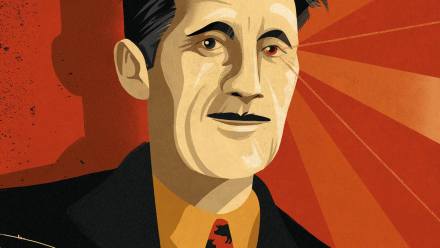
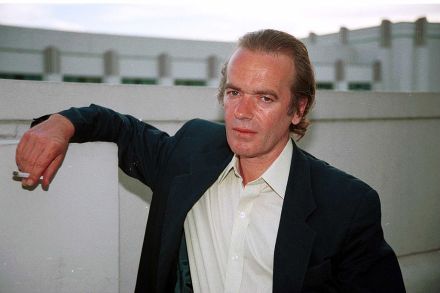
The Shards is about 600 pages long. “Should anyone even publish a 600-page novel?” asks its author Bret Easton Ellis. “I happen to believe, yes, if it’s justified.” Such books are rarely justifiable, and often, novelists become buzzed-about simply for executing them, but not many can boast that every word, scene and sentence is necessary. This is how it feels to read The Shards: not a detail is to be missed. It contains the thematic elements that run through Ellis’ oeuvre: the social lives of the wealthy, or nearly wealthy, drugs, sexuality and desperation painted over with bursts of violence. The through line that connects his work isn’t that sex and violence are taboo.

ellis
National Counterterrorism Center Director Christopher Miller testifies at a Senate Homeland Security and Governmental Affairs Committee hearing (Photo by Joshua Roberts-Pool/Getty Images)

Exclusive: Pentagon chief details January 6 riot response

Christopher C. Miller, acting secretary of defense during the last few months of the Trump presidency, will reveal the entirety of his role in protecting the Capitol on January 6, 2021 riots in his new book, Soldier Secretary: Warnings from the Battlefield & the Pentagon about America’s Most Dangerous Enemies. Miller previously testified about how the Pentagon sought to quell the riots to the January 6 Committee; pieces of his testimony have been released to the press to raise questions about President Donald Trump's claims that he personally ordered 10,000 troops to be on standby during his speech on the Ellipse. Miller does not expound on this debate in the introduction to his book, which has been provided exclusively to The Spectator World.

The books to watch out for in 2023

After a fair-to-middling 2022, it’s not unreasonable to hope that 2023 will see several stars burn brightly in the literary firmament. Whether what promises to be the most talked-about book of the year, Prince Harry’s Spare (Random House, January), is included in this number remains to be seen. On the plus side, the prince has the estimable J.R. Moehringer as his ghostwriter; on the negative side is the fact that his every public appearance over the past few years has been so combative that we might expect little more than a 416-page exercise in score-settling. More reliable pleasures await. Pamela Anderson’s memoir Love, Pamela (HarperCollins, January) should be a revelatory and fascinating dive beyond the usual bimbo clichés.

Of course: all the great women in history were actually men

One of the great, pesky questions of human history has finally been answered. For thousands of years , as we all know, most great accomplishments were the works of men. But now and then there was an outlier, a woman doing great things. Esther in the Bible, Joan of Arc or Elizabeth I of England. It made no sense — but today, thanks to the tireless work of gender studies departments we know the truth: those weren’t women at all. They were actually men. This weekend we had further confirmation of this revelation from the New York Times which ran a piece revealing that Louisa May Alcott, author of Little Women, was a trans man. We know this because sometimes Alcott went by “Lou” and mentioned having a “boys' spirit.” I’m sold.

louisa may alcott women

The publishing mega-merger that wasn’t

If you sit down and talk to an author for any length of time, you will hear gripes. (Writers will never be confused with the sunniest of people on this planet.) About the visibility of their books; about the size of their advances; about their sales, relative to their other titles and to their peers; about publicity campaigns; about cover designs. There will be a lot of gripes, and if you are cornered by an author in a bar, or at a party, you might be advised to make your excuses and flee. But if you have some sympathy for this much-maligned breed, it may occur to you that the basis of their complaints ultimately comes down to a simple lack of appreciation by their publishers: those all-powerful entities that have the power to make or break careers at the touch of a button.

publishing
locust

Stephen Amidon’s day of the locust

Stephen Amidon’s Locust Lane begins late at night, with a dog run over by an alcoholic fund manager. Patrick is well over the limit: “He didn’t need another item in the overladen shopping cart of guilt he was pushing around.” He vacillates, and then scarpers, setting up the novel’s themes of addiction, accident, power and privilege, and how far people will go to save themselves. Questions of nature and nurture abound: does monstrous behavior pass down the generations, or is it learned and acquired? And what lengths will communities go to in order to protect their own? Locust Lane is a street in the town of Emerson. It’s a tony neighborhood, whose vast, spotless houses contain apparently equally spotless WASP-y families, insulated by centuries of accumulated wealth.

Dylan

Bob Dylan’s tower of song

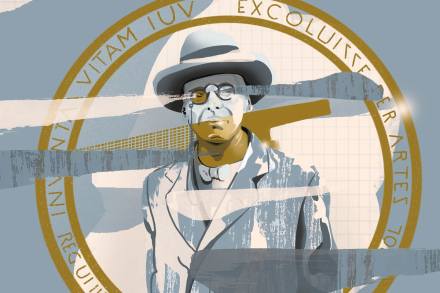
“He doesn’t write on drugs, he doesn’t write on liquor, he writes on everyday occurrences.” — Beatty Zimmerman, Bob Dylan’s mother, 1999. After you admire the cover of Bob Dylan’s The Philosophy of Modern Song, and its triptych portrait of Little Richard, Alis Lesley and Eddie Cochran in their prime, open it to the title page. There, in pulp-fiction red, is a little crimson lightning bolt. On the next page, there is a photograph of the twenty-two-year-old Elvis Presley — the man who popularized the lightning bolt, with his logo “TCB” or “Taking Care of Business in a Flash” — in a Memphis record store, looking through just-released bounty like “Here’s Little Richard” and “A Tribute To James Dean.

queen mother

Was the Queen Mother ever really funny?

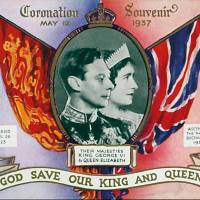
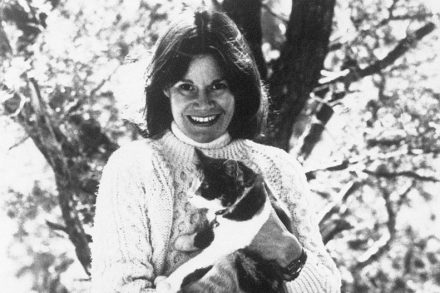
Was the Queen Mother ever really funny? She was clearly extremely good company: an attentive listener, full of enthusiasm and affection, right up until her death, aged 101, in 2002. She was also the ideal queen for an unconfident George VI, undermined by his stutter and caught unawares by his accession to the throne, thanks to the abdication of his appallingly selfish brother, Edward VIII. The only time I ever saw the Queen Mother — when she was eighty, at her Clarence House home — I was only eight, but I remember her clearly. A tiny figure, she beamed away, spreading goodwill among strangers when so many people that age have lost mobility, let alone the ability to cheer up other people. Grumpy George V had thought much the same of her charm nearly sixty years earlier.

Bob Dylan’s curious book signing controversy

The times, they are a-changing. For the past six decades, Bob Dylan has been one of the most enigmatic artists in American music, whose every public utterance has been pored over by his admirers and detractors alike. But one thing that Dylan has never been is a man who threw it all away: reputationally speaking, at any rate. Yet things at last have changed. In a simple twist of fate that Dylan surely never could have predicted, he has become embroiled in — of all things — a controversy over signed books. Dylan's most recent publication, The Philosophy of Modern Song, was released in a deluxe limited edition, retailing at $599 apiece.

The spy novelist who became an Irish nationalist

The period of the First World War was a golden age for the spy novel. There’s nothing like a really cataclysmic global conflict to stir any halfway attentive author. And perhaps the pick of the literary crop was 1903’s The Riddle of the Sands, by the Anglo-Irish writer, soldier, and politician Erskine Childers. The novel mixes some gentle satire about the graded snobberies of the Edwardian class system with a seafaring adventure involving a couple of topping British chaps going after German spies in the Baltic. It’s not only a riveting tale in itself, but so cogent in its account of the state of Britain’s maritime defenses that it prompted the Admiralty to hurriedly install a series of new coastal gun batteries.

The Spectator’s 2022 Books of the Year

William Boyd Writing effective comedy is very difficult. True comic genius, the ability to create a unique tone of voice — deadpan, perfectly timed, self-deprecating, abjuring all whimsy (the British disease) and grandstanding — is extremely rare. One thinks of S.J. Perelman, Peter de Vries, the Grossmiths and P.G. Wodehouse amongst very few others. One name that can be added to this tiny and exclusive club is Theo Fennell who has published, this year, his memoir I Fear For This Boy: Some Chapters of Accidents (Bloomsbury, $35). It relates incidents in Fennell’s life where everything that could go wronnd Catholic Churches as he veered between them.

books
cormac McCarthy

The return of Cormac McCarthy

After sixteen years of silence, Cormac McCarthy has literally written a novel and a half. That’s the good news. Perhaps less-good news is that about half the longer novel depicts conversations between a mad person and an imaginary deformed imp called The Thalidomide Kid, while all of the half-novel is a dialogue between the same mad person and her psychiatrist. The unequivocal bad news is that quite a lot of both is about quantum physics, by way of ruminations on the Manhattan Project and a JFK conspiracy theory: an unholy trinity of literary red flags. I do not mean to dissuade anyone from reading a rare new work by one of America’s finest living writers. Parts of The Passenger and its “coda,” Stella Maris, are very funny. Parts are even brilliant.