Books

The spy who loved me

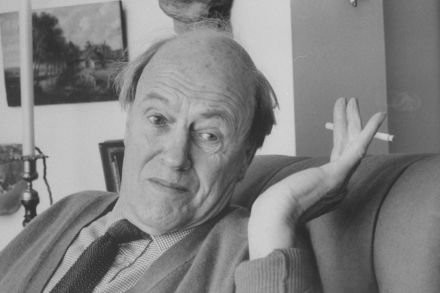
I started reading Suleika Dawson’s The Secret Heart at a London bar, intending simply to skim through as I finished my beer. Six hours and many more beers later I was still at the bar, and still reading. The book, an erotically charged, no-punches-pulled account of her multiple affairs with the author John le Carré (or David Cornwell, as she knew him), is also a fascinating and important portrait of the man himself. The pseudonymous author, with her winking nod at Max Beerbohm’s femme fatale, offers a degree of insight and honesty which le Carré’s official biography (let alone his own memoir) and recently released collection of letters do not, and a character study of a London long since lost.

le Carré

Stephen Amidon’s day of the locust

Stephen Amidon’s Locust Lane begins late at night, with a dog run over by an alcoholic fund manager. Patrick is well over the limit: “He didn’t need another item in the overladen shopping cart of guilt he was pushing around.” He vacillates, and then scarpers, setting up the novel’s themes of addiction, accident, power and privilege, and how far people will go to save themselves. Questions of nature and nurture abound: does monstrous behavior pass down the generations, or is it learned and acquired? And what lengths will communities go to in order to protect their own? Locust Lane is a street in the town of Emerson. It’s a tony neighborhood, whose vast, spotless houses contain apparently equally spotless WASP-y families, insulated by centuries of accumulated wealth.

locust

Bob Dylan’s tower of song

“He doesn’t write on drugs, he doesn’t write on liquor, he writes on everyday occurrences.” — Beatty Zimmerman, Bob Dylan’s mother, 1999. After you admire the cover of Bob Dylan’s The Philosophy of Modern Song, and its triptych portrait of Little Richard, Alis Lesley and Eddie Cochran in their prime, open it to the title page. There, in pulp-fiction red, is a little crimson lightning bolt. On the next page, there is a photograph of the twenty-two-year-old Elvis Presley — the man who popularized the lightning bolt, with his logo “TCB” or “Taking Care of Business in a Flash” — in a Memphis record store, looking through just-released bounty like “Here’s Little Richard” and “A Tribute To James Dean.

Dylan

Was the Queen Mother ever really funny?

Was the Queen Mother ever really funny? She was clearly extremely good company: an attentive listener, full of enthusiasm and affection, right up until her death, aged 101, in 2002. She was also the ideal queen for an unconfident George VI, undermined by his stutter and caught unawares by his accession to the throne, thanks to the abdication of his appallingly selfish brother, Edward VIII. The only time I ever saw the Queen Mother — when she was eighty, at her Clarence House home — I was only eight, but I remember her clearly. A tiny figure, she beamed away, spreading goodwill among strangers when so many people that age have lost mobility, let alone the ability to cheer up other people. Grumpy George V had thought much the same of her charm nearly sixty years earlier.

queen mother

Bob Dylan’s curious book signing controversy

The times, they are a-changing. For the past six decades, Bob Dylan has been one of the most enigmatic artists in American music, whose every public utterance has been pored over by his admirers and detractors alike. But one thing that Dylan has never been is a man who threw it all away: reputationally speaking, at any rate. Yet things at last have changed. In a simple twist of fate that Dylan surely never could have predicted, he has become embroiled in — of all things — a controversy over signed books. Dylan's most recent publication, The Philosophy of Modern Song, was released in a deluxe limited edition, retailing at $599 apiece.

The spy novelist who became an Irish nationalist

The period of the First World War was a golden age for the spy novel. There’s nothing like a really cataclysmic global conflict to stir any halfway attentive author. And perhaps the pick of the literary crop was 1903’s The Riddle of the Sands, by the Anglo-Irish writer, soldier, and politician Erskine Childers. The novel mixes some gentle satire about the graded snobberies of the Edwardian class system with a seafaring adventure involving a couple of topping British chaps going after German spies in the Baltic. It’s not only a riveting tale in itself, but so cogent in its account of the state of Britain’s maritime defenses that it prompted the Admiralty to hurriedly install a series of new coastal gun batteries.

The Spectator’s 2022 Books of the Year

William Boyd Writing effective comedy is very difficult. True comic genius, the ability to create a unique tone of voice — deadpan, perfectly timed, self-deprecating, abjuring all whimsy (the British disease) and grandstanding — is extremely rare. One thinks of S.J. Perelman, Peter de Vries, the Grossmiths and P.G. Wodehouse amongst very few others. One name that can be added to this tiny and exclusive club is Theo Fennell who has published, this year, his memoir I Fear For This Boy: Some Chapters of Accidents (Bloomsbury, $35). It relates incidents in Fennell’s life where everything that could go wronnd Catholic Churches as he veered between them.

books
autofiction

Think autofiction is easy? Think again

"No, Lisa." As rejection letters go, it was admirably concise. I’d made an attempt at “autofiction,” that amorphous genre which inhabits the space between autobiography and fiction, and this was the entirety of my editors’ response. Any writer who has been at it for any length of time will have received Dear Johns from publishers, but is two words a record? It was something to cling to, at least, during the five further years it took for the book to find a home. Eventually, a French house took it, and Les Femmes de mes amants staggered unobtrusively into print in June this year. Obviously, I should have set my sights on Paris from the first.

Oates

Joyce Carol Oates, a woman for all seasons

Midway through my conversation with the eighty-four-year-old Joyce Carol Oates, one of the most prolific writers America has ever seen (fifty-eight novels, plus plays and children’s books), and now one of its more unpredictable tweeters, with over 226,000 followers, I ask what it’s like being having been one of the country’s “major” literary figures for so long. Oates’s classic 1966 short story “Where Are You Going, Where Have You Been?” about the kidnap and possible murder of a sixteen-year-old girl, and her 1992 Pulitzer-nominated novella Black Water demonstrate her grasp on the dark side of the twentieth-century American psyche.

Debunking the grievance industry in our schools

City Journal last month released a survey that asked eighteen-to-twenty-year-olds whether they had been taught six concepts related to critical race theory. These included: “America is a systemically racist country,” “White people have white privilege,” “White people have unconscious biases that negatively affect non-white people," “America is built on stolen land,” “America is a patriarchal society,” and “Gender is an identity choice.” Each of these was answered in the affirmative by a majority of participants, of whom more than 80 percent attended public schools. That’s curious given that public educators and their defenders in corporate media have been claiming for years that CRT is not taught in schools.

Inside Joan Didion’s extravagant estate auction

On December 23, 2021, I left the Hollywood Roosevelt and walked down North Orange Drive to turn right and face Sunset Boulevard. It was dark when I passed the entrance to the Chateau Marmont. When I finally crossed the street to arrive at Book Soup, the “Bookseller To The Great & Infamous,” I turned to the cashier and asked if they had copies of Play It As It Lays by Joan Didion. He huffed, “Uh, yeah, we’re sold out.” Joan Didion had died earlier that day in Manhattan due to complications of Parkinson’s Disease.

joan didion

Warning: this book may make you like Bono

There is a famous (and, I fear, apocryphal) story about Bono at his most messianic at a U2 gig in the early part of this century. Pausing between songs, he clicked his fingers meaningfully. After doing this a few times, he said, with utmost gravity, “Every time I do this, a child in Africa dies of starvation.” Most of the audience nodded in sympathy, but one man in the front row had a better response. “Well stop fucking doing it then!” Bono’s response was not recorded, but the finger-clicking soon disappeared from his repertoire of stadium show gimmicks. It is reasonably easy to see why Bono — and, by extension, U2 — are so reviled.

bono

Publishing staff demand axing of Amy Coney Barrett book

Cockburn would like to issue a preemptive apology to those who thought being extraordinarily accomplished was enough to justify a lucrative book deal. Apparently an author's manuscript should be sent to the shredder if he or she holds an unorthodox opinion on hot-button political issues. That's the case made by the coffee-fetchers and typo-catchers in the publishing industry who signed an open letter denouncing Supreme Court Justice Amy Barrett's upcoming book with Penguin Random House. The group of "concerned publishing professionals" claim that paying Coney Barrett a $2 million advance to outline her judicial philosophy constitutes an international human rights violation. No, seriously.

amy coney barrett
prince harry memoir spare

Prince on pre-order: Harry’s memoir release date announced

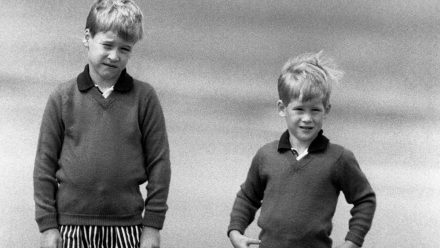
Cockburn has a few vacations coming up in 2023, so is on the hunt for some new light reading material. Thank God that Prince Harry has announced that his long-awaited memoir, Spare, will hit shelves globally on January 10. The cover features a close-up of the man fifth in line to the British throne, staring down the barrel of the camera, blue eyes glinting, beard tidily trimmed. His expression says, "this is my story." Publisher Penguin Random House said in a press release: “Spare takes readers immediately back to one of the most searing images of the twentieth century: two young boys, two princes, walking behind their mother's coffin as the world watched in sorrow — and horror.

The prodigal daughter

In April 1930, the nineteen-year-old Edda Mussolini married Count Galeazzo Ciano, aged twenty-seven, after a brief courtship in which love appears to have played little part. Her father, Il Duce, wanted the magnificent occasion to be not merely the wedding of the century but a grand, almost royal, demonstration of fascist might and a celebration of fecundity. Edda, his beloved firstborn, was to stand for everything that was best about fascist womanhood, while the groom was to carve out the path of “the new Italian man.” These were the glory years, and thousands of schoolchildren sent poems and cards with angels in advance of the occasion, which the Papal Nuncio attended with a present from the Pope.

mussolini
carey

The bookish life of John Carey

One of the most revealing moments in Sunday Best — a collection of book reviews dating back to the late 1980s — comes when John Carey, invited to appraise some items about Robert Graves, remembers hobnobbing with the author of I, Claudius half a century ago in Oxford’s High Street. Instantly, two of Carey’s signature marks — his love of literature and his eye for personality — come crashing together. Graves, then in his late seventies, tall, craggy and mage-like, is still a “commanding sight.” The drawback is his conversation: from the great poet’s lips, “in disconcertingly loud, upper-class tones, issued a bizarre stream of superstition and bogus history.

wild problems

Living one’s best life

In our era of Twitter hot takes and Medium listicles promising to make you millions, I have a soft spot for life-wisdom books, meditations of the old school that you can spend quality time with even when the ideas presented in them are timeless. I’ve read with pleasure the popular life guidance books of the past decades, from The Happiness Hypothesis or Letters to a Young Contrarian to Zena Hitz’s quietly transformative Lost in Thought, and I felt a renewed connection with the ancient questions of existence in a modern retelling. It should be the habit of all widely read thinkers, whether coming from STEM, the humanities or the social sciences, to sit down and write an accessible recap for all of us of what they have found out.

acaster

A comedian explains how to quit social media

James Acaster’s Guide to Quitting Social Media presents itself as a “how-to” or “self-help” manual. But it's actually a 272-page stand-up comedy special. It’s no surprise that a stand-up comedian would write a comedy book — indeed, this is Acaster’s third trip to the literary well — but it’s nevertheless striking how fully the Kettering-born joker commits to the routine this go-round. His new Guide to Quitting Social Media reads like it was meant to be performed on stage. It’s a return to the signature style Acaster became known for following his breakout special Repertoire in 2018. The Netflix collection was filmed in one week and features four distinct, one-hour comedy routines that build upon and call back to each other.