Books

The great late Yeats

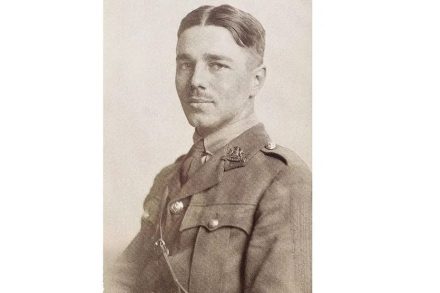
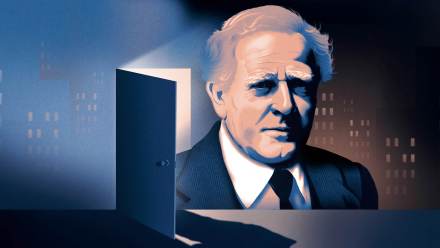
The 1923 Nobel Prize in Literature was awarded to William Butler Yeats “for his always inspired poetry, which in a highly artistic form gives expression to the spirit of a whole nation.” Informed of the prize late on the night of November 14 by the editor of the Irish Times, the fifty-eight-year-old Yeats and his wife George sat up taking telephone calls and telegrams for a couple of hours. Then, according to Yeats’s sister Lily, the couple went down to the kitchen and cooked some sausages before going to bed. The next day, the Yeatses went out and began spending some of the check Yeats would receive in December.

yeats
Caroline

Lady Caroline Lamb and the frantic bed-hopping between the great houses of England

“Mad, bad and dangerous to know.” That’s the line Lady Caroline Lamb (1785-1828) is known for — her brilliant, pithy verdict on her lover Lord Byron. Her other great claim to fame — her marriage to Viscount Melbourne, twice prime minister — was marginal from a historical point of view: she died, aged only forty-two, her health shattered by drink and laudanum, before Melbourne became PM; before he became Lord Melbourne, in fact — he succeeded to the title after her death. But, still, as Lady Antonia Fraser reveals in her gripping biography, Lady Caroline Lamb: A Free Spirit, she was a remarkable woman, possessed of exceptional charm, as was Byron.

Moore

Lorrie Moore explores the thin veil between life and death

Very few of us could evade accusations of pretension if we quoted Faulkner in everyday conversation. The characters conjured up in Lorrie Moore’s fiction are granted an exception, though not always solely by virtue of their earnestness. In her novel I Am Homeless If This Is Not My Home, which traces a journey toward a final burial in the American South, allusion to As I Lay Dying is particularly apt. Moore has made a name for herself as one of America’s masters of the short story, with her inimitable style on display ever since her first work of fiction, “Raspberries,” was published in 1977. In this, her first novel for fourteen years, she once again wields her wordplay playfully and powerfully, striking a balance between levity and gravity.

ciano

The troubled relationship between Mussolini and his son-in-law

Like those of his wartime ally Joseph Goebbels, the diaries of the Italian fascist foreign minister Count Galeazzo Ciano (1903-44) have proved a mainstay of academic research into the frequently banal inner workings of the Axis dictatorships. Both men were entirely aware of their journals’ historical and commercial value. In 1937, Goebbels struck a lucrative deal with Max Amman, the Nazi Party publisher, for the release of his warped musings on race and politics twenty years after his death, which in the event came sooner than he might have imagined. Ciano in turn used his diaries to barter unsuccessfully for his life when arrested on charges of treason.

war

Men at War examines homosexuality among World War Two soldiers

As a little boy, Luke Turner, like so many other little boys, was fascinated by World War Two. He used to spend hours carefully making Airfix models of warplanes, and his favorite haunt was the Royal Air Force Museum in Hendon, a suburb of North London. Men at War, his second book, is an attempt to explore and explain both this interest and his own sexuality (he is bisexual, with a female partner), in response to what he sees as the dominant, jingoistic attitude propagated via general British cultural discourse. He claims that we do not see those who fought as individuals, but as clipped, heroic avatars, like Captain Sir Tom Moore, who raised millions of pounds for NHS charities during the lockdowns: dignified, silent, brave.

The afterlife of Christopher Hitchens

In 2011, a terminally ill Christopher Hitchens faced death with droll stoicism: “To the dumb question ‘Why me?’ the cosmos barely bothers to return the reply: ‘Why not?’” he wrote. As his health declined and the end drew nearer, the skeptical Hitchens stuck to his atheist guns, clear-eyed in his confidence that death was final. Hitchens died in 2011, but his work and reputation live on. No paradox there, of course, but just how large Hitchens looms twelve years after his death would surely have surprised even this immodest author. It’s certainly a surprise to me, a reformed Hitchens fanboy. The face of twenty-first-century atheism is having quite the afterlife.

Hitchens
George queen

The king and queen who saved the British monarchy

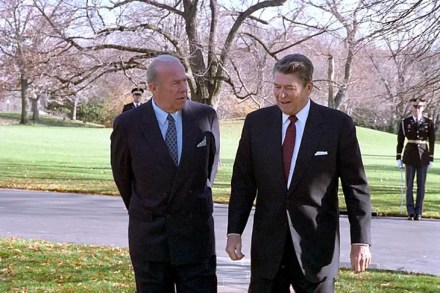
In some ways, the world of George VI and his consort Elizabeth, the future Queen Mother, from 1936-52 was very different from how we envision that of today’s British royal family; its rituals seem to belong to an era of Jurassic antiquity. In George’s day, Britain was still a global power, and its monarch ruled over both an empire and an elaborate court system with a “Page of the Backstairs” and a “Yeoman of the Pantry” — not to mention a fully staffed, oceangoing yacht — at his disposal. His coronation in May 1937 was as protracted as that of any maharajah. The Edwardian braid and sashes on display during more recent military pageantry look sadly Ruritanian by comparison. In other ways, their lives resonate more clearly with our own.

refugees

How refugees saved a town in upstate New York

Utica was once home to the American Nightmare. In the 1960s, the upstate New York city was a vibrant manufacturing hub, home to 100,000 people. Then the great unwinding began. General Electric pulled out in the early 1990s, and shortly after that the Air Force base closed. Entire streets burned as fleeing residents tried to claim insurance payouts. Families moved out as gangs from New York City moved in. Walking through the rubble in 1999, the mayor joked to an interviewer he had been having a nightmare of his own: “I dreamed I was the mayor of the city of Utica.

multilevel marketing

Inside the world of multilevel marketing

Emily Paulson felt lost. A young mother with several small children, she’d stepped away from the career ladder and found herself stuck juggling childcare alone when her husband traveled for his corporate job. She was trapped in a circuit of sweatpants and Spongebob. So when an old high school acquaintance invited her out for wine, she was thrilled at the chance to get dressed up, go somewhere swish and feel like herself again. It turned out to be a trap. Although she wasn’t swept into the back of a van by kidnappers, she was propelled into the world of Multilevel Marketing (MLM), also known as a pyramid scheme. The drinks invitation was a lure, first to be wowed by the fabulous cosmetics she could buy (at a discount!! And didn’t her friend’s skin look amazing?

hanks

Tom Hanks should stick to acting

The French novelist Michel Houellebecq recently appeared in a pornographic film. As one does, of course, although he claims that it was by accident. Nevertheless, there aren’t many authors-turned-actors, even by design. (Graham Greene had a small cameo in Truffaut’s Day for Night; Maya Angelou pops up dispensing folksy wisdom in How to Make an American Quilt.) You will, however, lose count of the thespians who clamor to adorn the printed page; I will not mention any, but you can look them up, should you wish to. Tom Hanks (the actor) has produced his debut novel, The Making of Another Major Motion Picture Masterpiece. The title is, I think, supposed to be arch, in a David Eggers, Heartbreaking-Work-of-Staggering-Genius kind of way.

authors

Where will the vogue for censoring our best-loved authors lead?

It was recently announced in the Daily Telegraph that the novels of P.G. Wodehouse — much beloved by millions, including me, for their combination of wit and soufflé-light evocation of an England that never really existed but which almost might have done — are the latest to fall foul of that new scourge of writers the world over, the “sensitivity reader.” New editions of Wodehouse’s masterly works Right Ho, Jeeves and Thank You, Jeeves have been reissued with the craven disclaimer “Please be aware that this book was published in the 1930s, and contains language, themes and characterizations which you may find outdated. In the present edition, we have sought to edit, minimally, words that we regard as unacceptable to present-day readers.

Judy Blume steps on the J.K. Rowling landmine

Until a few weeks ago, Judy Blume’s reputation as one of the world’s most admired and respected novelists seemed assured. She has sold over 82 million copies of her twenty-five books, has won countless awards and was named one of TIME’s most influential people earlier this year. But those whom the gods wish to destroy are asked for their views on J.K. Rowling — and so when Blume was asked as much in an interview, she replied, “I love her... I am behind her 100 percent as I watch from afar... I haven’t been in touch with her during this tough time. Probably I should.” This went badly, as might be imagined — “Fuck Judy Blume!

judy blume

Donald Trump to publish 1995 letter from King Charles

Donald Trump is set to publish a letter from then-Prince Charles, without the British monarch's permission. The letter from the now-King will form part of a book coming out Tuesday called Letters to Trump, which features celebrities and other people who have written to the former president during his life. The correspondence is said to range from President Richard Nixon to Alec Baldwin. Perhaps they bonded over lawsuits? Charles purportedly wrote to Trump in 1995 to thank him for offering an honorary membership to his Mar-a-Lago resort in Florida. A nice gesture, but King Charles isn’t a golfer. Maybe it’s something to do with those hands.

charles

Who was the real Martin Luther King, Jr.?

Jonathan Eig’s new King: A Life (KAL) is the first comprehensive biography of the black civil rights hero to appear in more than thirty years, and it will succeed my own Bearing the Cross (BTC), published in 1986, as the standard account. One normally does not review a book one’s blurbed — I’ve called it “a great leap forward in our biographical understanding” — nor where one’s actively aided the author’s research and read his manuscript multiple times. But comparisons between KAL and BTC will be legion, so highlighting the three most significant ways in which the two biographies differ will be a service both to the thousands of readers whom Eig’s volume should attract and to students of King’s life more generally.

king

What makes a novel funny?

What makes a novel funny? As well as being too enormous a question to tackle properly here, such an enterprise would, I suspect, require so clinical an approach to reading comic fiction as to remove entirely any possible joy or amusement. As the old saying goes, deconstructing a joke is like dissecting a frog: nobody laughs, and the frog dies. However, the question came to me again recently, as I reread John Kennedy Toole’s A Confederacy of Dunces. I howled with laughter from the initial farcical scene outside a department store, through Ignatius J.

funny novel

Curtis Sittenfeld is the great American observer

If a Martian landed on Earth and wanted a quick summary of the state of modern American life, I would point him toward the works of Curtis Sittenfeld. Sittenfeld (born 1975 in Ohio) is a novelist. Like all the great ones, her perceptions are more accurate about real life than most nonfiction writers’ could claim. In Prep (2005), she skewered American class in the story of a Massachusetts boarding school; Sittenfeld herself went to private school at Groton. In Rodham (2020), a novel about Hillary Clinton, she nailed today’s politics. And, in her best book to date, American Wife (2008), a thinly disguised novel about George and Laura Bush, she filleted the American approach to inherited money, and the swaggering confidence it produces.

sittenfeld

Madness and cannibalism with David Grann

David Grann is one of a very select club of writers: those whose books of history are so diverting that they almost seem implausible. Their narrative constructions are so effective, the dialogue so apposite, that jaded readers might think everything has been made up or twisted to give the books life, in novelistic fashion. And yet — as with the books of Erik Larson — that’s not true at all. It’s all there in the notes: everything between quotation marks was actually said or written. It’s a remarkable skill. This is a hell of a story, and I use that word appropriately. Those who shipped out from Portsmouth on HMS Wager in 1740 — part of George Anson’s circumnavigation of the globe — struggled through hell.

grann