Books

The man who made Reagan

Ronald Reagan has been dead for nearly twenty years, but sometimes it still feels like he’s still the head of the Republican Party. The fortieth US president has been etched in American folklore as one of the country’s most effective and historic statesman, the man who stared down the Soviet Union and pursued policies that ultimately brought down the so-called “Evil Empire” in December 1991. Republican politicians of all stripes, from presidential aspirants to local councilmembers, utter his name at every opportunity. The first GOP presidential debate took place at the Reagan Library in Simi Valley, California, where multiple candidates looked back at the 1980s as a time when the mighty US shook off the cobwebs from the Vietnam War and rediscovered its self-confidence.

President Reagan walking with George P. Shultz outside the Oval Office (Wikimedia Commons)

The Roman Empire’s years of glory

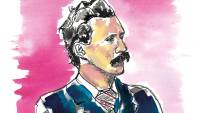
The Roman emperor Domitian began life as a spare. At the end of the first century CE, while his brother Titus was the heir to their father Vespasian, the younger boy’s “sense of resentment and frustration had festered,” writes Tom Holland. “Rather than stay in Rome, where his lack of meaningful responsibility was inevitably felt as something raw,” Domitian moved away with a wife whom his family disliked, “doomed forever to be a supernumerary,” paranoid, attracting gossip, avoiding any company in which “innocent mention of baldness” might be viewed as “mockery of his own receding hairline.” In most judgments by posterity this Prince Harry of the early empire fulfilled all this lack of early promise. Big brother Titus became emperor only briefly.

Roman

America’s professor: the afterlife of C.S. Lewis

In the summer of 1955, an unusual meeting took place. Billy Graham visited the writer and academic C.S. Lewis in Lewis’s rooms at Magdalene College, Cambridge. It was unusual because leading British academics typically avoided Southern Baptist revivalists. But rather than encountering a fussy, prim don, Graham found a kind, intelligent scholar who was very happy to spend the afternoon with him. Later, Graham admitted he was intimidated by Lewis, but the English professor quickly dispelled any anxiety, probably by offering Graham a cup of tea. Graham’s impact on American religious culture, for good or ill, is unquestioned, but it is difficult to imagine what that same culture would look like without the works of C.S. Lewis.

lewis
congo

How the CIA interfered in the Congo

As everybody knows, as soon as you start to talk to any historian of postwar life in any Latin American or African or Southeast Asian country, the discussion quickly turns to the role of the CIA in subverting democracy. From the Truman-era coups in Syria and Egypt, through regime change in Guatemala, assassination in the Dominican Republic, the fomenting of industrial unrest in Guyana, and both the military and covert US involvement in Vietnam, it seems overseas intrigue was the rule and long periods of benign neglect the exception.

Suleyman

The gap between technotopia and dystopia are never far apart

Broken Arrow isn’t just the title of a mediocre 1996 film, but the term for a serious accident involving a nuclear weapon. Over the last seventy years, the United States has officially experienced thirty-two Broken Arrows, where a nuclear weapon has been in a crash or fire, accidentally been dropped — or just disappeared. Incredibly, six have been lost and never recovered. Artificial intelligence (AI) pioneer Mustafa Suleyman tells one such story in his new book, The Coming Wave: Technology, Power and the 21st Century’s Greatest Dilemma. In 1961, a B-52 bomber carrying two live hydrogen bombs broke up in the skies above Goldsboro, North Carolina. One bomb disintegrated when it plunged into a muddy field.

iliad

Two excellent books that offer new insight into The Iliad

The Iliad, Homer’s extraordinary epic poem, begins with Apollo, the god of light, zooming down from heaven “like night,” bringing plague to the Greek camp before Troy. Many days later, after the Trojan Hector’s funeral rites, the poem ends, at dawn. The light god brings darkness; dawn brings the doom of Troy. Such are the ironies that underpin the epic, revealing it as a work of supreme artistry, probably composed by one hand alone. For decades, I have lived in the light and shadow of The Iliad, reading it at first piecemeal in Greek, then in various translations, then all the way through in Greek (an experience both taxing and exhilarating). My Loeb edition, its prim English translation opposite the raw Greek, is never far from my side.

A brief history of flat earthers

In 2020, an American pilot and daredevil named “Mad Mike” Hughes launched himself in a homemade steam-powered rocket, hoping to achieve enough altitude to prove to himself that the Earth was flat. Unfortunately, the rocket crashed and Mad Mike was no more. “I’m not going to take anyone else’s word for it, or NASA, or especially Elon Musk with SpaceX,” he had once explained in an interview. “I’m going to build my own rocket right here and I’m going to see it with my own eyes what shape this world we live on is.” In this way he became a martyr to the modern conspiracy theorist’s mantra: “Do your own research!

Flat earthers

White feminists are finding new problems with motherhood

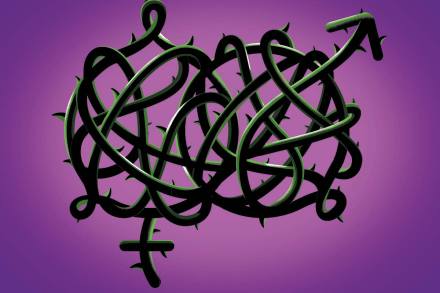
Do you ever wish that your young children would stop asking you questions, constantly touching your body and being needy for your love and attention? That’s called being “touched out,” a new-age expression for the Extremely Online mother who can’t seem to reconcile with the idea that her life is going to be different after she has children. It’s also the title of Amanda Montei’s memoir-cum-cultural criticism on how modern motherhood in America is indistinguishable from the pervasive rape culture that permeates every aspect of a woman’s life in the country, including marriage, the workplace and yes, parenthood. Montei’s revelations about motherhood came to her after #MeToo took off.

Christine Blasey Ford to release memoir

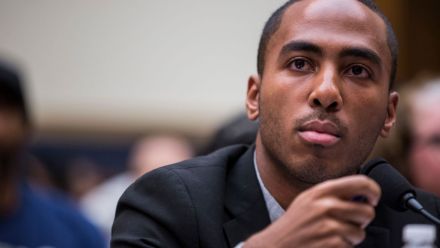
Christine Blasey Ford is back and ready for more — disbelief, tears? Perhaps all of it. The professor of sociology who testified in 2018 that Supreme Court nominee Brett Kavanaugh had committed sexual assault against her in high school is set to release a memoir this March detailing the trial.   Cockburn suspects your opinion on whether the book will be fiction or nonfiction depends on how you vote, though One Way Back promises to be “the compelling true story behind the testimony that awed the nation.”   According to St. Martin’s Press, the memoir recounts the months leading up to the Kavanaugh confirmation hearing as Ford attempted to get information “into the right hands” without bringing backlash on her friends and family.

elon musk

The new Elon Musk biography lacks a clear vision

In the prologue to his biography of Elon Musk, Walter Isaacson evokes the Hero’s Journey in its most pop-culture incarnation: It’s one of the most resonant tropes in mythology. To what extent does the epic quest of the Star Wars hero require exorcising demons bequeathed by Darth Vader and wrestling with the dark side of the Force? Isaacson’s assumption is that Luke Skywalker is the hero of the original film A New Hope. His preamble is titled “Muse of Fire,” a reference to the most famous prologue in literature, the opening lines of Henry V. In Shakespeare’s play, the poet, recognizing the gargantuan feat before him, asks the Muse for help: O, for a muse of fire that would ascendThe brightest heaven of invention!

Christopher Rufo’s new book is impressively erudite

When a new book by an author often characterized as a conservative polemicist earns a rave review in the staid Economist, independent thinkers take notice. Christopher Rufo’s articles on recent US radicalism for the Manhattan Institute’s City Journal have long attracted wide attention, and now America’s Cultural Revolution has been praised as “meticulous” and “cerebral” as well as “persuasive and well-written.” All true, for Rufo’s book is impressively erudite, reflecting a breadth and depth of familiarity with influential leftist writings that will shame any number of “woke” academics.

rufo
carroll

Emily Carroll’s new graphic novel plays on our deepest fears

Emily Carroll’s new graphic novel, A Guest in the House, is an involving, beautifully plotted study of the madness of isolation, steeped in the tropes of fairy tale and horror. And, as all good fairy tales do, it confidently deals in the imagery of the unconscious. Narrated via an innovative combination of text and cinematic, sweeping illustration, it concerns the boundaries of the imagination, and the dynamics of a small family as it threatens to fall apart. Abby is a young wife, listless and bored, who has married an older man (David, a normal kind of guy, with that most humdrum of jobs: dentistry). The setting, depicted with haunting precision in muted tones, is 1990s Canada.

Eliot

An admirable but flawed new biography of George Eliot

What to call her? The question troubled George Eliot, and challenges Clare Carlisle, her latest biographer. Even this book’s indexer plays along, providing more than one entry for its shapeshifting but steadfast subject. The Marriage Question shows us a woman fragmented, attempting to understand in her various existences how — and if — personal freedom can be achieved when your life is bound to another. Mary Ann (or Anne) Evans was born in Warwickshire, in the West Midlands of England, in 1819. On moving to London in 1850, hoping to make her living as a writer, she became Marian Evans.

taupin

Bernie Taupin is more than just ‘Elton John’s lyricist’

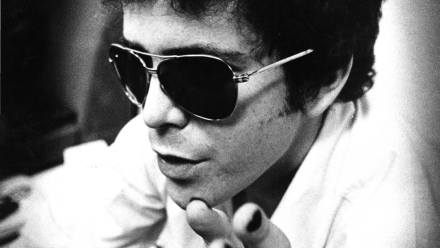
It takes only a couple of hours by train from the southern reaches of rural Lincolnshire to central London. But for seventeen-year-old Bernie Taupin, leaving home in June 1967 to try his luck in the big city, the journey might as well have been to a distant planet, such was the gulf between his life as a casual farm-laborer and his ambitions to become an internationally acclaimed songwriter like his heroes Hank Snow or Merle Haggard.

astor

A diverting but unsurprising new history of the Astor clan

Mention “Astor” to most people and you immediately conjure up tales of fabulous wealth, the sort of Gilded Age beauty and excess expressed to perfection in the paintings of John Singer Sargent. The family name became synonymous at times with luxury and good taste, at others with greed, power and extreme snobbishness. The founder of the dynasty, John Jacob Astor, was a German immigrant and one-time fur trader who came to America in 1783 after the Revolutionary War. His descendants swiftly capitalized on his substantial achievements, creating a Manhattan property empire of unrivaled wealth. There was also plenty of Astor philanthropy and involvement in political and cultural life along the way but then, in the early twenty-first century, came a fall from grace as dramatic as the rise.

The roots of J.K. Rowling’s contrarianism

Like his creator J.K. Rowling, Harry Potter says unspeakable things. He teases his cousin Dudley, the prince of his aunt’s suburban kingdom. He calls the Dark Lord Voldemort by his name. He even speaks to snakes. In other words, if Potter were a real person, he’d likely write a Substack, present a podcast and empathize with his creator’s recent public controversies. You are probably familiar with Rowling’s protests against trans activists’ demands to use women’s restrooms.

Rowling
fraud

Zadie Smith’s latest novel is glittering, grand and powerful

Zadie Smith’s ambitious latest novel, The Fraud, is loosely based on the life of the little-known nineteenth-century novelist William Harrison Ainsworth. He was, at one point, as popular as Charles Dickens, his novel Jack Sheppard even outselling Oliver Twist. But Ainsworth’s fortunes and talents declined, and his forty-odd novels vanished, going out of print soon after his death. Throughout The Fraud, as he sits groaning at his desk, he is an arch reminder not only of the vagaries of literary fame, but the pains of fiction-writing. As his cousin Eliza Touchet observes: “God preserve me from that tragic indulgence, that useless vanity, that blindness!” Ainsworth’s actual writing is redolent of educated middle-class male privilege. (“‘Zounds!

Lankford

How missing persons cases work in the wild

The Pacific Crest Trail is one of the world’s great long-distance hikes, running 2,650 miles from Mexico to the Canadian border. It's a chance to see some of North America’s most majestic scenery, encompassing desert and mountain, and millions of people visit parts of it each year, to hike or run. But only a very few ever walk the whole thing. Completing the entire trail — a “thru-hike” — takes five months. The challenge breeds a kind of camaraderie among hikers, who acquire “trail names” (the 2022 finishers included individuals known as “Sparkle Lizard,” “Milkshake” and “Squiggles”) and become part of a select group. Like its Eastern counterpart, the Appalachian Trail, it is a badge of honor for those who make it through.