Books

Nellie Bowles critiques progressivism and the media that covers it

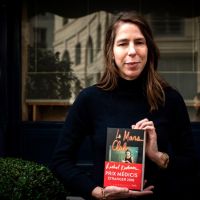
One of many fascinating things to be learned from Morning After the Revolution: Dispatches from the Wrong Side of History, by former New York Times correspondent Nellie Bowles, is the process by which someone gets canceled. I was of course familiar with the concept of cancel culture and figured it meant blackballing the wicked, but I’d never gotten a clear idea of how the thing was actually done. On the evidence of Bowles’s book, it means going on Twitter (OK, X) and posting derogatory tweets (X-pressions, whatever) about the offending party contemporaneously with others doing the same thing.

Bowles
Rushdie

Salman Rushdie’s memoir is a devastating and powerful account of near-death

In late summer 2022, at the Chautauqua Institute in upstate New York, the celebrated novelist Sir Salman Rushdie was stabbed many times as he was about to give a lecture, the subject of which, ironically, was keeping authors safe. The attack sent shockwaves throughout the literary establishment, and the world. It seemed as if civilization itself was under threat, as if our fundamental freedoms to create, associate and speak as we wish were defunct, reduced to the point of a knife. His new memoir, Knife, examines the attack and its implications for him, and for such freedoms generally.

Ayed

A skillful retelling of one of World War Two’s most dramatic stories

Around lunchtime on a late September day in 1944, a young woman stepped into one of the most fashionable cafés on the Champs-Élysées. Her eyes still scanned the room for threats, even though her war had been over for many months. Known variously as Suzanne, Madeleine, Blanche, Ginnette or Tony, she had “amassed names and personas just as other women of her years and beauty amassed admirers. And she had amassed those too” in the service of her country. Two such admirers now sat opposite her in the café, and she had to decide which one she was going to spend the rest of her life with, and which she would never see again. Such is the climax of the epic story of love and betrayal that Nahlah Ayed tells, using unpublished interviews and archival and personal documents.

Priest

Christopher Priest was a grievously underrated novelist

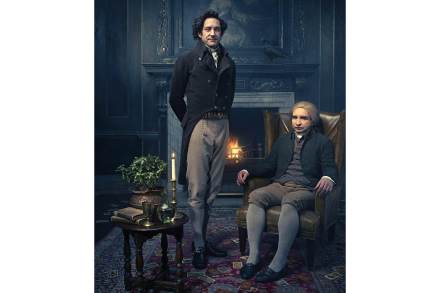
There really ought to be a word to describe the dispiriting realization that a great writer has slipped through our fingers without the culture at large ever quite appreciating what’s been lost. The novelist Christopher Priest, who died earlier this year of cancer at the age of eighty, was one such figure. It would be glib to describe him as the nearly-man of English fiction, for this wasn’t quite the case — instead his career represented a sequence of missed opportunities for the world beyond his chosen genre to recognize his skill and quiet profundity. In some ways, the early part of his publication history closely resembles that of J.G. Ballard without the mid-career renaissance Ballard enjoyed.

culture

This month in culture: June 2024

The Fall Guy In theaters now Ryan Gosling’s career is rather bizarre if you think about it, from drippy romcom protagonist in The Notebook to brooding car noir hero in Drive to laughable failure in The Nice Guys to musical star in La La Land and Barbie. Now he takes a stab at renewing his hardass ways in The Fall Guy, an adaptation of Lee Majors’s 1980s series which pairs him with Emily Blunt and is, in a way, an homage to the careers of “stars who do their own stunts” even if Gosling does not do so himself. There’s even a stunt show planned for Universal Studios’ Hollywood theme park based on the movie, prior to its release.

The problem with westerners seeking enlightenment in Asia

Call it a prejudice if you like. Living in Japan in the 1970s, I had a slight aversion to a particular type of westerner. He — for it was mostly a he — usually lived in Kyoto, sometimes wore a kimono and liked to sit in ancient temples chasing after that presumably blissful moment of enlightenment, awakening, satori, or whatever one wishes to call it. These seekers were less interested in Japan as a society of human beings. They wanted to float in higher spheres. As Christopher Harding explains in The Light of Asia, the Zen adepts, the Buddhist chanters, the rock-garden worshippers, the kimonoed fools (in my no doubt blinkered eyes) were part of a long western tradition.

Asia

Remembering the postmodern Paul Auster

In Salman Rushdie’s new memoir Knife, there is a powerful and moving moment — amid the many other powerful and moving moments — in which Rushdie visits his ailing friend Paul Auster at the latter’s house in Brooklyn and describes his sorrow at seeing him so reduced by illness. It may have been that the extent of the cancer that killed Auster had not been made public knowledge, although a statement was released about his condition, until Rushdie’s description of his encounter — and some might accuse him of indiscretion or indelicacy. Yet the news of Auster’s death, anticipated though it undoubtedly was, has meant that such questions recede almost immediately — and instead a consideration of his legacy as a writer, rather than an invalid, can begin.

paul auster

The wild times on the late, great John Belushi’s most famous film

A good place to start with The Blues Brothers, Daniel de Visé’s engaging account of the John Belushi-Dan Aykroyd comedy classic, is in the spring preceding the movie’s summer 1980 release. By this stage, the production was mired in controversy and a martyr to industry scuttlebutt. Press reports put the expenditure at anywhere between $35 million and $40 million (in fact it sailed home at a mere $27.5 million) — and this at a time when over-subsidized box office calamities such as Steven Spielberg’s 1941 and Michael Cimino’s Heaven’s Gate had prompted many a lament about Hollywood hubris. The rough cut came in at a mammoth three hours, at a time when two were reckoned excessive.

Belushi
Connell

The talented Evan S. Connell

When the journalist Steve Paul began his biography of the writer Evan S. Connell, a young librarian was helping him access research material. She happened across a photograph, and remarked, “What a suave-looking dude.” Connell had movie-star good looks. Of his eight novels, two are now packaged as classics of American literature. This on top of a biography of Goya; a 2009 Man Booker International nomination for lifetime achievement; and a bestselling history of a battle in the Great Sioux War of 1876. Acolytes recommend his greatest book, Mrs. Bridge, with the confident smile that looks forward to welcoming another member to the exclusive band of Connellites.

Until August

Gabriel García Márquez’s posthumously published novel is unconvincing

Love and loneliness. Loneliness and love. These two motifs, these two codependent deities, underpin all of grand maestro Gabriel García Márquez’s fiction — from his bewitching magnum opus One Hundred Years of Solitude to the tumultuous romance of Love in the Time of Cholera. His final sultry, sun-soaked and unexpected work, Until August, which he attempted to complete while struggling with dementia, is a continuation of these oeuvre-defining themes. It’s a damn shame it’s half-baked. The circumstances under which Until August came to be written might, themselves, one day make a rather droll short story, perhaps even a sparky novella.

Where is the clarity in modern center-right foreign policy?

When Ohio senator J.D. Vance arrived at the Munich Security Conference in February, he had a clear message meant for the world: the Republican Party was no longer the party of Ronald Reagan. Standing outside the Hotel Bayerischer Hof, he informed reporters that he did not believe American support for combat against authoritarian regimes should extend to Ukraine — and that he would continue to oppose efforts to “increase the supply of weapons in Ukraine because we’ve already expended so many of our munitions and resources” to achieve a victory that he does not foresee. Vance’s bootstrap story is well-known — he’s a Marine veteran turned Yale Law grad turned venture capitalist made prominent by his bestselling Appalachia memoir Hillbilly Elegy.

foreign policy
rollins

An unvarnished insight into the mind of Sonny Rollins

In the mid-1950s, alongside his close friend and intimate confidant John Coltrane, the revered saxophonist Sonny Rollins completely revolutionized notions about how the tenor saxophone could function within modern jazz. In landmark albums like Freedom Suite, Way Out West and Tenor Madness, Rollins pushed the art of melodic improvisation to transcendent new heights, his charismatic sound, his snaking melodies and his rhythmic liquidity ringing the changes as surely as Louis Armstrong had done thirty years earlier. And like Louis, and later Miles Davis, there came a point where Rollins wrestled free of the jazz aficionado’s gaze to become admired by a more general audience.

Holiday

A look into Billie Holiday’s final year

If ever a singer were difficult to pin down, it was Billie Holiday (1915-59), whose harrowing life story was first told in an unreliable memoir published just three years before her death. With Lady Sings the Blues, the jazz legend known for her emotional honesty not only allowed herself to be misrepresented (after all, she wasn’t even a blues singer), but actively participated in fabricating the fake stories which proliferated through the book. Some of these — such as a misstatement of her place of birth — are still repeated to this day. Two decades after the publication of Lady Sings the Blues a steady stream of more accurate biographies began to appear.

butler

Who’s afraid of Judith Butler?

Gay icon Judy Garland. Folk queen Judy Collins. Now, we have the lesbian saint Judith Butler (as of 2020, they/them saint Judith Butler.) Once resigned to recognition on college campuses for their unreadable 1990 tome Gender Trouble, which posited that gender is a performance, the queer theorist and Berkeley professor took off as a mainstream hero in the past decade. Tumblr kids reposted quotes from their lengthy, poorly written academic work. New York magazine declared Butler a “pop celebrity.” In March, Farrar, Straus and Giroux published Butler’s first commercial book, Who’s Afraid of Gender? Its prolonged roll-out aims to credit Butler for “birthing” the nonbinary and trans identities of the twenty-first century. It’s as much a publicity stunt as a book.

Who’s really behind the Biden administration’s foreign policy?

If you’re one of the many people worried that US foreign policy is in the hands of a visibly declining eighty-one year-old president, Alexander Ward’s account of the Biden administration’s first two years in office may — or may not — make you feel better, for he leaves readers with little doubt as to who is actually the executive branch’s most influential decision-maker: forty-seven year-old national security advisor Jake Sullivan. Ward might deny any such authorial intent, but time and again he shows his hand, as when he invokes “Sullivan’s first two years at the helm alongside Biden.

biden ward
hughes

Coleman Hughes’s case for a colorblind future

Claudine Gay would have you believe that her resignation as president of Harvard University was because of her identity. The scandal, in her and her allies’ eyes, was that — as she wrote in a New York Times op-ed — she was “a Black woman selected to lead a storied institution.” Never mind that her allies wouldn’t say the same if black academics they don’t like, like Thomas Sowell or John McWhorter, were involved in a similar scandal; their lens is always a racial one. But the colorblind response would throw all this aside.