Books

A new and compelling study of the life of the iconic rebel Nat Turner

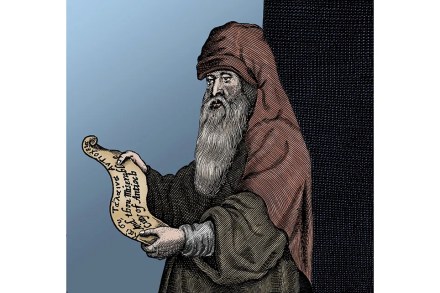
In 1831, while the slave rebel leader Nat Turner sat in jail awaiting trial in Southampton County, Virginia, he was visited by a local lawyer named Thomas Gray. Turner spoke at length to Gray, who subsequently published his record of their conversations. At one point Turner said he had been visited many years before by the spirit. “What do you mean by the spirit?” Gray asked. “The Spirit that spoke to the prophets in former days,” Turner replied. Gray was unmoved by Turner’s claims of divine inspiration and concluded that he was a “gloomy fanatic” moved to mass murder by religious delusions.

Turner
devil

Devil in the detail

When I was offered the chance to review two new books about the Devil, I thought, “what fun!” I wouldn’t describe myself as a particularly diabolical person, but as someone whose deep love of Paradise Lost has made me, as good old William Blake didn’t quite put it, “of the devil’s party while very much knowing it,” I rubbed my hands together in glee at the prospect of getting down and dirty with Old Nick. Not, you understand, that my purely literary interest can begin to compare to the “Satanic Panic” outbreak that gripped the imaginations of middle America in the late 1980s and 1990s. “Satanic cults! Every hour, every day, their ranks are growing!

culture

This month in culture: August 2024

The Instigators In theaters August 2, Apple TV+ August 9 Boston crime movies are back! Starring Matt Damon and Casey Affleck — and produced by Ben Affleck, of course — The Instigators is a heist comedy-thriller about a robbery that goes wrong, causing Damon’s therapist to get dragged along for the ride. Affleck/Damon productions have consistently been solid — from the ultimate Boston crime movie The Town to last year’s Jordan 1 sneaker-origin story Air — and this is directed by one of the best working action directors around, Doug Liman, who was responsible for The Bourne Identity, Mr. & Mrs. Smith, Edge of Tomorrow and (the underrated) American Made.

Anne Applebaum’s solutions to the ‘threat’ of autocracy

Liberal democracy is endangered more by its friends than by its enemies. Neither Moscow nor Beijing lured the United States into strategic humiliations in Iraq and Afghanistan. Nor was the rise of China to the rank of a great power brought about by Westerners sympathetic to Beijing’s communist system. If liberal parties and movements in the United States and Europe seem to be losing ground to populists, this is not thanks to Facebook ads purchased by Vladimir Putin in support of Donald Trump or Brexit. Liberals themselves sabotaged liberal democracy by prioritizing liberalism over democratic legitimacy for three decades after the Cold War — on fundamental issues ranging from trade and foreign policy to immigration and national values. Anne Applebaum’s latest book, Autocracy, Inc.

Applebaum
King

Stephen King’s You Like it Darker shows a master at his peak

It is not hyperbole to call Stephen King the most influential horror writer alive. Across page and screen alike, nobody else can claim to have had such an expansive and lasting impact on popular culture. King’s name has become so commonplace that it’s easy to take it and him for granted, and to forget that behind the ultrafamiliar and now-ubiquitous branding there lies, in fact, a wild and strikingly original mind and a beating, bloody, passionate heart. You Like It Darker, King’s latest offering, is a highly accomplished and masterful collection of twelve short (and not so short) stories, all blistering examples of King’s powers. Though some have seen the light of day elsewhere, most are published here for the first time. All are worth the purchase.

Murray

Is the hype for The Bee Sting justified?

On a recent visit to the bookshops of New York, I found all the usual suspects front and center. If you wanted David Grann, Amor Towles or Salman Rushdie, you had come to the right department; if your tastes veered more toward the Air Fryer Cookbook, that particular whim would be well catered for, too. But the single book I saw on most prominent display everywhere I visited was the new novel by the Irish author Paul Murray, The Bee Sting. A shop assistant in McNally Jackson professed herself an admirer of both writer and work. “I’ve never seen anything like it. We sell a dozen copies a day, sometimes more. It’s hit a chord with people in a way that other books just don’t.

Barry

Kevin Barry’s latest novel is bursting with energy, brutality and poetry

"He walked as calamity. He walked under Libra. He was living all this bullshit from the inside out. Oh, he scathed himself and harangued and to his own feet flung down fresh charges. But there were dreams of escape, too — one day you could ride south on a fine horse for the Monida Pass.” Well met by moonlight, Tom Rourke, doper and dreamer, formerly of County Cork, now a miner in Butte, Montana, in 1891. Welcome to yet another wild and whirling world made by Kevin Barry. Barry’s first collection of short stories, There Are Little Kingdoms, appeared in 2007; he was already celebrated in his native Ireland as a creator of darkly comic troubled characters compassionately drawn.

suburbia

Suburbia’s irredeemable reputation in the American canon

"My God, the suburbs!” John Cheever, the short-story writer who has rejoiced in the nickname “the American Chekhov,” had what can only be described as ambivalent feelings about the twentieth-century housing developments that grew up on the outskirts of major cities. He said of them that “they encircled the city’s boundaries like enemy territory and we thought of them as a loss of privacy, a cesspool of conformity, and a life of indescribable dreariness in some split-level village where the place name appeared in the New York Times only when some bored housewife blew off her head with a shotgun.” Cheever was not wholly consistent himself.

culture

This month in culture: July 2024

The Bear, season three Hulu, June 27 America loves a misanthropic, depressive chef. How else would we know the chef is a real artist? The Bear returns for its third season with the trailer promising lots of arguing, screw-ups, failures and everything else you’ve come to expect from the beloved show. We’re not sure why you would take a perfectly good beef-sandwich shop in Chicago and try to turn it into a Michelin-starred restaurant, but we hope Carmy and the gang give us some sort of good reason. — Zack Christenson Jeremy Allen White in The Bear Wimbledon ESPN and ABC, July 1 You know summer has arrived when the brilliant green grass of the All-England Lawn Tennis and Croquet Club lights up your screens.

Have you ever heard of the St. Brice’s Day Massacre?

The St. Brice’s Day Massacre? I must admit I hadn’t heard of this “most just extermination” of Danes in Oxford at the instigation of King Aethelred the Unready in 1002, perhaps because the teaching of history in Britain tends to kick off in 1066. You certainly don’t think of Oxford as a place that pioneered techniques of ethnic cleansing. Crypt is a collection of seven essays that unearth details about how certain people lived and died in the past. If you didn’t already know Alice Roberts’s background as an anatomist and biological anthropologist, you’d have a good chance of deducing it from this book.

Roberts

An incisive memoir of life in the cloisters

Bishop Fulton J. Sheen, the immaculately Brylcreemed megastar of the golden age of Catholic television and radio evangelism in the United States, famously hated hearing the confessions of nuns. Doing so, Sheen is reported to have said, was “like being stoned to death with popcorn.” Despite this, Sheen — at one point broadcasting to over 30 million Americans — found himself hearing a lot of nuns’ confessions in his later career. He was reduced to this, alongside what was rather euphemistically referred to as his “international cassette tape ministry,” having fallen foul of the archbishop of New York, the doughty Cardinal Spellman.

Cloistered
Scouts

A history of the LGBTQ+ aspects of the Boy Scout movement

Today, gay activism may seem synonymous with incompetent nonprofit employees shutting down traffic to demand you use ze/zir pronouns because made-up pronouns, and only made-up pronouns, will fix global warming. But once upon a time, gays understood strategy better than nearly any other special-interest group in America. They were the best in the game. Sarah Schulman’s masterful AIDS history, Let the Record Show: A Political History of ACT Up New York, 1987-1993, details how the HIV activist group ACT UP took a good-cop/bad-cop approach to fighting for life-saving medication.

Rushdie

Salman Rushdie’s memoir is a devastating and powerful account of near-death

In late summer 2022, at the Chautauqua Institute in upstate New York, the celebrated novelist Sir Salman Rushdie was stabbed many times as he was about to give a lecture, the subject of which, ironically, was keeping authors safe. The attack sent shockwaves throughout the literary establishment, and the world. It seemed as if civilization itself was under threat, as if our fundamental freedoms to create, associate and speak as we wish were defunct, reduced to the point of a knife. His new memoir, Knife, examines the attack and its implications for him, and for such freedoms generally.

Ayed

A skillful retelling of one of World War Two’s most dramatic stories

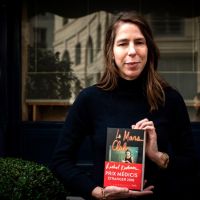
Around lunchtime on a late September day in 1944, a young woman stepped into one of the most fashionable cafés on the Champs-Élysées. Her eyes still scanned the room for threats, even though her war had been over for many months. Known variously as Suzanne, Madeleine, Blanche, Ginnette or Tony, she had “amassed names and personas just as other women of her years and beauty amassed admirers. And she had amassed those too” in the service of her country. Two such admirers now sat opposite her in the café, and she had to decide which one she was going to spend the rest of her life with, and which she would never see again. Such is the climax of the epic story of love and betrayal that Nahlah Ayed tells, using unpublished interviews and archival and personal documents.

Priest

Christopher Priest was a grievously underrated novelist

There really ought to be a word to describe the dispiriting realization that a great writer has slipped through our fingers without the culture at large ever quite appreciating what’s been lost. The novelist Christopher Priest, who died earlier this year of cancer at the age of eighty, was one such figure. It would be glib to describe him as the nearly-man of English fiction, for this wasn’t quite the case — instead his career represented a sequence of missed opportunities for the world beyond his chosen genre to recognize his skill and quiet profundity. In some ways, the early part of his publication history closely resembles that of J.G. Ballard without the mid-career renaissance Ballard enjoyed.

culture

This month in culture: June 2024

The Fall Guy In theaters now Ryan Gosling’s career is rather bizarre if you think about it, from drippy romcom protagonist in The Notebook to brooding car noir hero in Drive to laughable failure in The Nice Guys to musical star in La La Land and Barbie. Now he takes a stab at renewing his hardass ways in The Fall Guy, an adaptation of Lee Majors’s 1980s series which pairs him with Emily Blunt and is, in a way, an homage to the careers of “stars who do their own stunts” even if Gosling does not do so himself. There’s even a stunt show planned for Universal Studios’ Hollywood theme park based on the movie, prior to its release.

The problem with westerners seeking enlightenment in Asia

Call it a prejudice if you like. Living in Japan in the 1970s, I had a slight aversion to a particular type of westerner. He — for it was mostly a he — usually lived in Kyoto, sometimes wore a kimono and liked to sit in ancient temples chasing after that presumably blissful moment of enlightenment, awakening, satori, or whatever one wishes to call it. These seekers were less interested in Japan as a society of human beings. They wanted to float in higher spheres. As Christopher Harding explains in The Light of Asia, the Zen adepts, the Buddhist chanters, the rock-garden worshippers, the kimonoed fools (in my no doubt blinkered eyes) were part of a long western tradition.

Asia

Remembering the postmodern Paul Auster

In Salman Rushdie’s new memoir Knife, there is a powerful and moving moment — amid the many other powerful and moving moments — in which Rushdie visits his ailing friend Paul Auster at the latter’s house in Brooklyn and describes his sorrow at seeing him so reduced by illness. It may have been that the extent of the cancer that killed Auster had not been made public knowledge, although a statement was released about his condition, until Rushdie’s description of his encounter — and some might accuse him of indiscretion or indelicacy. Yet the news of Auster’s death, anticipated though it undoubtedly was, has meant that such questions recede almost immediately — and instead a consideration of his legacy as a writer, rather than an invalid, can begin.

paul auster