Book Reviews

Our reviews of the latest in literature

She’s leaving home: Breakdown, by Cathy Sweeney, reviewed

The narrator of Cathy Sweeney’s first novel has finally cracked. I say ‘finally’ because there have been signs: drinking alone; disliking her daughter, or at least her type; having an affair with her friend’s son; opening a separate bank account in her maiden name when her mother died. But in the beginning we don’t know any of this. We don’t know what she’s doing, and neither does she. It’s an ordinary Tuesday in November when she leaves her comfortable home in the suburbs of Dublin, which she shares with her husband and their two almost-adult children: ‘I grab my handbag and keys, let the front door shut behind me. I


Milton Friedman – economic visionary or scourge of the world?

The Keynesian economist Nicholas Kaldor called Milton Friedman one of the two most evil men of the 20th century. (Friedman was in distinguished company.) The ‘scourge’ he inflicted on the world was monetarism, a product of what Kaldor called Friedman’s Big Lie – of which more later. Moral judgments aside, how does Friedman rank in the world of 20th-century economists? By common consent, he stands with Friedrich Hayek and John Maynard Keynes at the apex of his profession. All wrestled with the defining problem of their age: the radical economic and political instability of the 1920s and 1930s. Their responses reflected their national situations. Keynes, economically secure and confident in

The travails of Britain’s first Labour government

Once the working classes were allowed to vote it was inevitable that sooner or later they would elect a government which reflected their interests. That moment came with the appointment, in January 1924, of the first Labour government.    The circumstances could hardly have been less auspicious. There had been three general elections in as many years. No party had an overall majority. Labour, with 191 seats, was not even the largest, with the result that, throughout its short life, the government was entirely dependent on the goodwill of the Liberals, which soon ran out. With a couple of junior exceptions during the wartime coalition, no Labour MP had any

From The Archives: Anne Applebaum

25 min listen

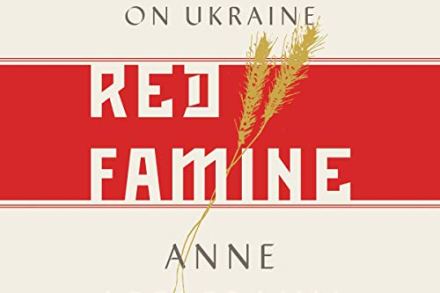
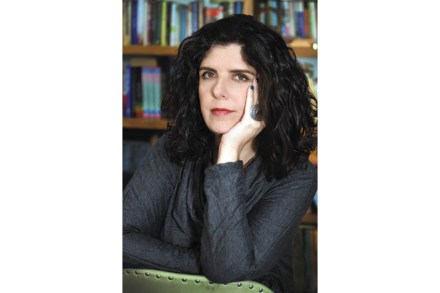
The Book Club is taking a brief Christmas break, so we have gone back through the archives to spotlight some of our favourite episodes. This week we are revisiting Sam’s conversation from 2017 with the Pulitzer Prize winning historian (and former Spectator deputy editor) Anne Applebaum about her devastating new book Red Famine. The early 1930s in Ukraine saw a famine that killed around five million people. But fierce arguments continue to this day over whether the ‘Holodomor’ was a natural disaster or a genocide perpetrated by Stalin against the people and culture of Ukraine. Sam asks Anne about what we now know of what actually happened — and what it means for

Septuagenarians behaving badly: Stockholm, by Noa Yedlin, reviewed

My grandmother wore a bikini long after she’d turned 60. As a teenager, I couldn’t think of anything more embarrassing than to be seen with her on the beach. When the day came, on an inescapable family holiday, I begged her to reconsider. ‘I’ve never understood why they say the body betrays you,’ she replied. ‘The body is simply doing what it’s supposed to. It’s the soul that refuses to do its part in the deal.’ I remembered this reading Stockholm, a delightful dark comedy by the Israeli author Noa Yedlin about four elderly people conspiring to conceal the sudden death of their friend, the renowned economist Avishai Har-Nof, so

Has Germany finally shaken off its dark past?

In 1982, a board game appeared in West Germany. If you landed on square B9 you were sent to a refugee camp in Hesse where you became ill from loneliness, unfamiliar food and not being allowed to work. Worse still, you had to miss a go and spend the free time thinking about ‘how you would feel in such a situation’. Even if, like me, your childhood was spent crying over lost games of Monopoly, nothing could quite prepare you for the cheerless experience of playing ‘Flight and Expulsion Across the World’. It’s unlikely an updated version has been commissioned for our home secretary, with players assigned counters representing the

How dangerous is the Sunni-Shia schism?

In 2014, with the Middle East convulsed by the murderous, self-styled Islamic State, a Daily Mail reader wrote a letter to the editor which began: ‘Are you confused by what is going on in the Middle East? Let me explain…’ Aubrey Bailey went on to describe the dizzying complexity of diplomatic relationships thrown into turmoil: So, some of our friends support our enemies and some of our enemies are our friends, and some of our enemies are fighting our other enemies, whom we don’t want to lose, but we don’t want our enemies who are fighting our enemies to win… And all this was started by us invading a country

What Shakespeare meant to the Bloomsbury Group

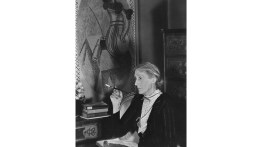
In November 1935, Virginia Woolf saw a production of Romeo and Juliet. She was not overly impressed. ‘Acting it,’ she wrote, ‘they spoil the poetry.’ Harsh words, you might think, for a cast that included John Gielgud, Laurence Olivier, Peggy Ashcroft, Edith Evans and Alec Guinness. But Shakespeare on the stage was something of a bête noire for the Bloomsbury group. ‘We, of course, only read Shakespeare,’ Clive Bell later said. The Shakespeare that mattered was the one on the page. Shakespeare on stage was a bête noire for the Bloomsberries. ‘We, of course, only read Shakespeare,’ said Clive Bell Who was that ‘we’, though? Marjorie Garber’s understanding of the

Why were masters of the occult respected but witches burnt?

It has long been acknowledged that alchemy, however bizarre its premises, is the fore-runner of modern chemistry, compelling a figure as rational as Sir Isaac Newton. Other aspects of Renaissance thought are harder to assimilate. In his study of five crucial figures of the 15th and 16th centuries, Anthony Grafton aims to demonstrate that astrology, angelology and conjuration were, if not central to the era’s world view, at least hard to extricate from its more respectable concerns. His first subject, Faust, is little more than a sideshow, but significant in establishing the magus as a not entirely respectable figure, from which ignominy Grafton seeks to rescue him. The four who

Must we live in perpetual fear of being named and shamed?

You should feel thoroughly ashamed of reading this infamous rag. Or else you might decide to revel, shamelessly, in its critics’ prim disapproval. From political squalls to global wars, David Keen argues that a ‘spiral of shame’ and shamelessness now traps individuals and societies in arid cycles of pain, rage and revenge. Manipulative actors – ‘advertisers, warmongers, terrorists, tyrants and charlatans’ – sell us ‘magical solutions’ to the anguish of the shame they themselves stoke. But they merely pass the burden to other groups, leaving us with more suffering. Keen writes: ‘Such actors do with shame what the Mafia does with fear.’ The author teaches conflict studies at the LSE.

Why are the Japanese so obsessed with the cute?

Joshua Paul Dale is a professor of American literature and culture at Chuo University in Tokyo and a pioneer in what is apparently a burgeoning academic field called ‘Cute Studies’ – or what Damon Runyon might have called ‘Pretty Cute’ Studies, as in ‘“Are You Kidding Me? You Study This?” Studies.’ In fairness, Dale makes a strong case for his subject to be taken seriously. Irresistible is packed with references to all sorts of neuroscientific studies and cultural studies and studies about theories of animal domestication and the evolution of ‘affiliative social behaviour’, which lead Dale to posit that cuteness is a ‘species-wide emotion’. Is it an emotion? I don’t

The freedom fighters who dared to take on a communist superpower

In May 2020, as the planet grappled with the pandemic, China’s state media declared that there were ‘obvious deficiencies’ in Hong Kong law enforcement needing to be addressed. Any delusions this might have referred to intensifying police brutality in response to massive pro-democracy protests, let alone the unleashing of Triad thugs to attack participants, were dashed rapidly. Details emerged days later of a draconian new security law that criminalised any form of dissent, whether at home or abroad, with threat of life imprisonment. ‘When the world is not watching, they are killing Hong Kong,’ said Dennis Kwok, a lawyer and pro-democracy legislator. He was right. This was the moment that

From The Archives: Robert Webb

26 min listen

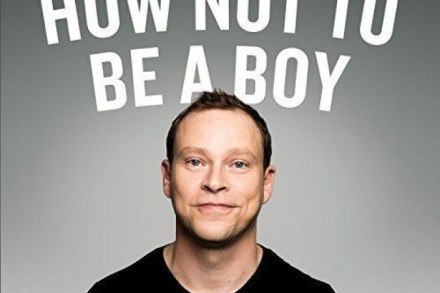
The Book Club is taking a brief Christmas break, so we have gone back through the archives to spotlight some of our favourite episodes. This week we are revisiting Sam’s conversation from 2017 with Robert Webb. His moving and funny book How Not To Be A Boy turns the material of a memoir into a heartfelt polemic about what he calls ‘The Trick’: the gender expectations that he identifies as causing many of the agonies of his adolescence and young manhood. What is it to be a man? Are we doomed to lives of inarticulacy, shagging, fighting and drinking — giving pain and fear their only outlet in anger?

From The Archives: Speeches that shape the world

28 min listen

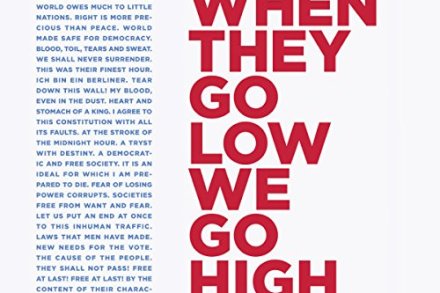
The Book Club is taking a brief Christmas break, so we have gone back through the archives to spotlight some of our favourite episodes. This week we are revisiting Sam’s conversation from 2017 with Philip Collins, former speech writer to Tony Blair, about his book When They Go Low, We Go High: Speeches That Shape The World and Why We Need Them. He takes Sam through the history of rhetoric, how Camus is the original centrist Dad, and why David Miliband’s victory speech is perhaps one of the best speeches never delivered. 

The bald truth about Patrick Stewart

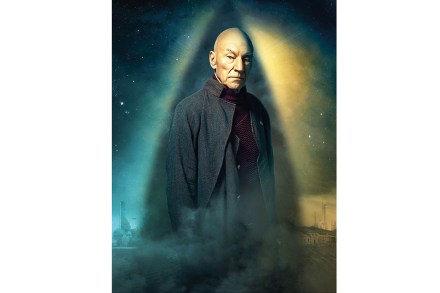
When you think that David Niven, James Mason, Ronnie Barker, Arthur Lowe and Powell and Pressburger among many others failed to receive state honours, you’ll concede that a knighthood was wasted on Patrick Stewart, even if for 12 years he was chancellor of Huddersfield University. I mean no disparagement by this. I’m happy for him. But why not Sir Timothy Spall or Sir Timothy West? Stewart, whose grandmother was Stan Laurel’s babysitter, is a middle-ranking mime with a gurgling bass-baritone. He is chiefly famous for the X-Men franchise and for playing Captain Jean-Luc Picard in 178 episodes of Star Trek: The Next Generation, plus the numerous feature film spin-offs in

Surprise package: Tackle!, by Jilly Cooper, reviewed

Jilly Cooper, queen of the British bonkbuster, has turned her attention to football for her 18th novel. She was inspired after sitting next to Sir Alex Ferguson at lunch one day. She also thanks Kenny Dalglish, Alan Curbishley and ‘my wonderful neighbour’ Tony Adams in her acknowledgements. Her friend, the former home secretary Michael Howard, even took her to a Liverpool match, where she met Steven Gerrard.  Her legions of fans need not worry, however. We are still in Rutshire, the village Cooper created for her earlier novels; Rupert Campbell-Black, the hero of Riders, Rivals and Mount!, who was allegedly partly modelled on Andrew Parker Bowles, still lives in Penscombe

The popularity of ‘Amazing Grace’ owes much to its melody

Type ‘Amazing Grace’ into YouTube and you can cancel any other plans you might have had for the day. Page after page serves up everything from Elvis Presley to Pavarotti, Gospel choirs and winsome Celtic lovelies, folkies in fabulous knitwear and X Factor finalists strenuously proclaiming their surgically enhanced faith; even an American president. There are arrangements for electric guitar, steelpan orchestra, bagpipes or (God help us) beginner flute ensemble. Saved from the storm, Newton was aware of ‘a sense of the amazing grace that snatched me from ruin’ All of which suggests that James Walvin’s Amazing Grace is a book landing in fertile soil. This is a song that’s

Alan Partridge has had more incarnations than Barbie

Alan Partridge is back, and this time he’s restoring a lighthouse. The third volume of the Norfolk microstar’s faux autobiography is a meticulous parody of the celebrity-in-search-of-a-televisable gimmick genre, blending fan-friendly, behind-the-scenes tales of his more recent public adventures (This Time, Scissored Isle, From the Oasthouse) with a classic midlife lurch for purpose, part Griff Rhys-Jones rescuing threatened buildings, part Clarkson’s Farm. Though Steve Coogan’s id-slaying monster started out as a media satire, Alan Partridge has become a vital national mirror in which middle-aged, middle English, middleweight, middlebrow man (let us call him Homo Partridgensis) can watch himself weather and crumble. The act of restoring a suitably phallic landmark on