Books

Ernest Hilbert weathers the storms of life and fatherhood

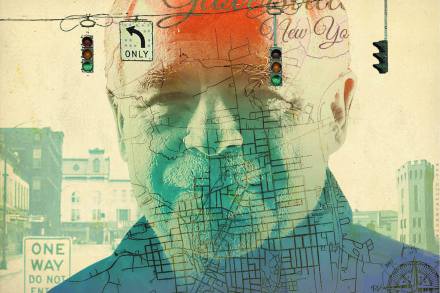
Storm Swimmer, Ernest Hilbert’s fifth collection of poems and winner of the 2022 Vassar Miller Prize in Poetry, is obsessed with bodies of water, especially the ocean. Even before the book begins, Hilbert declares this preoccupation through three sea-based epigraphs, running a wide gamut from Apollonius of Rhodes to Rachel Carson and Iris Murdoch. Over the forty-four formally various and adept poems that comprise this ninety-page, seven-section text, Hilbert engages repeatedly with different aspects of the oceanic to dazzling effect. Often he effects our encounter with the sea through the experiences of the swimmer, who almost always is a struggling figure. Sometimes — as in the case of the title poem — he must contend with the weather: “Without the sun the sea is tangled steel.

Hilbert
Winn memoriam

Forbidden love in the Great War

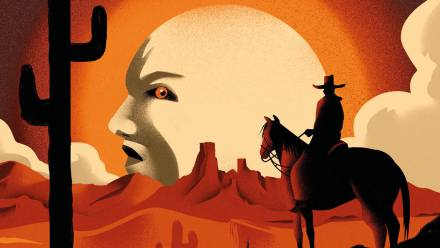
Alice Winn’s beautifully written and engrossing debut, In Memoriam, comes hot on the heels of Tom Crewe’s debut The New Life, which followed the tortured relationship between two men at the turn of the century, and was loosely based on the life of the scholar John Addington Symonds. Winn has turned her impressively attuned eye to World War One, and two young men who fall in love at their public school (old money, military and aristocratic connections, tailcoats and buggery), before heading off to the front; the flower of their generation, doomed to die as the mechanistic future tears apart chivalric ideals, and society starts to question its very nature.

The Windsors at War tells the rest of Edward VIII’s story

Alexander Larman’s The Crown in Crisis ended with the former Edward VIII, "now exiled to Europe, traveling away in the night." In his engrossing The Windsors at War, Larman relates what happened next. In some respects, the tale he tells can be read as a pitch-black comedy, something signaled by the dramatis personae that begins it. A "disgraced Yugoslavian prince" makes it into "Society — high" joining, among other grandees, a millionaire murder victim, and no fewer than three "playboys," one of whom was the millionaire’s suspected murderer. A "would-be royal assassin" fares less well, banished to "Society— low," along with the likes of a journalist (naturally) and an American engineer "unimpressed by the Duke and Duchess of Windsor.

windsors war

Shipwrecks, amputations and polar-bear attacks: the doomed voyage of the Karluk

The heroic age of polar exploration gave birth to epics as grand and as harsh as the landscapes in which they unfolded. And, as in all the best epics, their protagonists are often of interest not only for what they do, but also for who they are, or, in the case of the Arctic adventurer — “explorer” is too confining a word — Vilhjalmur Stefansson (1879-1962), who they pretend to be. Stefansson is the “villain” of Buddy Levy’s Empire of Ice and Stone: The Disastrous and Heroic Voyage of the Karluk, a tale that reads like an unusually grim, remarkably gripping Edwardian imperial yarn.

karluk
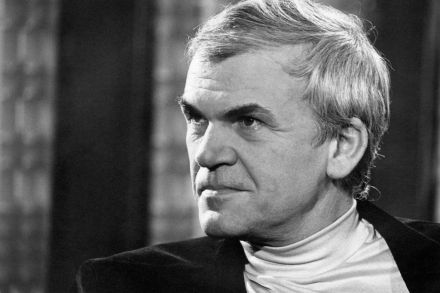
kurkov

Andrey Kurkov brings clarity to the Ukraine invasion

"War and books are incompatible,” decided Andrey Kurkov, one month into Putin’s war against Ukraine. Reading his Diary of an Invasion, it’s not hard to see why he thinks so. Homes are evacuated; air raid sirens go off day and night. You get shelled. There is a never-ending cascade of bad news: about friends, about war crimes, about the possibility of nuclear catastrophe. The loss of luxuries. No tonic water, no whiskey-and-soda. There isn’t much time to think. Kurkov’s book came to the attention of the West when it was published in the UK last September. Since then, it has emerged as one of the first serious works of literature to come out of Ukraine since the invasion.

The quiet rise of Outback Noir

No Australian woman has ever won the Booker Prize — and yet in the stylish genre called Outback Noir, women reign supreme. Of these, the queen is Jane Harper. Her 2016 debut, The Dry (successfully filmed with Eric Bana), marked the start of a new kind of detective fiction that has gained an international following. Some of this may be due to the way we love this version of Down Under. Forget about Sydney, Melbourne or Perth. Portraits of small societies where embattled individuals get swallowed up by the big bad bush, parched or flooded, give an apocalyptic, Mad Max edge to a distinctly Australian setting. Arthur W.

harper outback noir

Prince Andrew wants an American-penned memoir, too

Haven’t heard enough about how terrible life is with unimaginable wealth and privilege? Fear not, proles: Prince Andrew is reportedly in talks with American authors to write his memoir, because a world-class education can buy him some things, but words are hard.  The book is described by the Daily Mail’s sources as "Spare 2.0," after the controversial Prince Harry autobiography that came out in January. Cockburn wonders if the disgraced duke will spend as much time writing about his “todger” as his dear nephew did.  The Duke of York is hoping that the memoir will clear his name in light of the Jeffrey Epstein scandal — the last time he attempted that feat, it famously went well.

prince andrew memoir

DeSantis’s book reveals a serious guy — and a private one

Upon first read, it would be easy to conclude that Ron DeSantis’s new book, The Courage to Be Free: Florida’s Blueprint for America’s Survival, isn’t very revealing. After all, the list of topics Florida’s governor gave little or no attention to in his book is long. He says little about his parents, nothing at all about his early schooling, his church, his teachers, or others who influenced his thinking, nothing about his Italian heritage, his year as a teacher, or the 2015 death of his sister at age thirty, and many other personal issues.   Obama admitted using coke and other drugs in his memoir, Dreams from My Father.

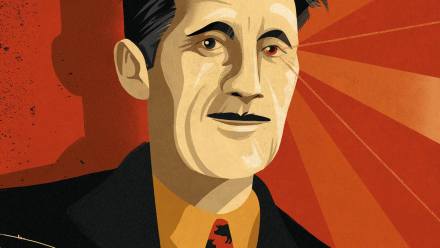
How America influenced George Orwell

Some of the most tantalizing pieces of George Orwell’s journalism are the reviews written on the hoof, filed against deadlines, sent straight to the typewriter while World War Two raged above his head. One of them is a round-up of four reprinted dystopian novels supplied to the weekly magazine Time and Tide in July 1940, shortly after the fall of France. (Today, it’s rarely reissued and barely available outside the stout bindings of volume XII of Orwell: The Complete Works.) The four books are Jack London’s The Iron Heel (1908), H.G. Wells’s When the Sleeper Wakes (1910), Aldous Huxley’s Brave New World (1932) and Ernest Bramah’s The Secret of the League (1907).

orwell

There’s more to Pamela Anderson than Playboy and sex tapes

Pamela Anderson cites Joseph Campbell’s The Hero with a Thousand Faces as the template for her memoir, Love, Pamela. The pop literary critic’s analysis of mythical heroes famously inspired George Lucas’s Star Wars. As Lucas deconstructs the heroes of western literature, Anderson dismantles the banal Madonna/whore template that has dominated tabloid coverage of her life. Unfortunately, Anderson supplants one boring motif with an even more tedious one: the archetype of the celebutante victim.

Pamela

Do James Bond’s would-be censors have a point?

James Bond may have battled the nefarious forces of SMERSH, SPECTRE and other international terror organizations, but surely he has never faced quite so implacable a foe as the sensitivity reader. Following in the footsteps of Roald Dahl, the wholesale revision of whose books led to international outrage, Ian Fleming’s Bond novels, which have been re-released to mark the seventieth anniversary of the first publication of Casino Royale, have undergone their own exercise in alteration. But is it an egregious travesty à la Dahl, or — whisper it — might someone have had an idea arising from nobler motives?

bond

The difficulties of writing historical fiction

I was dozing, a little hungover, on the morning flight from Prague to London, when I saw them for the first time. Ten men on a beach, dragging a landing craft up the sands. Where? Can’t tell yet. When? The fourteenth century. Who? Don’t know, but they look like trouble. I woke up. Through my AirPods I heard the Blur singer Damon Albarn growling the final song from their 1997 album Blur. “In these towns, the English army grinds their teeth into glass / You know you’ll get a kicking tonight...” I opened my laptop and started making notes. The men came surprisingly well-formed. They were soldiers of fortune in the Hundred Years’ War. They already had names. Faces. Talents. Foibles. Yearnings. Secrets. I wrote down as much as they could tell me before the plane landed.

historical fiction
ringmaster

Vince McMahon: the modern-day P.T. Barnum who changed America

Book reviews should be like Car & Driver: flip over the page to a concrete, plainly written piece — no writerly words or literary drivel — by someone who’s test-driven the book and punched up a nuts-and-bolts guide. The reader should get a look under the hood: polished steel and chrome cylinders. Does it hum? Vroom, we’re off the races. I say this because I’m reporting on a prototype I’m afraid of driving: an advance reader’s edition, uncorrected, not for sale or quotation. I can’t rev this baby for you, or even kick the tires, but here goes.

new life

Tom Crewe’s The New Life is sophisticated, intelligent and gripping

Tom Crewe’s highly accomplished debut novel, The New Life, concerns the suppression of sexual feelings, and how utopian visions can falter when they come up against cold hard reality. It begins with John Addington (closely, though not entirely, based on the nineteenth-century man of letters John Addington Symonds), fantasizing about a homosexual encounter in a London underground train. The carriage is crammed: a man is pressing his buttocks into John’s crotch; John’s excitement cannot be concealed; soon they are in the throes of passion, despite the crowds around them. It’s a claustrophobic, tense, almost nightmarish scene, executed with minute attention to detail.

colleen hoover

The enigmatic rise of Colleen Hoover

The world’s bestselling author is a forty-three-year-old mom you probably haven’t heard of. In fact, unless you’re an extremely online fiction reader between the ages of sixteen and twenty-four, Hoover is likely to be a bit of an unknown quantity. It’s hard to see how she can stay that way: with 1.1 million followers on TikTok — her fans call themselves her CoHort — Hoover is the platform’s most popular author. As a result of her #BookTok fame, “CoHo” is now the second most followed author on Goodreads; while most authors have a single book on the bestseller list, Hoover dominates with multiple books at a time. In late January this year, her books held three of the top five spots on the New York Times bestseller list.

Reading Roald Dahl in a dystopian world

It is a trope of dystopian literature that once-beloved works are censored beyond recognition by blank-faced apparatchiks, removing apparently subversive or dangerous content at the behest of the state. As ever in our brave new world, reality has come to imitate fantasy, with Roald Dahl the latest author to face that most implacable of nemeses: changing social attitudes. It has been revealed by the Daily Telegraph that Dahl’s books — published in the United States by Penguin Young Readers Group, and Puffin in the United Kingdom — have been quietly but systematically edited to make them more "acceptable" for a 2023 readership. These changes, of which there are hundreds across Dahl’s canon, fundamentally alter some of the most beloved children’s titles ever written.

Hoover damned

When J. Edgar Hoover died in May 1972 at seventy-seven, he had been director of the Federal Bureau of Investigation for forty-eight years, ever since progressive attorney general Harlan Fiske Stone had promoted the then-obscure twenty-nine-year-old Justice Department bureaucrat in 1924. With fewer than 400 agents, limited responsibilities, and a reputation badly tarnished under a corrupt previous attorney general, what was then called the Bureau of Investigation offered modest prospects. Still, the new boss set out to clean house, institute stringent hiring standards and impose a culture of science-based crime-fighting on his federal agents. One new hire in 1928 was Clyde A.

hoover
spare

The art of the royal memoir

By the time you read this piece, Prince Harry’s autobiography Spare will have been published in the United States. The question of whether it’s any good will be decided swiftly by the newspaper and online literary critics, but we in the monthly magazine trade have, alas, been denied the opportunity to see it before our publication deadlines. Under normal circumstances, this would bode very badly indeed. As with films that are not screened for critics beforehand — “because we want the audience to discover the magic for themselves” — books that have very tight publication schedules and are embargoed to the hilt are usually seen as flops-in-prospect.

iron curtain

From Russia with love

Most readers, myself included, are sick of “fan fiction,” depending as it does on hijacking classic literature for its own feebler energies, but Vesna Goldsworthy’s Iron Curtain is a shining exception. Having successfully recast The Great Gatsby as the exploits of a Russian oligarch in twenty-first century London (Gorsky), and imagined the afterlife of Anna Karenina’s son in postwar Britain (Monsieur Ka), her latest novel has as its model something far more sinister. Its narrator, Milena Urbanska, is the daughter of “the second most powerful man” in an unnamed Soviet satellite country, and a creature of privilege, “the only fully convertible global currency,” as she remarks.