Books

A diverting but unsurprising new history of the Astor clan

Mention “Astor” to most people and you immediately conjure up tales of fabulous wealth, the sort of Gilded Age beauty and excess expressed to perfection in the paintings of John Singer Sargent. The family name became synonymous at times with luxury and good taste, at others with greed, power and extreme snobbishness. The founder of the dynasty, John Jacob Astor, was a German immigrant and one-time fur trader who came to America in 1783 after the Revolutionary War. His descendants swiftly capitalized on his substantial achievements, creating a Manhattan property empire of unrivaled wealth. There was also plenty of Astor philanthropy and involvement in political and cultural life along the way but then, in the early twenty-first century, came a fall from grace as dramatic as the rise.

astor

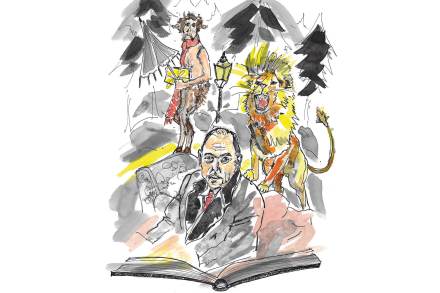
The roots of J.K. Rowling’s contrarianism

Like his creator J.K. Rowling, Harry Potter says unspeakable things. He teases his cousin Dudley, the prince of his aunt’s suburban kingdom. He calls the Dark Lord Voldemort by his name. He even speaks to snakes. In other words, if Potter were a real person, he’d likely write a Substack, present a podcast and empathize with his creator’s recent public controversies. You are probably familiar with Rowling’s protests against trans activists’ demands to use women’s restrooms.

Rowling
Lankford

How missing persons cases work in the wild

The Pacific Crest Trail is one of the world’s great long-distance hikes, running 2,650 miles from Mexico to the Canadian border. It's a chance to see some of North America’s most majestic scenery, encompassing desert and mountain, and millions of people visit parts of it each year, to hike or run. But only a very few ever walk the whole thing. Completing the entire trail — a “thru-hike” — takes five months. The challenge breeds a kind of camaraderie among hikers, who acquire “trail names” (the 2022 finishers included individuals known as “Sparkle Lizard,” “Milkshake” and “Squiggles”) and become part of a select group. Like its Eastern counterpart, the Appalachian Trail, it is a badge of honor for those who make it through.

Ryan

Maureen Ryan exposes the Hollywood horror show

In late July, the actor and director Kevin Spacey was acquitted of a range of sexual offenses against young men, some dating back the best part of two decades. Spacey’s acquittal was greeted with a mixture of relief by his admirers, who are now keen to see a great actor resume his career, and dismay by those who believe that Spacey, and others like him, are powerful figures who have not been held to sufficient account. It is salutary to look at the court case — and indeed the media frenzy surrounding it — and ask what it’s saying about contemporary Hollywood mores, which, in the post #MeToo climate, show few signs of becoming more socially acceptable.

faust

Drew Gilpin Faust, a rebel with a cause

In 1957, when Drew Gilpin Faust was nine years old and growing up in the Shenandoah Valley, she learned from the car radio that in Virginia, black children were forbidden by law from going to school with white children. Disturbed by this egregious instance of Jim Crow segregation, she sent a letter to the president. “Please Mr. Eisenhower,” she wrote, “please try and have schools and other things accept colored people.” Young Drew’s sense of what was and wasn’t fair lay at the heart of her childhood rebelliousness, as well as her battle, as a young woman coming of age in the 1960s, against unjust social hierarchies.

Taking a trip to Russoville

In Elsewhere, a coruscating memoir published in 2012, Richard Russo described his formative years as “an American childhood, as lived in the late Fifties, by a lower-middle class that barely seems to exist any more.” The setting for this slice of lost Eisenhower-era Americana was Gloversville in upstate New York, an East Coast leather town where the money had long since moved out and taken the locale’s animating spirit with it, to the point where the eighteen-year-old high-school graduate reckoned that “you could have strafed Main Street with an automatic weapon without endangering a soul.” The “Main Street” reference carries its own freight of associative cargo.

russo
Boyd

William Boyd’s latest novel is immense fun

William Boyd is perhaps best known for his novel Any Human Heart, which charts the adventures of Logan Mountstuart throughout the twentieth century. Mountstuart marries well, divorces, annoys the Duke of Windsor, is imprisoned, becomes an art dealer in America and has sundry diverting escapades. It’s a warm, impassioned and involving narrative, and Boyd winningly returns to a similar formula in his latest book, The Romantic. The prologue presents The Romantic as a fictionalized biography, reconstructed from notes and maps left behind by its subject. All biography, says Boyd, is by its nature fictional.

mirski

Visiting a forgotten chapter in American history

Nowadays few Americans could identify what the Monroe Doctrine signifies. Named for the fifth US president, the point of the 1823 policy had been succinctly stated fifteen years earlier by the third, Thomas Jefferson: “The object... must be to exclude all European influence from this hemisphere.” Sean Mirski terms the Doctrine “revolutionary” in his impressively erudite We May Dominate the World, an astonishingly comprehensive and stylishly written account of US foreign policy in the Western Hemisphere during the years 1860 to 1945. Calling the period a “missing chapter” in American history, he rightly asserts that “the story of the United States’s rise to regional hegemony has not received anywhere near the attention it deserves.

page

Elliot Page’s memoir is a tale of tragic self-destruction

In 2010, the twenty-three-year-old actress Ellen Page appeared on the British talk show Friday Night with Jonathan Ross. Plonking herself down on the guest couch, and noticing there was a lot of room left, she announced: “I’m petite.” The affable Ross seized on this new avenue of conversation. “Do people comment on your height when you first meet them?” “They often comment on how incredibly short I am.” “And is this something you welcome or would you rather they didn’t?” “Oh, it’s just fine. I’m used to being short. It’s been a part of my life. And it’s something that I’ve begun to accept.” Back then, Page came across as confident and resilient. But according to Page, this was an act, carefully constructed for her by homophobes.

Milan Kundera’s ‘transcendental buffoonery’

I was just leaving France when I got the news that that the Czech novelist Milan Kundera had died, aged ninety-four. He had emigrated to Paris in 1975, when he was forty-six, a refugee from the crackdown in Prague following the Russian obliteration of the Prague Spring in 1968. He died in his adopted city on July 11, full of honors but also, or so it seems to me, largely forgotten.  I had not been following Kundera’s work for many years. But there was a moment, in the 1980s, when he was the talk of the posh, intellectual literary town. I wrote a longish essay about him for the New Criterion in 1986. I draw on that work here.  Kundera was in his late thirties when he published his first novel, The Joke, in Prague in 1967.

milan kundera

The great late Yeats

The 1923 Nobel Prize in Literature was awarded to William Butler Yeats “for his always inspired poetry, which in a highly artistic form gives expression to the spirit of a whole nation.” Informed of the prize late on the night of November 14 by the editor of the Irish Times, the fifty-eight-year-old Yeats and his wife George sat up taking telephone calls and telegrams for a couple of hours. Then, according to Yeats’s sister Lily, the couple went down to the kitchen and cooked some sausages before going to bed. The next day, the Yeatses went out and began spending some of the check Yeats would receive in December.

yeats
Caroline

Lady Caroline Lamb and the frantic bed-hopping between the great houses of England

“Mad, bad and dangerous to know.” That’s the line Lady Caroline Lamb (1785-1828) is known for — her brilliant, pithy verdict on her lover Lord Byron. Her other great claim to fame — her marriage to Viscount Melbourne, twice prime minister — was marginal from a historical point of view: she died, aged only forty-two, her health shattered by drink and laudanum, before Melbourne became PM; before he became Lord Melbourne, in fact — he succeeded to the title after her death. But, still, as Lady Antonia Fraser reveals in her gripping biography, Lady Caroline Lamb: A Free Spirit, she was a remarkable woman, possessed of exceptional charm, as was Byron.

Moore

Lorrie Moore explores the thin veil between life and death

Very few of us could evade accusations of pretension if we quoted Faulkner in everyday conversation. The characters conjured up in Lorrie Moore’s fiction are granted an exception, though not always solely by virtue of their earnestness. In her novel I Am Homeless If This Is Not My Home, which traces a journey toward a final burial in the American South, allusion to As I Lay Dying is particularly apt. Moore has made a name for herself as one of America’s masters of the short story, with her inimitable style on display ever since her first work of fiction, “Raspberries,” was published in 1977. In this, her first novel for fourteen years, she once again wields her wordplay playfully and powerfully, striking a balance between levity and gravity.

ciano

The troubled relationship between Mussolini and his son-in-law

Like those of his wartime ally Joseph Goebbels, the diaries of the Italian fascist foreign minister Count Galeazzo Ciano (1903-44) have proved a mainstay of academic research into the frequently banal inner workings of the Axis dictatorships. Both men were entirely aware of their journals’ historical and commercial value. In 1937, Goebbels struck a lucrative deal with Max Amman, the Nazi Party publisher, for the release of his warped musings on race and politics twenty years after his death, which in the event came sooner than he might have imagined. Ciano in turn used his diaries to barter unsuccessfully for his life when arrested on charges of treason.

war

Men at War examines homosexuality among World War Two soldiers

As a little boy, Luke Turner, like so many other little boys, was fascinated by World War Two. He used to spend hours carefully making Airfix models of warplanes, and his favorite haunt was the Royal Air Force Museum in Hendon, a suburb of North London. Men at War, his second book, is an attempt to explore and explain both this interest and his own sexuality (he is bisexual, with a female partner), in response to what he sees as the dominant, jingoistic attitude propagated via general British cultural discourse. He claims that we do not see those who fought as individuals, but as clipped, heroic avatars, like Captain Sir Tom Moore, who raised millions of pounds for NHS charities during the lockdowns: dignified, silent, brave.

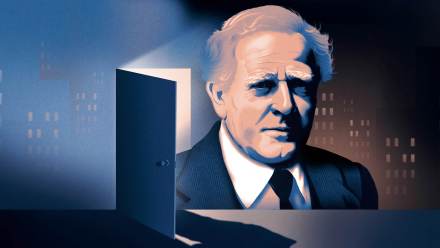
The afterlife of Christopher Hitchens

In 2011, a terminally ill Christopher Hitchens faced death with droll stoicism: “To the dumb question ‘Why me?’ the cosmos barely bothers to return the reply: ‘Why not?’” he wrote. As his health declined and the end drew nearer, the skeptical Hitchens stuck to his atheist guns, clear-eyed in his confidence that death was final. Hitchens died in 2011, but his work and reputation live on. No paradox there, of course, but just how large Hitchens looms twelve years after his death would surely have surprised even this immodest author. It’s certainly a surprise to me, a reformed Hitchens fanboy. The face of twenty-first-century atheism is having quite the afterlife.

Hitchens
Halliburton

The dauntless spirit of Richard Halliburton

A sailor; a conqueror of the most treacherous mountain peaks; a man who wades defiantly under the stars of the Far East sky; a dashing writer who pursues his mark as a hunter on safari; an explorer who rides elephants through the Alps. This is not a collection of young men, newly emancipated by the end of the Great War and a new era of global empires. It is the nearly improbable life of one man, Richard Halliburton, whose swashbuckling existence was inspired by everyone from Daniel Defoe and Rupert Brooke to Odysseus. Halliburton was the self-proclaimed protagonist of his own heroic epic. He decided in the days before his graduation from Princeton in spring 1921 that he would forgo a life of tedious expectations and “let those who wish have their respectability.