Books

Think autofiction is easy? Think again

"No, Lisa." As rejection letters go, it was admirably concise. I’d made an attempt at “autofiction,” that amorphous genre which inhabits the space between autobiography and fiction, and this was the entirety of my editors’ response. Any writer who has been at it for any length of time will have received Dear Johns from publishers, but is two words a record? It was something to cling to, at least, during the five further years it took for the book to find a home. Eventually, a French house took it, and Les Femmes de mes amants staggered unobtrusively into print in June this year. Obviously, I should have set my sights on Paris from the first.

autofiction
Oates

Joyce Carol Oates, a woman for all seasons

Midway through my conversation with the eighty-four-year-old Joyce Carol Oates, one of the most prolific writers America has ever seen (fifty-eight novels, plus plays and children’s books), and now one of its more unpredictable tweeters, with over 226,000 followers, I ask what it’s like being having been one of the country’s “major” literary figures for so long. Oates’s classic 1966 short story “Where Are You Going, Where Have You Been?” about the kidnap and possible murder of a sixteen-year-old girl, and her 1992 Pulitzer-nominated novella Black Water demonstrate her grasp on the dark side of the twentieth-century American psyche.

Debunking the grievance industry in our schools

City Journal last month released a survey that asked eighteen-to-twenty-year-olds whether they had been taught six concepts related to critical race theory. These included: “America is a systemically racist country,” “White people have white privilege,” “White people have unconscious biases that negatively affect non-white people," “America is built on stolen land,” “America is a patriarchal society,” and “Gender is an identity choice.” Each of these was answered in the affirmative by a majority of participants, of whom more than 80 percent attended public schools. That’s curious given that public educators and their defenders in corporate media have been claiming for years that CRT is not taught in schools.

Inside Joan Didion’s extravagant estate auction

On December 23, 2021, I left the Hollywood Roosevelt and walked down North Orange Drive to turn right and face Sunset Boulevard. It was dark when I passed the entrance to the Chateau Marmont. When I finally crossed the street to arrive at Book Soup, the “Bookseller To The Great & Infamous,” I turned to the cashier and asked if they had copies of Play It As It Lays by Joan Didion. He huffed, “Uh, yeah, we’re sold out.” Joan Didion had died earlier that day in Manhattan due to complications of Parkinson’s Disease.

joan didion

Warning: this book may make you like Bono

There is a famous (and, I fear, apocryphal) story about Bono at his most messianic at a U2 gig in the early part of this century. Pausing between songs, he clicked his fingers meaningfully. After doing this a few times, he said, with utmost gravity, “Every time I do this, a child in Africa dies of starvation.” Most of the audience nodded in sympathy, but one man in the front row had a better response. “Well stop fucking doing it then!” Bono’s response was not recorded, but the finger-clicking soon disappeared from his repertoire of stadium show gimmicks. It is reasonably easy to see why Bono — and, by extension, U2 — are so reviled.

bono

Publishing staff demand axing of Amy Coney Barrett book

Cockburn would like to issue a preemptive apology to those who thought being extraordinarily accomplished was enough to justify a lucrative book deal. Apparently an author's manuscript should be sent to the shredder if he or she holds an unorthodox opinion on hot-button political issues. That's the case made by the coffee-fetchers and typo-catchers in the publishing industry who signed an open letter denouncing Supreme Court Justice Amy Barrett's upcoming book with Penguin Random House. The group of "concerned publishing professionals" claim that paying Coney Barrett a $2 million advance to outline her judicial philosophy constitutes an international human rights violation. No, seriously.

amy coney barrett
prince harry memoir spare

Prince on pre-order: Harry’s memoir release date announced

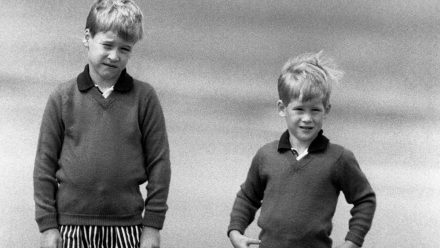
Cockburn has a few vacations coming up in 2023, so is on the hunt for some new light reading material. Thank God that Prince Harry has announced that his long-awaited memoir, Spare, will hit shelves globally on January 10. The cover features a close-up of the man fifth in line to the British throne, staring down the barrel of the camera, blue eyes glinting, beard tidily trimmed. His expression says, "this is my story." Publisher Penguin Random House said in a press release: “Spare takes readers immediately back to one of the most searing images of the twentieth century: two young boys, two princes, walking behind their mother's coffin as the world watched in sorrow — and horror.

The prodigal daughter

In April 1930, the nineteen-year-old Edda Mussolini married Count Galeazzo Ciano, aged twenty-seven, after a brief courtship in which love appears to have played little part. Her father, Il Duce, wanted the magnificent occasion to be not merely the wedding of the century but a grand, almost royal, demonstration of fascist might and a celebration of fecundity. Edda, his beloved firstborn, was to stand for everything that was best about fascist womanhood, while the groom was to carve out the path of “the new Italian man.” These were the glory years, and thousands of schoolchildren sent poems and cards with angels in advance of the occasion, which the Papal Nuncio attended with a present from the Pope.

mussolini
carey

The bookish life of John Carey

One of the most revealing moments in Sunday Best — a collection of book reviews dating back to the late 1980s — comes when John Carey, invited to appraise some items about Robert Graves, remembers hobnobbing with the author of I, Claudius half a century ago in Oxford’s High Street. Instantly, two of Carey’s signature marks — his love of literature and his eye for personality — come crashing together. Graves, then in his late seventies, tall, craggy and mage-like, is still a “commanding sight.” The drawback is his conversation: from the great poet’s lips, “in disconcertingly loud, upper-class tones, issued a bizarre stream of superstition and bogus history.

wild problems

Living one’s best life

In our era of Twitter hot takes and Medium listicles promising to make you millions, I have a soft spot for life-wisdom books, meditations of the old school that you can spend quality time with even when the ideas presented in them are timeless. I’ve read with pleasure the popular life guidance books of the past decades, from The Happiness Hypothesis or Letters to a Young Contrarian to Zena Hitz’s quietly transformative Lost in Thought, and I felt a renewed connection with the ancient questions of existence in a modern retelling. It should be the habit of all widely read thinkers, whether coming from STEM, the humanities or the social sciences, to sit down and write an accessible recap for all of us of what they have found out.

acaster

A comedian explains how to quit social media

James Acaster’s Guide to Quitting Social Media presents itself as a “how-to” or “self-help” manual. But it's actually a 272-page stand-up comedy special. It’s no surprise that a stand-up comedian would write a comedy book — indeed, this is Acaster’s third trip to the literary well — but it’s nevertheless striking how fully the Kettering-born joker commits to the routine this go-round. His new Guide to Quitting Social Media reads like it was meant to be performed on stage. It’s a return to the signature style Acaster became known for following his breakout special Repertoire in 2018. The Netflix collection was filmed in one week and features four distinct, one-hour comedy routines that build upon and call back to each other.

Exposing the logical fallacies of Critical Race Theory

In a late September article for the Washington Post magazine, staff writer DeNeen L. Brown declared that she has “decided to eventually leave America.” Though when or where she will go she “can’t say for sure,” she is “finally ready.” “I want to engage in intellectual debates without having to explain the history of this country’s racism,” she writes. "I want to live in a country where racism is not a constant threat.” There are other things about America that frustrate Brown. It's a country that “seem[s] to be increasingly dangerous for Black people” — an observation that is, in fact, true, though, as data indisputably demonstrates, this stems far more from black-on-black crime than it does from a supposedly “white supremacist” regime.

Literary journal in flames after interview with Spectator writer

All is not well at the literary journal Hobart Pulp, Cockburn has learned — and it's all down to one of our mischievous Spectator contributors. His words have caused violence, apparently, as nearly the entire staff of the journal have resigned in protest. Last month, Alex Perez sat down with Hobart Pulp's top editor, Elizabeth Ellen, to discuss the state of the literary and publishing scene — ranging from MFAs to woke writers to how he got his start in writing. Perez, a Latino writer who graduated from the prestigious Iowa Writers Workshop, had some choice words about the cowardice of writers and editors today. The interview, originally posted to the Hobart Pulp website last month, didn't make much of a stir until this week, when its editors and contributors began to take notice.

university alex perez hobart pulp

Alan Rickman and the misery of being famous

Perhaps the defining moment of the posthumous collection of diary excerpts from the late actor and director Alan Rickman comes around two thirds of the way in. Rickman has recently played the villainous role of Judge Turpin in Tim Burton’s Sweeney Todd, an undertaking he describes with what readers will have come to recognize as his signature combination of angst and actorly obsession ("I can only sense the crumbs, dandruff, dirt under the nails.") At last, the film is finished, and is premiering in London. Rickman’s general mien of detachment ("there is a deep introspection during these days…a feeling of being marginalized by shallow minds") is temporarily interrupted by an impertinent journalist, who asks him at the premiere, "If you were a pie, which flavor would you be?

Free expression after the Rushdie attack

In an interview with Stern magazine at the end of July, Sir Salman Rushdie was asked about the current circumstances of his life. Given that this is a question that he has faced since 1989, Rushdie might have been expected to respond with boredom, even irritation — as, understandably, he has done in other public conversations, when the subject of the fatwa that he has been under for nearly three and a half decades has been raised by an inquisitive or prurient journalist — but he responded with reasonably good cheer. Describing his everyday existence as “very normal,” he even ventured a light-hearted remark, saying, “A fatwa is a serious thing. Luckily we didn’t have the internet back then. The Iranians had to send the fatwa to the mosques by fax.

Rushdie
birds

Exploring the decline of Britain’s birds

You can forgive those Brits who forget they live on an island. Motorways, next-day delivery and WiFi all distance residents of the United Kingdom from the physical margins of their country, but the limitations of geography are at the heart of a rhapsodic book that traces the astonishing declines of the British Isles’ native birds. In Search of One Last Song is the debut book by Patrick Galbraith, the editor of Shooting Times, the UK’s largest-circulation hunting and shooting publication. This earthy travelogue transports readers to foggy moors and wind-blasted coastlines and gentle fields across Great Britain as Galbraith pursues leads of flocks in utter trouble.

God

Has the American novel abandoned God?

I have always thought “Call me Ishmael” to be a rather camp introduction to a novel. Given the line’s conspiratorial intimacy, I have long imagined it whispered by a drag queen in a dive bar at 3 a.m. This, however, is the fault of my own unseriousness. The resonance of the name Ishmael — Abraham’s illegitimate son by Hagar who is destined to wander the desert — remains the opening example of one of the clearest, cleverest and most consistent of themes in Herman Melville’s magnum opus Moby-Dick, namely, the quest for God. Religion runs through Moby-Dick. We might almost say that the Bible haunts it. There are the names, mostly of Biblical characters, and even the direct invocation of prophets: Ezekiel, Elijah and, of course, the ur-whale wrestler, Jonah.

Osipov

The Soviets brought far from home

"It’s best not to talk politics with patients, but if a woman has an unusual mitral valve, it’s tempting to think that she herself must be interesting,” sighs the Russian doctor, essayist and short-story writer Maxim Osipov towards the end of his 2017 essay “The Children of Dzhankoy.” The temptation does not, alas, live up to expectations for Osipov. His mitral valve patient is “a thirty-six-year-old journalist and amateur pilot who misses the USSR.” “Now, that was strength” she claims. Osipov, with typical economy, comments, “nothing interesting.