Books

A look into Billie Holiday’s final year

If ever a singer were difficult to pin down, it was Billie Holiday (1915-59), whose harrowing life story was first told in an unreliable memoir published just three years before her death. With Lady Sings the Blues, the jazz legend known for her emotional honesty not only allowed herself to be misrepresented (after all, she wasn’t even a blues singer), but actively participated in fabricating the fake stories which proliferated through the book. Some of these — such as a misstatement of her place of birth — are still repeated to this day. Two decades after the publication of Lady Sings the Blues a steady stream of more accurate biographies began to appear.

Holiday
butler

Who’s afraid of Judith Butler?

Gay icon Judy Garland. Folk queen Judy Collins. Now, we have the lesbian saint Judith Butler (as of 2020, they/them saint Judith Butler.) Once resigned to recognition on college campuses for their unreadable 1990 tome Gender Trouble, which posited that gender is a performance, the queer theorist and Berkeley professor took off as a mainstream hero in the past decade. Tumblr kids reposted quotes from their lengthy, poorly written academic work. New York magazine declared Butler a “pop celebrity.” In March, Farrar, Straus and Giroux published Butler’s first commercial book, Who’s Afraid of Gender? Its prolonged roll-out aims to credit Butler for “birthing” the nonbinary and trans identities of the twenty-first century. It’s as much a publicity stunt as a book.

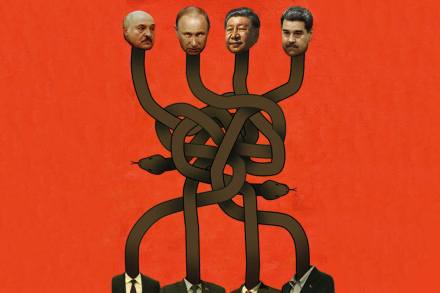
Who’s really behind the Biden administration’s foreign policy?

If you’re one of the many people worried that US foreign policy is in the hands of a visibly declining eighty-one year-old president, Alexander Ward’s account of the Biden administration’s first two years in office may — or may not — make you feel better, for he leaves readers with little doubt as to who is actually the executive branch’s most influential decision-maker: forty-seven year-old national security advisor Jake Sullivan. Ward might deny any such authorial intent, but time and again he shows his hand, as when he invokes “Sullivan’s first two years at the helm alongside Biden.

biden ward
rutland

War hero, bon viveur, Japanese spy: Frederick Rutland wore many masks

It is early in the morning on the “day of infamy,” Sunday, December 7, 1941. Two hundred and fifty miles north of Hawaii, six Japanese aircraft carriers are preparing to launch more than 350 aircraft in a surprise attack on the United States Pacific Fleet at Pearl Harbor. The fleet’s commander-in-chief, Admiral Husband E. Kimmel, had told a reporter the day before that the Japanese would be “damned fools” to attack the United States, ignoring the warnings that war was imminent. Around 7:30 a.m., the lead Japanese pilot fires a single flare, giving the pilots the “final go” signal. “Within an hour... the US Pacific Fleet was in ruins.” The American public, writes espionage historian Ronald Drabkin in Beverly Hills Spy, quite rightly demanded: “Whose fault was it?

chidren's

The frustrating rise of celebrities ‘writing’ children’s books

When you are next visiting a bookstore, and find your way to the children’s section, you might be forgiven for thinking that there is no longer such a thing as a children’s author. Instead, you will be ambushed by piles of books blazoned with the names of actors, singers, comedians, DJs and people who generously exhibit themselves on social media. “Writing” a children’s book has become another string to the celebrity bow. Imagine the scene. You’ve married a prince, and opened a shop that sells vaginal eggs. What more is there to do? A-ha, thinks the celebrity, perhaps while she is sitting on a bench. All those untutored minds, eager for moi! My personal brand will bring them such joy, such self-worth! They will all feel seen!

Cavendish

The wit and wisdom of Margaret Cavendish

Margaret Cavendish, Duchess of Newcastle, who died aged fifty in 1673, was a divisive character whose life spanned one of the most fraught periods of English history. To some contemporaries, she was one of the wonders of the age, while others considered her one of the silliest writers ever to have taken up a pen. In her last two decades, Cavendish published over a dozen works of drama, philosophy and poetry, including what some consider her masterpiece, The Blazing World. Posterity has seen her obscured and dismissed, the fame she admitted craving granted only in 1929, when Virginia Woolf described Cavendish in A Room of One’s Own as “a giant cucumber” who “frittered her time away, scribbling nonsense and plunging ever deeper into obscurity.

zwick

Edward Zwick on his hits — and his misses

It is both disappointing and unsurprising that A-list filmmakers don’t use social media more often. Disappointing, because the opportunity to share candid insights into their craft would be of enormous interest to those who have watched, and often loved, their films; unsurprising, because the vast majority of these men and women wish to make more pictures in the future, and know that the chances of excommunication for excessive candor do not justify entertaining the curious and prurient with some well-chosen putdowns of actors, producers and other creatures of ego.

Dune, an enduring monument to cultural appropriation

One of the Ukraine war’s minor celebrities is Ramzan Kadyrov, a Russian politician and Islamic hardliner who rules his native province of Chechnya as a personal fiefdom. Kadyrov and his combative underlings have been active on social media from the beginning of the conflict, posing with guns and trophies and boasting about their martial prowess.  Before they became villains in the Western press, tarred by their association with Russian aggression and Islamic fundamentalism, the Chechnyan mountain clans’ struggle for independence was a Victorian cause celebre, akin to Western support for Ukraine today.

dune

What Really Happens in Vegas doesn’t tell you what really happens in Vegas

Many magicians have passed through Las Vegas since its inception somewhere around the early 1940s: David Copperfield, Penn and Teller, Criss Angel. But possibly its most renowned, yet least acclaimed, trickster was a woman named Gloria Dea.   Dea performed traditional magic — the sleight of hand stuff — but she had a specialty in billiard ball manipulation, tossing the balls so that they seem to multiply and then disappear. A prodigy, you could say — and one of the first magicians, let alone a female one, to set foot on the Strip. In 1941, Dea, who was born Gloria Metzner in Oakland, California, appeared at the Round-Up Room at the El Rancho Vegas. She was not yet twenty years old. Dea lasted a year before Hollywood recruited her into D-movies.

seal patterson vegas

Pat Yale follows her hero across Turkey

Green-eyed Gertrude Bell belongs in Charles Doughty’s Travels in Arabia Deserta, that slab of velvety antique that enthralled the English (they were not yet British) in the love-affair phase of their relationship with the Arabs. County Durham-born to a wealthy industrialist father, Bell (1868-1926) was a key player when the Powers tried ineptly to mould the Middle East, as the Ottoman Empire crumbled. She is well covered in the literature and appears in a large hat alongside Churchill in conference photographs. But as Pat Yale announces in this new book: “Her time in Turkey has been largely overlooked.” Bell traveled extensively in that country before the first world war (starting in 1899) and in its aftermath.

Yale

Woody Allen pens new short story for the New Criterion

Manhattan-based literary magazine the New Criterion has published its first ever piece of fiction in its forty-two-year history. The author may raise an eyebrow: it’s legendary and controversial filmmaker Woody Allen. Allen has penned the short story “Breakfast Special” for the magazine's February 2024 edition. Appropriately enough, for both the magazine and the author, it takes place in Manhattan and stars Murray Tempkin, "a slim, bespectacled thirty-year-old writer, who on a good hair day resembles a scientist or an intellectual but should the weather turn humid looks more like some kind of meshuggener." The tale, which centers on a meetcute gone very, very wrong, bears all of Allen's hallmarks: neuroses, humor, romance, social awkwardness.

woody allen

The notorious feud between John Ruskin and James Whistler

It was too dark to see, and the painting was upside down. In 1877 John Ruskin, the leading art critic of Victorian England, attended an exhibition that included paintings by the American-born artist James Abbott McNeill Whistler. He hated them — and said so. In print. “I have seen, and heard, much of Cockney impudence before now; but never expected to hear a coxcomb ask two hundred guineas for flinging a pot of paint in the public’s face.” Whistler sued. The following year the argument came to court, on a dark day in a gloomy and gaslit courtroom. The canvases that Ruskin had so disliked were propped up against a wall and barely visible; one was the wrong way up, and another was dropped unceremoniously onto an elderly gentleman’s balding head.

ruskin
gissing

In praise of George Gissing, the born exile

George Gissing died just over 120 years ago, marooned in the French Atlantic resort of Saint-Jean-Pied-de-Port and in circumstances that might have been plundered wholesale from one of his notoriously ground-down novels. H.G. Wells, present at the scene, was so affected by his friend’s deathbed ravings that he transferred them word for word into the mouth of Uncle Ponderevo as he lies dying in Tono-Bungay (1909). There are Orwellian shadings: like Gissing, Orwell died at forty-six of lung disease, and was profoundly influenced by his Victorian forebear. It was Anthony Powell who remarked of Orwell’s third novel, Keep the Aspidistra Flying (1936) that “the Gissing had to stop.

spufford

Cahokia Jazz is enormous fun

If you are a male, middle-aged, middle-class novelist, do not despair of being deemed unpublishable in our era of identity politics. On both sides of the Atlantic, the smartest chaps have turned away from the interiority of literary fiction. From Colson Whitehead and Marlon James to Mick Herron and Charles Cumming, they now write detective fiction, speculative fantasy, or a combination of the two. Francis Spufford, the award-winning author of best-selling novels such as Golden Hill, has come up with a zinger. Cahokia Jazz is set in a 1920s city in a counterfactual America. Here, the native Americans were not fatally weakened by a deadly strain of smallpox, but experienced the milder version which has just a 1 percent mortality rate and confers immunity.

death

The peculiar American attitude toward death

Dying sensibly has always eluded Americans — from Elvis to Houdini — and that’s before you even get to the funeral part. In fact, in America, something peculiar has occurred over the last century. Traditional obsequies have fallen out of favor as Americans increasingly opt for “anything but” the conventional when it comes to final resting places: that is, no more six feet under. According to the National Funeral Directors Association (NFDA), the majority of Americans now choose cremation, with the rate expected to surpass 80 percent by 2045. Ecofriendly departures — think hemp coffins or ashes strewn over a living coral reef — are also becoming more popular; 60 percent of respondents to one recent survey expressed an interest in “green funeral options.

Books to look forward to in 2024

Ah, welcome back. In our previous look at some of the major books of the year, I highlighted titles that went on to be acclaimed bestsellers and the most talked-about volumes of the past twelve months, as well — inevitably — as a few that failed to live up to the high expectations that we’d placed upon them. It is interesting that, just as Prince Harry’s Spare was indeed the most discussed book of last year, another hotly tipped memoir is undoubtedly the major release of 2024.

The marvelous Montalbano

I visited Sicily in May 2005, when the airlines were still requiring all checked luggage to be left unlocked. After the flight from Paris touched down at Palermo, my wife and I went to collect our luggage at an apparently quiet and unrushed airport to discover my suitcase opened partway and an expensive dressing gown missing. Eighteen years ago, il Commissario Salvatore Montalbano was quite unknown to me. Otherwise, I should have immediately thought of the Sinagra family at the eastern end of the island, though the word “mafia” did come to mind as I rezipped the bag.

Montalbano
callas

The heart of Maria Callas’s genius

For much of the last century, a young woman’s concept of artistic vocation was forged by the ballet. The dream of being fêted for a body that was drilled, starved and exercised into a perfect instrument was preeminent — until Maria Callas came along. Daisy Goodwin’s fourth novel, Diva, is based on the life of Callas, whose affair with the other most famous Greek in the world, Aristotle Onassis, made her a worldwide celebrity. Her glamour and genius made her a superstar, but her life was crosshatched with tragedy. A singer’s voice, as her teacher told her, is like an amphora filled with golden coins: each time she sings, she is giving one gold coin away. Singing too much, too young, hastens destitution.