Arts Reviews

The good, bad and ugly in arts and exhbitions

Inspired and not-so-inspired

Reinhard Keiser is not a name that triggers many associations in most opera lovers’ minds, even the most frenzied devotees of the Baroque. He was a big figure in his time, though, and there have been odd recordings of his works, so he ranks with Traetta and Cimarosa from later in the 18th century as someone to arouse curiosity. With each of these composers, as with many others, I have had the experience of turning on the radio and hearing a stretch of their works without knowing what the music was, and finding I had to listen to the end because what I was hearing was impressive enough for me

A Buddhist bows out

One of the most gilded careers in our post-war musical life ends next week when Robert Tear sings in public for the last time. At least he thinks it will be the last time. ‘There’s nothing in the diary,’ he says. ‘But I’m not disappointed. After 50 years it is wonderful to be relieved of fear. It has made me believe that life could have been like this for ever!’ Tear is singing the Blind Judge in a concert performance of Erich Korngold’s little-known 1927 opera, Das Wunder der Heliane, at the Royal Festival Hall, and he is clearly enjoying the discovery. ‘Korngold came at the end of a generation,

Pistols pack a punch

‘Anyone in the building under 40?’ asks Johnny Rotten. Yes, I am (just): and, by the looks of things, about 20 others among 3,000-odd punters at the Brixton Academy, come to see the Sex Pistols in their middle-aged prime. Punk isn’t dead. It just drives a people-carrier these days. But age cannot wither these amazing 30-year old songs. The set opens with the sonic attack of ‘Pretty Vacant’–the best pop record ever, in my book–as Steve Jones’s ferocious guitar forms the wall of sound upon which Rotten’s words are sprayed like seething graffiti. It is five years since I last saw the Pistols, and it appears that Jones has been

A small jewel

Well, it’s not as good as Monica Ali’s book. I’m not convinced it does the book justice. I didn’t think it captures the book. Is it true to the book? And blah-de-blah-de-blah, but if you want my advice, which you should, as I am very good at advice: ditch the book. This is a film and should be judged as only that: a film. A film adapted from a book is no longer the book, just as milk made into cheese is no longer milk. It’s become something else, in and of itself. So there is really only one question and that question is this: is Brick Lane a good

Hopeless propaganda

The Arsonists, Royal Court; The Giant, Hampstead; The Bicycle, MenKing’s Head   Strange happenings in theatreland. Three London playhouses have taken it into their heads to mount a sustained attack on the avant garde. Result â” carnage! Careers are in tatters. Reputations have been shredded. Some of these playwrights will never be seen again. In August the Donmar cruelly demonstrated that N.F. Simpson was unworthy of adult attention by staging two of his silliest playlets alongside a slice of tedious cleverness by Michael Frayn. Last month the Royal Court embarrassed Ionesco by putting on his dated sci-fi fantasy, Rhinoceros. Next the Almeida started knocking lumps out of Caryl Churchill

Conquests and coffins

One of the few certainties about Henry V is that every performance is a political act, or will certainly be read as such. On BBC2’s Newsnight Review the other day, Michael Gove wondered whether there’d been a single production since Olivier’s triumphalist film of 1944 that hadn’t been anti-war, anti-patriotic and anti-heroic. Although that isn’t totally true (see Emma Smith’s superb 2002 CUP edition of the play), it’s near the mark. Famously, or perhaps infamously, Michael Bogdanov’s 1980s version had the English soldiers embark for France under a banner inscribed ‘F**k the Frogs’ and singing ‘’Ere we go, ’ere we go, ’ere we go again’. Henry (Michael Pennington) was a

Blown away by Napoleon

For much of the summer my brother Dick spends his weekends either as a skirmisher with the Voltigeurs in Napoleon’s Grande Armée or depending on which side needs the extras as a redcoat of the 9th Regiment of Foot. He has frozen his balls off at the battle of Jena. He is fluent in complex early-19th-century musket drill. He even alters his facial hair configurations according to whether or not the soldier he’s playing would or wouldn’t be allowed a beard. Some people think re-enactors are silly. My friends Robert Hardman and Andrew Roberts like to put on a sort of E.L. Wisty voice and tease them thus: ‘By day

The 42nd’s latest triumph

For once the hype proved accurate. Black Watch, which closed its New York run yesterday, is every bit as good as the reviews, advertising and word of mouth had suggested. It goes to Sydney and Wellington next before returning to the US and Toronto next year (I think the next US venue is Norfolk, Virginia). If you’re in –  or near – any of those cities, you’re in for a treat.

Clemency Suggests

Books Letters of Ted Hughes – ed. Christopher Reid/Faber Finally! Moving, passionate, angry, funny, striking, brilliant and beautiful beyond belief, the collected letters of one of our greatest poets have now taken pride of place on my bedside table, and may, I suspect, be a permanent addition to the pile. They are extraordinary. For too long Hughes – who is also revealed here as an impassioned pioneer of the environmentalist movement – has suffered under the prying, accusatory eyes of those who would blame him for the successive suicides of Sylvia Plath and Assia Wevill; a prime example of what happens when biographical speculation gets in the way of objective

A magic moment in the gruesome history of portrait sculpture

The relationship between a great artist and his sitters is a poignant one. But what they say to each other during the long periods of concentrated stillness, on the one hand, and frenzied search for a likeness, on the other, is seldom recorded. We do not know what Leonardo said to the Mona Lisa to evoke her Giaconda Smile. Or what Vermeer, a shadowy figure at all times, told the girl with the pearl earring, to fix her mood of heart-catching, pensive beauty. One feels that Vermeer was as gentle as the touch of his brush, and spoke in barely audible whispers. He was, I think, nervous and easily upset

Round the galleries

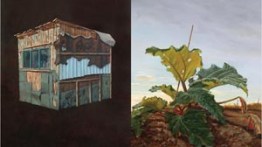
The autumn brings a fine crop of new exhibitions, some of them even full of ‘mellow fruitfulness’. I have been watching the development of Julian Perry’s work over the past ten years with considerable pleasure, but his new show is his best yet. Perry has an eye for the details of suburban living and recreation, for south coast holiday homes, caravan parks and tower blocks. His last show, at Guildhall in 2004, focused on the arboreal delights of Epping Forest. In his new one, A Common Treasury: The Sheds Lost to the Olympiad (Austin/Desmond, Pied Bull Yard, 68/69 Great Russell Street, WC1, until 16 November), Perry turns his attention to

Saints on the move

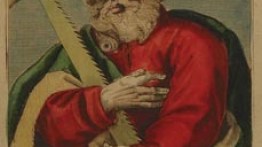
In August 1766, the printmakers of Augsburg brought a case of plagiarism against the Veneto publishers and printmakers Remondini. One of the witnesses they summoned was Giuseppe Fietta, an itinerant pedlar, who was then doing the rounds of Bavaria selling Remondini’s Santi, or prints of saints. They were very popular with country-folk, Fietta explained, because they were not only cheaper than other prints, but also highly coloured and even decorated with silver and gold. Fietta was one of hundreds of pedlars working for the Remondini, an extraordinarily enterprising workforce that was a cornerstone of the company’s enormous success. The Remondini family began their operation in 1657 in Bassano del Grappa

The road to Auschwitz

Theatre: Lotte’s Journey, Cloud Nine, Joe Guy Beware of plays that open on trains trundling through Europe in the 1940s. You know where they’re heading. The strength of Candida Cave’s new work, Lotte’s Journey, is that it evades cliché by telling the passengers’ stories in reverse. In particular we focus on Charlotte Saloman, a brilliant Jewish artist haunted by the suicide of her mother and grandmother. The script is technically ambitious and takes us from Berlin to Rome and Nice, and covers Saloman’s life from the age of eight when her father explained the cause of her mother’s death as influenza. These large transitions are skilfully handled by Ninon Jerome’s

Simple minds

This film is described on the posters as ‘a powerful and gripping story that digs behind the news, the politics and a nation divided to explore the human consequences of a complicated war’. Should you encounter this poster and should you have a marker pen upon you, you may wish to add graffiti beneath: ‘You wish.’ Is this vandalism? I would not consider it so. I would consider it only fair that the British cinema-going public is warned in this way. And while you are there, you may even wish to add: ‘This is tedious and insulting and barely even a story.’ Perhaps it was made more with an American

Czech mates

Solo behind the Iron Curtain (Radio Four), International Radio Playwriting Competition (BBC World Service)  ‘I was pretty sure I was being followed,’ he said in that unforgettably sleek drawl. We are in Prague at the height of the Cold War in 1968 and Robert Vaughn, aka Mr Napoleon Solo, is under surveillance. Cue blazing trumpets and a Hammer organ. The man from U.N.C.L.E. (there was a time when every teenager in the land could have told you immediately what those initials stood for) is making a second world war film in the Czech capital with his pals from Hollywood, George Segal and Ben Gazzara, just as Dubcek is being told

Dreaming with Stephen

Joe’s Palace (BBC1),  A Room with a View (ITV), River Cottage: Gone Fishing (Channel 4) The word ‘dream’ has different meanings, as in the greetings card: ‘May all your dreams come true, except the one about the giant hairy spiders’. Martin Luther King never said, ‘Brothers and sisters, I have a dream, and in this dream I am shipwrecked with my wife’s sister, with 2,000 tins of spinach, and for some reason Doris Day is there as well…’ ‘Dream’ meaning ‘longed-for desire’ is, I suppose, short for day-dream, in which you are in control of the fantasy. Most real dreams consist only of bizarre and surreal situations, meaningless juxtapositions. Sometimes,

Glutton for punishment

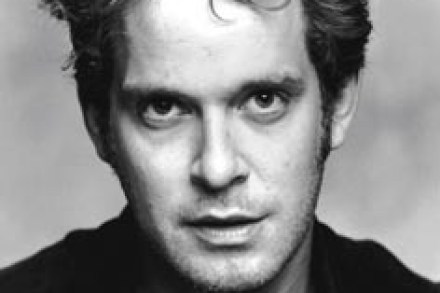
Act one, scene one The curtain opens on the offices of The Spectator magazine, London SW1, where a woman stands, stage left, staring at a telephone. A clock on the wall says 7.15. Something about the woman’s demeanour suggests it to be p.m. How long can she look at a phone? Just as the audience is beginning to wonder, the woman sighs, picks up a sheaf of papers from the desk and starts to read out loud: Me: Tom Hollander, actor, born 1967. Read English at Cambridge. TV and film credits include: Absolutely Fabulous, Martha, Meet Daniel and Laurence, Gosford Park, The Lost Prince and Pride and Prejudice…Pirates of the

Glowing in the dark

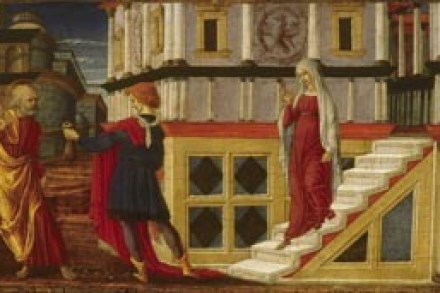
The latest exhibition in the grim dungeon of the National Gallery’s Sainsbury Wing actually looks rather splendid. After a slow start, this tribute to later Renaissance Siena blossoms forth — despite the dim lighting — into real magnificence. It brings together more than a hundred exhibits, mostly paintings and drawings, but including sculpture, ceramics and manuscripts, in a well-designed and skilfully installed display which focuses on the Sienese achievement from 1460 to 1530. I suppose if people think of Sienese painters, they think of Duccio, the Lorenzetti brothers, Simone Martini and Sassetta, all of whom were dead before the period covered by this exhibition begins. Renaissance art history is dominated