Arts Reviews

The good, bad and ugly in arts and exhbitions

Two greats

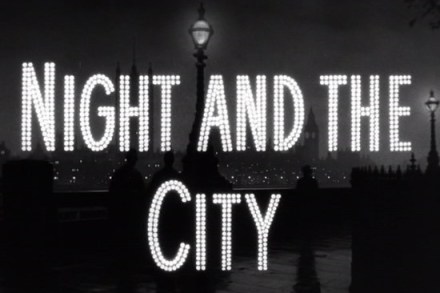
Cinema is losing its heroes in pairs at the moment. After Bergman and Antonioni passed-away in quick succession last year, the past week has seen the deaths of Richard Widmark and Jules Dassin – my favourite screen actor and one of my favourite directors, respectively. Apart, they were involved in some sublime movies. Together, they created one of the finest noir films – Night and the City.  I’ll be writing a fuller appreciation of these two greats later this week, but for now my Widmark and Dassin top-5 lists will have to suffice. I’d recommend that you buy, borrow or rent as many of these films as possible – they’re all essential:   Richard
Crowded out

Cranach Royal Academy, until 8 June Friend of Martin Luther, and court painter to the Elector of Saxony (who was Luther’s protector), Lucas Cranach the Elder (c.1472–1553) has been called the leading artist of the Reformation. He produced many devotional images and religious scenes yet to us Cranach is known for other subjects — palely loitering nudes and strongly naturalistic portraits on fresh green backgrounds. Braving the queues at the Academy, I was pleasantly surprised to discover an exhibition filled with colour, mostly in the richly decorative religious works. We haven’t seen much Cranach in this country, though our public collections have a few choice examples of his work. Last

Two little boys

Son of Rambow 12A, nationwide Son of Rambow is the tale of two young boys — one from a strict religious background; the other a troubled troublemaker — who come together to shoot a backyard version of Rambo: First Blood to enter it into the BBC’s Screen Test competition. It is a British film, set in some English suburb in the early Eighties, and it is chock-a-block with all the things that usually make films like this work very happily indeed: slapstick; fantasy; derring-do; friendship; getaways on bicycles and scrappy underdogs triumphing over horrid adults. It’s mostly a kids’ film, but it also has its eye on cinema-accompanying parents with

Sugar rush

As in real life, it’s considered faintly reprehensible in music to have a sweet tooth. Greens are good for you, and so is The Velvet Underground, but right now I’m thinking about going up to the shop at the end of the road and buying a packet of Maltesers, having just listened to a Take That album. I can’t believe I have just written those words. If you had told me ten years ago that not only would I voluntarily listen to a Take That album in 2008, but that it would also be my own copy, which I had bought with my own money, I think I would have

Supplementary benefits

Henrietta Bredin talks to the Young Vic’s David Lan and ENO’s John Berry about the joys of collaboration Walking into the Young Vic these days is a hugely pleasurable experience, and it’s even more of a pleasure to see the delight with which David Lan, its artistic director, looks around him at a theatre that has become so lively, busy and welcoming. The building recently underwent a much-needed overhaul and reopened in October 2006 — impressively on time and on budget — with three performing spaces, including two new studios, and public areas that are really appealing to spend time in. This is all to the good for English National

Lost in translation | 29 March 2008

A Couple of Poor, Polish-Speaking Romanians Soho Theatre The Man Who Had All the Luck Donmar Warehouse Brave thrusts at the Soho. A wacky new play by Polish wunderkind Dorota Maslowska has been translated and directed by the theatre’s artistic supremo, Lisa Goldman. It opens with a pair of ugly drunken hitch-hikers speaking English in dense Slavic accents. They get a lift from a mild-mannered twit who speaks English in an English accent and after threatening him with murder they set off on a bizarre journey across Poland towards Warsaw. To be properly understood the play requires an exact knowledge of Eastern Europe’s recent history. Migrants from down-and-out Romania have

Reflexive and reflective

Punch and Judy Linbury Studio La vie parisienne Guildhall School of Music and Drama Harrison Birtwistle’s Punch and Judy is very much a piece of its time, the late 1960s, but returning to it after many years I was pleasantly surprised to find how much of it remains fresh and invigorating. Music Theatre Wales mounted three performances at the Linbury, and in a few weeks there will be a new production of it by ENO. It seemed to fit perfectly into the limited space of the Linbury, the orchestra behind the stage, and it has enough of the feel of a fairground entertainment to make the idea of it in

Hancock’s hubris

Television feeds upon itself, which isn’t surprising. Watching TV is by a huge margin our most popular — or our most time-consuming — leisure activity. It’s surprising there isn’t more television about television. We have the occasional oleaginous tribute show to some ancient trouper, a few quizzes about television, and those endless Saturday-night marathons on Channel 4 — Your 100 Most Loathsome Television Moments. Not much else. There is a terror about revisiting the past. TV people must always be moving forward for fear the audience will think ‘we’ve seen all this’ and drift off to something new and exciting, such as talking to each other, or going to the

Radio select

Do you ever wish you could listen to the best bits of Radio Four’s Today Programme while skipping the dross? Just as Sky Plus has transformed television by allowing you to fast forward the adverts, I have recently acquired a radio that does the same: Evoke-3 by Pure has this same “live pause” facility So just leave to record for half an hour, and then you can fast forward the irritating bits. No need to listen to “Jesus was left-wing too” Thought For The Day or environmentalism masquerading as journalism. And you get the same brilliant array of presenters (about to get less brilliant, sadly, when Carolyn Quinn leaves). It’s

Natural beauty

Amazing Rare Things The Queen’s Gallery, Buckingham Palace, until 28 September Do not be put off by the title of this show: in its barrow-boy eagerness to pull in the punters, such a naff title undermines the essential dignity of the exhibits (Leonardo is here, after all), and discounts the high quality of art on display. The Queen’s Gallery does not need to be so determinedly populist in approach, though I can understand that marketing people would not consider the exhibition’s theme — ‘The Art of Natural History in the Age of Discovery’ — to be sufficiently sexy. So we are lumbered with this teen-dream title. Ignore it, for your

Waste of life

Beaufort 15, Key Cities Beaufort is the Israeli war film that won the Silver Bear at Berlin and was nominated for an Oscar for best foreign language film and it is very, very dull. After I had seen it I sent a friend to see it who is much more war-literate than I am and afterwards he said, ‘Thanks. It was very, very dull.’ What, then, does this mean for the Bear that is Silver and the nomination that is Oscar? It’s the rubbish tip for them, my dears; the rubbish tip. It has to be because as you know, and as my more war-literate friend now knows to his

Letting down Mr B.

New York City Ballet London Coliseum Despite the hype with which it was heralded, and an undeniably interesting programme of delectable choreographic offerings, the New York City Ballet season at the London Coliseum has not lived up to expectations. Last week I expressed my reservations about the second programme on offer, the one celebrating the artistic genius of Jerome Robbins; I now find myself in the unenviable position of expressing similar and even more serious reservations about the other two programmes I saw, the Essential Balanchine, and Four Voices: Wheeldon, Martins, Bigonzetti and Ratmansky, which is dedicated to four new dance-makers. Keeping up with tradition and with a historically well-established

Mozartian magnificence

It’s the best book about one of the greatest composers. I’ve devoted odd moments of this autumn and winter to absorbed intake of Hermann Abert’s Mozart and am lost in admiration for its achievement, simultaneous with renewed wonder and delight at the achievements of its subject. Though regrettable that this classic (it finally appeared in German between 1919 and 1921) has had to wait till now for a complete translation, there are compensating gains. Notably in the comprehensive updating, via hundreds of footnotes incorporating almost 90 years’ worth of further discoveries, biographical and textual. The scholarly task of modernising the annotations has been magnificently discharged by Cliff Eisen of King’s

Celebrating renewal

Not Bach, or Beethoven, to celebrate the Easter season on Radio Three, but a series of programmes dedicated to Spring. Not that you would have discovered this from the Radio Times, which gave us a few lolloping rabbits and the strangest and most unappetising-looking Easter eggs but nothing to suggest that Radio Three has been making an effort to give some shape and purpose to the daily grind by acknowledging on air the transition from darkest winter to the Rites of Spring. This year’s spring, of course, is playing hooky, and for most of us Easter was colder and whiter than Christmas. It’s all the fault of those bearded clerics

What’s the worst movie ever?

How do you measure a truly awful movie? Joe Queenan explains: To qualify as one of the worst films of all time, several strict requirements must be met. For starters, a truly awful movie must have started out with some expectation of not being awful. That is why making a horrific, cheapo motion picture that stars Hilton or Jessica Simpson is not really much of an accomplishment. Did anyone seriously expect a film called The Hottie and The Nottie not to suck? Two, an authentically bad movie has to be famous; it can’t simply be an obscure student film about a boy who eats live rodents to impress dead girls.

The ideally expensive thing

Susan Moore on how the Americans have become net sellers of works of art Junius Spencer Morgan caused a sensation in 1876 when he paid the staggering sum of £10,100 — more than the National Gallery of London’s annual purchase grant — for Gainsborough’s celebrated portrait of Georgiana, Duchess of Devonshire. Since then a seemingly interminable line of nouveaux-riches American ‘Despoilers’ has relieved the impecunious (and often only too willing) European aristocracy of the art treasures their ancestors had amassed over the centuries. The phenomenon prompted the foundation of the National Art Collections Fund in Britain in 1903 to help save such treasures for the nation, and was subtly dissected

Ready for retirement

Eugene Onegin Royal Opera House Fiesque Bloomsbury Theatre When the late Steven Pimlott’s production of Tchaikovsky’s Eugene Onegin was first staged at the Royal Opera two years ago, it had a frosty critical reception, largely because too much of it seemed either routine or irrelevant. Why, for instance, do we get Flandrin’s famous painting of a nude lad in profile as a front-drop for the first part of the work? Try as anyone might, it would be hard work to find any gay subtext in this opera. The composer clearly identified with Tatyana, and as always wrote his best love music when the object of passion is a man, but

Unsung hero

New York City Ballet London Coliseum Despite being one of the greatest dance-makers ever, Jerome Robbins remains, outside the United States, an unsung hero of 20th-century ballet. Even newly printed European dance-history manuals relegate him to a lesser place, preferring to give sole credit to Russian-born George Balanchine for the creation of a distinctively American ballet style. But if there is a choreographer who truly contributed to the development of anything identifiable as American ballet, it is Robbins. It is a pity that, bar one or two titles, a large portion of his oeuvre remains unknown to dance-goers from the Old World. A real pity, for ten years after his

Anthony Minghella RIP

If this is another Black Wednesday, it has just been made blacker yet with the news of the horribly untimely death of Anthony Minghella. He was one of those rare shining people; a writer of enormous skill, a literate and musical director, a man of acute perception and understanding, deeply kind and over-flowingly generous. A bright light has been extinguished.