Arts Reviews

The good, bad and ugly in arts and exhbitions

Hayward Gallery’s Light Show is intoxicating, disorientating, panic-inducing and hypnotic

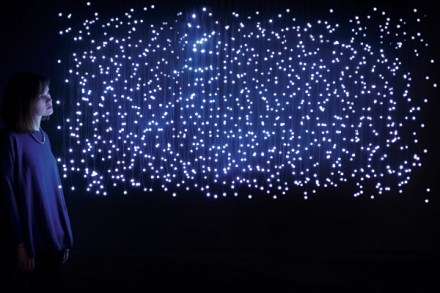
A room filled with glowing fog; shadowy figures among glittering LEDs and warm ‘breathing’ columns of light. Welcome to the trip that is Light Show (until 28 April), the Hayward Gallery’s latest exhibition exploring how artists have used the medium of artificial light over the past five decades. With side effects of disorientation, slight panic and hallucinatory visions, this exhibition is an intoxicating sensory cocktail, plunging visitors into a world that is recognisable and unfathomable at the same time. With sculptures and installations that visitors can step into, Light Show is a fitting title for something that is, in many ways, more spectacle than ‘exhibition’. This art is entertainment; children

Mimics, pagans and pilgrims on TV

What would you do if you had a quite extraordinary talent in impersonating everyone, from Al Pacino to Barack Obama to just any random Irish bloke? In TV land, you are probably rather baffled by it all, and unsure what to do about it as you languish in an unfulfilling half-life, until a Series of Events comes along to show you what a gift you have. This is what happens to The Mimic’s Martin Hurdle, whom we first encounter in his car stuck in traffic, entertaining himself by putting on the voice of Terry Wogan, true to it in texture and timbre, if not in spirit (‘It’s mornings like this,

Get a life

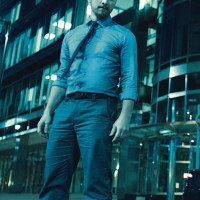
Welcome to the Punch is a British crime action thriller and here is why you may wish to see it: it is set in a night-time London so magnificently lit even I wanted to visit, and I live there. And now, ten reasons you can skip it, get on with your life and save 99 minutes, whether those minutes are precious or not. My time isn’t particularly precious, but it may be different for you. Here you are. 1. Although it has a top, top cast (James McAvoy, Mark Strong, Andrea Riseborough, David Morrissey) it only goes to prove the following old saying: the best cast in the world cannot

Written on Skin review: sex, murder and cannibalism at the Royal Opera House

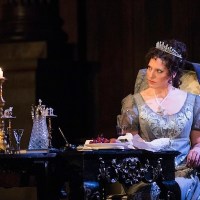
George Benjamin’s Written on Skin is a work of compelling fascination, all the more so in that it is elusive and possibly wilfully puzzling. I want to see it again as soon as possible, and of how many new operas can that be said? Actually, of three that have been premièred at the Royal Opera in the past decade — Adès’s The Tempest, Birtwistle’s The Minotaur and now this, though it has already been performed in Europe. Three apparent masterpieces of opera from England in a decade is impressive, indeed unprecedented. And they are all quite different, with Skin being the most opaque, though the experience of sitting through it,

The Audience review: Helen Mirren leads a Mike Yarwood show with Oscar-level talent

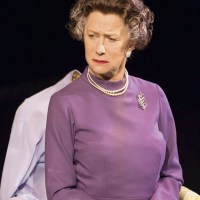
Peter Morgan has extracted more cash from the royal ‘brand’ than the Buckingham Palace giftshop. He’s at it again with The Audience, a fictional dramatisation of the weekly conversations between the Queen and her first ministers. This is a smart idea carried off with intelligence and plenty of style. Morgan dispenses with a linear parade of PMs and leaps to and fro across the decades. A youthful Harold Wilson bustles in full of self-confidence and jokes. The Queen takes to him immediately. Barely ten years later, the Yorkshireman has dwindled into a broken figure and his legendary memory is fading fast. But as he shrinks, the bond of affection between

The Cuckoo Clock

for Michael Donaghy, 1954-2004 Parking near St Pancras long before light, it wouldn’t spook if you peered from a shop front or popped from a grille — remembering the night we arranged a rendezvous at the Elephant, you like a meerkat in-and-out of the subways on the traffic island, head cocked but hesitant when I called A Mhíchíl through the sodium haze — who already must have felt in your brain a faint alert above the chug of the Riesenrad… I observed the scared look but never imagined you’d be panicked or with a farcical skip be gone: feral, too soft you were, but glad in your heart as you

How Roy Lichtenstein became weighed down with superficiality

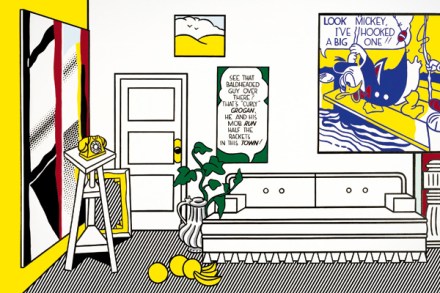
On both sides of the Atlantic there are still heated debates about who invented Pop Art, the Americans or the British, but it seems much more probable that concurrently each initiated their own brand in response to the zeitgeist of post-war consumerism. Certainly, the American Roy Lichtenstein (1923–97), after near-abstract beginnings, started in 1961 to paint large freehand versions of comic-strip frames, complete with speech bubbles, and exhibited them in New York in the first Pop Art shows. He moved on a bit from comic strips to Disney, advertising and the ordinary objects of the modern environment, and developed a style of measured drawing and stencils that broke up colour

The man behind Eric and Ernie

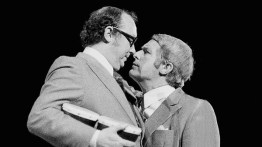
It takes a special sort of talent to turn a good act into a great one, and without John Ammonds, who died last month, aged 88, it’s quite possible that today’s couch potatoes never would have heard of Morecambe & Wise. As their BBC producer, he transformed them from jobbing comics into a national institution. The seven series he made with them still stand as the acme of Light Entertainment television. When Ammonds teamed up with Eric and Ernie, their double act was two-dimensional. Viewers liked them but they didn’t warm to them. Ammonds reconnected them with their theatrical roots, filming them on a raised stage with wings and curtain.

After Saddam

‘The problem is why,’ said the health project officer of a British charity working in the marshlands of southern Iraq close to Basra. ‘No one answers why?’ He was talking to the BBC journalist Hugh Sykes about the state of Iraq, ten years after the fall of Saddam Hussein. He agreed that the Americans and British had done ‘a good job’ in getting rid of the dictator but said that this had changed nothing in Basra, whose economy had been destroyed by Saddam as he drained the marshes, turning a landscape that was vivid green into burnt ochre. We also heard from the farmers who in the hours after Saddam’s

Bluestone 42: Dad’s Army it isn’t

The thing that always used to bother me about M*A*S*H as a child was the lack of combat. You’d see the realistic film of choppers at the beginning and, obviously, the plotline would quite often include casualties coming in from recent scenes of action. But the exciting stuff always seemed to happen offstage, a bit like in Shakespeare where some character strides on and tells you what a terrible battle there’s just been and you’re going, ‘Wait a second. Did we just skip past the most exciting bit?’ This clearly isn’t going to be a problem, though, with BBC3’s new sitcom about a bomb disposal unit in Afghanistan, Bluestone 42

Mozart magic

It was some time since I’d been to a performance of Mozart’s greatest though not his deepest opera, Le Nozze di Figaro, one of the works of which I can’t imagine ever tiring. And it is, despite some heavy vocal demands, an opera which normally suits students at the music colleges well. There weren’t any obvious grave shortcomings in the first night’s performance of it at the Guildhall School of Music & Drama, but it annoyingly failed to achieve lift-off. Nerves may well have a lot to do with that: the playing of the Overture had enough problems of intonation among the winds, which later played beautifully, to suggest that.

Aversion therapy

It’s been a while, I have to say, but last week I saw a show that thrilled me to the core. Trelawny of the Wells, the Donmar’s latest offering, is a tribute to the theatre written by actor-turned-writer Arthur Wing Pinero. A simple set-up. Gorgeous young luvvie, Rose Trelawny, has forsaken the greasepaint to marry a greaseball called Arthur Gower. He’s loaded. Rosie’s actor chums treat her to a farewell bash complete with antique gags, tuneless ditties, snatches from half-remembered dramas and long-winded orations consisting entirely of in-jokes. (You’ll have spotted that this is not the show that thrilled me to the core.) At one point, a tragedian holds a

Transatlantic traffic

There has been a lot of discussion recently, prompted by the start of President Obama’s second term, about the ‘Special Relationship’ between the United Kingdom and the United States. What seems to have been overlooked in the analysis of politics, economics and diplomatic relations is that the strongest and most culturally important link between the two countries is their shared passion for theatre. For all the razzle-dazzle of Broadway, the London of Elizabeth II remains, as it has since the rule of Elizabeth I, the world capital of the stage. Transferring from London to New York is a huge buzz for British actors, but it is a chance to sample

Port na h-Abhainne

We walked the cliff of Portnahaven listening to the grey seals sing on Orsay and Eilean Mhic Coinnich across the little harbour. Were they singing for the love of being here in this place, like us, far from griefs — and were they also singing, as we were, to each other?

David Inshaw: the great romantic

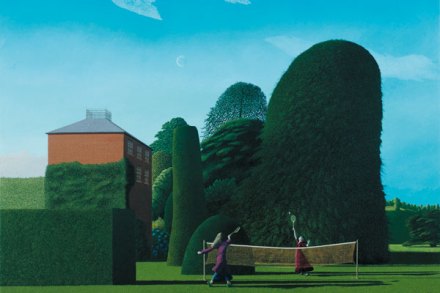
David Inshaw will celebrate his 70th birthday on 21 March, around the time of the spring equinox. On the eve of this grand climacteric, which will be marked by an exhibition of new and old work at the Fine Art Society, I went down to Devizes to interview him. He has lived for much of his life there, with brief interludes in Bristol, London, Cambridge and Wales. In Devizes he is surrounded by the countryside that has most inspired him — the Marlborough Downs and the open stretches of Salisbury Plain, the trees and hills of his beloved Wiltshire. Inshaw is a landscape and figure painter, known to many as

Wandering eye

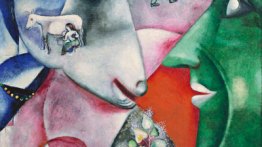
‘When Matisse dies,’ declared Picasso, ‘Chagall will be the only painter left who understands what colour really is.’ Wandering around this splendid show you can see exactly what he meant. Chagall never used colour for cheap effect, but to convey meaning and emotion. The effect of seeing so many of his works together is almost overwhelming — a symphony hung upon a wall. But these aren’t the romantic paintings of Chagall’s later years, the visions of young lovers floating over seas of flowers. These are the urgent artworks of his youth, made at a time of immense upheaval. By focusing on these early years, to the virtual exclusion of his

Foundling Hospital tokens

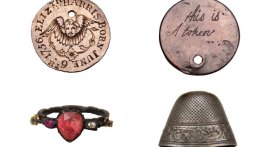
‘Dear Sir, I am the unfortunate woman that lies under sentens of Death in Newgatt…’  So begins a letter of 1757 addressed to the powers that be at the Foundling Hospital in  London’s Bloomsbury. Written in a strong hand, it contains the poignant petition of a woman on death row, Margaret Larney, that her children, who have been admitted to the hospital separately, might ‘know one and other’. Even if the younger child hadn’t died shortly after admission, Margaret’s eloquent plea would certainly have been in vain. When an infant entered the hospital, its former identity was erased and siblings remained ignorant of their blood ties. But now, some 250

Could Malcolm Tucker take on Alan Rusbridger?

Sad news has broken. If the online speculation is true, it appears that casting agents for the upcoming Guardian movie have overlooked Daniel Radcliffe for the part of Alan Rusbridger. Given that Harry Potter and AR are dopplegangers, Mr Steerpike reckons that the agents have missed a trick. For those who haven’t heard, the film will chart the paper’s stormy relationship with Wikileaks. Benedict Cumberbatch is already getting to grips with the role of Julian Assange; the question now is, who will play Rusbridger? Incongruous rumours are circulating that the softly spoken editor will be portrayed by Scottish actor Peter Capaldi, aka Malcolm Tucker. The foul mouthed ranter from the BBC’s The Thick