Arts Reviews

The good, bad and ugly in arts and exhbitions

Notes on the type

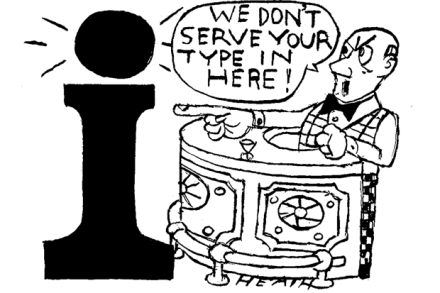
Back in 1997 the New Yorker published a piece lampooning the proliferation of ‘Notes on the Type’ — those oleaginous mini-essays informing us that ‘this book was set in Backslap Grotesque Italic Semi-Detached, a variant of Bangalore Torpedo Moribund adapted in 1867 from a matrice by the Danish chiseller Espy Sans, a character if ever there was one’. In the years since, the situation has gone from worrying to insufferable. Many non-fiction books now suffer from a severe case of distended colophon — sentence after rococo sentence, in the best M&S chocolate-box language, on the lineage of the type and typographer, on the amusing top notes of blueberry and persimmon
The prodigy

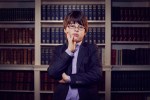
On Tuesday night on Channel 4, a stern male figure peered over his glasses (as equipped with one of those cords favoured by themiddle-aged specs-wearer) and offered us his robust views on how government benefits encourage laziness. Which might not sound that unusual — except that the male figure in question was 12. His name, no less improbably, was Mog and he was a contestant in the new series of Child Genius, now hosted by Richard Osman — these days almost as ubiquitous on television as Susan Calman is onRadio 4. As ever, the first few minutes were spent assuring us how fiendish the quiz would be; but, as ever

Girls v. ghosts

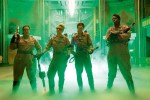
From the moment this all-female reboot of Ghostbusters was announced, the fan-boy panic set in: where will it end? An all-female Top Gun? Will it make me pregnant? Who are these ‘women’? Where do they come from? Are they a recent thing? Do we know any? If it’s proved they can carry big Hollywood comedies, how will they ever be stopped? Such vitriol had to be coming from a sexist place as films are rebooted all the time and superheroes are endlessly — Batman can’t bend down to pull up his socks without being rebooted — yet they don’t provoke hate. Plus, it’s not as if remaking a film erases

First thing’s first

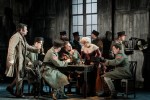
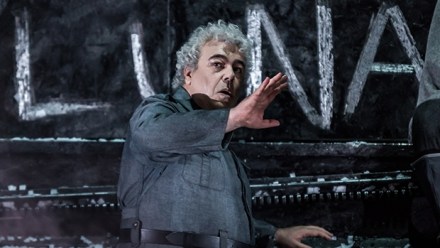
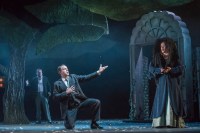
Leonore is the first version of Beethoven’s Fidelio, and Stephen Medcalf thinks it’s better. ‘What Leonore gives us is more discursive but more dramatic,’ he declares in the programme of this Buxton Festival production. Well he would, wouldn’t he? He’s the director. You’d hope he’d have some faith in the piece. And what’s undeniable is that with Leonore you get more Beethoven for your buck than in Fidelio. True, there’s no ‘Abscheulicher!’ and no glowing declaration of universal brotherhood from the Minister. But if you’ve ever wished that Beethoven had given us a bit less of all that freedom and humanity stuff and a bit more romantic comedy, Leonore is

My best fiend

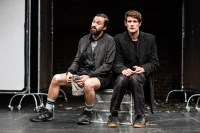
Anthony Neilson is an Arts Council favourite known for trivial but impenetrable plays with off-putting names like The Wonderful World of Dissocia. His latest effort has another hazard-warning instead of a title. Unreachable starts with an actress auditioning for a dystopian sci-fi movie set in a clichéd future. She lands the role and we cut to the film-lot where more clichés await. Pretentious director Max is furious because the sun won’t stay in one place and he decides to ditch his digital cameras and film instead on old-fashioned celluloid. The shoot is suspended while producers scrabble around for emergency funding. This self-involved storyline would be unbearable if it weren’t for

Death of the auteur

From the Oscar winning classics of the early Seventies — The French Connection (1971) and The Exorcist (1973) — to the southern trailer trash noir Killer Joe (2011), William Friedkin has been behind some of the darkest films ever to come out of Hollywood. He has also had a famously bumpy career, careening from great successes to big flops (does anyone remember Jade?). Somehow, he’s always rebounded. Currently, the 80 year old director is developing Killer Joe into a television series, set to star Nicholas Cage as the cowboy hat wearing detective/hitman played so mesmerisingly in the film by Matthew McConaughey. At the Cannes Film Festival in May, Friedkin was

Echoes of Italy

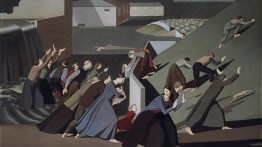
‘Hidden beauty is best (half seen), faces turned away.’ So noted a young English painter named Winifred Knights in 1924. Until recently, the power of her own work has been thoroughly concealed. After her death in 1947, indeed even before it, Knights was forgotten. By the 1950s her reputation had sunk so completely that both the Tate and the Fitzwilliam Museum refused to accept one of her masterpieces as a gift. However, artists who disappear into oblivion are sometimes rediscovered — and that is what has happened to Knights, who is now the subject of an admirable exhibition at Dulwich Picture Gallery. It is, as the cliché goes, a revelation.

Accentuate the positive | 7 July 2016

Fifty years ago on Monday the World Service programme Outlook was launched as an innovative news and current affairs programme presented ‘magazine style’ with live interviews featuring ‘star’ guests. Such ‘soft’ journalism was highly suspect back in 1966, as England won the World Cup, Russia landed the Lunar 9 mission on the moon and China embarked on its Maoist cultural revolution, because it relied not so much on factual truths or reportage but on the emotional truth of what it felt like to be there in that place at that moment in time. Over the years, though, the guests on Outlook have taken over from the news content precisely because

And your point, Professor?

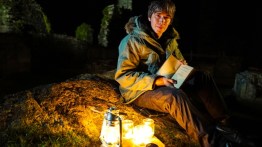
Pop idol turned top boffin Brian Cox doesn’t shy away from the big issues. With programmes such as Wonders of the Solar System, Wonders of Life and Human Universe, Cox, the heir apparent to His Eminence Sir David Attenborough, has dared to dream on a cosmic scale. Are there any limits to his mighty intellect? In his latest adventure, Forces of Nature (BBC1, Monday), the ambitious prof boldly seeks to illustrate the workings of ‘the underlying laws of nature’. As wistful electronic music tinkled Eno ishly in the background, he assured us, in a metaphysical tone, that ‘the whole universe, the whole of physics, is contained in a snowflake’. Representing

Friel good factor

Does anyone believe Brian Friel’s libellous blarney? He portrays Ireland in the 20th century as an economic basket case where the starving, the retarded, the crippled and the widowed offer up prayers to a heartless God who responds by heaping their burden ever higher. Friel is popular with British mainlanders who are tickled by the news that their Atlantic coastlines are peopled by picturesque barbarians and suicidal drunkards mired in exquisitely revolting dereliction. You’ll notice that aid agencies use the same technique, and for the same audience, when they portray Africa as a rough and ready paradise where life is organised around the latest borehole dug by a team of

Erectile dysfunction

Anthony Weiner is the American politician who made a comeback after a sexting scandal and stood for New York mayor. He was topping the polls, when a second sexting scandal broke, which proves what, probably, none of us had suspected all along: that thing you do where you send women pictures of your erect penis must be awfully hard to quit. This fly on the wall documentary was, happily, already filming Weiner and his fascinating wife (Huma Abedin, Hillary Clinton’s long time aide) when his career imploded, and the result is as supremely entertaining, painfully funny and queasily riveting as you might have hoped, with one caveat: why is it

Double trouble | 7 July 2016

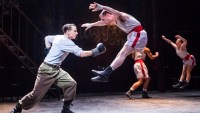
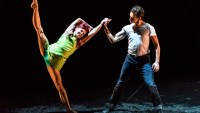
The Bolshoi Ballet’s wunderkind ballerina Natalia Osipova defied received wisdom when, in 2012, she cast off from the great Moscow company with her equally prodigious then boyfriend and partner Ivan Vasiliev to go freelance. Without the Bolshoi’s unmatched support system, its coaching and opportunities, its reputation behind her, protested the Russian media, how could she thrive? Much the same was said over here the following year when the Royal Ballet’s precocious young star, the matchlessly graceful, imperiously aquiline Sergei Polunin thumbed his nose at a cornucopia of Covent Garden leading roles and skipped off to an uncertain future trailing behind him incoherent tweets about wanting to run a tattoo parlour.

Holy visions and dustbins

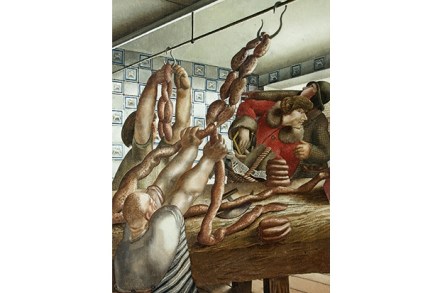
Woolworth’s spectacles. Pudding-basin haircut, rather sparse. Norfolk jacket. Pyjama cuffs below trouser legs and sleeves. Paints and brushes in an old black perambulator. And a sign propped up on a gravestone: ‘As he is anxious to complete his painting of the churchyard Mr Stanley Spencer would be grateful if visitors would kindly avoid distracting his attention from the work.’ This was Spencer in his Cookham dotage, a picture of wilful eccentricity, painting the church, cottages, meadows and Thames banks he had known since childhood. An odd little fellow, with the emphasis on little. He was 5ft 2in, by his family’s estimation, and better suited to the ambulance service than he

The big chill | 30 June 2016

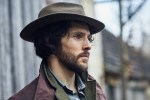
It’s sadly possible to imagine that The Living and the Dead was sold to BBC1’s commissioning editors as ‘Poldark meets The Exorcist’. Yet, while that wouldn’t be a completely inaccurate summary, the overall result is a lot more coherent, clever and ambitious than that. At heart, in fact, Tuesday’s first episode was a nifty twist on another genre: the one where a retired detective/gunslinger/master criminal comes out of retirement for one last job. The programme began in Somerset in 1894, where we met Harriet Denning, an unusually bright 16-year-old, whose intellectual curiosity alarmed her mother but who was encouraged in her reading of Ibsen, Zola and Darwin by her proud

Refuge from the referendum

A brief encounter with Radio 4’s Any Questions to gauge the measure of opinion in the shires after the referendum result was enough to convince me we are entering even more torrid times than during the campaign. For some mysterious reason both Harriet Harman and Alex Salmond, billed in Radio Times to appear on the panel alongside Ken Clarke and Chris Grayling, had reneged on their promise and been replaced by Emily Thornberry, the Labour MP who got into trouble in 2014 for her white van man tweet, and Steven Woolfe, an oxymoronic Ukip MEP. The audience, judging from the applause, were pretty much balanced between the Leavers and Remainers

Tangled web | 30 June 2016

Mike Bartlett’s curious blank-verse drama Charles III became an international hit. His new effort examines the cut-throat world of dark-web espionage. An American traitor named Andrew (Edward Snowden presumably) is hiding out in a Moscow hotel. Enter a flirty, giggling Irishwoman played by Caoilfhionn Dunne, who claims to be British and who teases Andrew over his betrayal of his homeland’s secrets. She evinces an interest in Oscar Wilde and the pair lock horns over footling minutiae. Andrew points out that Barbie dolls are called Sindy in the UK and this seems to demonstrate his familiarity with Britain. But he fails to spot the false cadences of her accent and he

Light and shade | 30 June 2016

Comedy and tragedy sit close beside one another in Mozart’s operas. Whether it’s the grinning horror of the Così finale — lovers joined, perhaps for ever, to the wrong partners — or the violence and mental instability so barely contained in the flimsy comic fabric of La finta giardiniera, there’s a continuum of emotion that belies the easy binaries of opera buffa and opera seria. Two new productions explore the shifting light of the composer’s chiaroscuro world, letting sunshine into the near-tragedy of Idomeneo and glancing into the darker corners of Le nozze di Figaro. Washed up on to Garsington Opera’s stage in two enormous shipping containers, Tim Albery’s Idomeneo