Arts Reviews

The good, bad and ugly in arts and exhbitions

Royal prerogative

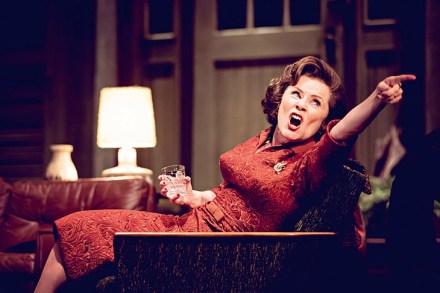
No one should complain that My Country; a work in progress is a grim night out. It’s rare for a good play to be written by royal command. The co-authors are the Queen’s personal minstrel, Carol Ann Duffy, and the director of her Royal National Theatre, Rufus Norris. These inspiring artistes have sent their vassals beyond the security of London to annotate ‘the words of people across the UK’ in the hope of understanding a humanitarian disaster: Brexit. The show makes its prejudices clear by dedicating the script to a Remain voter, Jo Cox, who was murdered by a Leave supporter. And it promotes the view, common among Remainers, that

Let’s hear it for the boys

Girls creator Lena Dunham has received criticism from all sides. Detractors on the right see her as an exhibitionist provocateur. Those on the left see her as a privileged narcissist, who can’t help but see feminism through a white middle-class prism — and who unforgivably rooted for Hillary Clinton over Bernie Sanders. The HBO show that made Dunham’s name, which she has written and starred in since her early twenties, is on its final season. It has portrayed the young lives and friendships of four millennial women trying to succeed, or just subsist, in New York, and how their dreams either lose grandeur when they come true or don’t come

Going underground

When Wireless Nights hit the Radio 4 airwaves in the spring of 2012, I was not at all sure about Jarvis Cocker’s particular, not to say eccentric, manner of presentation, butting in, making his presence felt, never letting us forget that it’s his programme, he’s in charge. His coy comments were too self-conscious for my taste. He didn’t sound natural; his after-dark meanderings felt too contrived. Now I realise I had completely missed the point. Cocker’s deliberate mannerisms, his upside-down way of looking at things, his curiosity and desire to share with us his thoughts are all very much part of who he is, and once you get used to

Denial has rarely looked so good

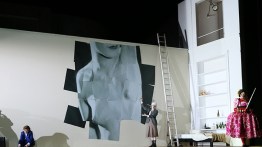
Ceci n’est pas une Partenope. Forget the warring classical kingdoms of Naples and Cumae: this is surrealist Paris in the 1930s and imminent invasion is the stuff of conversational parenthesis, barely worth interrupting a rubber of bridge for, let alone an embrace. Man Ray, Lee Miller and their androgynous associates slink and affect their way around a monochrome salon with its suggestively curved central staircase, offering up the performance of themselves as a living exhortation to make art, not war. As a response to Handel’s most Shakespearean of comedies, Christopher Alden’s production is inspired — more now, if anything, than in 2008 when it was new. There’s a new kinship,

The odd couple | 16 March 2017

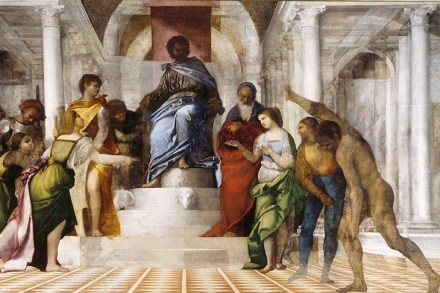
Only once did Michelangelo sign a sculpture. It was the ‘Pietà’ of 1497–1500, and he did so using an incomplete sentence in the past imperfect: ‘Michelangelo Buonarroti the Florentine was making…’. The implication was that actually completing a perfect masterpiece was an unattainable goal, so instead he just had to leave off (a great many artists still feel the same about finishing a picture). The ‘Pietà’ is included in Michelangelo & Sebastiano, a remarkably ambitious new exhibition at the National Gallery: not, of course, the original marble, which remains in St Peter’s, but a plaster cast from 1975. Nonetheless, in some ways, the cast gives you a better view than

The return of the What’s That Thing? Award for bad public art

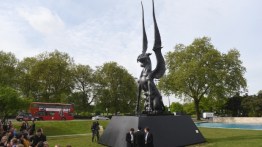
Wouldn’t it be nice, in these divided times, for humanity to have a common enemy – preferably an inanimate one. Welcome to the What’s That Thing? Award. We’re in our second year, hunting down the most execrable new pieces of public art that have appeared in the past year in this country and this time we’ve teamed up with the Architecture Foundation. The prize grew out of a report I wrote six years ago when we were at peak public-art-as-urban-panacea and every council was desperately clambering over itself to add a bit of swanky tat to their portfolio of local amenities. (I remember going to a public art ‘consultation exercise’ in John O’Groats where two artists delivered a powerpoint presentation to

Assayas’ Personal Shopper is slick, unnecessarily complex and totally irrelevant

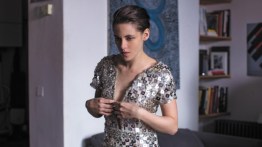
Creaking doors, rustling leaves and leaky taps make up the soundtrack of Olivier Assayas’ improbable horror film Personal Shopper. But the most unnerving (and grating) sound in this supernatural fashion show are the iMessage alerts that may or may not be coming from the beyond. If that sounds ridiculous, that’s because, like so much else in this baffling film, it is. Assayas has made some excellent films over the past two decades and more, and I think his nosedive with Personal Shopper can be explained by his latest muse, Kristen Stewart. Sure, she’s pretty – if that emaciated-junkie look turns you on. But why the former Twilight star has turned

Fatal distraction

I don’t think that I have left a theatre many times feeling as depressed and irritated as after the Royal Opera’s Die Meistersinger, in the new production by Kasper Holten. The run of the Royal Opera’s recent productions of Wagner — appalling Tristans, a dire succession of Parsifals, mediocre Rings — hadn’t prepared me for so deep an abyss of irrelevant idiocy as this. I thought I had reached the stage where, having seen so many fearful operatic productions of works I love, I was able to enjoy myself purely on account of the music, almost inured to what I was seeing. On this occasion, the musical level was uneven

Got the message?

To cut to the chase, my ten-year-old daughter really liked Beauty and the Beast. And given you’re probably going to be watching this as a child’s plus-one, I’d say hers is the view that matters. Her favourite character was Le Fou, the baddie’s gay sidekick, though I’m not sure she realised. But then the gay scene that Disney’s been making such a fuss about, in which the adorably camp and chubby Josh Gad gives Luke Evans — the fabulous Gaston — a bit of a shoulder massage when they’re relaxing at the inn, honestly isn’t such a big deal. Sorry. This would be a digression, except that there’s been so

To die for

Down the Mighty River with Steve Backshall (BBC2) was perfect Sunday-night TV — one of the most enjoyable adventure travelogues I’ve watched in ages. So I was quite surprised to see it reviewed lukewarmly by another critic. One of the critic’s objections was that the scene where Backshall spots a bird of paradise through his binoculars by the Baliem river in Papua New Guinea was a bit crap. Why couldn’t we have seen it in loving close-up detail, as you would on a David Attenborough? But this is precisely what I loved about the documentary. It had a roughness, an unpredictability, a spontaneity that you rarely find on TV any

Tail-end Terry

It is often said that Terence Rattigan’s ‘thing’ was his homosexuality and that his disguising of it coloured everything he wrote. But he had, I think, another secret up his sleeve that is still little known. He was a tailgunner in the RAF. Indeed the service was his family and a thread of blue serge runs through his career. He died in 1977, aged 66. After Harrow and Oxford, the war rudely interrupted his dazzling entrée as a dashing young Thirties playwright. After basic training, Rattigan was assigned as a wireless operator and airgunner to a squadron of Sunderlands, hunting enemy submarines in the Atlantic. One moment he was banking

A matter of life and death | 16 March 2017

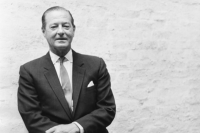
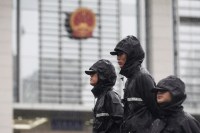
It was the crime story that showed us just how much China has changed since its years of social, political and economic isolation. The discovery on 16 November 2011 of the dead body of the British businessman Neil Heywood in Room 1605 of the Lucky Holiday Hotel in the Chinese city of Chongqing was not in itself so shocking. Sordid maybe, as it was declared by the Chinese authorities that he had died of excessive alcohol consumption. But nothing more than that. The revelations that followed, though, transformed the case into an international cause célèbre, the inner workings of Chinese politics unravelling before the greedy eyes of the foreign media.

His dark materials | 16 March 2017

The enticingly subversive films of Paul Verhoeven were very tempting to me as a schoolboy. When I hit 14, the Dutch director released RoboCop and the excitement among me and my friends at catching two hours of unmitigated ultra-violence reached fever pitch. He did not disappoint. That was in 1988 and it was interesting later on to read several newspaper articles accusing Verhoeven of having made a fascistic screed in favour of zero-tolerance law enforcement. This was not something any of us had considered up to that point, but satire, yes, even back then we had an inkling of what that was and RoboCop seemed to fit the bill nicely.

Buffy the Vampire Slayer made me the man I am

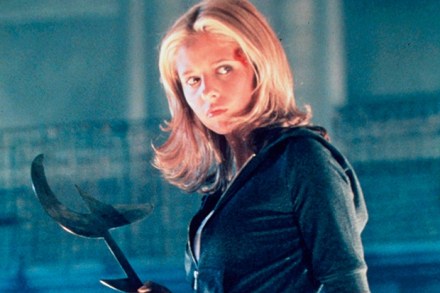
Buffy the Vampire Slayer turned 20 yesterday, which will make millennials feel as old as the actors who supposedly passed for teenagers back then. When Buffy came out I was eight. At first I was hooked by the horror aesthetic. Later I began to appreciate how it dealt with adolescent crises through supernatural allegory. But only now do I realise how lucky I was to have grown up with an empowered feminist to look up to (and have my first crush on). For those who didn’t watch Joss Whedon’s show between 1997 and 2003, Buffy Summers (Sarah Michelle Gellar) is a popular cheerleader type who falls in social status after she finds out she

How Buffy the Vampire Slayer transformed pop culture

Buffy, the Vampire Slayer. Right there, those four ridiculous words, are why it shouldn’t have worked. What was this? Some low-camp Russ Meyer knock-off? Joss Whedon’s generation-defining TV hit debuted 20 years ago tonight. Its anniversary is being marked by the fans who adored it and the critics whose cool detachment it drove a stake through. It is fourteen years since Sunnydale collapsed into the Hellmouth and Buffy left the airwaves after seven seasons. But far from turning to dust, this unlikeliest of cultural landmarks has enjoyed an afterlife through graphic novels, fan fiction, merchandise, conventions and the long-running chatter about a Hollywood adaptation, a rumour that has proved harder

Paradise lost | 9 March 2017

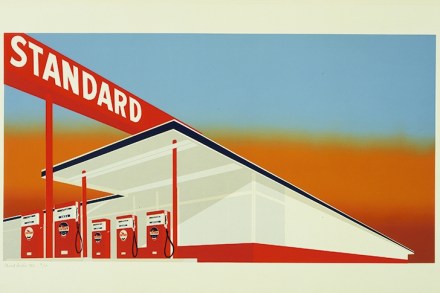
The American dream was a consumerist idyll: all of life was to be packaged, stylised, affordable and improvable. Three bedrooms, two-point-five children, two cars and one mortgage. The sense was first caught by Alexis de Tocqueville in Democracy in America (1835–40), where he talks about a people more excited by success than fearful of failure. We all know when the dream died: on 9 November 2016. People in Brooklyn were crying. In Manhattan they couldn’t breathe. A national angst had been revealed: the land of plenty had become the land of the plenty cross. But when did the dream start? There was the Jeffersonian trinity of life, liberty and the

Home help

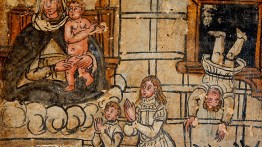
There have been many explanations for what happened in the Italian Renaissance. Some stress the revival of classical antiquity, others the rise of individualism. A pioneering exhibition at the Fitzwilliam Museum, Cambridge, Madonnas and Miracles: The Holy Home in Renaissance Italy, takes a different line. It’s all about the 15th- and 16th-century household — and the religious furnishings and fittings it contained. To a 21st-century eye some of these are distinctly bizarre. Early on, there is a painting of the ‘Madonna and Child’ by a follower of Filippo Lippi — just the kind of thing one expects to find in an art gallery. Underneath it is a brightly painted wooden

Victim mentality

Elle has been described as ‘a rape revenge comedy’, which seems unlikely, and also as ‘post-feminist’, which is likely as, in my experience, that simply means anything goes so long as you acknowledge that feminism has happened. The film stars Isabelle Huppert, who was Oscar-nominated for her performance, and who has repeatedly said that her character, Michèle, is not ‘a victim’ although, as you have to watch Michèle being raped or near-raped several times, I don’t know how we can be so sure about that. Perhaps I’m just not sufficiently in touch with my ‘post-feminist’ side to fully comprehend. Directed by Paul Verhoeven (Basic Instinct, RoboCop, Total Recall, Showgirls) and