Arts Reviews

The good, bad and ugly in arts and exhbitions

Absorbing and meticulously researched play about Partition: Drawing the Line reviewed

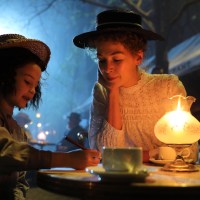
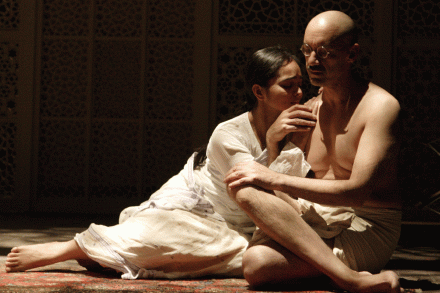
Theatres have taken to the internet like never before. Recorded performances are being made available over the web, many for free. Getting Better Slowly is about a dancer, Adam Pownall, who spent two years fighting Guillain-Barré syndrome. This lucid and enjoyable show (recorded at Lincoln Drill Hall) now looks horribly topical. A young artist, paralysed by a mysterious disease, refuses to surrender and eventually reclaims his vigour and his ability to communicate. That could stand for the profession as a whole. Hampstead Theatre offers a slate of three recorded plays. (Wild and Wonderland were reviewed in The Spectator on 30 June 2016 and 12 July 2014 respectively). Drawing the Line
The perfect film for family viewing: Belleville Rendez-Vous revisited

The selection of a film for family viewing is a precise and delicate art, particularly with us all now confined to quarters in intergenerational lockdown. Should the film-picker misjudge the terrain on ‘scenes of a sexual nature’, the entire family will be condemned to sit, agonised, through the dreaded onset of rhythmic heavy breathing and beyond, until finally someone cracks and mumbles ‘this is a bit racy’ while reaching for the fast-forward button. On the other hand, some of the full-throttle kids’ films seem designed to test adult sanity to its limit. I made the mistake once of watching Rugrats in Paris with a hangover, and when the maniacally squeaky

An extraordinary tale: BBC2’s The Countess and the Russian Billionaire reviewed

There can’t be many programmes that bring to mind quotations from both Henry Kissinger and Boney M., but BBC2’s The Countess and the Russian Billionaire was one of them. While Kissinger’s idea that ‘power is the ultimate aphrodisiac’ may be a little out of fashion in the #MeToo age, it was hard not to think it played a part in the eye-popping events that Wednesday’s documentary laid out with some relish. As for Boney M., rarely has ‘Oh, those Russians’ from ‘Rasputin’ felt so penetratingly insightful. The programme began filming in 2015, with the apparent aim of providing a ringside seat at a fight between an excitingly wealthy British-based couple

The art of the hermit

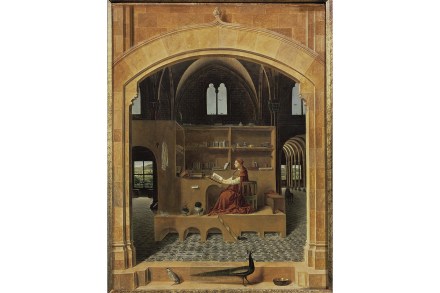
Late in the afternoon on Valentine’s Day, I walked through an almost empty Uffizi. Coronavirus was then a Wuhan phenomenon. Our temperatures had been taken at the airport, but there were no restrictions on travel and those wearing masks looked eccentric. I congratulated myself on finding Florence so quiet. Off-season, I thought smugly. That’s the way to do it. Heaven knows it’s empty now. The painting that caught my eye on that distant-seeming visit was a long, low cassone-shaped painting on the theme of the Thebaid attributed to Fra Angelico (c.1420). The Thebaid is a collection of texts telling of the saints who in the first centuries of Christianity retreated

Ill-disciplined and self-indulgent: The Guilty Feminist podcast reviewed

With theatres shut, radio must lighten the darkness. The Guilty Feminist is a wildly popular podcast performed by Deborah Frances-White and guests. In the episode of 23 March, the presenter hoped the superbug would cure our mania for business trips to ‘Philadelphia for a meeting about key performance indicators… Don’t fly to see people you hate. Fly to see people you love.’ She was probably unwise to dabble in medical predictions. ‘I hope Boris catches coronavirus so badly he needs to be sequestered on a desert island with no loo roll.’ Her co-presenter, Sindhu Vee, mocked her children’s frailties and her own. One of her young daughters announced her intention

Are there ways in which virtual exhibitions are better than real ones?

Six months ago I published a book about travelling to look at works of art. One such journey involved a round trip of about 6,000 miles to contemplate minimalist sculptures in the Texan desert. But the point wasn’t so much the distance as the importance of standing physically in front of the works themselves. Seeing the actual thing, I argued, was fundamentally different from looking at it in a book or on a screen. Nowadays, of course, unless you live within walking distance of a notable sculpture, that’s really all there is. A week ago my inbox was flooded with messages announcing that the art institutions of the world were

Perfectly serviceable – at points even charming: Four Kids and It reviewed

This film contains flying children, time travel and a sand monster that lives under a beach — yet the most incredible thing of all is that a family get to go on holiday. They actually leave their house, drive down an actual motorway, rent an actual seaside cottage and go for actual walks, passing well within two metres of actual other people! And not once do Derbyshire police film them with a drone, then post intimidating footage of it on the internet. The movie’s producers couldn’t have known they’d be releasing their creation into a locked-down world, but now that they have, who’s to say more people won’t watch it

War and plague have menaced theatres before, but rarely on this scale

It seems a long time ago now. I was meeting the artistic director of a pub theatre near Westminster on the afternoon of 16 March. Already it was clear that this was one of the worst days of his professional life. That evening’s performance of a John Osborne play had been cancelled because a cast member had caught a severe cold over the weekend. During the morning, four more shows had withdrawn their productions, and the theatre had nothing to present for the next eight weeks. As we spoke, his phone pinged. Another cancellation. The door swung open and the production manager came in with a look of doom on

The grisly art of Revolutionary France

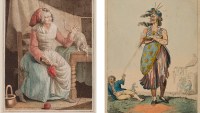
There was a basket of thick red wool and two pairs of large knitting needles at the start of University College London’s cleverly curated exhibition, Witnessing Terror: French Revolutionary Prints 1792–94. Visitors were invited to contribute their own lines of stitches before picking up a copy of A Tale of Two Cities, in which Dickens fictionalised the tricoteuses, the women who gathered around the guillotine knitting and waiting for heads to roll. The first six prints are French portraits of ‘revolutionary martyrs’ ranging from Louis XVI, wearing the bonnet rouge, or red cap of liberty, that was placed on his head when the crowd broke into the Tuileries Palace in

You’ll keep saying ‘I’m sorry, did I hear that correctly?’: Fiasco reviewed

Kevin Katke was quite a man. He had no military training, no political background and no espionage experience. Nonetheless, his hatred of communists and can-do attitude made him the pre-eminent idiot savant of private American intelligence throughout the Reagan administration. It was a peripatetic career that culminated with him spearheading a bungled plot to oust a leftist regime in Grenada while holding down a full-time job at Macy’s. Call it the American dream. I learnt this — along with dozens of other things to make you say, ‘I’m sorry, did I hear that correctly?’ — listening to Fiasco (Luminary), a political-history podcast whose second season retells the bizarre and shambolic

Gorgeous and electrifying: And Then We Danced reviewed

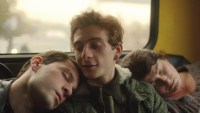
The film you want to see this week that you mightn’t have seen if you weren’t stuck at home is And Then We Danced, a gay love story set in Tbilisi, Georgia, and it is truly wonderful and gorgeous. Every cloud and all that. However, in my area the demand on broadband is so high that all I get is buffering, buffering, buffering, like it’s 1996, so the only way I could watch this in its entirety was by getting up at 5 a.m. And if it was an absolute pleasure then, it’ll be an absolute pleasure anytime. It passed the 5 a.m. test, you could say. Some scene are

The director that everyone loved to hate: David Thomson interviews Peter Bogdanovich

Peter Bogdanovich’s new documentary about Buster Keaton, The Great Buster, is a match made in movie heaven. I can’t think of two men more devoted to making motion pictures — huge successes in their day — more acquainted with the merciless climate of Hollywood, or more aware that they were as instrumental in their own downfall as in their glory. ‘Buster said he made the great mistake of his life in 1928,’ says Bogdanovich. ‘He had done these masterpieces in the 1920s — Steamboat Bill Jr, Sherlock Jr, The Navigator, The General — and done them the way he wanted with his own production unit… It couldn’t get any better.

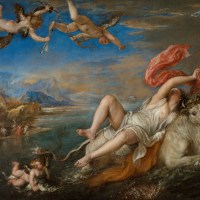
To ‘review’ such supreme paintings is slightly absurd: Titian at the National Gallery reviewed

In 1576 Venice was gripped by plague. The island of the Lazzaretto Vecchio, on which the afflicted were crammed three to a bed, was compared to hell itself. In the midst of this horror Tiziano Vecellio, the greatest painter in Europe, died — apparently of something else. He was in his eighties and working, it seems, almost to the end. Titian: Love, Desire, Death, which was briefly on at the National Gallery, before it was closed down this week by our own plague, contained several of the greatest masterpieces of his old age — and also of European art. It comprises just seven canvases, all done for Philip II of

The director of Persepolis talks about her biopic of Marie Curie: Marjane Satrapi interviewed

The problem with making an accurate film about science is that science is rarely exciting to watch, explains director Marjane Satrapi. Movie convention tends to insist on the climax of the eureka moment and the fiction of the solitary male genius, who doggedly closes in on his discovery in the same way that a detective might doggedly close in on a killer. ‘It doesn’t happen this way,’ says Satrapi. ‘It’s a result of lots and lots of work, which most of the time is repetitive and most of the time you know you don’t know where you’re going, and it’s lots of collaboration.’ Satrapi studied mathematics in her birthplace of

Catherine Deneuve at her most Deneuve-ish: The Truth reviewed

To tell you the truth about The Truth, even though it stars Catherine Deneuve at her most Catherine Deneuve-ish (i.e. campily grand) and I was so looking forward it — it’s the first non-Japanese production from Hirokazu Kore-eda, who made the very lovely Shoplifters — it is now quite hard to concentrate on anything in films beyond the fact that they already feel like social history. My God, there was a time when people just went out and about willy-nilly? And they hugged and kissed and weren’t always washing their hands while singing ‘Happy Birthday’? So that gets in the way, as does having to watch films at home rather

A mesmerising piece of theatre: On Blueberry Hill reviewed

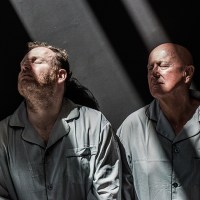
On Blueberry Hill sounds like a musical but it’s a sombre prison drama set in Ireland. Two bunkbeds. Above, an older man, Christy. Below, his younger companion, PJ. They take turns to talk, and gradually they reveal how their lives are interwoven. These are men of unusual intelligence and articulacy, and both are so profoundly in love with life’s simplest joys that their incarceration seems barely credible. Each might be a professor of literature or philosophy. During his boyhood, PJ tells us, he once worked as a golf caddy for a movie actor who shot a perfect round. It made him more happy than anything he had ever done. He

What is driving the rise in extreme cinema?

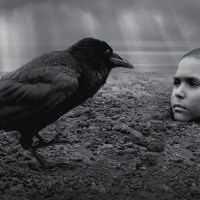
Why do we watch films like The Painted Bird? The movie tracks a young Jewish boy, an unclaimed innocent, wandering Eastern Europe as the second world war rages around him, drifting from village to village, encountering rape, paedophilia, mass murder and one spectacularly grisly scene where a miller gouges out his love rival’s eyes with a spoon — before tossing them to the cat. In the current climate you might want something more restorative than a film reminding us of forgotten civilian monstrosities. But increasing numbers are lapping up this kind of cinematic experience. This isn’t just cinema for people sick of Marvel. This is extreme cinema, endurance viewing for